Filter :
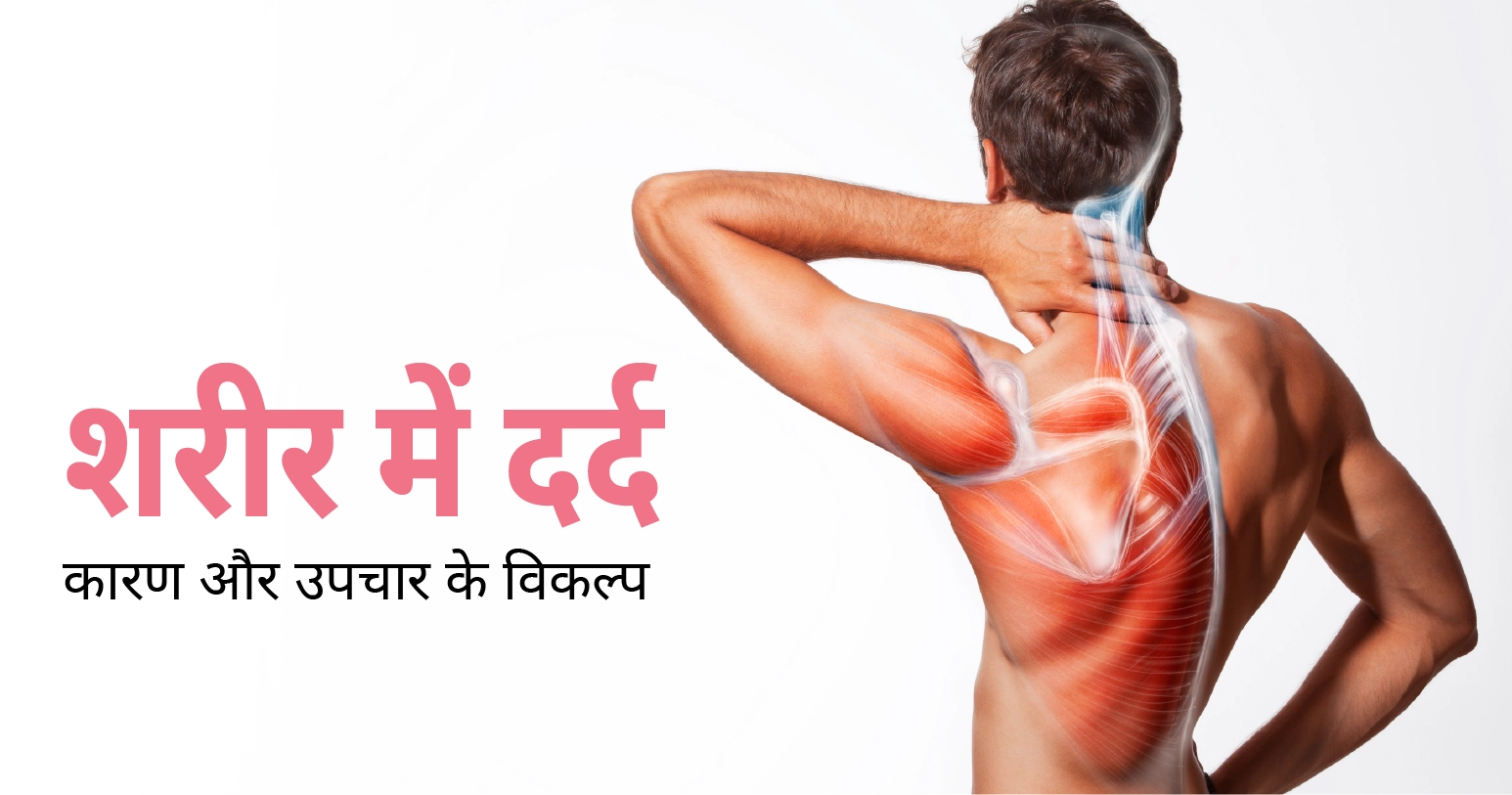
Table of Contents
हर दर्द खतरनाक नहीं होता। कई बार शरीर में दर्द का होना बिल्कुल सामान्य होता है और कुछ दिनों में अपने आप ठीक भी हो जाता है। चलिए इसे उदाहरण की मदद से समझते हैं –
जब आपने बहुत दिनों बाद जिम जाना शुरू किया हो और मांसपेशियों पर अचानक जोर पड़े। जब सर्दी-जुकाम या फ्लू हो और पूरे बदन में दर्द और टूटन हो। जब लंबी यात्रा के बाद शरीर अकड़ा हुआ हो। इन सभी स्थितियों में “तीव्र दर्द” (Acute Pain) होता है। यह आमतौर पर 2 से 5 दिनों में ठीक हो जाता है।
लेकिन जब पूरे शरीर में दर्द नियमित हो जाए, यानी हफ्तों या महीनों तक बना रहे – तो यह “दीर्घकालिक दर्द” (Chronic Pain) की श्रेणी में आता है। और यही वह स्थिति है जब डॉक्टर की सलाह जरूरी हो जाती है।
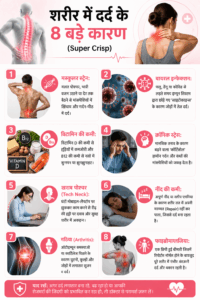
बिना तैयारी के भारी काम करना, गलत तरीके से वजन उठाना, या बहुत देर तक एक ही पोजीशन में बैठे रहना – इन सबसे मांसपेशियों में सूक्ष्म चोटें आ जाती हैं। नतीजा – अगले दिन पूरे शरीर में दर्द और सूजन। यह दर्द खासकर कमर, पीठ, गर्दन और कंधों में महसूस होता है।
जब शरीर किसी वायरस से लड़ रहा होता है, तब प्रतिरक्षा प्रणाली (Immune System) कुछ रसायन (Cytokines) छोड़ती है जो मांसपेशियों और जोड़ों में दर्द पैदा करते हैं। इसलिए फ्लू में “पूरे शरीर में दर्द की दवा” की जरूरत पड़ती है। COVID-19 के बाद भी कई मरीजों में हफ्तों तक शरीर में दर्द और थकान रहती है, जिसे “Long COVID” कहा जाता है।
यह आधुनिक भारत की सबसे बड़ी समस्या है। AIIMS दिल्ली के एक रिसर्च के अनुसार, भारत में लगभग 70-80% शहरी आबादी विटामिन D की कमी का सामना कर रहे हैं। घरों के भीतर काम करना, धूप से बचना और खराब खानपान इसके मुख्य कारण हैं।
विटामिन D की कमी: हड्डियों में दर्द, मांसपेशियों में कमजोरी, और थकान
विटामिन B12 की कमी: नसों में दर्द , झनझनाहट, हाथ-पैरों का सुन्न होना
मैग्नीशियम की कमी: मांसपेशियों में ऐंठन और रात को पैरों में दर्द
यह सुनने में अजीब लग सकता है, लेकिन मानसिक तनाव शारीरिक दर्द में सीधे तौर पर बदल सकता है। जब हम लंबे समय तक तनाव में रहते हैं, तो शरीर “कोर्टिसोल” (Cortisol) हार्मोन रिलीज करता है। इससे गर्दन और कंधों की मांसपेशियां कस जाती हैं और पुराना दर्द बन जाता है। बहुत से लोगों में डिप्रेशन और चिंता (Anxiety) भी शरीर में व्यापक दर्द के रूप में सामने आती हैं।
आज आप मेट्रो में जाएं और देखें कि हर व्यक्ति अपने फोन में घुसा बैठा है। इसे “Tech Neck” कहा जाता है। मोबाइल और लैपटॉप पर झुककर काम करने से गर्दन, कंधे और पीठ पर भारी दबाव पड़ता है। WHO की एक रिपोर्ट के अनुसार, कमर दर्द (Back Pain) दुनिया में विकलांगता का नंबर एक कारण बन चुका है।
नींद वह समय है जब शरीर खुद को ठीक करता है। अगर यह रिपेयर का समय न मिले, तो दर्द और थकान बनी रहती हैं। Sleep Apnea (नींद में सांस रुकना) और अनिद्रा (Insomnia) जैसी स्थितियां इस चक्र को और खराब कर देते हैं।
रूमेटाइड गठिया (Rheumatoid Arthritis) एक स्वप्रतिरक्षित विकार या ऑटोइम्यून विकार है, जिसमें शरीर अपने ही जोड़ों पर हमला करता है। इससे पूरे शरीर में दर्द और सूजन होती है, खासकर सुबह के समय। ऑस्टियोआर्थराइटिस (Osteoarthritis) में जोड़ों की उपास्थि (Cartilage) घिसने लगती है, जिससे घुटने, कूल्हे और रीढ़ में दर्द होता है।
फाइब्रोमायल्जिया एक ऐसी स्थिति है, जिसमें पूरे शरीर में अंदरूनी दर्द होना लंबे समय तक बना रहता है, लेकिन खून की जांच में कुछ नहीं दिखता। इसमें थकान, नींद की गड़बड़ी और याददाश्त की समस्याएं भी होती हैं। भारत में यह बीमारी अक्सर देर से पहचानी जाती है।
पूरे शरीर में दर्द की दवा लेने से पहले सही निदान जरूरी है। डॉक्टर जांच से दर्द के मूल कारण का पता लगाते हैं और उसी दर्द के कारण के आधार पर इलाज की योजना बनाते हैं –
नोट: बिना डॉक्टर की लिखित पर्ची (Prescription) के किसी भी दर्दनिवारक दवा का नियमित सेवन लिवर और किडनी को नुकसान पहुंचा सकता है।
हल्के और अस्थायी शरीर दर्द के लिए ये घरेलू उपाय आपको तुरंत राहत दे सकते हैं –
घरेलू उपाय और आराम तब तक ठीक हैं, जब तक दर्द हल्का और अस्थायी हो। लेकिन निम्न स्थितियों में बिना देर किए डॉक्टर से मिलें –
शरीर में दर्द 2 हफ्ते से ज्यादा समय से बना हुआ हो। दर्द के साथ तेज बुखार, ठंड लगना या वजन अचानक कम होना हो। जोड़ों में सूजन और लाली हो, खासकर सुबह के समय। पूरे शरीर में अंदरूनी दर्द होना, जिसके कोई कारण समझ न आएं। सांस लेने में तकलीफ या सीने में दर्द के साथ शरीर दर्द हो। दर्द की वजह से रोजमर्रा के काम करना मुश्किल हो रहा हो।
इन स्थितियों में खुद से पूरे शरीर में दर्द की दवा लेना खतरनाक हो सकता है। सही जांच ही सही इलाज की नींव है।
पूरे शरीर में दर्द सिर्फ एक तकलीफ नहीं, बल्कि आपके शरीर का संकेत है। चाहे वह थकान हो, विटामिन की कमी या कोई बीमारी, इन संकेतों को हल्के में न लें। इस ब्लॉग में आपने जाना कि शरीर में दर्द क्यों होता है, इसके कारण क्या हैं और इसका डॉक्टरी व घरेलू उपचार कैसे किया जा सकता है।
सबसे जरूरी बात यह है कि अपने दर्द को नजरअंदाज न करें। समय पर सही जांच और इलाज से आप जल्द स्वस्थ हो सकते हैं। सीके बिरला अस्पताल दिल्ली और गुरुग्राम के अनुभवी विशेषज्ञ डॉक्टर आपकी समस्या के सही उपचार के लिए तैयार हैं। आज ही अपॉइंटमेंट बुक करें और दर्द-मुक्त जीवन की शुरुआत करें।
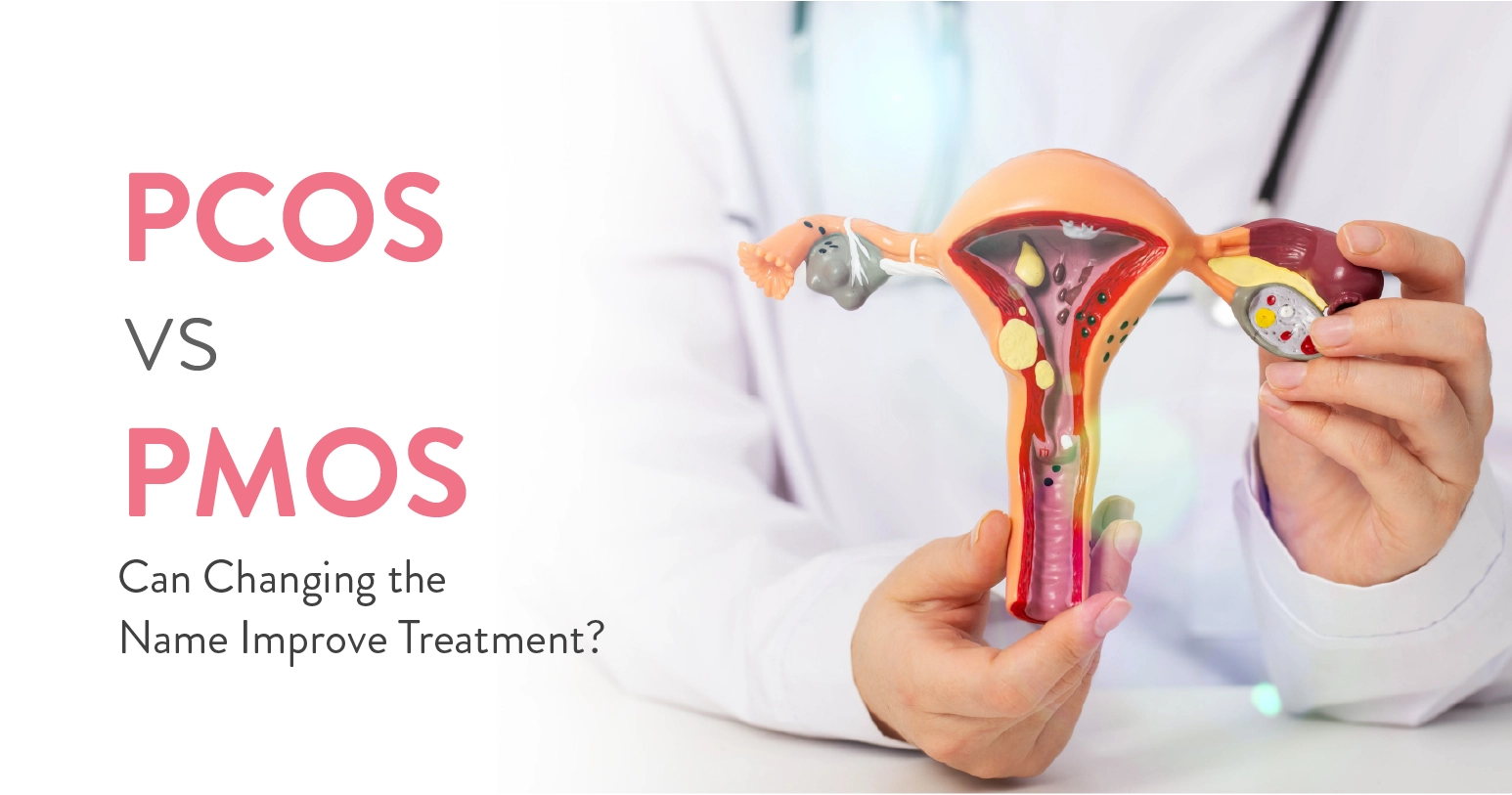
अगर आपको या आपके किसी अपने को PCOS है, तो शायद आपने कभी न कभी यह सुना होगा कि “अरे, बस ओवरी में सिस्ट है, ज्यादा कुछ नहीं।” यही वह गलतफहमी है जिसकी वजह से लाखों महिलाओं का सही इलाज देर से हुआ, सही जांच नहीं हुई और तकलीफें बढ़ती रहीं। मई 2026 में मेडिकल दुनिया ने एक बड़ा कदम उठाया। PCOS (Polycystic Ovary Syndrome) का नाम आधिकारिक रूप से बदलकर पॉलीएंडोक्राइन मेटाबॉलिक ओवेरियन सिंड्रोम या PMOS (Polyendocrine Metabolic Ovarian Syndrome) कर दिया गया है। यह महज एक अक्षर का बदलाव नहीं है; यह इस स्थिति को देखने का एक अलग नजरिया है। भारत में भी लाखों महिलाएं इस स्थिति से जूझ रही हैं और अनियमित पीरियड्स, वजन बढ़ना, बालों का झड़ना या गर्भधारण में तकलीफ को नियति मानकर चुप बैठी हैं। अगर आप भी ऐसा कुछ महसूस कर रही हैं, तो यह ब्लॉग आपके लिए है। और हां, सीके बिरला अस्पताल के अनुभवी स्त्री रोग विशेषज्ञों से आज ही अपॉइंटमेंट लें। सही जानकारी और सही इलाज से यह स्थिति पूरी तरह मैनेज की जा सकती है।
Table of Contents
यह नाम बदलाव रातों-रात नहीं हुआ। इसके पीछे 11 साल की मेहनत, 22,000 से ज्यादा लोगों की राय और 56 अंतरराष्ट्रीय संगठनों की सहमति है। चलिए इसे अलग-अलग भागों में समझते हैं –
पुराने नाम की समस्या क्या थी?
PCOS यानी “पॉलीसिस्टिक ओवरी सिंड्रोम” यानी “बहुत सारे सिस्ट” पर केंद्रित था। लेकिन सच यह है कि इस स्थिति में जो अंडाशय (ovary) पर दिखने वाले छोटे-छोटे द्रव से भरे थैले होते हैं, वे असली पैथोलॉजिकल सिस्ट (pathological cyst) नहीं होते। यह नाम पूरी बीमारी की झलक नहीं देता था। इसलिए बहुत सी महिलाओं की देर से जांच होती थी। इसके साथ-साथ डॉक्टर भी कभी-कभी इसे केवल ओवेरियन समस्या मानकर चलते थे। हार्मोनल असंतुलन (hormonal imbalance), मेटाबॉलिक समस्याएं और मानसिक स्वास्थ्य पर असर नजरअंदाज हो जाते थे। द लैंसेट में 12 मई 2026 को प्रकाशित रिसर्च में यह स्पष्ट किया गया कि पुराना नाम “वैज्ञानिक दृष्टि से गलत था और महिलाओं के इलाज में देरी का कारण बनता था, इसलिए इस नाम के नवीनीकरण की आवश्यकता पड़ी।
PMOS यानी पॉलीएंडोक्राइन मेटाबॉलिक ओवेरियन सिंड्रोम, इस नाम में तीन अहम शब्द हैं –
PMOS एक जटिल हार्मोनल और मेटाबॉलिक स्थिति है, जो मुख्य रूप से प्रजनन आयु (reproductive age) की महिलाओं को प्रभावित करती है। Endocrine Society के अनुसार, दुनिया में हर 8 में से 1 महिला, यानी 17 करोड़ से ज्यादा महिलाएं, इससे प्रभावित हैं। WHO के अनुमान के मुताबिक इनमें से करीब 70% महिलाओं को यह पता ही नहीं होती कि उन्हें यह स्थिति है। भारत में यह स्थिति तेजी से बढ़ रही है। बदलती जीवनशैली, तनाव, खान-पान और शारीरिक निष्क्रियता इसके प्रमुख कारण माने जाते हैं। यह स्थिति सिर्फ पीरियड्स की अनियमितता नहीं है। यह उससे कई बड़ी समस्या है, जो शरीर के कई हिस्सों को एक साथ प्रभावित करती है।
PMOS के लक्षण हर महिला में अलग-अलग हो सकते हैं। कुछ को बहुत कम लक्षण दिखते हैं, कुछ को एक साथ कई तकलीफें होती हैं।
अगर इनमें से दो या तीन लक्षण आपको लंबे समय से हो रहे हैं, तो देर न करें।
PMOS का कोई एक कारण नहीं है। यह कई कारकों के एक साथ मिलने से होता है –
PMOS का निदान आमतौर पर इन तीन मानदंडों (Rotterdam criteria) पर आधारित होता है, जिनमें से कम से कम दो होने पर PMOS माना जाता है:
जांच में शामिल हो सकते हैं: हार्मोन ब्लड टेस्ट (LH, FSH, testosterone, insulin, thyroid), ब्लड शुगर और ग्लूकोज टॉलरेंस टेस्ट, पेल्विक अल्ट्रासाउंड।
PMOS का कोई स्थायी इलाज नहीं है, लेकिन इसे बहुत अच्छी तरह मैनेज किया जा सकता है।
मानसिक स्वास्थ्य देखभाल: PMOS से जुड़े अवसाद और चिंता को नजरअंदाज नहीं करना चाहिए। काउंसलिंग और मनोवैज्ञानिक सहायता इलाज का अहम हिस्सा है।
CKB Hospital में हमारे विशेषज्ञ PMOS के हर पहलू पर काम करते हैं। अभी अपॉइंटमेंट बुक करें और एक व्यक्तिगत इलाज योजना पाएं।
हाँ, PMOS होने का मतलब यह नहीं कि आप माँ नहीं बन सकतीं। सही इलाज से ज्यादातर महिलाएं गर्भधारण करती हैं। जीवनशैली सुधार, ओव्यूलेशन बढ़ाने वाली दवाएं और जरूरत पड़ने पर IVF (In Vitro Fertilization – टेस्ट ट्यूब बेबी) जैसे विकल्प उपलब्ध हैं। सही समय पर सही विशेषज्ञ से मिलना सबसे जरूरी है।
PCOS से PMOS का सफर सिर्फ नाम का बदलाव नहीं है। यह उन लाखों महिलाओं के लिए एक स्वीकृति है, जो वर्षों से सुनती आई हैं कि “बस थोड़ी सी सिस्ट है।” अब दुनिया मान चुकी है कि यह एक जटिल स्थिति है, जिसे पूरी गंभीरता से लेना जरूरी है।अगर आपको या आपके परिवार में किसी को PMOS के लक्षण हैं, या आपको पहले PCOS बताया गया था, तो घबराइए नहीं। सीके बिरला अस्पताल के स्त्री रोग और एंडोक्रिनोलॉजी विशेषज्ञों से मिलें और एक विस्तृत जाँच करवाएं। सही जानकारी और सही इलाज से यह स्थिति पूरी तरह नियंत्रण में रह सकती है।
पुराना नाम PCOS सिर्फ ओवेरियन सिस्ट पर ध्यान देता था, जो भ्रामक था। PMOS नाम इस स्थिति के हार्मोनल और मेटाबॉलिक पहलुओं को सही तरीके से दर्शाता है। यह बदलाव मई 2026 में द लैंसेट में प्रकाशित हुआ।
हाँ, बिल्कुल। PCOS और PMOS एक ही स्थिति के दो नाम हैं। आपको नई जांच कराने की जरूरत नहीं। पुराना निदान और इलाज दोनों मान्य हैं।
अनियमित पीरियड्स, वजन बढ़ना, चेहरे पर अनचाहे बाल, मुंहासे, बालों का झड़ना, थकान और गर्भधारण में तकलीफ सामान्य लक्षण हैं। हर महिला में लक्षण अलग हो सकते हैं।
हाँ, सही इलाज, जीवनशैली में बदलाव और दवाओं से अधिकांश महिलाएं गर्भधारण में सफल होती हैं। जरूरत पड़ने पर IVF जैसे विकल्प भी उपलब्ध हैं।
कोई स्थायी इलाज नहीं है, लेकिन जीवनशैली सुधार, व्यायाम, खानपान में बदलाव और डॉक्टरी दवाओं से इसे अच्छी तरह मैनेज किया जा सकता है।
मुख्य रूप से हाँ। हालांकि कुछ शोधकर्ता यह मानते हैं कि इसका एक रूप पुरुषों में भी हो सकता है, लेकिन यह अभी शोध के शुरुआती चरण में है।
भारत में करीब 10 से 20% प्रजनन आयु की महिलाएं इससे प्रभावित हैं। शहरी महिलाओं में यह दर अधिक देखी जाती है।
An assumption that stroke only happens to people in their 60s or 70s is one of the most dangerous misconceptions in modern health today. The reality is concerning! Strokes are happening to younger adults at an increasing rate, and the warning signs are being missed because no one expects them. A stroke happens when blood supply to a part of the brain is suddenly interrupted, either because a blood vessel gets blocked or because a blood vessel ruptures and bleeds into the brain. When brain cells do not get enough oxygen-rich blood, they begin to die within minutes, which makes this condition more time crucial and life threatening.
In older adults, the causes like weak arteries due to aging are fairly well understood. But in young people, the condition is more complex.Here are the most common causes of stroke in young adults that doctors are seeing today:
Table of Contents
The challenge with stroke in young adults is that it is almost always unexpected. A healthy seeming person is the last person anyone would suspect of having a stroke. This leads to delays in seeking care.
A simple and reliable tool for recognising a stroke quickly is the FAST acronym.
If you notice any of these signs, call for help immediately. Do not wait to see if it passes.
Apart from the FAST signs, there are other stroke symptoms that younger adults may experience:
These symptoms can sometimes show briefly and resolve within minutes, in what is called a Transient Ischemic Attack or TIA, also known as a ‘mini-stroke.’
Some risk factors are unique to or more common in younger adults, and they go unrecognised until a stroke actually occurs.
Time is the single most critical factor in stroke results. Brain cells begin to die within minutes of losing blood supply, and every minute without treatment can cause lasting damage.
If you or someone around you shows any stroke symptoms, here is what to do:
The majority of strokes are preventable, and when caught early, treatment results for younger adults are more likely to be better than for older patients.
Prevention, however, remains the most powerful strategy.
Medical emergencies like stroke are also affecting younger people who are at the height of their careers and family lives and it is doing so at a time when they have the most to lose. However, most strokes are preventable, and when they do occur, early action can save your life.
At the CK Birla Hospital, our expert team of neurologists and stroke specialists is committed to providing overall care for patients of all ages. If you have any doubt, book a consultation with our neurology team today.
What is the most common cause of stroke in young adults?
The most common causes are high blood pressure, cardiac conditions, blood clotting disorders, arterial dissection, and diabetes.
Can a person in their 20s or 30s have a stroke?
Yes. The overall risk is lower than in older adults, strokes do occur in people as young as their teens and twenties. Undiagnosed hypertension, heart abnormalities, and clotting disorders can all cause stroke even in seemingly healthy young people.
How is stroke in young age different from stroke in older people?
Stroke in younger adults has different underlying causes such as arterial dissection, clotting disorders, or genetic factors, compared to older adults where hardening of arteries is the dominant factor. Symptoms can also be intermittent, making them easier to dismiss.
What are the early warning signs of stroke in young adults that are often ignored?
Signs that frequently get dismissed are sudden numbness or tingling on one side of the body, a brief episode of slurred speech, sudden vision changes, dizziness, and a severe headache. Many young adults attribute these to stress, migraine, or exhaustion.
Can stroke in young age be prevented with lifestyle changes?
The majority of stroke risk factors can be managed with positive lifestyle changes. Regular monitoring of blood pressure and blood sugar, a healthy diet, consistent physical activity, quitting smoking, limiting alcohol, and managing stress can reduce risk. For those with specific medical risk factors, medication and close followup with a doctor provide an additional essential layer of protection.
Have you also been hearing about people as young as their 30s or 40s collapsing due to a heart attack? This is no rare story. Earlier, medical emergencies like heart attacks were largely seen in older people, but in recent years, heart problems are increasingly common in young adults.
When these problems are rising so rapidly, we cannot ignore them. To protect yourself, it is very important to be aware of why such cases are increasing. Knowing the early signs, understanding the causes, and acting in time could really be life-saving for you or someone you love. Read on to find out more.
Table of Contents
Let’s first understand what a heart attack actually is.
A heart attack (medically known as a myocardial infarction) occurs when the flow of oxygen-rich blood to part of the heart muscle is suddenly blocked, usually by a blood clot in a coronary artery. If not treated promptly, the affected heart muscle can be damaged or die due to a lack of blood supply, leading to permanent heart damage.
For decades, cardiovascular disease was thought to be a condition that mainly affected older people. Today, however, more and more younger adults are being affected by it too.
Research presented at the American College of Cardiology found a worrying trend. The proportion of heart attacks occurring in adults aged 40 and younger increased by about 2% each year over the last decade of a 16-year study.
In India, the situation is equally sobering. Data from the Indian Heart Association shows that half of all heart attacks in Indian men occur before the age of 50, and a quarter before the age of 40.
To understand the cause of heart attack at a young age requires looking at both inherited and lifestyle factors.
They are the most powerful contributors. These conditions slowly damage the walls of arteries over years.
Excess body weight puts sustained strain on the heart. This raises blood pressure, and worsens cholesterol profiles, all of which increase heart attack risk.
Tobacco damages blood vessels and accelerates the buildup of plaque, which is the fatty deposits inside arteries.
If a close family member experienced a heart attack before the age of 55, your own risk increases considerably. Inherited conditions such as familial hypercholesterolaemia, which is a genetic disorder that causes dangerously high cholesterol levels from birth, can affect arterial blockages.
Stress affects the release of hormones like cortisol and adrenaline that, over time, raise blood pressure and cause inflammation in the arteries. Studies increasingly show a strong connection between anxiety, depression, and heart disease risk in younger populations.
Hours spent sitting at desks, in front of screens combined with diets high in processed foods, trans fats, and sodium create the environment for early cardiovascular disease.
One of the reasons heart attacks in young people are so dangerous is that the warning signs can be easy to dismiss or misattribute to something else like stress, acid reflux, muscle strain, or fatigue.
Here are the common symptoms you should never ignore:
It is important to note that women and younger adults may sometimes experience atypical heart attack symptoms. The crushing chest pain may be absent. Instead, symptoms such as nausea, jaw pain, shortness of breath, or overwhelming fatigue may be the primary signs. Do not wait to see if the symptoms pass. Seek emergency medical care immediately.
Modern life has made it easier to live in ways that gradually damage your heart. Long work hours, stressful environments, poor sleep, convenience food, and digital sedentariness are the new normal.
Sleep deprivation is an overlooked risk factor. Consistently sleeping fewer than 6 hours a night has been linked to higher rates of hypertension, inflammation, and heart disease.
Consuming too much alcohol raises blood pressure and can affect abnormal heart rhythms called arrhythmias.
Mental load may not be a traditional risk factor but it contributes to chronic stress that keeps the body’s fight or flight system activated far longer than it was designed to be.
The concerning part is that these habits generally start in the 20s and 30s.
The choices made in your 20s, 30s, and 40s decide your health. The rising cases of heart attack in young adults is a wake up call. If you have been experiencing any unusual symptoms, have a family history of heart disease, or simply want to understand your cardiac risk better, do not delay and consult with the healthcare specialist.
The CK Birla Hospital has a team of experienced cardiologists and cardiac specialists who provide comprehensive heart care. You can book a consultation with our Cardiology team to assess your risk, discuss your symptoms, and take charge of your heart health before it becomes an emergency
“Why do I have a headache every day?”
It is one of the most common health questions people search online. If you experience headaches every day or find yourself searching for reasons for frequent headaches more and more often, this article is for you.
We will walk you through the most common causes of constant headaches, help you recognise warning signs that need medical attention, and explain when it is time to see a specialist.
Table of Contents
For millions of people, headaches are something they have to deal with daily, something they try to push through with a glass of water and a painkiller.
Most recurring headaches are not dangerous. They are, however, a sign from your body asking for medical attention.
Here are the most common causes of constant headaches:
You first need to identify your personal triggers if you want to manage the recurring headaches.
Doctors classify them broadly as primary headaches (which are the condition themselves) and secondary headaches (which are symptoms of something else).
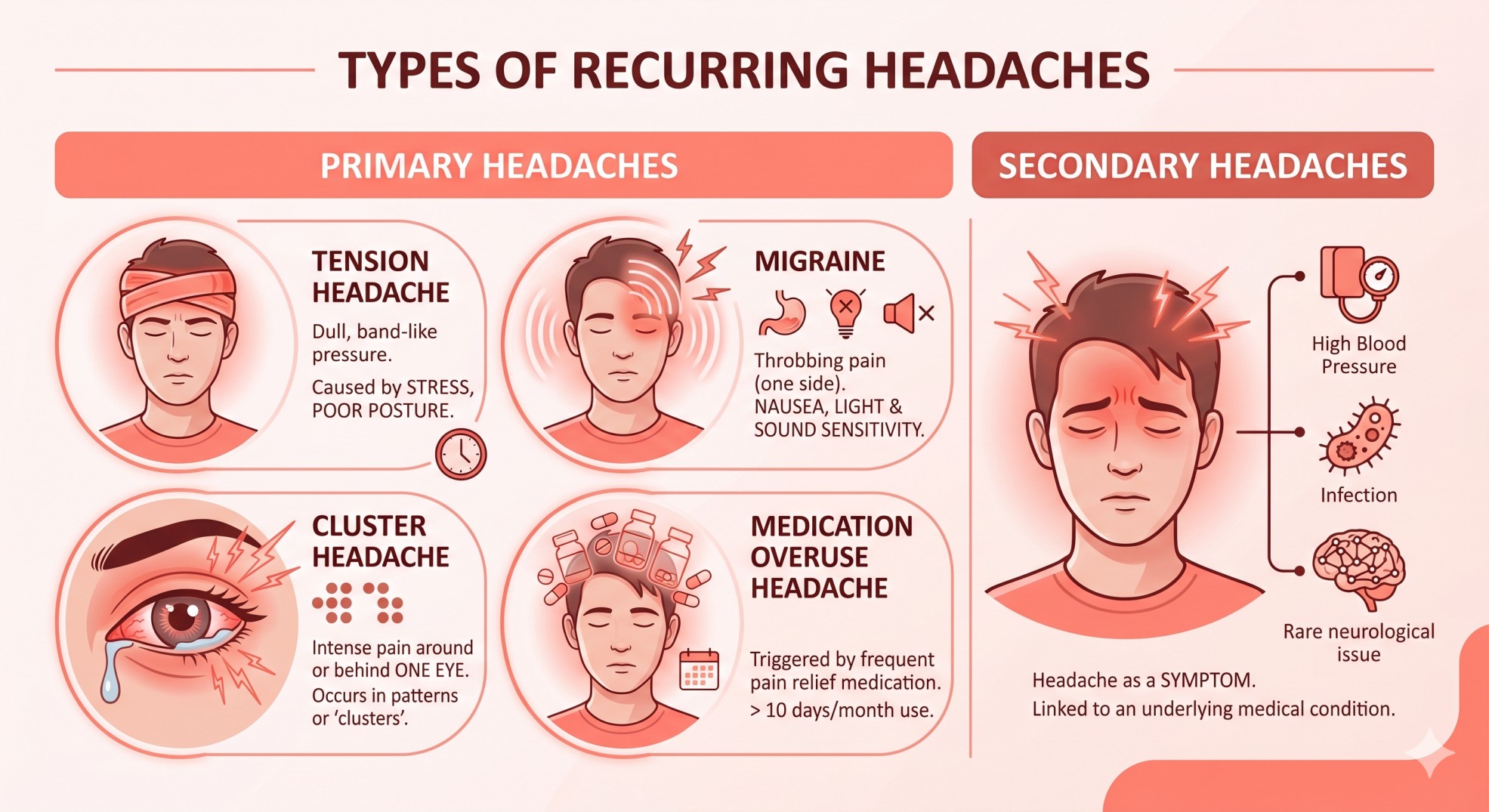
Here is what each common type looks like:
The vast majority of daily headaches are linked to common lifestyle factors. However, a small but important number may be red-flag headaches that require urgent medical attention.
You should seek medical help timely if:
You must be wondering at what point does a recurring headache stop being “just a headache”. Do not delay seeing a doctor if you experience any of these signs:
Most recurring headaches respond very well to the right treatment and lifestyle changes.
The right treatment depends on the type and pattern of your headaches which is exactly why a specialist assessment is important.
Frequent headaches are one of the most common health complaints, but that does not mean they should simply be taken lightly. In most cases, the reasons for headaches every day are treatable lifestyle factors. But some headaches do point to something more serious. If you are experiencing any of the red flag symptoms described in this article, do not delay consulting a healthcare specialist.
Our team of experienced neurologists at the CK Birla Hospital provides comprehensive care for all types of headache disorders. You can simply reach out to us or book a consultation to get the expert advice.
Have you also been hearing about people as young as their 30s or 40s collapsing due to a heart attack? This is no rare story. Earlier, medical emergencies like heart attacks were largely seen in older people, but in recent years, heart problems are increasingly common in young adults.
When these problems are rising so rapidly, we cannot ignore them. To protect yourself, it is very important to be aware of why such cases are increasing. Knowing the early signs, understanding the causes, and acting in time could really be life-saving for you or someone you love. Read on to find out more.
Table of Contents
Let’s first understand what a heart attack actually is.
A heart attack (medically known as a myocardial infarction) occurs when the flow of oxygen-rich blood to part of the heart muscle is suddenly blocked, usually by a blood clot in a coronary artery. If not treated promptly, the affected heart muscle can be damaged or die due to a lack of blood supply, leading to permanent heart damage.
For decades, cardiovascular disease was thought to be a condition that mainly affected older people. Today, however, more and more younger adults are being affected by it too.
Research presented at the American College of Cardiology found a worrying trend. The proportion of heart attacks occurring in adults aged 40 and younger increased by about 2% each year over the last decade of a 16-year study.
In India, the situation is equally sobering. Data from the Indian Heart Association shows that half of all heart attacks in Indian men occur before the age of 50, and a quarter before the age of 40.
To understand the cause of heart attack at young age requires looking at both inherited and lifestyle factors.
Metabolic Conditions
They are the most powerful contributors. These conditions slowly damage the walls of arteries over years.
Here are the common symptoms you should never ignore:
It is important to note that women and younger adults may sometimes experience atypical heart attack symptoms. The crushing chest pain may be absent. Instead, symptoms such as nausea, jaw pain, shortness of breath, or overwhelming fatigue may be the primary signs. Do not wait to see if the symptoms pass. Seek emergency medical care immediately.
Modern life has made it easier to live in ways that gradually damage your heart. Long work hours, stressful environments, poor sleep, convenience food, and digital sedentariness are the new normal.
Sleep deprivation is an overlooked risk factor. Consistently sleeping fewer than 6 hours a night has been linked to higher rates of hypertension, inflammation, and heart disease.
Consuming too much alcohol raises blood pressure and can affect abnormal heart rhythms called arrhythmias.
Mental load may not be a traditional risk factor but it contributes to chronic stress that keeps the body’s fight or flight system activated far longer than it was designed to be.
The concerning part is that these habits generally start in the 20s and 30s.
Prevention can actually help from this life threatening condition, and the earlier you start, the better the result.
The CK Birla Hospital has a team of experienced cardiologists and cardiac specialists who provide comprehensive heart care. You can book a consultation with our Cardiology team to assess your risk, discuss your symptoms, and take charge of your heart health before it becomes an emergency.
What is the most common reason for a heart attack at a young age?
The most common reasons for a heart attack at a young age are high blood pressure, high cholesterol, type 2 diabetes, obesity, smoking, a sedentary lifestyle, stress and family history of heart disease.
What are the early warning symptoms of heart attack in young adults?
Early warning signs are chest pain or pressure, shortness of breath, pain spreading to the jaw, neck, left arm, or back, nausea, cold sweats, dizziness, and unusual fatigue. Any of these symptoms warrant immediate medical attention.
Can teenagers have heart attacks, and what causes them?
Serious coronary heart attacks are very rare in teenagers. However, teenagers can experience sudden cardiac arrest which is an abrupt stopping of the heart. It is often due to undiagnosed conditions such as hypertrophic cardiomyopathy, congenital heart defects, or electrical rhythm disorders. Lifestyle factors such as drug use, obesity, and physical inactivity can also increase risk over time.
How is a heart attack in young adults different from one in older people?
In younger adults, heart attacks are usually caused by sudden plaque rupture rather than the slow, progressive narrowing of arteries more common in older people. Younger patients may recover better if treated timely.
Can heart attacks at a young age be prevented through lifestyle changes?
Yes. The majority of heart attack risk factors in young adults including high blood pressure, obesity, inactivity, smoking, poor diet, and unmanaged stress are manageable. Regular health checkups, physical activity, a balanced diet, and avoiding tobacco can reduce risk. Starting these habits in your 20s and 30s provides the greatest long-term cardiovascular benefit.
Have you ever found yourself scratching your arms, legs, or back repeatedly and wondering, “Why is my body itchy all the time?” Occasional itching is common, but itchy skin that refuses to go away may be a sign that it is time to seek medical attention.
For many people, an itching problem can be due to dry skin, seasonal changes, or an allergic reaction. However, in some cases, when your whole body feels itchy may be connected to underlying health conditions. In this blog, let’s walk through the causes of body itching that can help you recognize when simple selfcare may be enough and when it is time to go to a doctor.
Table of Contents
The medical term for itchy skin is pruritus. It refers to an uncomfortable sensation that makes you want to scratch.
It can affect a small area or involve the entire body. It may irritate you with redness, bumps, or a rash, but sometimes the skin looks completely normal.
Your skin contains specialized nerve endings that react to irritation, dryness, inflammation, or certain chemicals released by the body. When these nerves are triggered, they send signals to the brain, creating the urge to scratch.
Although scratching may provide temporary relief, excessive scratching can damage the skin, worsen inflammation that can frustrate you.
Most itchy skin causes are not serious. Some of the most common reasons are:
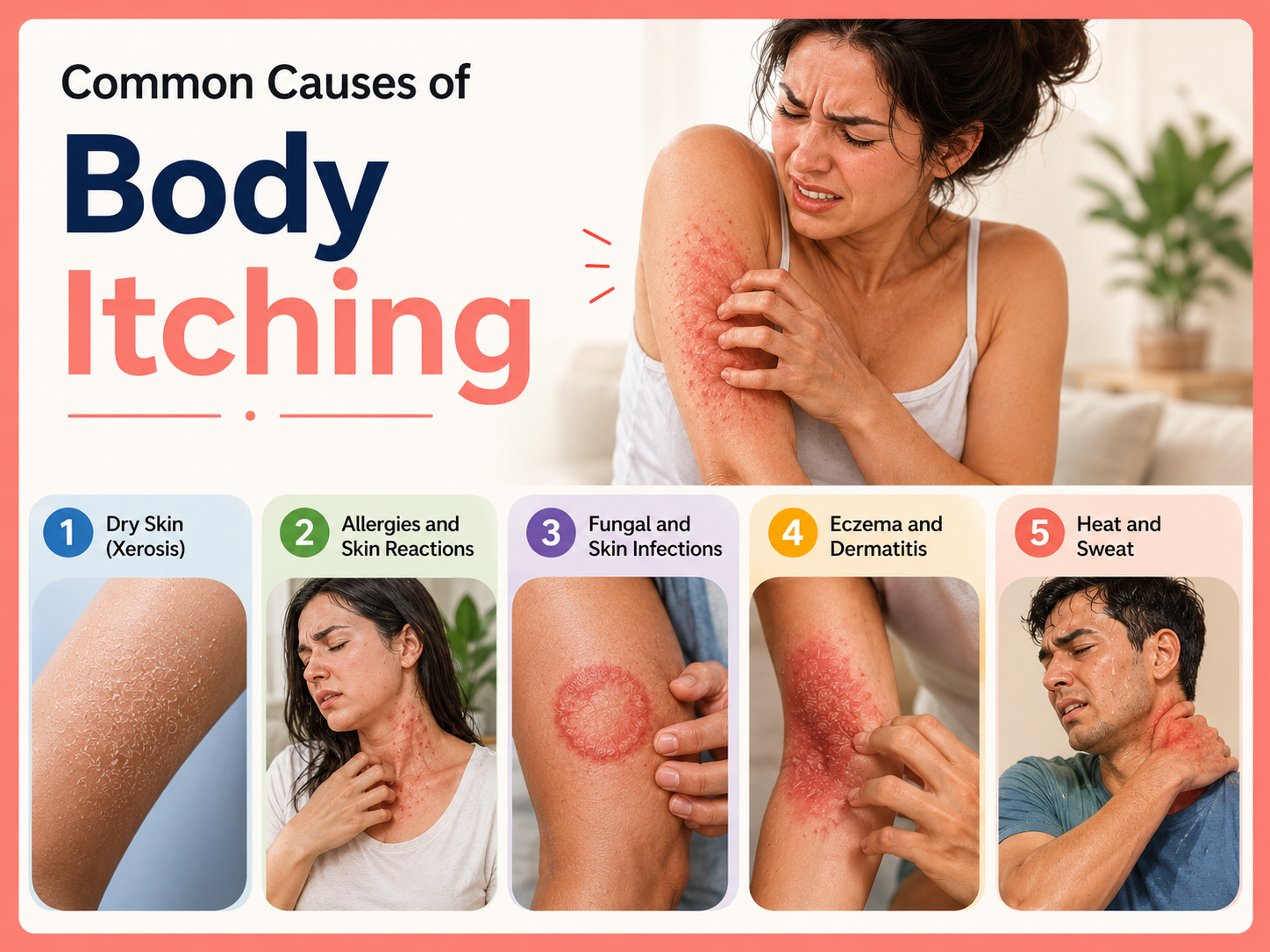
It is one of the major reasons for this condition, especially during winter or in air conditioned environments. Aging can also reduce the skin’s natural moisture levels. Its common signs are:
An itchy skin allergy occurs when the immune system reacts to a substance that it considers harmful. Some possible factors that can cause skin allergies are:
Eczema and dermatitis are inflammatory skin conditions that frequently cause itching, redness, and irritation. These conditions can flare up due to stress, allergens, weather changes, or skin sensitivity.
Certain fungal infections, bacterial infections, and parasitic conditions can also lead to itchy skin. These produce visible changes such as redness, scaling, or small bumps.
Excessive sweating can block sweat glands and irritate the skin, leading to itching, especially in hot and humid climates.
One of the most confusing situations is experiencing a whole body itching with no rash. Many people assume that itching must always be caused by a skin problem, but this is not always true. Sometimes, the skin looks completely normal, but the itching originates from internal changes within the body.
The following points highlights some possible causes:
This is why persistent whole body itching should not always be dismissed as a simple skin issue.
Most cases of itchy skin improve with moisturisers and basic skincare. However, certain symptoms need your serious attention.
You should consider seeing a skin specialist if:
These signs do not necessarily mean something serious is happening with your body, but they do indicate that a proper evaluation is worthwhile. A dermatologist can help identify the reason for itching in whole body areas through a detailed examination, medical history review, and, if necessary, blood tests or allergy testing.
When you know the reasons behind your itchy skin, you can prevent it from getting more serious. If you are experiencing full body itching, or recurring itchy skin allergy symptoms, speaking with a skin specialist can help you choose the right course of action.
At the CK Birla Hospital, experienced dermatologists can help you identify the root cause of persistent itching and guide you toward effective treatment, so you can feel comfortable in your skin again.

It is difficult to imagine losing a part of your body. For many women diagnosed with breast cancer, the thought of breast removal can bring fear, uncertainty, and countless questions about life after surgery.However, breast removal is no longer the default treatment for every breast cancer diagnosis. Due to advances in medical science, multiple treatment options are available today, depending on the type of cancer and a person’s overall health.
Table of Contents
All breast cancer cases are not the same, which is why the treatment plans and surgical options also differ. Your oncology team looks at the whole picture before recommending anything. The breast oncologists will evaluate:
Size and location of the tumour in the breast
Breast cancer is now the most commonly diagnosed cancer worldwide, accounting for roughly 1 in 8 can cer diagnoses globally according to the WHO. With increasing early detection through screening programmes, a growing proportion of patients are being diagnosed at earlier stages, which is exactly where breast conserving surgery becomes most viable.
A lumpectomy removes the tumour plus a small margin of healthy tissue around it, leaving the rest of the breast intact. It is generally followed by a course of radiation therapy to reduce the risk of cancer returning in the remaining tissue. Lumpectomy followed by radiation therapy has been shown to be as effective as mastectomy (full breast removal) for many early stage breast cancers.
Breast conserving surgery tends to be suitable when:
Beyond lumpectomy, there is also a more advanced approach called oncoplastic surgery. It combines tumour removal with reconstructive plastic surgery techniques, performed either at the same time as tumour removal or shortly after.
It allows surgeons to remove more tissues if needed, while reshaping the breast in a way that preserves its natural look. This means patients can have comprehensive cancer treatment without the cosmetic and emotional impact that used to be unavoidable.
Even with all this progress in surgical medicine, some outdated ideas and beliefs continue to circulate. Let’s debunk a few directly.
Myth 1 – “Mastectomy is always safer than lumpectomy. ”It is not always true for most early stage cases. Research consistently shows that lumpectomy along with the radiation therapy offers equivalent survival results for Stage I and Stage II breast cancer. The National Cancer Institute (NCI) confirms this.
Myth 2 – “If I keep my breast, the cancer is more likely to come back.” The risk of local recurrence after lumpectomy is real but it is low, generally around 1 to 2% per year. Your specialist will go through your individual risk profile with you.
Myth 3 – “I can choose mastectomy even if I don’t need it, just to feel safer.” For early stage cancers, removing the entire breast does not automatically improve the survival compared to lumpectomy. A decision to undergo mastectomy should be made thoughtfully, with full information and in consultation with your oncologist and medical team
Myth 4: “Surgery is the only treatment involved.” Surgery is usually one part of a broader treatment plan. Your treatment may also involve chemotherapy, radiation, hormone therapy, or targeted therapy. There are some medical situations where a mastectomy, which means removal of the entire breast, is the most recommended option. These conditions can be:
There are some medical situations where a mastectomy, which means removal of the entire breast, is the most recommended option. These conditions can be:
After a lumpectomy, most patients return home the same day or within 24 hours. Soreness and mild swelling are common for a few weeks, and most women resume light activities within one to two weeks. Radiation therapy usually begins a few weeks after surgery.
After a mastectomy, the hospital stay is usually one to three days. Recovery may take longer, generally four to six weeks for the incision to heal and if reconstruction has been done, the overall recovery timeline may extend further.
Physiotherapy and guided arm exercises are recommended to restore range of motion.
Emotional recovery is equally important and equally valid.
The psychological impact of breast cancer surgery including changes in body image and self-esteem is very important for many women.
Modern surgical options have made it possible for many women to treat cancer effectively while preserving what matters to them, physically, emotionally, and personally.
If you or a loved one is navigating this journey, the most important thing is getting good information and the right medical care that you can trust. Our dedicated ‘Breast Centre’ at the CK Birla Hospital brings together experienced oncological surgeons, oncoplastic specialists, and a full multidisciplinary team. You are welcome to call or book a consultation whenever you need advice.
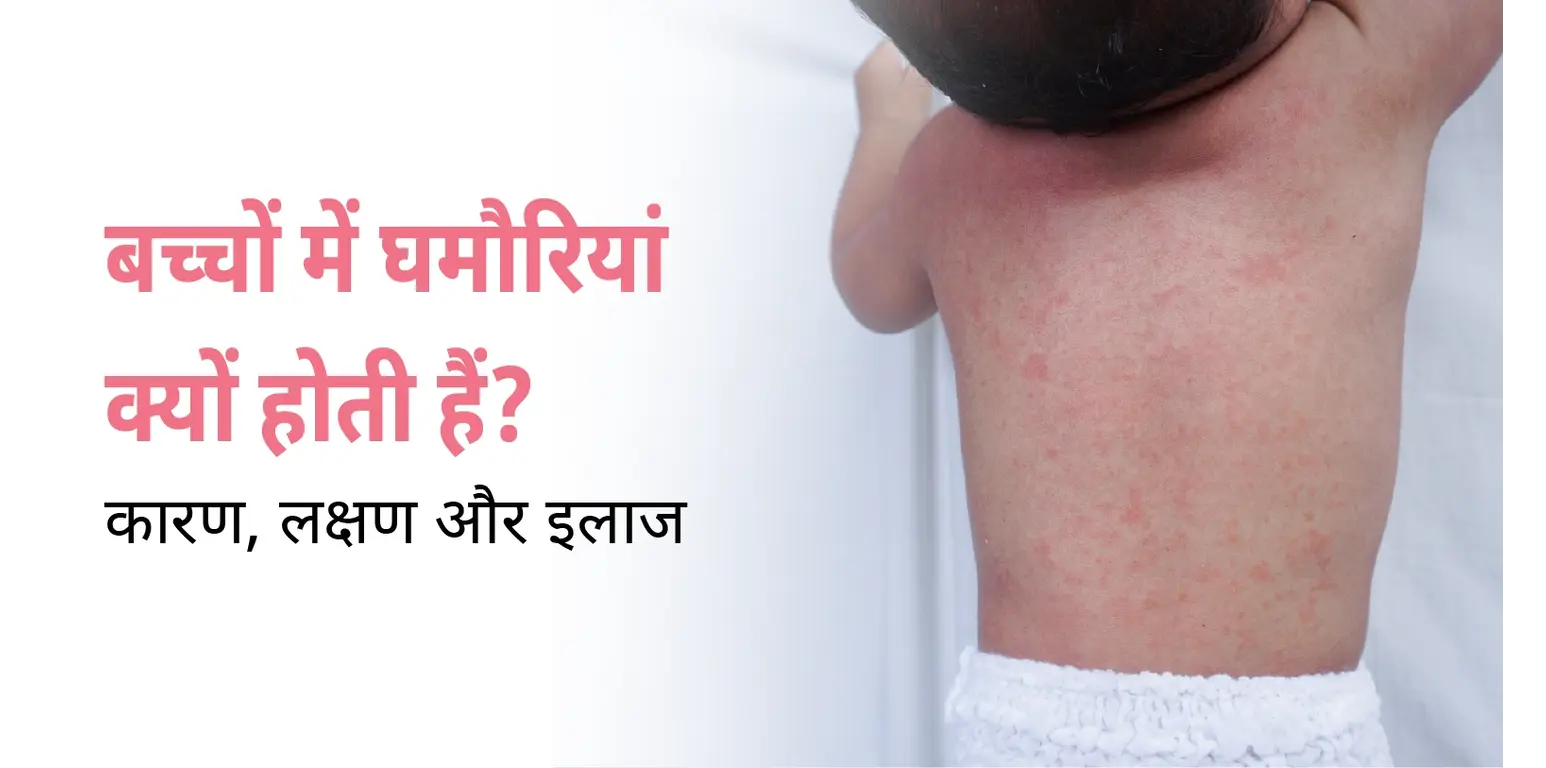
जब तपती दोपहर में आपका बच्चा अचानक चिड़चिड़ा होने लगे और उसकी मखमली त्वचा पर लाल-लाल दाने उभर आए, तो एक मां के दिल पर क्या गुजरती है, यह कोई नहीं समझ सकता। गर्मी का मौसम खुशियों के साथ-साथ बच्चों के लिए ‘हीट रैश’ की चुनौती भी लाता है।
छोटे बच्चे अपनी तकलीफ बोलकर नहीं बता सकते, वे सिर्फ रोकर अपनी बेचैनी जाहिर करते हैं। बच्चों में घमौरियाँ होना एक आम समस्या लग सकती है, लेकिन अगर सही समय पर घमौरियों का इलाज न किया जाए, तो यह त्वचा के गंभीर संक्रमण का रूप ले सकती है। सीके बिरला अस्पताल में हम आपकी इसी चिंता को समझते हैं और चाहते हैं कि आपका बच्चा गर्मी में भी खिलखिलाता रहे।
Table of Contents
वैज्ञानिक भाषा में घमौरियों को ‘मिलियारिया’ (Miliaria) कहा जाता है। सरल शब्दों में कहा जाए, तो जब त्वचा के रोम छिद्र बंद हो जाते हैं और पसीना बाहर नहीं निकल पाता, तो वह त्वचा के नीचे जमा होने लगता है। इससे छोटे-छोटे लाल दाने या फफोले बन जाते हैं, जिनमें तेज खुजली और चुभन होती है, जिसे घमौरियाँ कहा जाता है।
हम घमौरियाँ को एक गंभीर समस्या की श्रेणी में रखते हैं क्योंकि एक हालिया स्वास्थ्य सर्वे के अनुसार, गर्मी के महीनों में पीडियाट्रिक डर्मेटोलॉजी (बच्चों के त्वचा रोग) के ओपीडी में आने वाले 35% से 40% मामले हीट रैश और घमौरियों से संबंधित होते हैं। चूँकि बच्चों की त्वचा वयस्कों की तुलना में बहुत पतली और संवेदनशील होती है, इसलिए बच्चों में हीट रैश बहुत जल्दी और गहराई से असर करते हैं।
ये भी पढ़े: गर्मियों में त्वचा को सुरक्षित रखने के आसान तरीके
अक्सर माता-पिता पूछते हैं कि गर्मी में घमौरियाँ क्यों होती हैं? इसके पीछे कई शारीरिक और वातावरणीय कारण हैं –
ये भी पढ़े: जानें बार बार खुजली होने के कारण और उपाय
घमौरियाँ के लक्षण सिर्फ लाल दाने नहीं हैं, बल्कि यह बच्चे के व्यवहार में भी दिखते हैं –
ये भी पढ़े: बच्चों में खसरा क्यों होता है? जानिए कारण और बचाव के तरीके
हर घमौरी एक जैसी नहीं होती। विशेषज्ञों के अनुसार इन्हें तीन भागों में बांटा जा सकता है:
ये भी पढ़े: अनानास के फायदे, नुकसान, पोषक तत्त्व और खाने का सही तरीका
अगर आप सोच रहे हैं कि बच्चों में घमौरियाँ कैसे ठीक करें, तो सीके बिरला अस्पताल के विशेषज्ञ इन उपायों की सलाह देते हैं –
ये भी पढ़े: बदलते मौसम में बीमारियों से बचने के आसान टिप्स
घमौरियाँ का घरेलू इलाज अक्सर सबसे कारगर साबित होता है क्योंकि इसमें रसायन (Chemicals) नहीं होते। इसके लिए आप निम्न उपायों को अपना सकते हैं, जो हमारी दादी और नानी के द्वारा प्रमाणित भी होते हैं –
ये भी पढ़े: गर्मियों में सत्तू क्यों पीना चाहिए? जानिए 10 जबरदस्त फायदे
इस टेबल की मदद से समझते हैं कि आपको इस गर्मी में अपने बच्चे को गर्मी से बचाने के लिए क्या करना चाहिए और क्या नहीं करना चाहिए –
| क्या करें (Dos) | क्या न करें (Don’ts) |
| ठंडक का ध्यान: बच्चे को हमेशा छायादार और ठंडी जगह पर ही रखें। | धूप से बचाव: तेज धूप और गर्मी में बच्चे को बाहर ले जाने से पूरी तरह बचें। |
| हवा का प्रबंध: सोते समय पंखे या कूलर की हवा का उचित प्रबंध रखें, लेकिन ध्यान रहे कि सीधी हवा बच्चे को न लगे। | भारी क्रीम/तेल: घमौरियों वाली जगह पर गाढ़ा तेल, लोशन या पेट्रोलियम जेली न लगाएं, क्योंकि इससे रोमछिद्र बंद हो जाते हैं। |
| नाखूनों की सफाई: बच्चे के नाखून हमेशा काटकर रखें ताकि खुजलाने पर त्वचा पर घाव या इंफेक्शन न हो। | असुरक्षित लेप: घमौरियों पर दालचीनी, मिर्च या अन्य गर्म तासीर वाली चीजों का लेप भूलकर भी न लगाएं। |
सीके बिरला अस्पताल के आंकड़े बताते हैं कि उचित सावधानी और शुरुआती उपचार से 90% बच्चों में घमौरियाँ 3 से 4 दिनों के भीतर ठीक हो जाती हैं।
ये भी पढ़े: क्या रोज़ाना पपीता खा सकते है। इसके फायदे, नुकसान और पोषक तत्त्व।
घमौरियाँ से छुटकारा कैसे पाएं, उससे बेहतर है कि उन्हें होने ही न दिया जाए। नीचे कुछ टिप्स दिए गए हैं, जिनका पालन करने से आपको बहुत लाभ मिल सकता है –
ये भी पढ़े: क्या सामान्य ज़ुकाम, खांसी या ठंड निमोनिया में बदल सकती है
यदि आपको नीचे बताए गए लक्षण अपने बच्चे में महसूस होते हैं, तो बिना देर किए हमारे अनुभवी विशेषज्ञों से मिलें और अपने बच्चे के लिए परामर्श लें –
यह लक्षण सेकेंडरी बैक्टीरियल इन्फेक्शन के हैं। ऐसे में बच्चों की घमौरियाँ का इलाज विशेषज्ञ डॉक्टर से ही कराना चाहिए।
ये भी पढ़े: संतुलित आहार (7-दिन का संतुलित आहार चार्ट)
बच्चों की त्वचा उनकी मुस्कान जैसी ही नाजुक होती है। घमौरियाँ होना भले ही एक सामान्य मौसमी समस्या हो, लेकिन बच्चे के लिए यह बहुत कष्टदायक होती है। सही जानकारी और सतर्कता के साथ आप अपने नन्हे-मुन्ने को इस जलन से बचा सकते हैं। याद रखें, एक ठंडा और खुशहाल बच्चा ही स्वस्थ विकास की ओर बढ़ता है।
ये भी पढ़े: इन्फ्लूएंजा और मौसमी फ्लू से बचाव के उपाय
क्या घमौरियाँ संक्रामक (छूत) होती हैं?
नहीं, घमौरियाँ बिल्कुल भी संक्रामक नहीं होती हैं। यह एक व्यक्ति से दूसरे व्यक्ति में नहीं फैलतीं क्योंकि यह पसीने की ग्रंथियों के बंद होने के कारण होती हैं, न कि किसी वायरस या बैक्टीरिया से।
क्या घमौरियों में पाउडर लगाना सही है?
घमौरियों में पाउडर का उपयोग सावधानी से करना चाहिए। खुशबूदार पाउडर के बजाय मेडिकेटेड डस्टिंग पाउडर बेहतर है। पाउडर की बहुत मोटी परत न लगाएं, क्योंकि यह पसीने के छिद्रों को और ज्यादा बंद कर सकती है।
क्या घमौरियों में साबुन का इस्तेमाल करना चाहिए?
नहाते समय हल्के, सुगंध-रहित और पीच (pH) बैलेंस वाले साबुन का उपयोग करें। ज्यादा स्क्रब करने वाले या कठोर एंटी-बैक्टीरियल साबुन से बचें, क्योंकि वे त्वचा को और ज्यादा इरिटेट कर सकते हैं।
क्या नारियल तेल घमौरियों में फायदेमंद है?
नारियल तेल में एंटी-बैक्टीरियल गुण होते हैं, लेकिन घमौरियों की शुरुआती अवस्था में तेल लगाने से बचें क्योंकि यह रोमछिद्रों को ब्लॉक कर सकता है। जब दाने सूखने लगे, तब हल्का नारियल तेल लगाया जा सकता है।
क्या डायपर पहनने से घमौरियाँ बढ़ सकती हैं?
हाँ, डायपर के अंदर नमी और गर्मी के कारण घमौरियाँ और ‘डायपर रैश’ बढ़ सकते हैं। गर्मियों में कोशिश करें कि बच्चे को कॉटन की लंगोट पहनाएं या डायपर को बार-बार बदलें और बीच-बीच में ‘डायपर-फ्री’ समय दें।

