Filter :
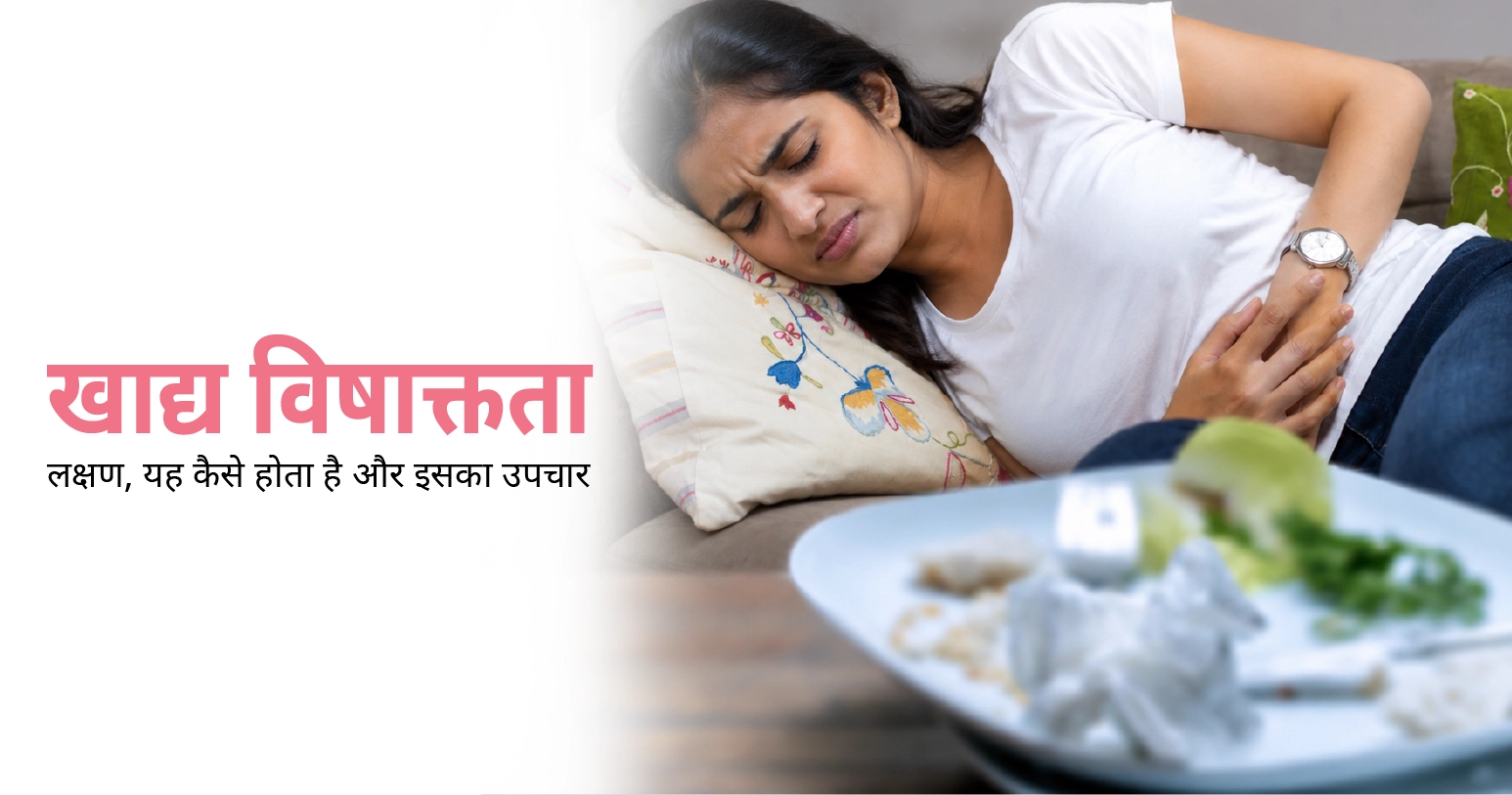
क्या रात में पार्टी के बाद सुबह आपके पेट में मरोड़, उल्टी, कमजोरी हो रही है और इससे आपका पूरा दिन बर्बाद हो रहा है? यदि आपको अपने जीवन में कभी न कभी ऐसा महसूस हुआ है, तो ये एक विचार करने वाली बात है, क्योंकि ये फूड पॉइजनिंग का संकेत हो सकता है। पहली नजर में फूड पॉइजनिंग यानी खाद्य विषाक्तता कोई गंभीर बीमारी नहीं लगती, लेकिन सही जानकारी न हो तो यह आपको कई दिनों तक तकलीफ में रख सकती है।भारत में हर साल लाखों लोग दूषित खाने और पानी की वजह से बीमार पड़ते हैं। गर्मी और बरसात के मौसम में यह समस्या और भी बढ़ जाती है। बच्चे, बुजुर्ग और कमज़ोर रोग प्रतिरोधक क्षमता वाले लोग इसके सबसे ज्यादा शिकार बनते हैं।इस ब्लॉग में हम आपको फूड पॉइजनिंग के बारे में वह सब कुछ बताएंगे, जो आपको जानना चाहिए। अगर आप या आपके परिवार में कोई इसके लक्षण महसूस कर रहा है, तो देर न करें। सीके बिरला अस्पताल के अनुभवी डॉक्टरों से अभी अपॉइंटमेंट बुक करें।
Table of Contents
फूड पॉइजनिंग तब होती है, जब आप ऐसा भोजन का सेवन करते हैं, जिसमें हानिकारक बैक्टीरिया, वायरस, परजीवी (पैरासाइट) या जहरीले रसायन मौजूद हों। जब ये नुकसानदायक तत्व आपके शरीर में पहुँचते हैं, तो आपका पाचन तंत्र उन्हें बाहर निकालने की लगातार कोशिश करता है, और यही कोशिश उल्टी और दस्त के रूप में सामने आती है।दुनियाभर में 250 से भी अधिक प्रकार की फूड पॉइजनिंग दर्ज की गई हैं। यह किसी भी उम्र में, किसी को भी हो सकती है। अच्छी बात यह है कि ज्यादातर मामलों में यह 1 से 2 दिन में अपने आप ठीक हो जाती है, बशर्ते शरीर में पानी की कमी न हो।
खाद्य विषाक्तता के कारणों को समझना इसे रोकने का सबसे पहला कदम है। खाना कई तरीकों से दूषित हो सकता है जैसे कि –
बैक्टीरिया (जीवाणु): यह सबसे आम कारण है।
वायरस: नोरोवायरस और हेपेटाइटिस A जैसे वायरस भी खाद्य संक्रमण की बड़ी वजह हैं। नोरोवायरस अक्सर कच्ची सब्जियों, फलों और समुद्री खाने से फैलता है।
परजीवी (पैरासाइट): जियार्डिया जैसे परजीवी दूषित पानी और कच्चे खाने से शरीर में पहुँचते हैं और आपको परेशान कर सकते हैं।
इसके अतिरिक्त भी कई कारण हैं, जिनसे फूड पॉइजनिंग की समस्या हो सकती है –
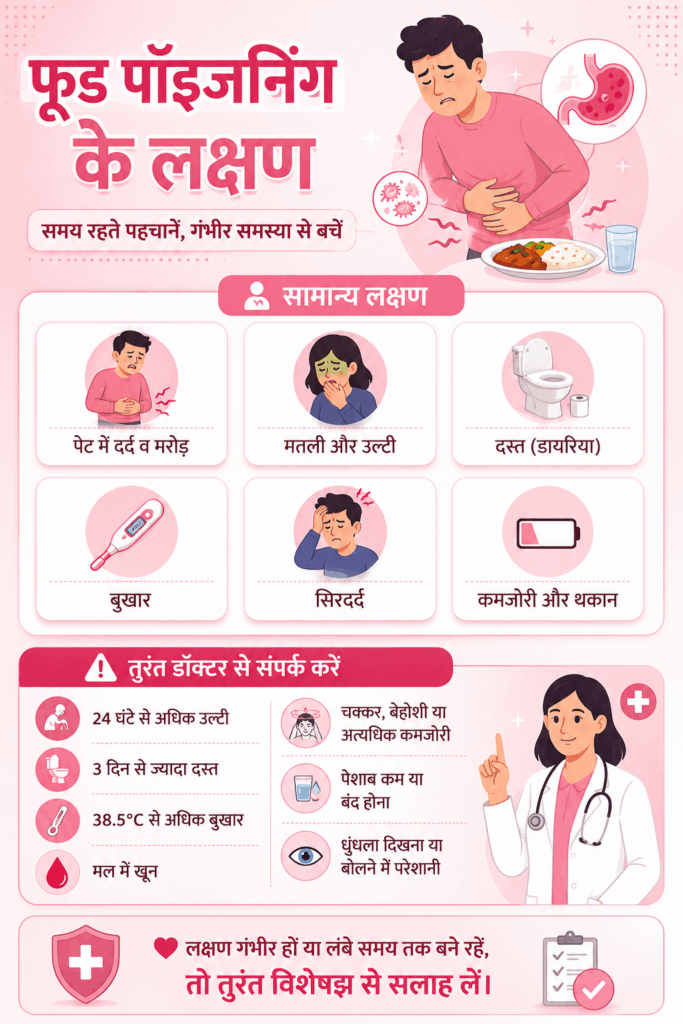
खाद्य विषाक्तता के लक्षण दूषित खाना खाने के 2 से 6 घंटे के अंदर शुरू हो सकते हैं। कुछ मामलों में यह 24 से 48 घंटे में भी दिखते हैं, यह इस बात पर निर्भर करता है कि किस तरह का बैक्टीरिया या वायरस आपके शरीर में गया है।
सामान्य लक्षण:
यह लक्षण दिखें तो तुरंत डॉक्टर के पास जाएं:
बच्चों और बुजुर्गों में डिहाइड्रेशन बहुत जल्दी होती है। इनमें लक्षण दिखते ही डॉक्टर से मिलें।
ज्यादातर फूड पॉइजनिंग के मामले घर पर ही ठीक हो जाते हैं। लेकिन सही देखभाल जरूरी है।
डॉक्टर द्वारा इलाज:
डॉक्टर पहले आपकी जाँच करेंगे और जरूरत पड़ने पर स्टूल टेस्ट (मल परीक्षण) या ब्लड टेस्ट करवा सकते हैं। इलाज के लिए निम्न विकल्पों का उपयोग होता है –
अगर आप सही इलाज के बारे में अनिश्चित हैं, तो सीके बिरला अस्पताल के गैस्ट्रोएंटेरोलॉजी विशेषज्ञ से अभी मिलें।
हल्की फूड पॉइजनिंग में नीचे दिए घरेलू उपायों से काफी राहत मिल सकती है –
फूड पॉइजनिंग एक आम लेकिन तकलीफदेह समस्या है। सही जानकारी और थोड़ी सावधानी से इसे काफी हद तक रोका जा सकता है। हल्के मामलों में घरेलू उपाय कारगर हैं, लेकिन लक्षण गंभीर हों, खासकर बच्चों और बुजुर्गों में, तो बिना देर किए डॉक्टर से मिलें।
अगर आप या आपके परिवार में कोई फूड पॉइजनिंग के लक्षणों से परेशान है, तो सीके बिरला अस्पताल के विशेषज्ञ डॉक्टरों से आज ही अपॉइंटमेंट बुक करें। सही समय पर सही इलाज से जल्दी ठीक होना संभव है।
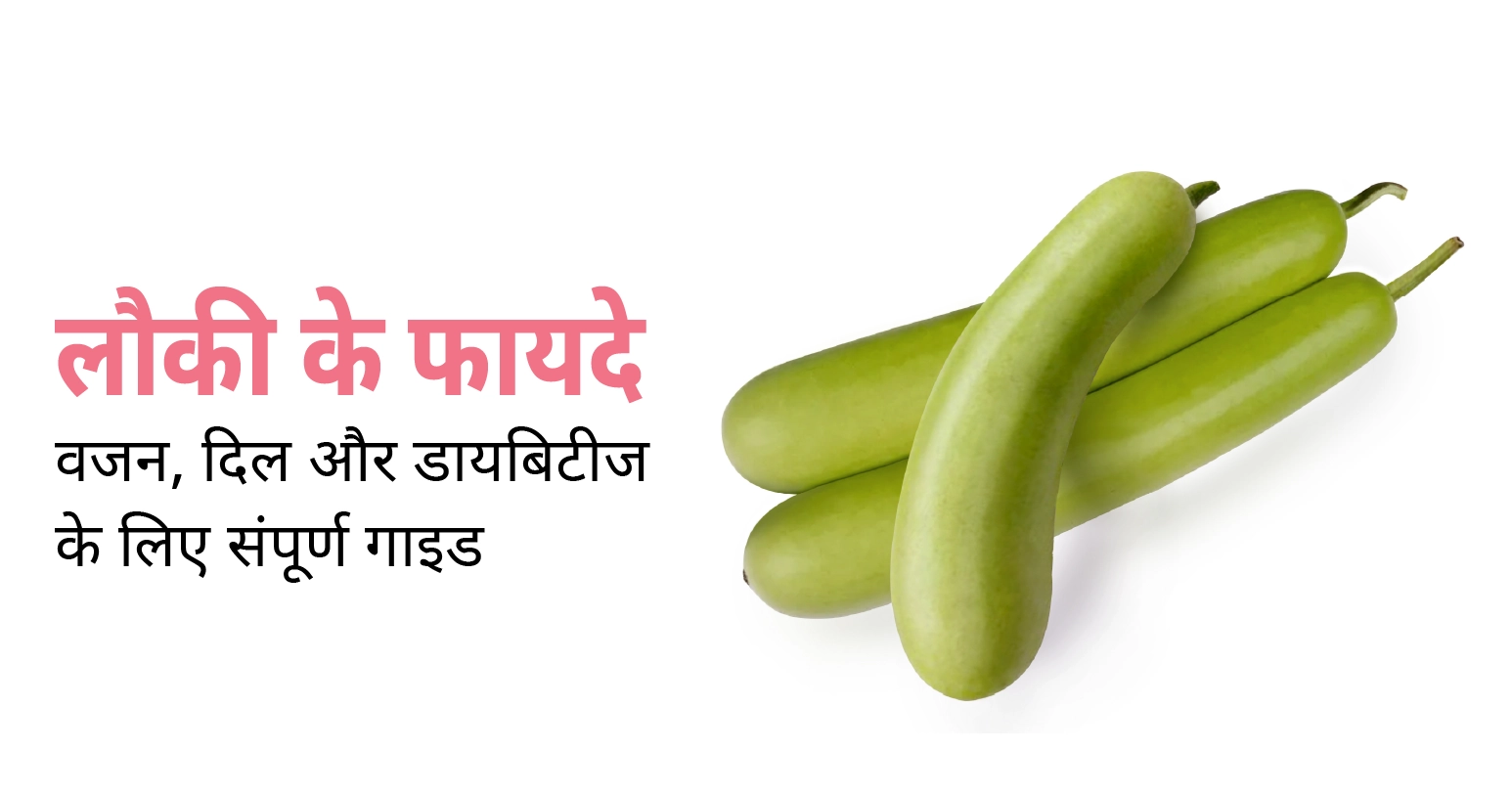
रसोई में रोज़ दिखने वाली यह हरी सब्जी शायद आपको बहुत साधारण लगे। बचपन में इसे देखकर मुंह बनाने की आदत भी होगी, लेकिन जब बात सेहत की आती है, तो लौकी किसी सुपरफूड से कम नहीं है और दिलचस्प बात यह है कि आयुर्वेद सदियों से जो बात कहता आया है, आधुनिक विज्ञान अब उसे साबित भी कर रहा है।
लौकी में लगभग 96% पानी होता है, कैलोरी बेहद कम होती है और फाइबर, विटामिन C, B, आयरन, मैग्नीशियम जैसे पोषक तत्वों की भरमार है। वजन कम करना हो, दिल को मजबूत रखना हो, डायबिटीज कंट्रोल करनी हो या बस पाचन सुधारना हो, लौकी हर मर्ज की दवा है।
इस ब्लॉग में हम आपको लौकी खाने के फायदे और नुकसान दोनों विस्तार से बताएंगे ताकि आप इसे सही तरीके से अपनी दिनचर्या में शामिल कर सकें। अगर आप किसी खास स्वास्थ्य समस्या जैसे डायबिटीज, हाई बीपी या वजन बढ़ने से जूझ रहे हैं, तो सीके बिरला हॉस्पिटल के मधुमेह विशेषज्ञ से एक बार ज़रूर मिलें। आज ही अपॉइंटमेंट बुक करें और सही दिशा में पहला कदम उठाएं।
Table of Contents
आज की भागदौड़ भरी ज़िंदगी में हम जो खाते हैं, वह धीरे-धीरे हमारी सेहत पर असर डालता है। प्रोसेस्ड फूड, तेल-मसाले और बाहर का खाना पेट, दिल और शुगर लेवल सब पर बुरा असर डालते हैं।
लौकी इससे एकदम उलट है। यह शरीर को अंदर से ठंडा रखती है, पाचन तंत्र को हल्का रखती है और किसी भी उम्र के इंसान के लिए फायदेमंद है। भारतीय खानपान में लौकी की सब्जी, रायता, हलवा और जूस सब बनते हैं, इसलिए इसे डाइट में शामिल करना मुश्किल भी नहीं है।
खास बात यह है कि 100 ग्राम लौकी में सिर्फ 15 से 17 कैलोरी होती हैं। यह उन लोगों के लिए एक आदर्श सब्जी है जो वजन कम करना चाहते हैं या लंबे समय तक पेट भरा रखना चाहते हैं।
अगर आप वजन कम करने की कोशिश में हैं और हर बार भूख आड़े आ जाती है, तो लौकी आपकी सबसे अच्छी साथी बन सकती है। इसमें मौजूद फाइबर पेट को लंबे समय तक भरा रखता है, जिससे बार-बार खाने की इच्छा कम होती है। कम कैलोरी और ज्यादा पानी मिलकर शरीर के मेटाबॉलिज्म को सक्रिय रखते हैं।
लौकी का जूस सुबह खाली पेट पीने से मेटाबॉलिज्म और भी तेज होता है। यह न केवल कैलोरी बर्न करने में मदद करता है, बल्कि शरीर में पानी की कमी भी पूरी करता है, जो वजन घटाने की प्रक्रिया में जरूरी है। लौकी जूस के फायदे उन लोगों के लिए विशेष रूप से अच्छे हैं, जो हर दिन एक्सरसाइज के साथ डाइट भी सुधारना चाहते हैं।
लौकी में मौजूद फाइबर और पोटेशियम मिलकर दिल को मजबूत रखते हैं। पोटेशियम ब्लड प्रेशर को कंट्रोल करता है और रक्त वाहिकाओं पर पड़ने वाले दबाव को कम करता है। फाइबर खराब कोलेस्ट्रॉल यानी LDL को कम करने में मदद करता है।
भारत में हृदय रोग तेजी से बढ़ रहे हैं और WHO के अनुसार हर साल दुनिया में हृदय रोग से होने वाली मौतें सबसे ज़्यादा हैं। ऐसे में लौकी जैसी पोषण से भरपूर सब्जी को रोजाना खाने में शामिल करना एक छोटी लेकिन असरदार कोशिश है।
लौकी का ग्लाइसेमिक इंडेक्स बेहद कम होता है। इसका मतलब है कि यह खाने के बाद ब्लड शुगर तेजी से नहीं बढ़ाता। इसमें मौजूद नेचुरल कंपाउंड्स इंसुलिन की संवेदनशीलता को बेहतर करते हैं।
टाइप 2 डायबिटीज के मरीजों के लिए लौकी का जूस पीने के फायदे बहुत हैं। यह ब्लड ग्लूकोज लेवल को स्थिर रखने में मदद करता है। हालांकि, डायबिटीज के मरीज पहले अपने डॉक्टर से ज़रूर पूछें कि उनकी दवाओं के साथ यह कितना सुरक्षित है।
कब्ज,एसिडिटी और अपच आज की सबसे आम पाचन समस्याएं हैं। लौकी में घुलनशील फाइबर होता है, जो आंतों की सफाई करता है और मल त्याग को आसान बनाता है। इसकी ठंडी तासीर एसिडिटी और पेट की जलन में भी राहत देती है।
जिन लोगों को आईबीएस यानी इरिटेबल बॉवेल सिंड्रोम की समस्या है, उनके लिए लौकी की सब्जी या उबली हुई लौकी बेहद फायदेमंद होती है।
लौकी एक प्राकृतिक डायूरेटिक है, यानी यह पेशाब को बढ़ाती है। इससे किडनी में जमा टॉक्सिन बाहर निकलते हैं। जो लोग यूरिनरी ट्रैक्ट इंफेक्शन (यूटीआई) से परेशान रहते हैं, उनके लिए लौकी का सेवन फायदेमंद हो सकता है।
लौकी में मौजूद विटामिन C और एंटीऑक्सीडेंट स्किन को अंदर से हाइड्रेट रखते हैं। नियमित लौकी का जूस पीने से चेहरे पर निखार आता है और बालों की जड़ों को पोषण मिलता है। गर्मियों में लौकी खाना शरीर को ठंडा रखता है, जिससे पसीने से होने वाली स्किन समस्याएं भी कम होती हैं।
लौकी में कोलीन और अन्य कंपाउंड्स होते हैं, जो नर्वस सिस्टम को शांत करते हैं। रात को लौकी की सब्जी खाने या लौकी का जूस पीने से नींद बेहतर आती है। जो लोग तनाव के कारण नींद नहीं ले पाते, उनके लिए यह एक प्राकृतिक उपाय है।
लौकी का जूस पीने के फायदे तब सबसे ज़्यादा मिलते हैं जब इसे रोज़ सुबह खाली पेट लिया जाए। एक गिलास ताज़ा लौकी के जूस में विटामिन B, C, आयरन, सोडियम, पोटेशियम और जिंक होते हैं। यह लिवर को डिटॉक्स करता है, ब्लड प्रेशर कंट्रोल में रखता है और दिनभर ऊर्जा बनाए रखता है।
लौकी का जूस पीने या इस्तेमाल करने से पहले उसे थोड़ा चखकर देख लें। अगर स्वाद कड़वा लगे, तो उसे बिल्कुल न पिएं और उस लौकी को फेंक दें। कड़वी लौकी में कुकरबिटासीन नाम का जहरीला तत्व होता है, जो उल्टी, दस्त और यहां तक कि गंभीर समस्याएं पैदा कर सकता है।
जूस में पुदीना, नींबू या अदरक मिलाने से स्वाद बेहतर होता है और पोषण भी बढ़ता है।
लौकी खाने के फायदे और नुकसान दोनों जानना ज़रूरी है। कड़वी लौकी का जूस पीना सबसे बड़ा खतरा है। इससे फूड पॉइज़निंग, उल्टी, पेट में तेज दर्द और गंभीर स्थितियों में अस्पताल जाने की नौबत आ सकती है। हमेशा जूस पीने से पहले लौकी का स्वाद जांच लें।
जिन लोगों को लो ब्लड प्रेशर की समस्या है, उन्हें लौकी का जूस सावधानी से लेना चाहिए क्योंकि यह ब्लड प्रेशर और कम कर सकती है। किडनी की गंभीर बीमारी वाले लोग पोटेशियम की अधिक मात्रा के कारण डॉक्टर की सलाह के बिना लौकी न लें। गर्भवती महिलाएं और स्तनपान कराने वाली माताएं भी जूस पीने से पहले डॉक्टर से पूछें।
लौकी देखने में जितनी साधारण लगती है, सेहत के लिए उतनी ही असाधारण है। वजन घटाने से लेकर दिल, डायबिटीज, पाचन, किडनी और स्किन तक, लौकी खाने के फायदे हर तरफ फैले हुए हैं। लौकी का जूस पीने के फायदे उन्हें और भी जल्दी मिलते हैं, जो इसे रोजाना की आदत बना लेते हैं।
प्रयास करें कि कड़वी लौकी से बचें, सही मात्रा में लें और अपनी खास स्वास्थ्य जरूरतों के अनुसार अपने डॉक्टर से सलाह लें। सीके बिरला अस्पताल में हमारे विशेषज्ञ आपकी हर स्वास्थ्य समस्या का समाधान खोजने में आपकी मदद करेंगे।
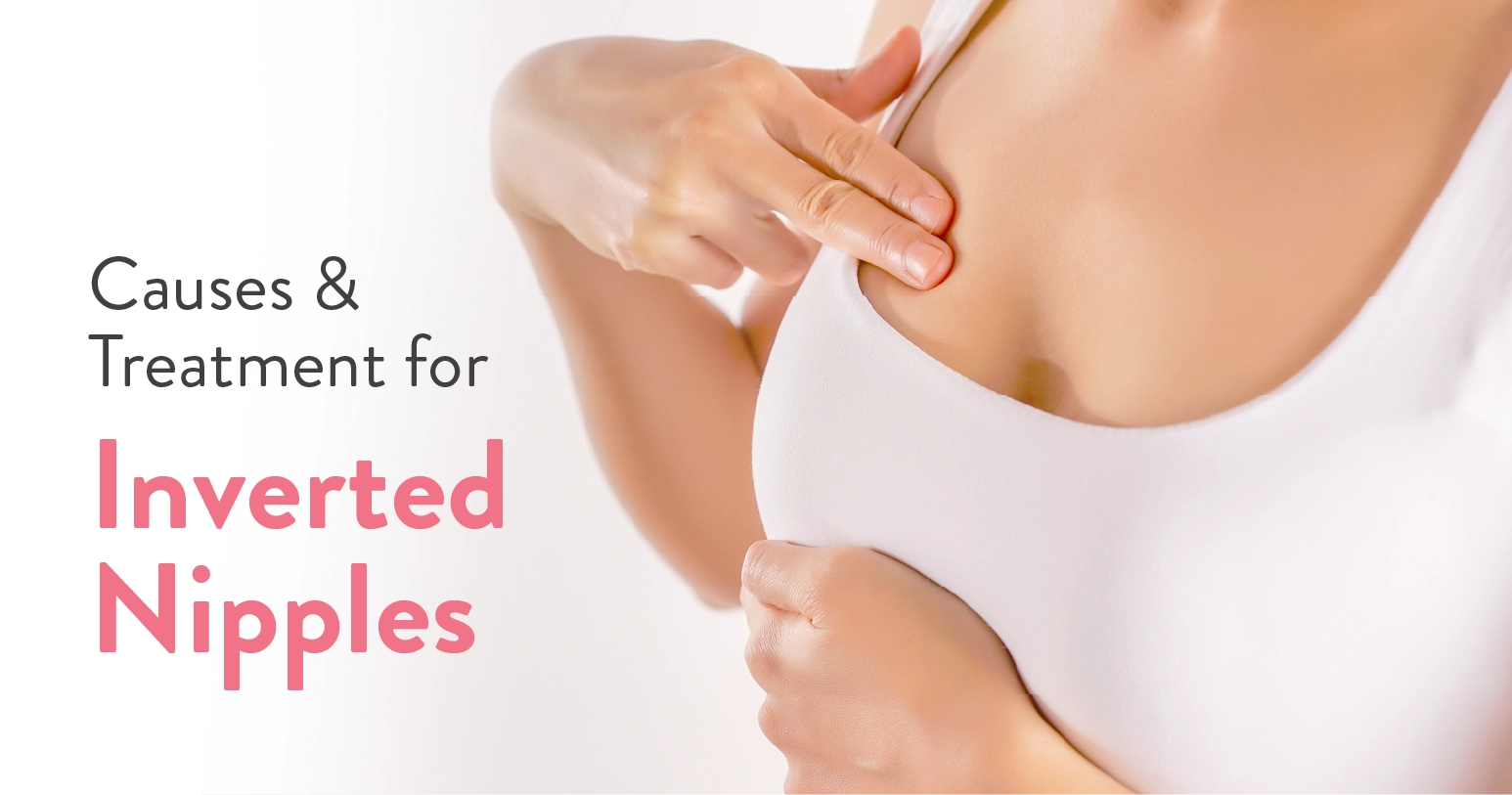
A nipple is made up of milk ducts, smooth muscle, nerve endings, and connective tissue. Normally, the nipple projects outward. In some people, the milk ducts are slightly shorter than usual, or fibrous tissue beneath the areola (the dark skin around the nipple) pulls the nipple tip inward, giving it a dimpled or tucked-in appearance.
So, if you have noticed that one or both of your nipples point inward rather than outward, you may have inverted nipples. It is a normal anatomical variation that is present since birth in some people.
Inverted nipples can also change in how they look throughout the day due to temperature, touch, or hormonal shifts. This is completely normal.
| Congenital Inversion | Acquired Inversion |
|
|
Table of Contents
No. A flat nipple lays evenly with the surrounding areola. It does not project outward, but it does not retract inward either. An inverted nipple is actively pulled inward.
The two can look similar but have different implications for breastfeeding and treatment.
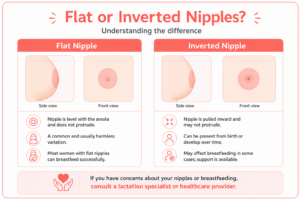
First, understand what has caused your nipple inversion. Some most common causes of such nipple type are:
These two conditions can also cause scarring that retracts the nipple inward.
If you have had breast surgery, a biopsy, breast reduction, or radiation therapy in the past, scar tissue from those procedures can sometimes affect the surrounding ductal tissue and cause the nipple to retract. This type of inversion is usually stable over time.
As we get older, breast tissue naturally loses some of its elasticity. This can lead to mild nipple retraction in older women. It is gradual, affecting both sides, and not linked to any underlying condition. It is a natural part of how breast tissue changes with age.
It is divided into three grades based on the degree of fibrosis.
Grade 1 (Mild)
Grade 1 inverted nipples are sometimes called ‘shy nipples.’ They can be easily pulled outward with light pressure or stimulation and stay out for a little while on their own. The milk ducts are fully intact with little to no fibrous tissue. Breastfeeding is very much possible at this grade.
Grade 2 (Moderate)
At Grade 2, the nipple can still be everted with some manual effort. However, it retracts back quickly. There is some fibrosis present beneath the nipple. Breastfeeding is possible but may need extra support.
Grade 3 (Severe)
Here, the nipple cannot be everted manually at all. There is noticeable fibrosis and shortening of the milk ducts beneath. Surgery is generally the recommended path forward at this stage.
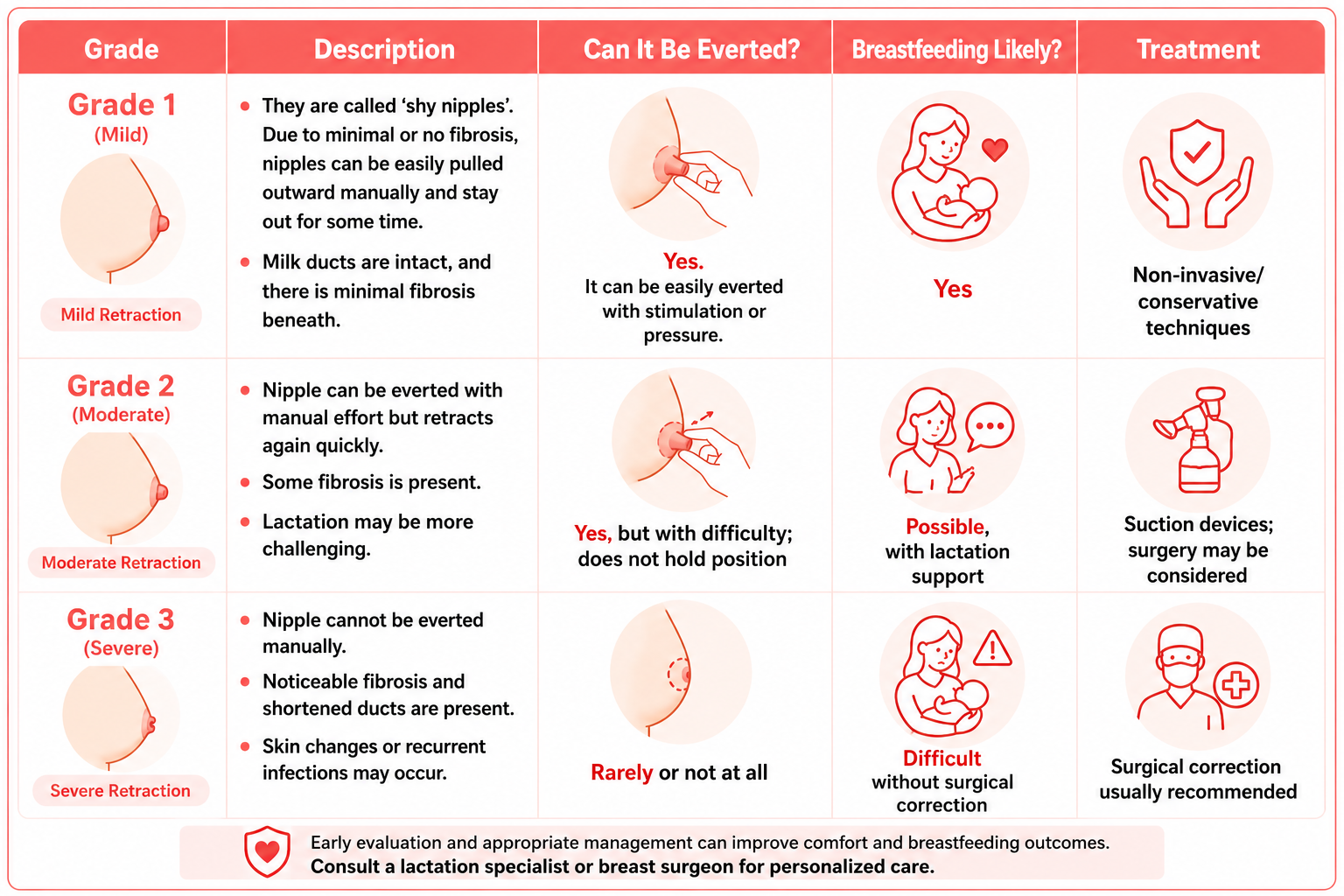
Most people with congenital inverted nipples (those who have since birth) have Grade 1 or Grade 2 inversion. Grade 3 is less common and is more frequently associated with acquired causes such as chronic infection or significant fibrosis.
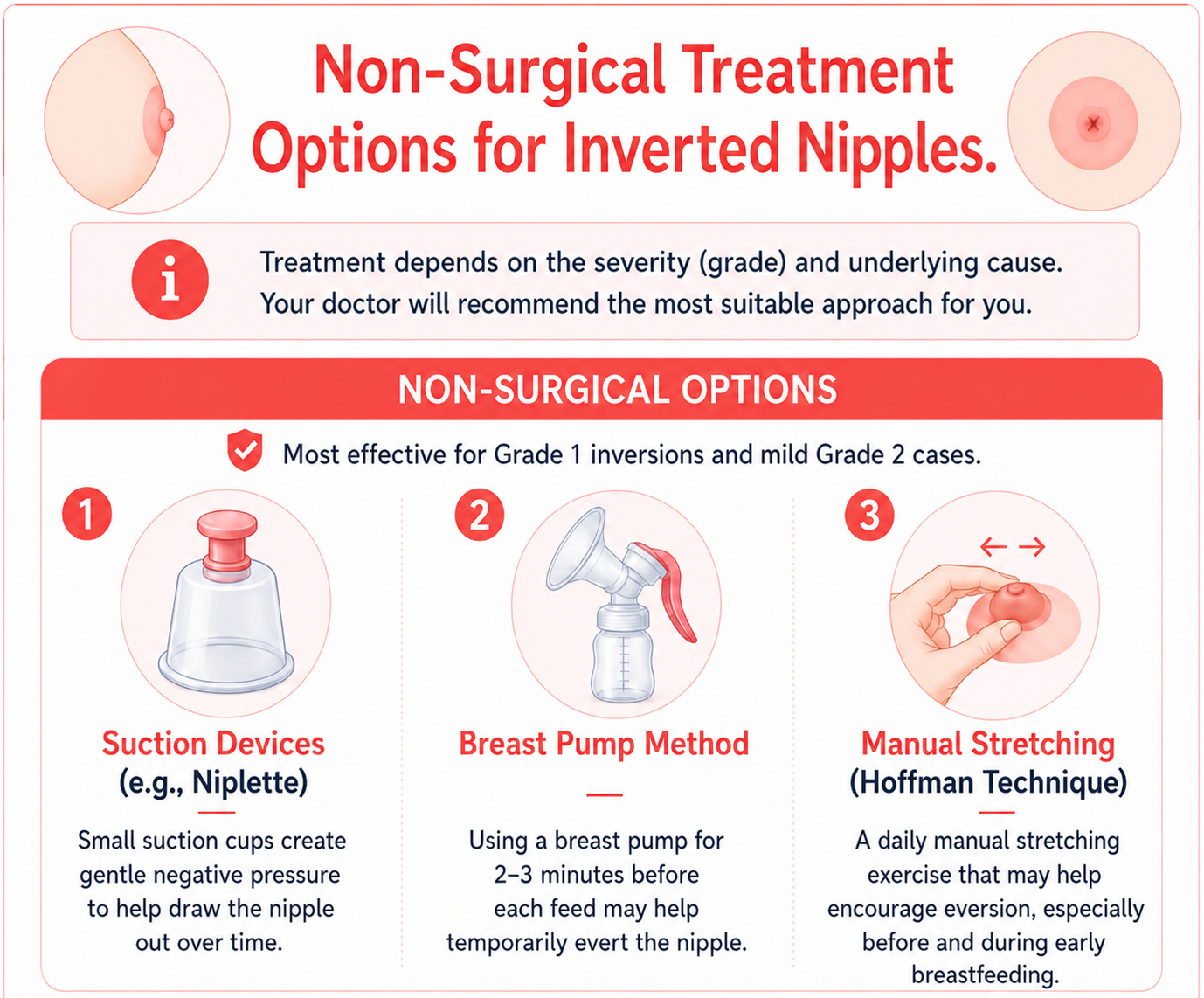
The treatment for inverted nipples depends majorly on its grade and the root cause. Based on your overall condition, you may be suggested any of these treatment approaches.
Most effective for Grade 1 inversions and mild Grade 2 cases.
There are two approaches your breast surgeon may discuss with you:
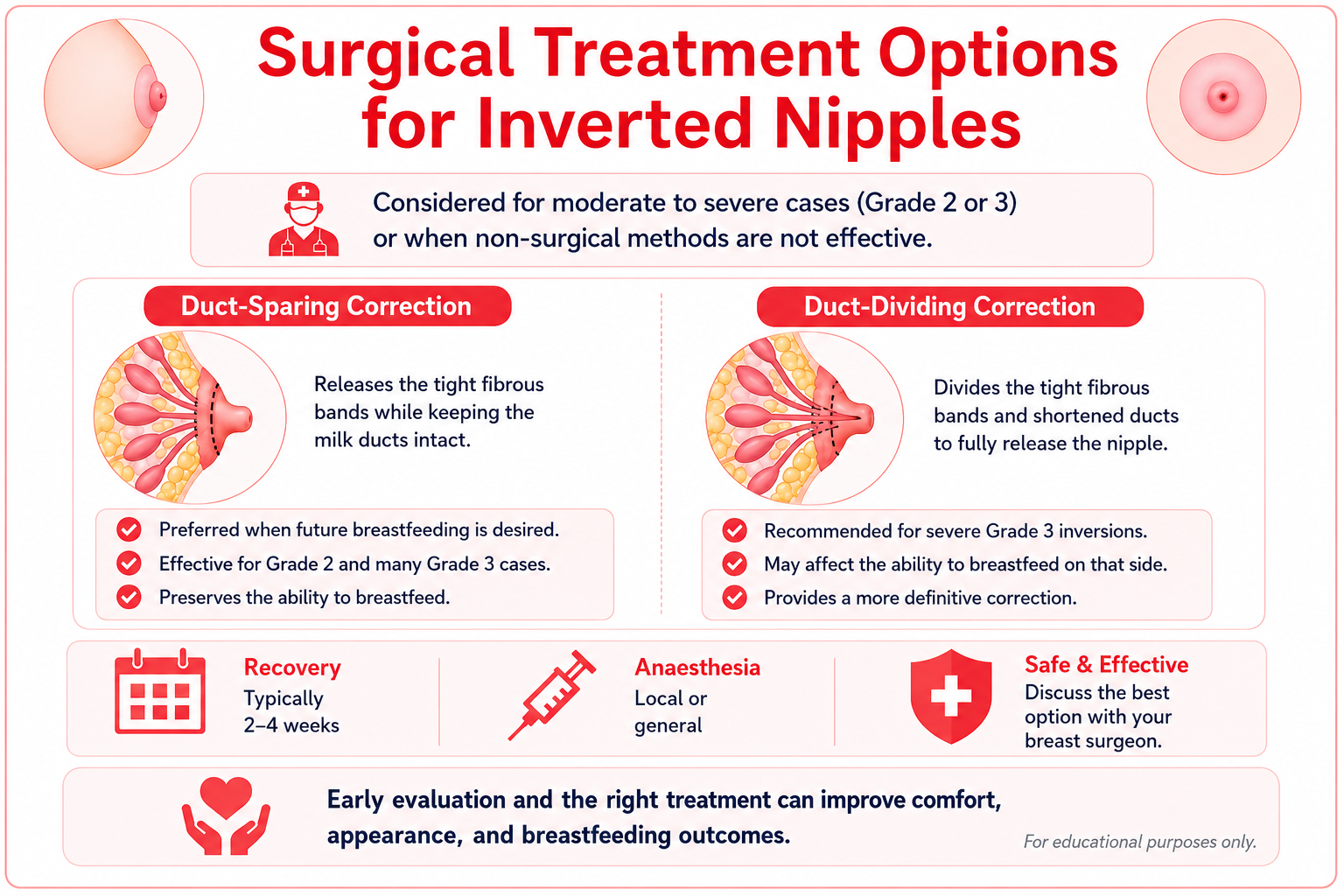
Important: If you are considering nipple correction surgery and have any future plans to breastfeed, discuss this before the procedure, not after. Your surgeon needs to know, as it affects which technique is used. Once duct-dividing surgery has been performed, breastfeeding on that side is generally no longer possible.
You should see a doctor promptly if you notice:
If you have had lifelong inverted nipples, no new symptoms, and no other breast changes, a routine mention to your doctor is sufficient. The breast care specialist will advise on regular breast screening as appropriate for your age and risk profile.
If you have noticed a recent change in your nipple and are struggling to figure out the reason behind it, the expert team of experienced breast specialists, gynecologists, and reconstructive surgeons at the CK Birla Hospital is here to help you. Our dedicated ‘Breast Centre’ provides compassionate care in a safe and private setting. You can book a consultation for early detection.
Extreme heat is one of the leading causes of weather-related illness, causing dehydration, fatigue, heat exhaustion, and in severe cases, heat stroke. Before you rush to stock up on cold drinks and packaged juices, look at one of the easy solutions that may already be sitting in your fruit bowl. The benefits of drinking lemon water in summer go far beyond just quenching your thirst. Let’s understand exactly how this little citrus fruit can make the summer bearable.
Table of Contents
Lemons are a rich source of Vitamin C, citric acid, antioxidants, and plant compounds called flavonoids. According to USDA, one whole lemon squeezed into water provides approximately 30.7 mg of vitamin C and about 17 calories. This delivers roughly 34% of the Daily Value (DV) for vitamin C, making lemon water a simple way to boost your vitamin C intake while adding very few calories.
In summer, your body is under constant stress from heat, fluid loss due to sweat, and environmental exposure. This is precisely when the lemon and water benefits become most relevant. The combination helps replenish fluids, improve your immune system, aids digestion, and even lifts your mood, all without adding sugar or artificial additives.
Starting your summer mornings with lemon water is, in many ways, a small act of selfcare.
Dehydration is the biggest summer health risk. Adults should drink at least 2 to 3 litres of water daily under normal conditions, and significantly more in hot climates. To make water more appealing, lemon adds a natural, pleasant flavour that encourages you to sip more throughout the day.
Vitamin C is a well known supporter of our immune system. It stimulates the production and function of white blood cells that are your body’’ first line of defence against infection. During summer months, when foodborne illnesses and viral infections are more likely to spike, this immune boost is very important.
The citric acid in lemon juice mimics the digestive acids in your stomach. This can help stimulate digestive enzyme production and ease bloating, indigestion, and sluggish digestion, all of which worsen in the heat.
Lemon water helps with liver function by encouraging the production of bile, a digestive fluid that helps the body process fats and flush out waste.
Lemon’s antibacterial properties can help reduce the bacteria responsible for bad breath which is common in summer due to dehydration.
Vitamin C is essential for collagen production, the protein that keeps your skin firm and elastic. When it is combined with improved hydration, the advantages of lemon water include healthier, more resilient skin.
Lemon water is very low in calories and can substitute for sugary drinks like sodas and packaged juices. Remember, lemon water alone is not a weightloss solution. It supports healthier choices as part of a balanced diet.
Timing and preparation both are the important factors when it comes to getting the most from this simple habit.
Beating the summer heat does not always require expensive supplements or complicated routines. Sometimes, the most effective wellness tools are the simplest ones. A glass of lemon water can improve your hydration, immunity, digestion, skin, and energy levels day after day.
If you are still not sure whether this citrus food is right for you or not, you can consult experienced dieticians and nutritionists at the CK Birla Hospital. They can help you build a summer health plan that is personalised, safe, and effective for your unique needs.
It is difficult to imagine losing a part of your body. For many women diagnosed with breast cancer, the thought of breast removal can bring fear, uncertainty, and countless questions about life after surgery.However, breast removal is no longer the default treatment for every breast cancer diagnosis. Due to advances in medical science, multiple treatment options are available today, depending on the type of cancer and a person’s overall health.
Table of Contents
All breast cancer cases are not the same, which is why the treatment plans and surgical options also differ. Your oncology team looks at the whole picture before recommending anything. The breast oncologists will evaluate:
Size and location of the tumour in the breast
Breast cancer is now the most commonly diagnosed cancer worldwide, accounting for roughly 1 in 8 can cer diagnoses globally according to the WHO. With increasing early detection through screening programmes, a growing proportion of patients are being diagnosed at earlier stages, which is exactly where breast conserving surgery becomes most viable.
A lumpectomy removes the tumour plus a small margin of healthy tissue around it, leaving the rest of the breast intact. It is generally followed by a course of radiation therapy to reduce the risk of cancer returning in the remaining tissue. Lumpectomy followed by radiation therapy has been shown to be as effective as mastectomy (full breast removal) for many early stage breast cancers.
Breast conserving surgery tends to be suitable when:
Beyond lumpectomy, there is also a more advanced approach called oncoplastic surgery. It combines tumour removal with reconstructive plastic surgery techniques, performed either at the same time as tumour removal or shortly after.
It allows surgeons to remove more tissues if needed, while reshaping the breast in a way that preserves its natural look. This means patients can have comprehensive cancer treatment without the cosmetic and emotional impact that used to be unavoidable.
Even with all this progress in surgical medicine, some outdated ideas and beliefs continue to circulate. Let’s debunk a few directly.
Myth 1 – “Mastectomy is always safer than lumpectomy. ”It is not always true for most early stage cases. Research consistently shows that lumpectomy along with the radiation therapy offers equivalent survival results for Stage I and Stage II breast cancer. The National Cancer Institute (NCI) confirms this.
Myth 2 – “If I keep my breast, the cancer is more likely to come back.” The risk of local recurrence after lumpectomy is real but it is low, generally around 1 to 2% per year. Your specialist will go through your individual risk profile with you.
Myth 3 – “I can choose mastectomy even if I don’t need it, just to feel safer.” For early stage cancers, removing the entire breast does not automatically improve the survival compared to lumpectomy. A decision to undergo mastectomy should be made thoughtfully, with full information and in consultation with your oncologist and medical team
Myth 4: “Surgery is the only treatment involved.”Surgery is usually one part of a broader treatment plan. Your treatment may also involve chemotherapy, radiation, hormone therapy, or targeted therapy.There are some medical situations where a mastectomy, which means removal of the entire breast, is the most recommended option. These conditions can be:
There are some medical situations where a mastectomy, which means removal of the entire breast, is the most recommended option. These conditions can be:
After a lumpectomy, most patients return home the same day or within 24 hours. Soreness and mild swelling are common for a few weeks, and most women resume light activities within one to two weeks. Radiation therapy usually begins a few weeks after surgery.
After a mastectomy, the hospital stay is usually one to three days. Recovery may take longer, generally four to six weeks for the incision to heal and if reconstruction has been done, the overall recovery timeline may extend further.
Physiotherapy and guided arm exercises are recommended to restore range of motion.
Emotional recovery is equally important and equally valid.
The psychological impact of breast cancer surgery including changes in body image and self-esteem is very important for many women.
Modern surgical options have made it possible for many women to treat cancer effectively while preserving what matters to them, physically, emotionally, and personally.
If you or a loved one is navigating this journey, the most important thing is getting good information and the right medical care that you can trust. Our dedicated ‘Breast Centre’ at the CK Birla Hospital brings together experienced oncological surgeons, oncoplastic specialists, and a full multidisciplinary team. You are welcome to call or book a consultation whenever you need advice.
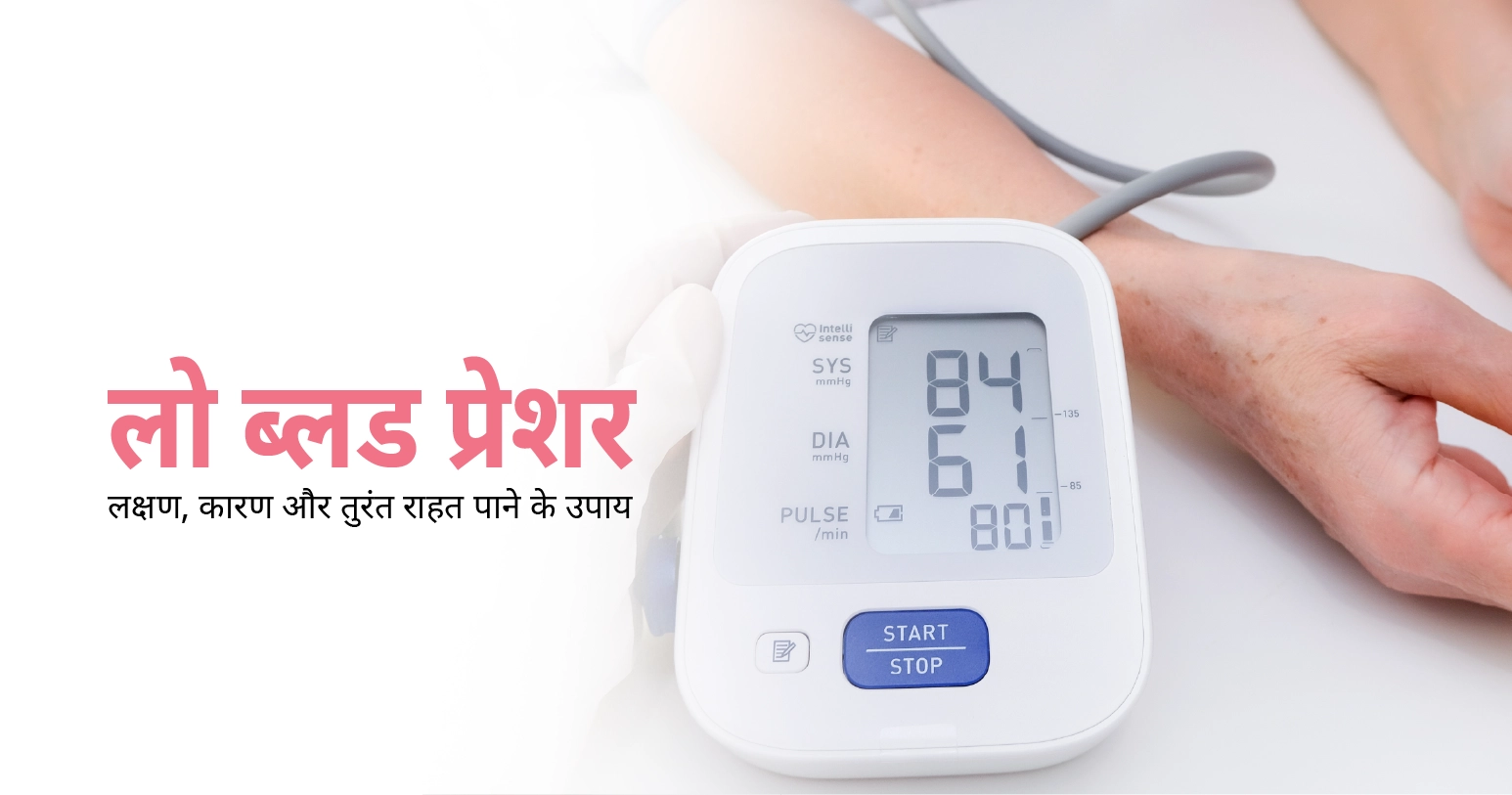
सुबह उठते ही आंखों के आगे अंधेरा छा जाए, सीढ़ियां चढ़ते-चढ़ते अचानक पैर लड़खड़ाने लगे, या बैठे-बैठे एकदम से बेचैनी हो जाए, तो ज्यादातर लोग इसे थकान या गर्मी का असर मानकर टाल देते हैं। लेकिन अगर ऐसा बार-बार हो रहा है, तो आपका शरीर यह संकेत दे रहा है, जिसे नजरअंदाज करना ठीक नहीं है, क्योंकि यह लो बीपी हो सकता है।भारत में जितनी बात हाई ब्लड प्रेशर की होती है, उतनी लो बीपी की नहीं होती, जबकि यह भी उतना ही ध्यान मांगता है। सही जानकारी के बिना लोग या तो घबरा जाते हैं या फिर बिल्कुल परवाह नहीं करते, दोनों ही स्थितियां नुकसानदेह हैं। इस ब्लॉग में हम आपको लो ब्लड प्रेशर से जुड़ी हर जरूरी बात बताएंगे, जैसे कि इसके लक्षण क्या होते हैं, यह क्यों होता है, घर पर क्या किया जा सकता है और कब डॉक्टर के पास जाना जरूरी हो जाता है।अगर आप या आपके परिवार में कोई इन लक्षणों से गुजर रहा है, तो आज ही सीके बिरला अस्पताल के अनुभवी विशेषज्ञों के साथ अपॉइंटमेंट बुक करें।
Table of Contents
पहले यह समझना जरूरी है कि सामान्य और लो ब्लड प्रेशर में फर्क क्या होता है। एक स्वस्थ व्यक्ति का ब्लड प्रेशर आमतौर पर 120/80 mmHg के आसपास होता है। जब यह रीडिंग 90/60 mmHg से नीचे गिर जाए, तो इसे लो ब्लड प्रेशर या हाइपोटेंशन (Hypotension) कहा जाता है।लेकिन एक जरूरी बात, हर किसी के लिए एक ही नंबर “सामान्य” नहीं होता। कुछ लोग, खासकर जो नियमित व्यायाम करते हैं, उनका ब्लड प्रेशर स्वाभाविक रूप से थोड़ा कम रहता है और उन्हें कोई तकलीफ नहीं होती। लेकिन जब कम रीडिंग के साथ लक्षण भी हो, तभी यह चिंता का विषय बनता है।
ब्लड प्रेशर को तीन स्थितियों में बांटा जा सकता है:
लो बीपी के लक्षण अचानक आ सकते हैं या धीरे-धीरे महसूस होते हैं। कई बार लोग इन्हें सामान्य थकान समझ लेते हैं, इसलिए इन्हें पहचानना जरूरी है।
अगर इनमें से तीन या उससे ज्यादा लक्षण एक साथ आ रहे हैं, तो इसे नजरअंदाज न करें।
लो बीपी के पीछे कई कारण हो सकते हैं। कुछ अस्थायी होते हैं, तो कुछ किसी बड़ी स्वास्थ्य समस्या का संकेत भी हो सकते हैं, जैसे कि –
कई बार लो बीपी के हल्के लक्षणों को घर पर ही संभाला जा सकता है। यहां कुछ आजमाए हुए और सुरक्षित उपाय हैं, जिन्हें आप भी अपना सकते हैं –
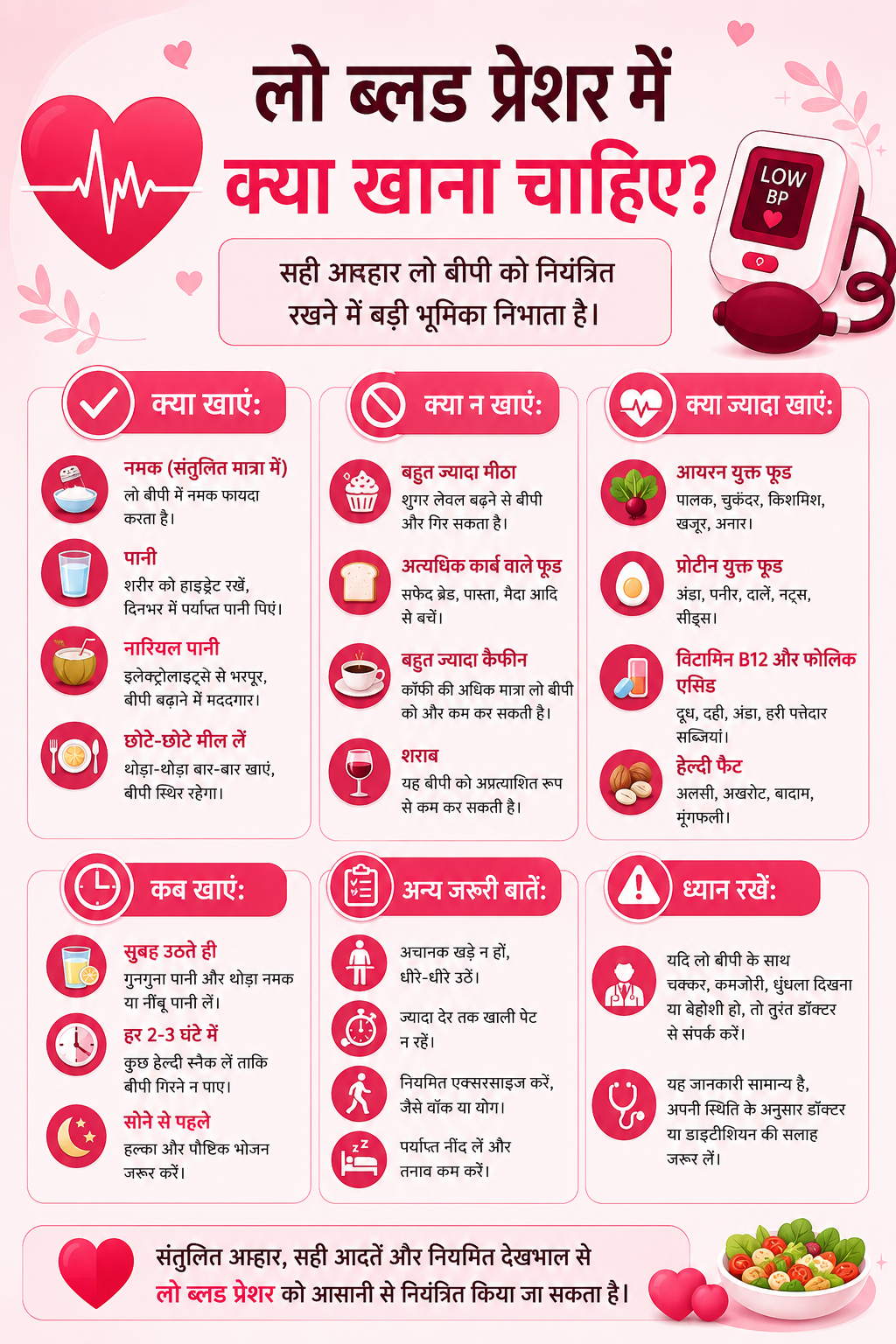
आपकी डाइट सीधे तौर पर तय करती है कि आपका ब्लड प्रेशर कैसा रहेगा। नीचे एक लिस्ट दी गई है, जो बताती है कि आपको क्या खाना चाहिए और क्या नहीं –
क्या खाएं:
क्या न खाएं या कम करें:
कुछ छोटी-छोटी आदतें लो बीपी को रोकने में बड़ा फर्क डाल सकती हैं जैसे कि –
घरेलू उपाय तभी काम आते हैं, जब बीपी हल्का लो हो और कारण स्पष्ट हो। लेकिन नीचे दी गई स्थितियों में तुरंत चिकित्सा सहायता लेना जरूरी है:
लो ब्लड प्रेशर को हल्के में लेना उचित नहीं है, लेकिन घबराने की भी जरूरत नहीं है। सही जानकारी, जागरूकता और समय पर कदम उठाने से इसे बखूबी नियंत्रित किया जा सकता है। अपने लक्षणों को पहचानें, खान-पान और जीवनशैली में छोटे बदलाव लाएं और जरूरत पड़ने पर हमारे अनुभवी इंटरनल मेडिसिन के डॉक्टर से मिलें और इलाज लें। याद रखें, आपका स्वास्थ्य सबसे बड़ी संपत्ति है और उसकी देखभाल करना आपकी जिम्मेदारी भी है।
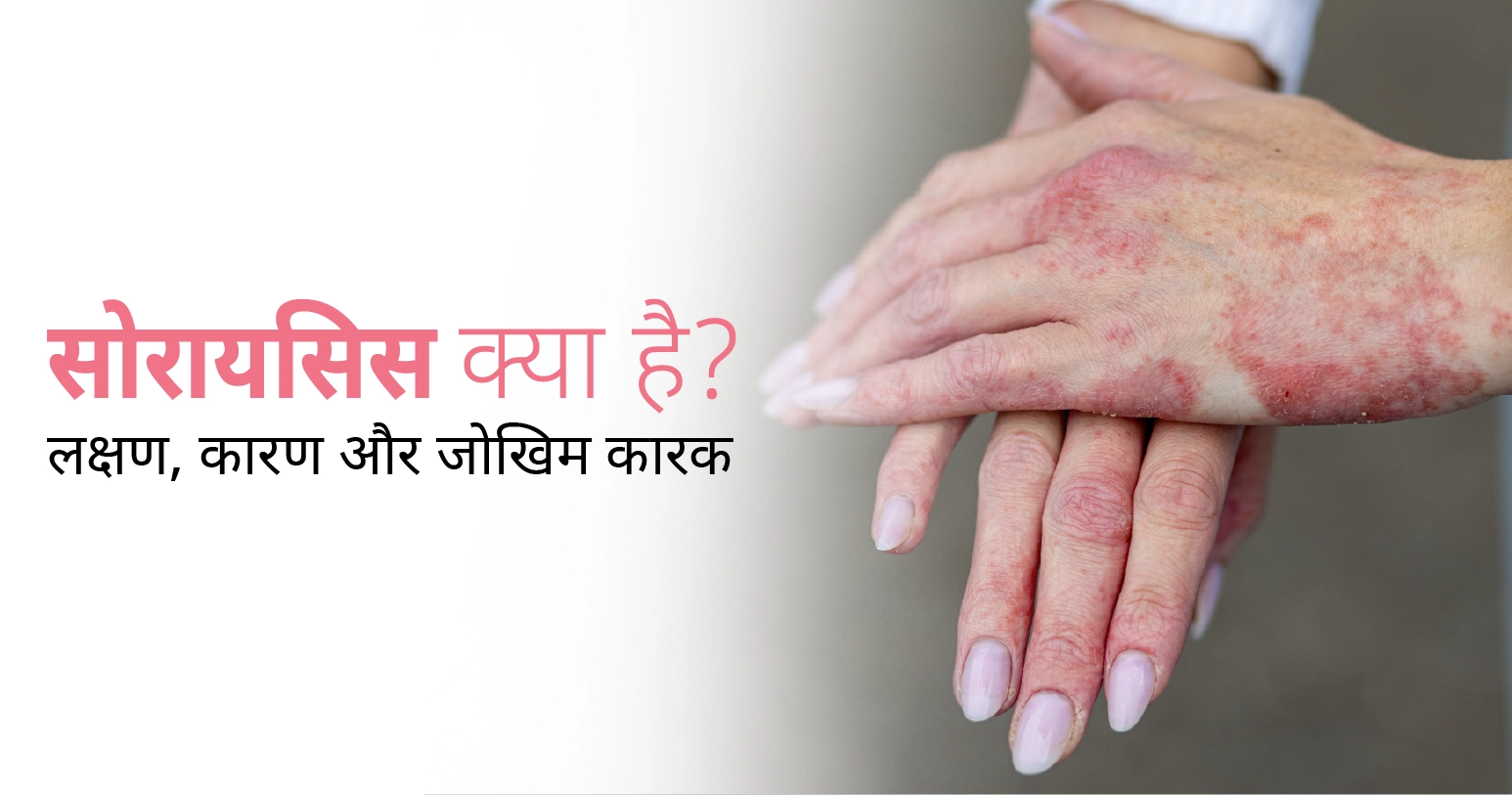
कई बार जब हमारी मां हमारे सिर में तेल लगाती हैं, तो वे अक्सर देखती हैं कि सिर पर कुछ सफेद-चांदी जैसी पपड़ी और उसके नीचे लाल, जलती हुई त्वचा है। ये हमारे सिर के साथ-साथ कोहनी और शरीर के अन्य भागों में भी हो सकते हैं। इस स्थिति को मेडिकल भाषा में सोरायसिस डिजीज (Psoriasis disease) कहा जाता है। यह सिर्फ एक त्वचा की बीमारी नहीं है, यह उस इंसान की पूरी जिंदगी को छूती है और उसके आत्मविश्वास, रिश्ते, काम और मानसिक शांति को प्रभावित करती है। भारत में सोरायसिस की व्यापकता 0.44% से 2.8% के बीच है और यह पुरुषों में महिलाओं की तुलना में लगभग 2.5 गुना ज्यादा देखा जाता है। ज्यादातर मामले 30-40 साल की उम्र में सामने आते हैं। अगर आप या आपका कोई करीबी इस बीमारी के बारे में सही जानकारी चाहते हैं, तो यह ब्लॉग आप उन्हें भेज सकते हैं। अगर आप पहले से लक्षण महसूस कर रहे हैं, तो आज ही सीके बिरला अस्पताल के अनुभवी डर्मेटोलॉजिस्ट से अपॉइंटमेंट बुक करें।
Table of Contents
सोरायसिस एक क्रोनिक ऑटोइम्यून (Chronic autoimmune) रोग है, जिसमें शरीर की प्रतिरक्षा प्रणाली गलती से अपनी ही स्वस्थ त्वचा कोशिकाओं पर हमला करने लगती है। सामान्य स्थिति में हमारी त्वचा कोशिकाएं लगभग 28-30 दिनों में फिर से रिपेयर या फिर से बनती हैं। लेकिन सोरायसिस में यह प्रक्रिया सिर्फ 3 से 5 दिनों में ही हो जाती है। इतनी तेजी से नई कोशिकाएं बनने पर पुरानी कोशिकाएं जमा होने लगती हैं और त्वचा पर मोटे, उभरे हुए, लाल रंग के धब्बे बन जाते हैं, जिन पर सफेद या चांदी जैसी पपड़ी होती है। अक्सर लोगों के मन में यह भ्रम उत्पन्न होता है कि “क्या सोरायसिस छूने से फैलता है?” इसका सरल सा उत्तर है – नहीं। सोरायसिस किसी भी तरह से संक्रामक (contagious) नहीं है। यह न छूने से फैलता है, न हवा से, न खाने से। यह एक आंतरिक इम्यून सिस्टम की गड़बड़ी है। यहां एक और प्रश्न उठता है कि “क्या सोरायसिस फैलता है शरीर पर?” हां, समय के साथ या ट्रिगर की वजह से यह शरीर के अन्य हिस्सों में फैल सकता है, लेकिन यह व्यक्ति से व्यक्ति में नहीं फैलता।
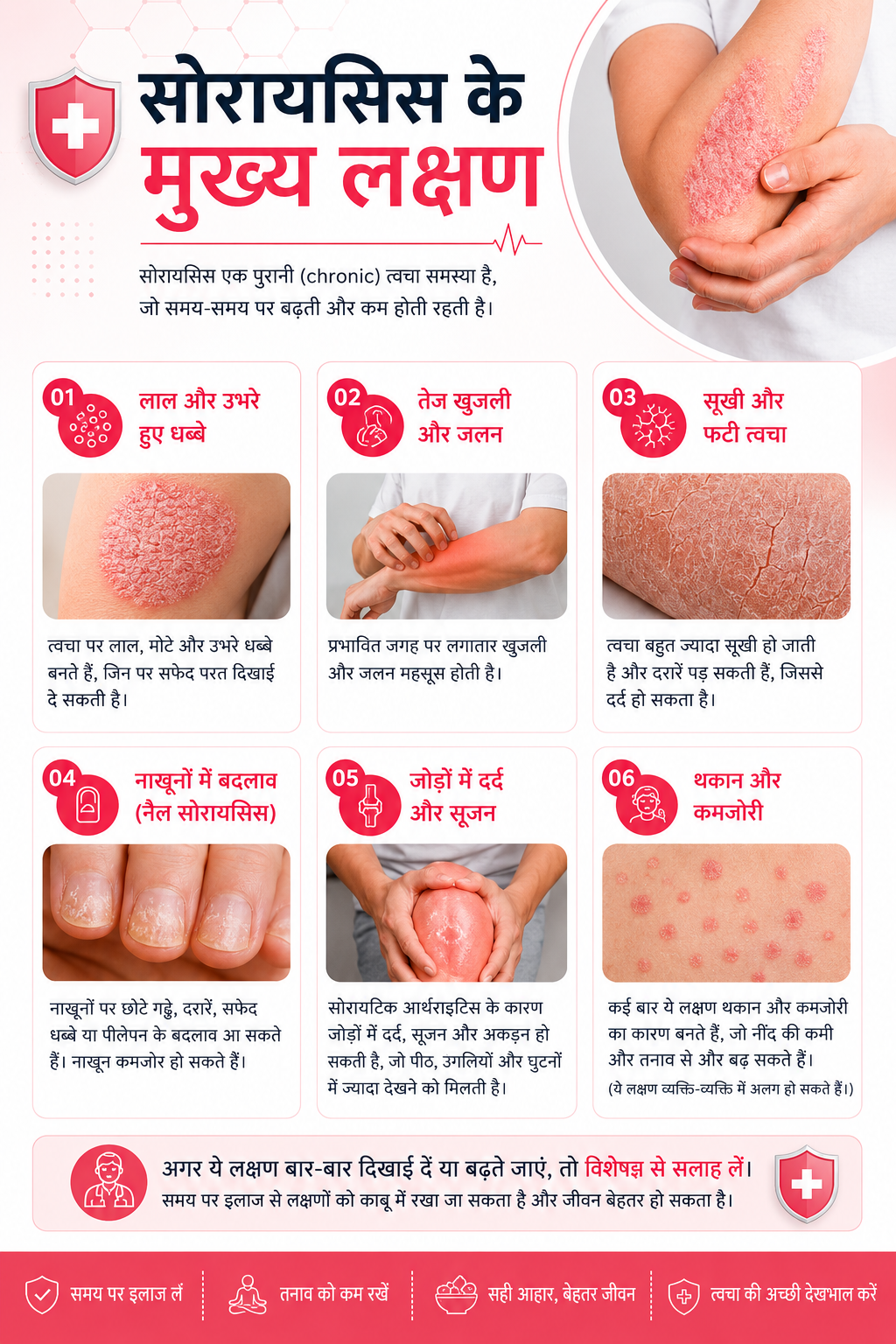
सोरायसिस के लक्षण हर व्यक्ति में अलग हो सकते हैं, लेकिन कुछ लक्षण सबसे आम हैं, जिन्हें पहचानना जरूरी है –
सोरायसिस सिर्फ एक तरह का नहीं होता। इसके कई प्रकार हैं और हर प्रकार के लक्षण थोड़े अलग होते हैं –
सोरायसिस के सटीक कारण अभी तक पूरी तरह स्पष्ट नहीं हैं, लेकिन चिकित्सा विज्ञान इसके दो प्रमुख आधार मानता है:
सोरायसिस डिजीज को शुरू करने या बिगाड़ने में इन कारकों की अहम भूमिका होती है –
बहुत से लोग सोरायसिस के लक्षणों को रूसी, एक्जिमा या सामान्य खुजली समझकर नजरअंदाज कर देते हैं। यह गलत है। नीचे दिए किसी भी संकेत पर तुरंत किसी अनुभवी डर्मेटोलॉजिस्ट से मिलें –
याद रखें कि सोरायसिस का इलाज जितनी जल्दी शुरू हो, उतना बेहतर नियंत्रण संभव है।
सोरायसिस एक ऐसी बीमारी है जो जिंदगी भर साथ रह सकती है, लेकिन इसका यह मतलब बिल्कुल नहीं कि आपकी जिंदगी रुक जाए। क्या सोरायसिस ठीक हो सकता है पूरी तरह? फिलहाल इसका कोई स्थायी इलाज नहीं है, लेकिन आधुनिक चिकित्सा के जरिए जैसे कि टॉपिकल क्रीम से लेकर फोटोथेरेपी (phototherapy) और बायोलॉजिक दवाओं की मदद से लंबे समय तक लक्षणों को शांत रखा जा सकता है।सबसे पहला कदम है एक भरोसेमंद डर्मेटोलॉजिस्ट से मिलना। सीके बिरला अस्पताल में आज ही अपना अपॉइंटमेंट बुक करें और अपनी त्वचा की देखभाल की शुरुआत करें।
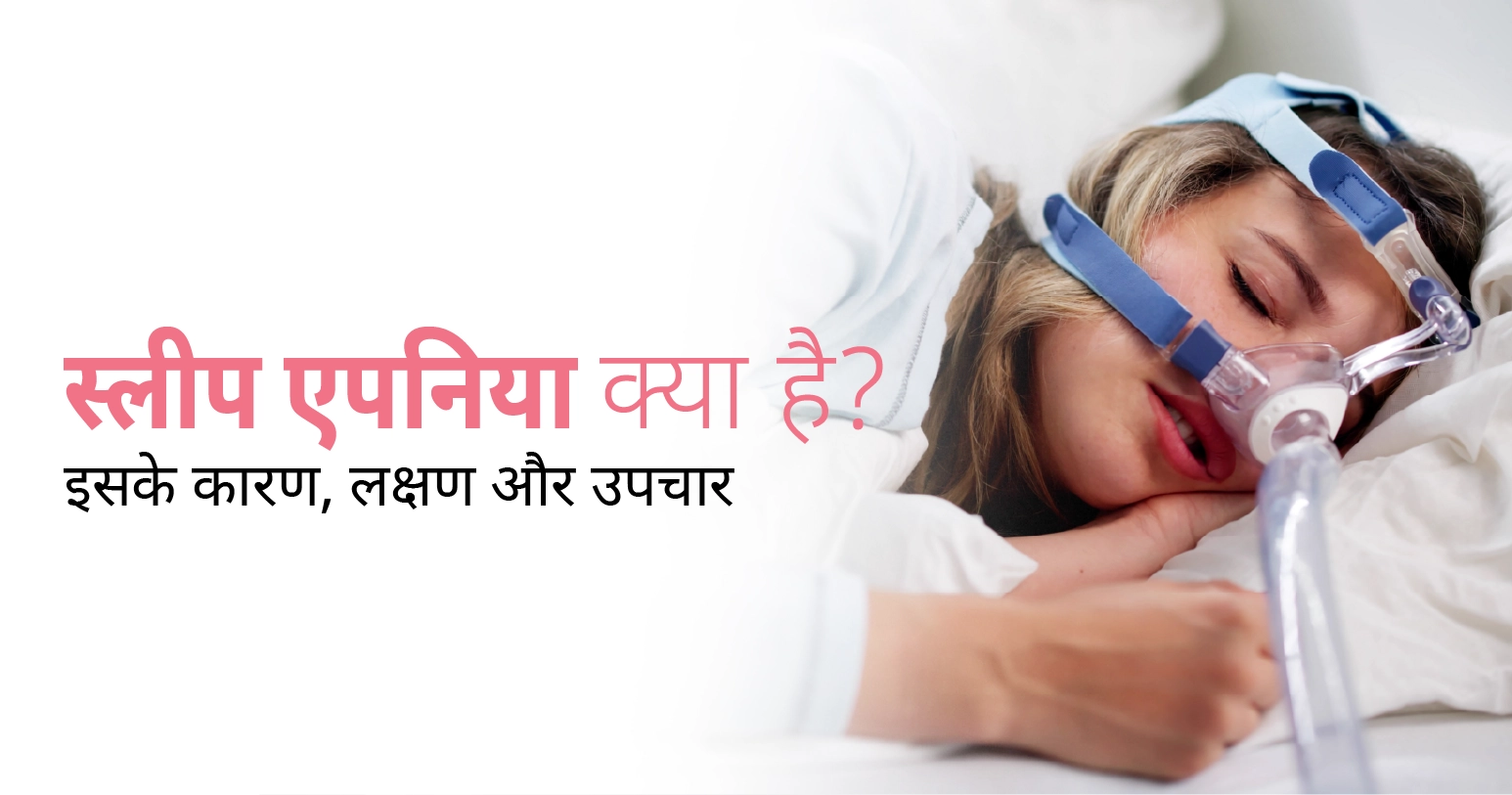
आधी रात को साथ सो रहे पार्टनर ने नोटिस किया कि कुछ सेकंड के लिए सांस की आवाज बंद हो गई, फिर अचानक एक तेज सांस के साथ फिर शुरू हुई। यह कोई इत्तेफाक नहीं, यह स्लीप एपनिया का सबसे आम संकेत है। सबसे डरावनी बात यह है कि जो कुछ हो रहा है, उसे खुद इसका पता नहीं चलता। वह सिर्फ यह जानता है कि चाहे कितनी भी देर सोए, सुबह उठते ही थकान, सिरदर्द और चिड़चिड़ापन साथ होता है।स्लीप एपनिया एक ऐसी नींद संबंधी समस्या है, जिसमें सोते समय सांस बार-बार रुकती है और शुरू होती है। एक हाल के भारतीय रिसर्च में बताया गया कि मध्यम से गंभीर स्लीप एपनिया भारत में करीब 30.5% लोगों में पाया गया, जबकि गंभीर स्लीप एपनिया लगभग 10.1% लोगों में मौजूद था। यह आंकड़े बताते हैं कि यह समस्या जितनी आम है, उतनी ही नजरअंदाज भी की जाती हअगर आपको या आपके पार्टनर को तेज खर्राटे आते हैं, सुबह उठने पर ताजगी महसूस नहीं होती या दिन भर थकान रहती है, तो इसे सामान्य मत समझिए। सीके बिरला अस्पताल के अनुभवी पल्मोनोलॉजिस्ट (फेफड़ा और नींद विशेषज्ञ) से आज ही अपॉइंटमेंट बुक करें और अपनी नींद को वापस सुरक्षित बनाएं।
Table of Contents
स्लीप एपनिया एक नींद संबंधी विकार है, जिसमें सोते समय सांस बार-बार रुकती (अक्सर 10 सेकंड या उससे अधिक समय के लिए सांस रुकना) है। यह रुकावट रात भर में दर्जनों या कभी-कभी सैकड़ों बार हो सकती है, जिससे शरीर को पर्याप्त ऑक्सीजन नहीं मिल पाती और गहरी नींद बार-बार टूटती है। जब सांस रुकती है, मस्तिष्क तुरंत अलर्ट होकर शरीर को जगाता है, ताकि सांस फिर शुरू हो सके। यह प्रक्रिया इतनी तेज होती है कि व्यक्ति को पूरी तरह जागने का एहसास नहीं होता, लेकिन गहरी नींद का चक्र बार-बार टूटता है। इसी वजह से पूरी रात सोने के बाद भी सुबह थकान महसूस होती है।
स्लीप एपनिया मुख्य रूप से तीन प्रकार का होता है –
ज्यादातर मामलों में, जिसे हम सामान्यतः स्लीप एपनिया कहते हैं, वह OSA ही होता है।
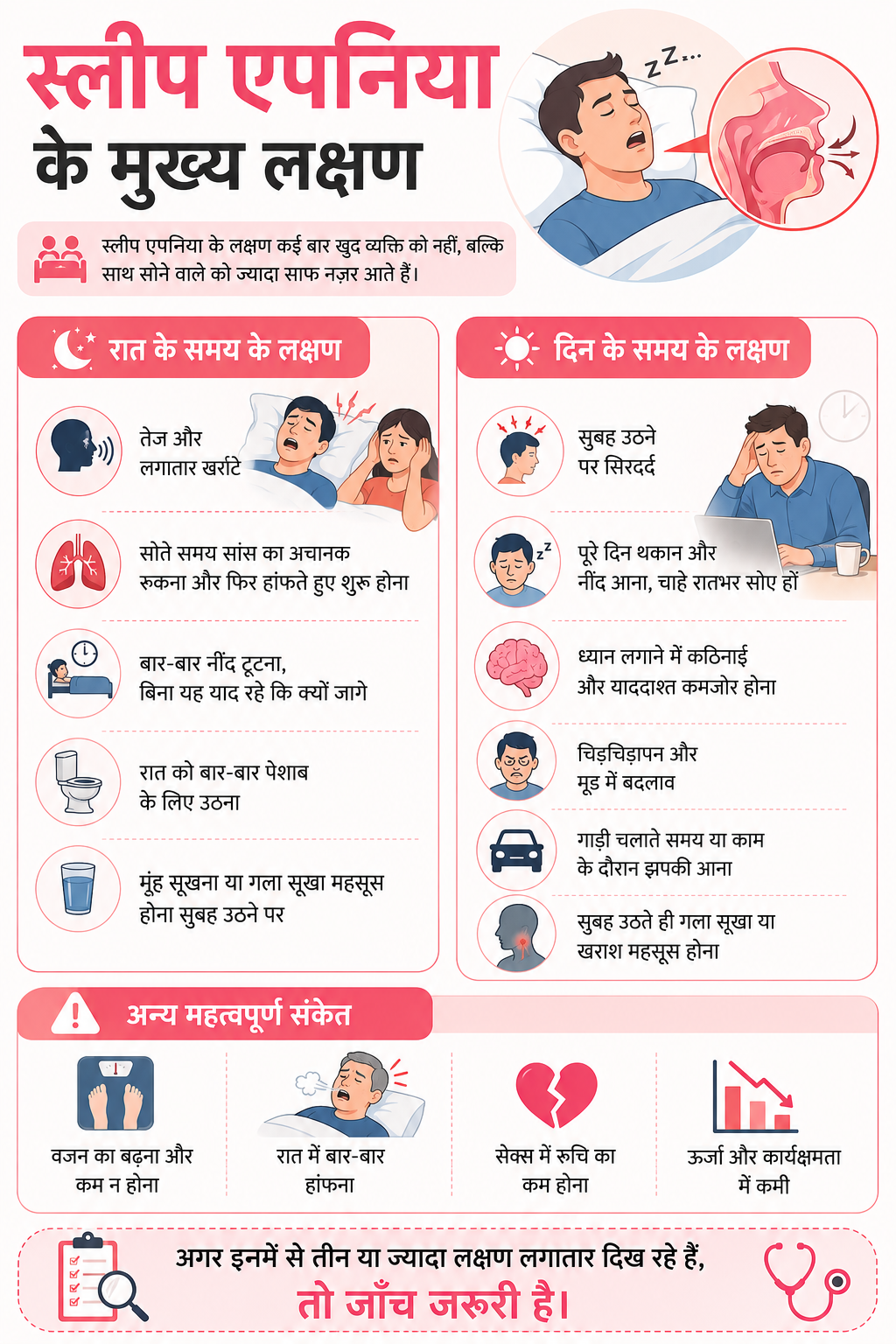
स्लीप एपनिया के लक्षण कई बार खुद व्यक्ति को नहीं, बल्कि साथ सोने वाले को ज्यादा साफ नज़र आते हैं।
रात के समय के लक्षण:
दिन के समय के लक्षण:
अन्य महत्वपूर्ण संकेत:
अगर इनमें से तीन या ज्यादा लक्षण लगातार दिख रहे हैं, तो जांच जरूरी है।
स्लीप एपनिया होने के मुख्य कारण कई हो सकते हैं, और अक्सर एक से ज्यादा कारण एक साथ मिलकर इसे बढ़ाते हैं –
स्लीप एपनिया का सही निदान घर पर अनुमान लगाने से नहीं, बल्कि विशेषज्ञ जांच से होता है –
जांच के नतीजों के आधार पर एपनिया-हाइपोपनिया इंडेक्स (AHI) से यह तय होता है कि स्लीप एपनिया हल्का, मध्यम या गंभीर है।
स्लीप एपनिया का इलाज इसकी गंभीरता और कारण पर निर्भर करता है।
हल्के मामलों में यह बदलाव बड़ा फर्क ला सकते हैं –
CPAP थेरेपी (Continuous Positive Airway Pressure): यह मध्यम से गंभीर OSA के लिए सबसे प्रभावी और सबसे ज्यादा इस्तेमाल होने वाला इलाज है। इसमें एक मास्क के जरिए लगातार हवा का दबाव दिया जाता है जो सांस की नली को खुला रखता है। शुरुआत में मास्क पहनना असहज लग सकता है, लेकिन नियमित इस्तेमाल से नींद की गुणवत्ता में बड़ा सुधार आता है।
ओरल अप्लायंस (Oral Appliance): हल्के से मध्यम OSA में दांतों पर पहनने वाला एक विशेष उपकरण जबड़े और जीभ को आगे की ओर रखता है, जिससे सांस की नली खुली रहती है।
सर्जरी : जब अन्य इलाज असफल हो जाएं या रुकावट की वजह कोई शारीरिक संरचना हो (जैसे टेढ़ी नाक की हड्डी, बड़ी टॉन्सिल), तो सर्जरी की सलाह दी जाती है। इसमें टॉन्सिल्लेक्टोमी, सेप्टोप्लास्टी या गले की संरचना सुधारने वाली सर्जरी शामिल हो सकती है।
योग सीधे स्लीप एपनिया का इलाज नहीं करता, लेकिन सहायक उपचार के रूप में बहुत असरदार है। अपनी जीवनशैली में आप निम्न योग को शामिल करके कुछ हद तक आराम पा सकते हैं –
नियमित योग और प्राणायाम से गले की मांसपेशियों की टोनिंग होती है, जिससे हल्के मामलों में रुकावट कम हो सकती है। हालांकि, गंभीर OSA में योग को CPAP या अन्य मेडिकल इलाज के साथ ही अपनाना चाहिए, उसकी जगह नहीं।
अनुपचारित स्लीप एपनिया सिर्फ नींद की समस्या नहीं रहती, यह पूरे शरीर पर असर डालती है –
यही वजह है कि स्लीप एपनिया को सिर्फ “खर्राटे” मानकर नजरअंदाज नहीं करना चाहिए।
स्लीप एपनिया एक गंभीर लेकिन इलाज योग्य समस्या है। सही समय पर पहचान और इलाज से न सिर्फ नींद बेहतर होती है, बल्कि हृदय, दिमाग और पूरे शरीर का स्वास्थ्य सुरक्षित रहता है। अगर आपको या आपके परिवार में किसी को तेज खर्राटे, दिन में थकान या नींद में सांस रुकने की शिकायत है, तो इसे नजरअंदाज न करें।
सीके बिरला अस्पताल के नींद विशेषज्ञों से आज ही मिले और सही जांच के साथ अपनी नींद और सेहत दोनों को वापस पाएं।
जैसे ही डॉक्टर आपके पेट का सीटी स्कैन देखने और उसका अध्ययन करने के बाद कहते हैं कि “कीमोथेरेपी शुरू करनी होगी।” बस, उसी समय कई लोगों को लगता है कि ये दवा उन्हें अंत की तरफ ले जाएगी, लेकिन ऐसा कुछ नहीं है।
इस डर से बचने के लिए आपको कुछ प्रश्नों के उत्तर जानने होंगे जैसे कि “कीमो क्या होता है?”, “क्या यह दर्दनाक है?”, “क्या इससे बाल सच में झड़ जाते हैं?” चिंता न करें, हम इन सभी सवालों के जवाब आपको इस ब्लॉग में देने वाले हैं।
यदि आपको भी कीमो का सुझाव दिया गया है, तो कम से कम सेकंड ओपिनियन के लिए हमारे अनुभवी ऑन्कोलॉजी (oncology) विशेषज्ञों से अभी अपॉइंटमेंट बुक करें। वे आपको पूरी प्रक्रिया समझाएंगे और बताएंगे कि आपको इसकी आवश्यकता है कि नहीं और यदि है तो कब तक आपको कीमो के लिए आना पड़ेगा।
Table of Contents
कीमो का मतलब है – रसायनों (chemicals) से उपचार। कीमोथेरेपी एक ऐसा इलाज है जिसमें खास तरह की दवाओं का उपयोग करके कैंसर कोशिकाओं को नष्ट किया जाता है या उनकी ग्रोथ को रोका जाता है। कैंसर की कोशिकाओं की एक खास बात होती है कि वे तेजी से बढ़ती हैं। कीमो की दवाएं ठीक इसी कमजोरी को निशाना बनाती हैं, अन्यथा ये पूरे शरीर में फैल जाएगी।
ये दवाएं शरीर में जाकर कैंसर कोशिकाओं के डीएनए (DNA) या उनके बढ़ने की प्रक्रिया को प्रभावित करती हैं, जिससे वे आगे बढ़ नहीं पाती और धीरे-धीरे नष्ट हो जाती हैं।
एक जरूरी बात जो हर मरीज को जाननी चाहिए – कीमोथेरेपी की दवाएं सिर्फ कैंसर कोशिकाओं तक सीमित नहीं रहती। ये कुछ हद तक स्वस्थ कोशिकाओं को भी प्रभावित कर सकती हैं, खासकर वो जो तेजी से बढ़ती हैं जैसे बालों की जड़ें, मुंह की परत, या रक्त कोशिकाएं। इसलिए कुछ साइड इफेक्ट होते हैं – लेकिन अच्छी खबर यह है कि स्वस्थ कोशिकाएं इलाज के बाद खुद ठीक हो जाती हैं।
यह सोचना गलत है हर प्रकार के कैंसर के लिए कीमोथेरेपी का ही उपयोग होगा। डॉक्टर कई बातें देखकर यह फैसला करते हैं –
कीमोथेरेपी का उपयोग इन उद्देश्यों के लिए किया जाता है:
ICMR के अनुसार भारत में साल 2024 में करीब 8 से 9 लाख कैंसर से जुड़ी मौतें हुईं – और इनमें से ज्यादातर मामलों में देर से निदान (late diagnosis) एक बड़ी वजह रही। अगर समय पर पहचान हो और सही इलाज मिले, तो कीमोथेरेपी जीवन बचाने में बेहद प्रभावी साबित होती है।
बहुत से लोग सोचते हैं कि कीमो सिर्फ ड्रिप (drip) के ज़रिए दी जाती है – लेकिन ऐसा नहीं है। कीमोथेरेपी के कई प्रकार और तरीके होते हैं, जिन्हें हम नीचे समझेंगे –
कीमोथेरेपी एक बार में नहीं, बल्कि चक्रों (cycles) में दी जाती है। एक चक्र में दवा दी जाती है और फिर शरीर को ठीक होने का वक्त दिया जाता है। आमतौर पर हर 2 से 4 हफ्ते में एक चक्र होता है। पूरा कोर्स कैंसर के प्रकार और स्टेज के हिसाब से 4 से 8 चक्र या उससे ज़्यादा हो सकता है।
कीमो शुरू करने से पहले कुछ बातें जानना बहुत ज़रूरी है जैसे कि –
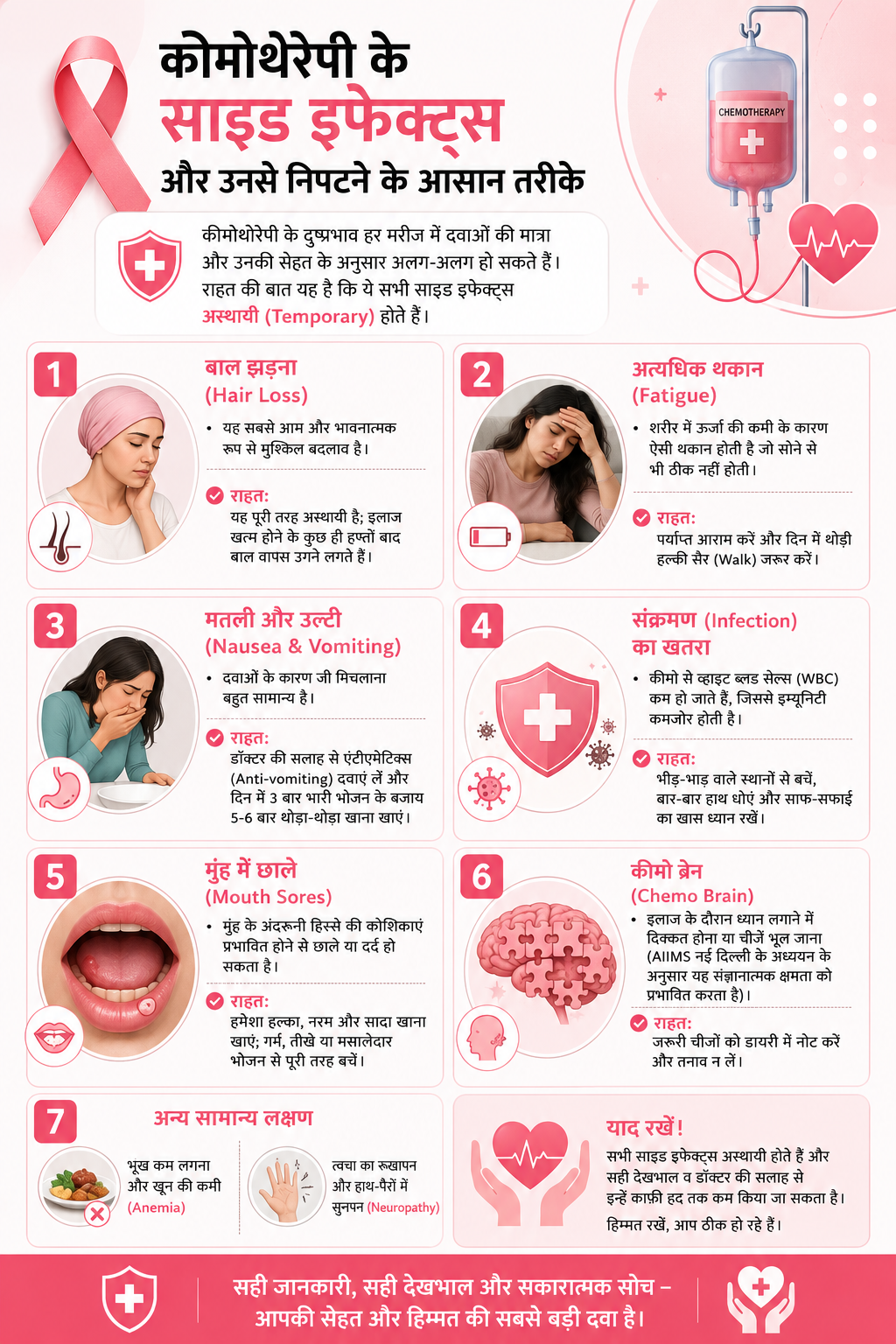
यह वो हिस्सा है जिसके बारे में हर कोई जानना चाहता है – और ज्यादातर लोग इसी वजह से कीमो से डरते हैं। सच यह है कि कीमोथेरेपी के दुष्प्रभाव हर मरीज में अलग-अलग होते हैं। यह इस बात पर निर्भर करता है कि किस दवा का उपयोग हो रहा है, कितनी मात्रा में, और मरीज की सेहत कैसी है।
यह याद रखें – ये सब अस्थायी हैं। इलाज खत्म होने के बाद धीरे-धीरे शरीर सामान्य होने लगता है।
कीमो के दौरान और बाद में सही खान-पान शरीर को जल्दी ठीक करने में बड़ी भूमिका निभाता है।
क्या खाएं:
क्या न खाएं:
कीमो का नाम सुनकर डर लगना स्वाभाविक है – लेकिन यह डर तब छोटा हो जाता है जब हम सच में जान लेते हैं कि कीमोथेरेपी क्या है और यह कैसे काम करती है। आज की मेडिकल टेक्नोलॉजी बेहद आगे बढ़ चुकी है। कीमो पहले से कहीं ज़्यादा सुरक्षित और असरदार हो गई है। इसके साइड इफेक्ट को मैनेज करने के तरीके भी बेहतर हो गए हैं।
सबसे ज़रूरी है – सही डॉक्टर, सही समय पर सही इलाज। सीके बिरला अस्पताल में हमारी कैंसर विशेषज्ञ टीम हर कदम पर आपके साथ है – चाहे आप अभी जानकारी जुटा रहे हों या इलाज शुरू करने के बारे में सोच रहे हों। आज ही अपॉइंटमेंट बुक करें और पहला कदम उठाएं।

