
Foods that are bland and easy to digest are good to eat when you are fighting an upset stomach. In most cases, upset stomachs can be easily treated by adjusting our diet a little. By following a few dietary tips given in the article can help you treat an upset stomach.
We have all been affected by an upset stomach one time or the other. Cramps, diarrhoea and indigestion are just a few of the symptoms that leave us feeling drained and sick. Thankfully in most cases, upset stomachs can be easily treated by adjusting our diet a little. So, hasten your recovery by just following the list of food for upset stomach and a few lifestyle tips.
An upset stomach isn’t one single condition — it’s a symptom that can come from several different causes, including:
– Gastritis (inflammation of the stomach lining, often from stress, certain medications, or infection)
– Viral gastroenteritis (the “stomach flu”)
– Food poisoning
– Irritable Bowel Syndrome (IBS)
– Lactose intolerance
– Food allergies
– Constipation
Note: bananas and applesauce are the exception to the “avoid raw fruit” rule below — they work precisely because they’re low in the insoluble fibre that raw fruit has, which is what makes raw fruit harder to digest during an upset stomach.
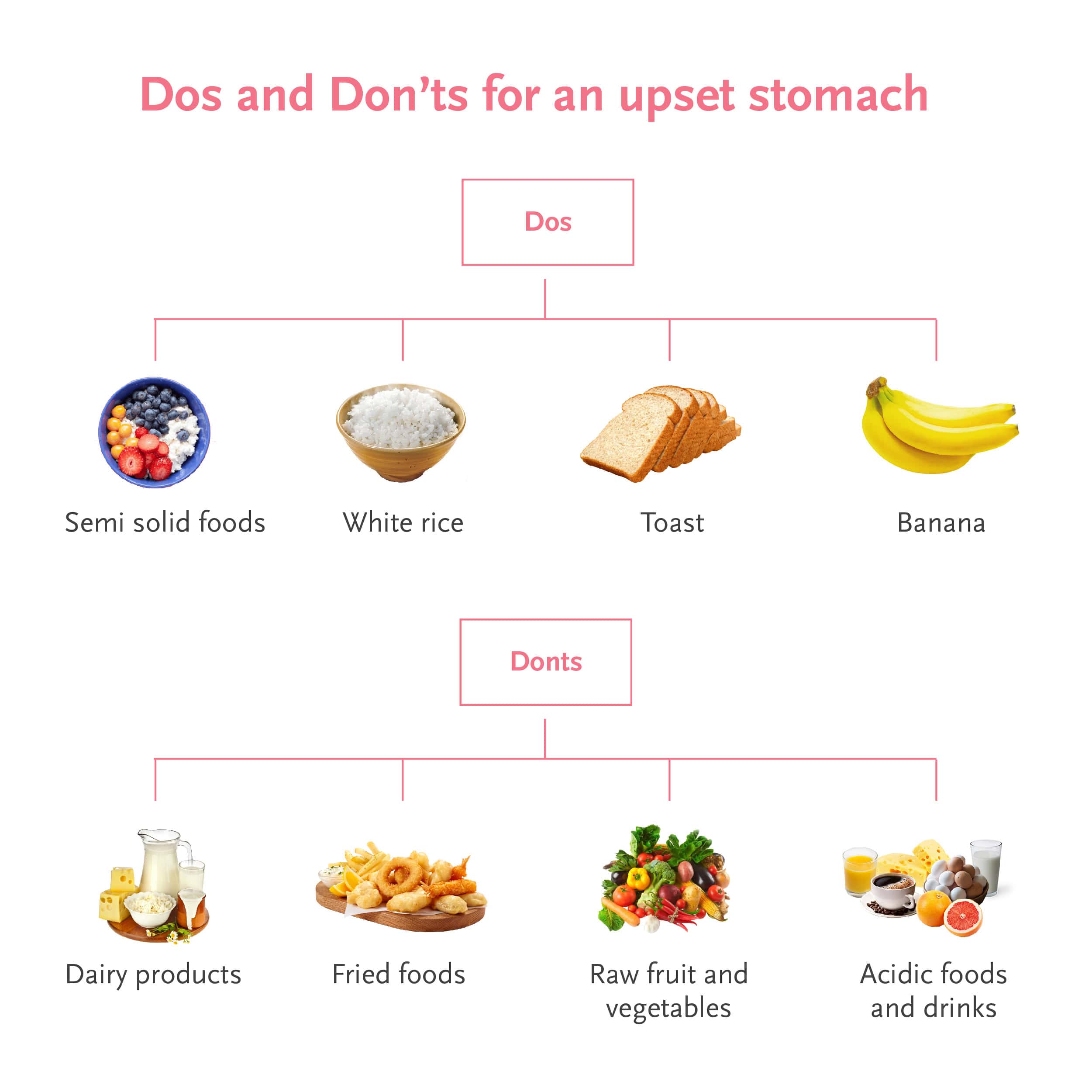
Most raw fruit is best avoided during a stomach upset (see “must-not haves” below), but a few are the exception:
Bananas— gentle on the stomach, help settle diarrhoea, and replace potassium lost through vomiting or loose stools.
Applesauce — cooked and pureed apple is easier to digest than a whole raw apple and helps firm up loose stools.
Ripe papaya, in small amounts — some people find it easier to digest than other raw fruit once symptoms start easing, though it’s best reintroduced only after the sharpest symptoms have settled.
These three are the fruit-based exceptions to the “avoid raw fruit” rule, everything else in the citrus, whole-apple, or high-fibre category is best left until your stomach has settled.
This is a common question, and the honest answer is: juice helps less than most people expect, and in some cases can make things worse.
Coconut water is a reasonable, low-sugar choice for gentle hydration alongside other fluids.
Diluted, low-sugar fruit juice without pulp** (for example, apple juice cut with water) can be used in small amounts once you’re keeping fluids down.
Plain fruit juice, water, and broth are not a substitute for oral rehydration solution (ORS) when you’re significantly dehydrated. They don’t replace lost electrolytes (sodium, potassium, bicarbonate) the way ORS does, and drinking a lot of plain juice or water alone can, in some cases, worsen the electrolyte imbalance. If diarrhoea or vomiting is more than mild, ORS should be your first choice, not juice.
For children specifically, undiluted apple juice and other clear liquids are not recommended as a rehydration fluid — an age-appropriate ORS is the right choice, and a doctor or pharmacist can advise on the correct amount.
If your upset stomach involves diarrhoea or vomiting, replacing lost fluids matters as much as choosing the right food. Along with water, coconut water, and clear soups, keep oral rehydration solution (ORS) on hand — it replaces the salts and sugars your body loses, not just the water. *If you’ve just vomited, it’s best to wait a few hours and sip small amounts of fluid frequently before trying solid food again, rather than eating or drinking a large amount right away.
The best way to deal with an upset stomach is to have plenty of fluids and stick to easily digestible bland soft food. Choose some comforting “khichidi” or curd rice for your meals with a side of buttermilk till the symptoms abate. Khichidi is known as the best food for upset stomach in India. If you don’t see your condition becoming better after a few days, seek medical attention or consult with your doctor to rule out any other condition.
Read: Causes of stomach ache after eating
If you’re looking for light, easy-to-digest food for an upset stomach, the must-haves listed above (semi-solid foods, white rice, toast, bananas, and applesauce) are exactly that — plain, low-fat, low-fibre foods that don’t ask much of your digestive system. Add boiled potatoes (plain, no butter or spices) and a plain scrambled egg to this list if you need something more filling once the sharpest symptoms have eased.
Alongside food choices, a few simple habits can reduce stomach discomfort:
– Eat slowly — it takes about 20 minutes for your stomach to signal fullness to your brain, so slower eating helps you avoid overeating.
– Chew thoroughly rather than gulping — swallowing air along with food can trap gas and worsen bloating.
– Eat smaller, more frequent meals rather than large ones.
– Avoid lying down for a few hours after eating, especially if reflux is part of your discomfort.
Most upset stomachs settle with diet and rest, but see a doctor if you notice any of the following:
– Symptoms lasting more than 3 days without improvement
– Signs of dehydration — very dark urine, dizziness, or not urinating
– Blood in vomit or stool, or black, tarry stools
– High fever alongside stomach pain
– Severe pain that is sharp, constant, or getting worse rather than better
The best way to deal with an upset stomach is to have plenty of fluids and stick to easily digestible bland soft food. Choose some comforting “khichidi” or curd rice for your meals with a side of buttermilk till the symptoms abate. Khichidi is known as the best food for upset stomach. If you don’t see your condition becoming better after a few days, consult with doctor.
Ques 1: What should I eat for an upset stomach?
Ans: If you are suffering from an upset stomach it is better to opt for semi solid bland food which is easy to digest. This includes white rice, plain bread, yogurt and bananas, these are some foods for upset stomach. Reduce your salt consumption and drink plenty of fluids (water is the best).
Ques 2: Why do I always have an upset stomach after drinking milk or eating cheese?
Ans: If you feel uncomfortable, bloated, nauseated, etc whenever you have foods with dairy products, chances are that you might be lactose intolerant. Try switching for dairy-free alternatives such as soy/almond milk, tofu, etc to see if the symptoms abate. If not, consult your doctor to test for possible causes.
Ques 3: Is yogurt good for upset stomach?
Ans: Yes, yogurt may help in upset stomach. Yogurt is rich in probiotics that can help you in maintaining good stomach health.
Written and Verified by:

Similar Surgery Blogs
Request a call back


