Filter :
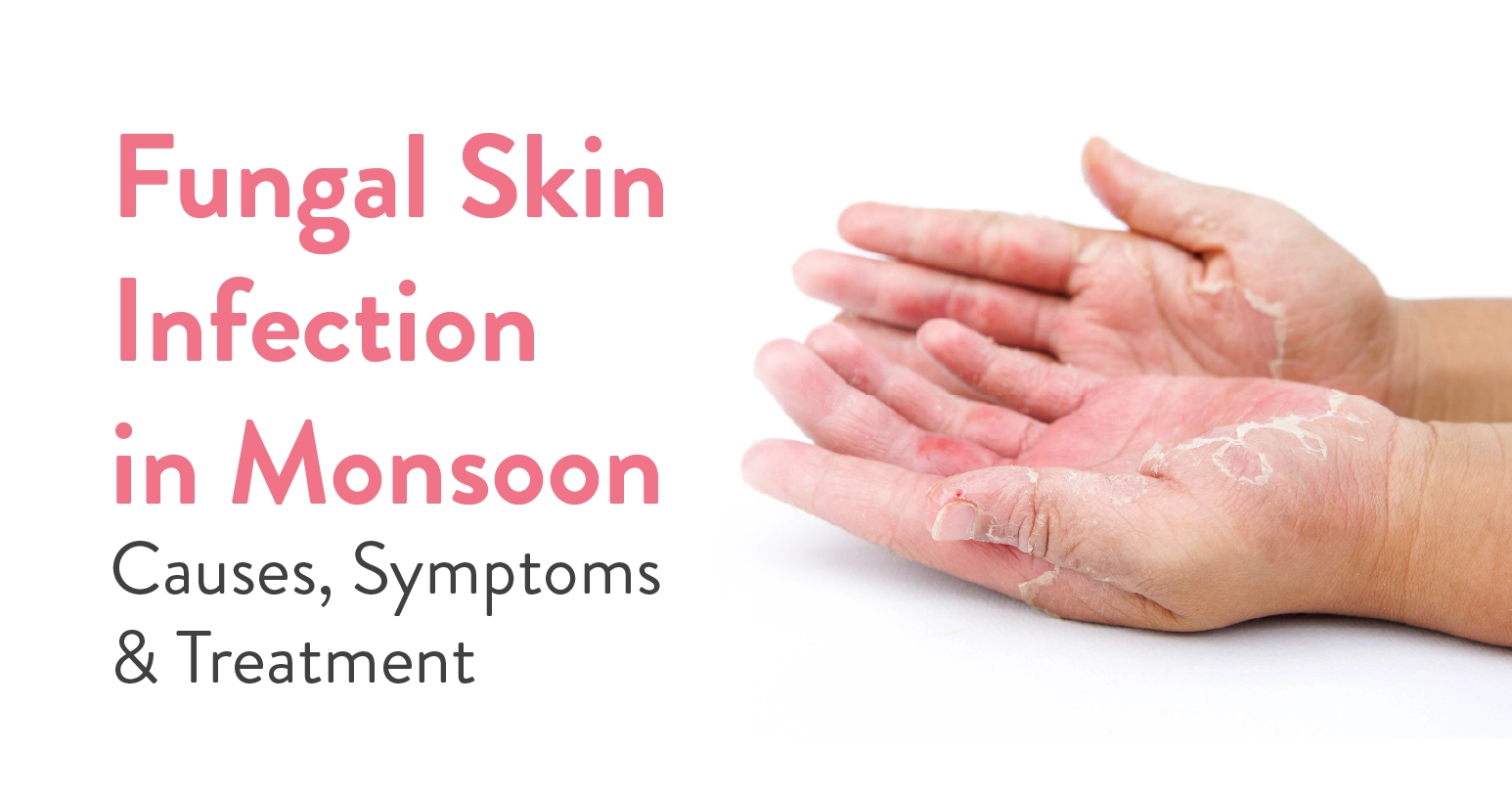
Grey skies, greenery all around and the refreshing scent of the first monsoon shower make the season a favourite for many. What often goes unnoticed, however, is the humidity that creates the perfect environment for fungal skin infections. Dermatologists see more cases of itchy, red and flaky skin rashes during the monsoon, as warm and damp conditions allow fungi to thrive. These infections can cause itching and discomfort, but they are highly treatable, with many people beginning to feel better within days of the right treatment.
Recognising the signs early and seeking timely treatment can help prevent the infection from spreading or recurring. Keep reading to learn why fungal skin infections become more common during the monsoon, how to identify them, the treatment options available and when you should consult a doctor.
Table of Contents
Small amounts of fungus live on everyone’s skin normally without causing any harm. Your skin keeps it in check without any effort on your part. Problems occur when that balance is disturbed. Sweat, humidity, tight clothing or even a small scrape can give these organisms room to multiply faster than your skin can control.
That is essentially what a fungal skin infection is: microscopic fungi that thrive in warm, damp conditions, growing more than they should on the surface of your skin.
It is also more common than most people assume. According to the World Health Organization (WHO), fungal skin infections affect more than 650 million people worldwide at any given time, making them one of the most common skin conditions globally.
Most cases are caused by a group of fungi called dermatophytes. These feed on keratin, the protein that makes up the outer layer of your skin, your hair and your nails, which is exactly why infections tend to show up in those areas.
Fungus follows the moisture. Wherever sweat or dampness stays longest on your body, that is usually where you will spot an infection and the type varies accordingly. The most common ones during the rains:
1. Ringworm (tinea corporis): Because of the ring-shaped rash it leaves behind, it is called ringworm. It appears as a red, scaly patch with a clearer centre, usually on the torso or limbs.
2. Athlete’s foot (tinea pedis): It affects the skin between the toes, especially in people whose feet stay damp inside shoes for long hours.
3. Jock itch (tinea cruris): This one occurs in the groin and inner thighs, areas that trap moisture and warmth.
4. Fungal infection on the face (tinea faciei): It is less common but increasingly seen, often mistaken for an allergy or acne because it can appear as a mild rash before the usual ring shape develops.
5. Fungal skin infection on hands and legs: It is commonly picked up through direct contact with an infected person, pet or shared item like a towel or gym mat.
6. Candidiasis: It is caused by a different type of fungus (yeast), mostly in skin folds, under the breasts or in nappy areas.
Monsoon weather brings high humidity, warm temperatures and low airflow; practically everything that fungus needs to thrive. Beyond the season itself, some common causes of fungal infection are:
Also, fungus does not need direct skin to skin contact to spread. Spores can survive on bathroom tiles, mats and shoes for weeks, which is part of why reinfection is so common even after the original rash has healed.
Fungal infection symptoms vary depending on the area of the body affected, but they usually follow a recognisable pattern.
It is commonly seen that the itch from a fungal infection tends to intensify right after you remove sweaty clothes or shoes, not while you are wearing them.
Most dermatologists can identify a fungal infection through a visual examination alone, given how characteristic the ring-like pattern is. When the diagnosis isn’t obvious — or when a rash isn’t responding to treatment — your doctor may take a small skin scraping and examine it under a microscope using a potassium hydroxide (KOH) test, or send a sample for fungal culture. This step matters more than patients often assume, because a handful of other skin conditions, including eczema and psoriasis, can look deceptively similar in early stages. Treating the wrong condition for weeks only delays real relief.
A dermatologist can usually diagnose a fungal skin infection based on your symptoms and by examining the affected skin. If the diagnosis is unclear or the infection is not responding to treatment, additional tests may be recommended, such as:
These tests help distinguish fungal skin infections from conditions with similar symptoms, such as eczema, psoriasis or dermatitis, ensuring you receive the most appropriate treatment.
Medicine for fungal infection on skin generally falls into two categories:
Some home measures can really help your skin recover faster:
These habits won’t cure an infection on their own, but they create the kind of environment fungus struggles to survive in, which lowers your risk of reinfection too.
What about remedies like turmeric paste, coconut oil or diluted apple cider vinegar?
They are popular, but the clinical evidence behind them is thin. At best, they may soothe irritation. But relying on them instead of an actual antifungal medicine usually just gives the infection more time to spread.
There is also the skin-type factor. What works gently on one person’s skin can irritate another’s. Rather than experimenting on your own, it is worth checking with a dermatologist, especially if the rash is not improving, since early guidance almost always saves more time than home remedies do.
Healing of fungal skin infection depends on where the infection is and how early treatment starts.
Most mild fungal infections can be managed with over-the-counter treatment, but it is worth seeing a dermatologist if:
Fungal skin infections can feel irritating especially when the itching disrupts sleep or the rash keeps reappearing. But they respond well to treatment and most people see improvement once they are on the right medicine and give their skin the dry, breathable environment it needs to heal.
If a rash is not healing or you are unsure what you are dealing with, the Dermatology team at the CK Birla Hospital is there to help you get an accurate diagnosis and a treatment suited to your skin.
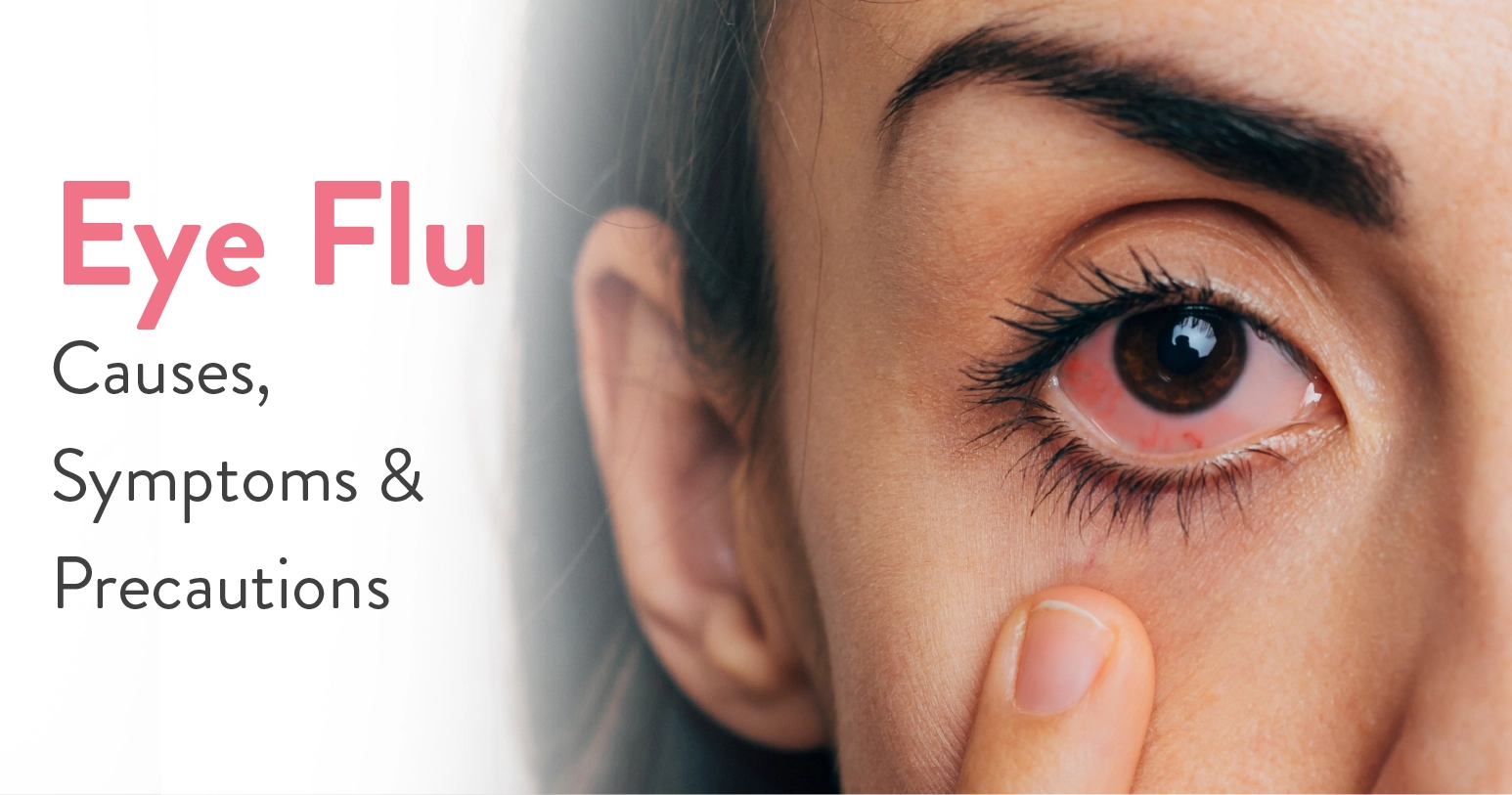
Ever woken up with a red, watery eye that feels itchy or gritty and wondered what caused it? These are common eye flu symptoms. Cases of eye issues increase during the monsoon season, particularly after heavy rains and flooding, when infections can spread more easily through close contact and contaminated surfaces. Since eye flu is highly contagious, recognising the symptoms early and seeking timely care can help ease irritation and reduce the risk of passing the infection to others. Read on to learn about its causes, symptoms, treatment options and precautions to help prevent its spread.
Table of Contents
‘Eye flu’ is the popular and commonly used term for a sudden, contagious eye infection that causes redness, watering and irritation. The name simply stuck in common usage because it spreads quickly through communities, much like a seasonal flu outbreak. Doctors use a more precise term for it, which brings us to the next question people often ask.
Yes. Eye flu is conjunctivitis which means inflammation of the conjunctiva.
The conjunctiva is a thin, transparent layer that lines the inside of your eyelids and covers the white part of the eye (sclera). When it becomes infected or irritated, the tiny blood vessels within it become inflamed and more visible, causing the eye to appear pink or red. This condition is known as conjunctivitis, commonly referred to as pink eye.
According to the Centers for Disease Control and Prevention (CDC), pink eye is one of the most common eye conditions affecting both children and adults and many cases improve with the timely and right care depending on the underlying cause.
Eye flu is most commonly caused by viral infections, particularly adenoviruses, which spread easily from person to person. Humid, waterlogged conditions do not cause eye flu directly. They create the perfect environment for viruses to survive on surfaces longer and for people to touch contaminated water, then their eyes, more often. The infection itself always needs a virus or bacteria to take hold.
Three broad categories of eye flu exist:
Early eye flu symptoms start subtly, with a slight grittiness or the feeling of sand in one eye, before worsening over the next 24 to 48 hours. As the infection progresses, a few other signs tend to show up too.
Common signs of eye flu are:
Normally, eye flu starts in one eye and spreads to the other within a day or two, as the virus travels easily through hand-to-eye contact. If both eyes turn red at exactly the same time with intense itching, that is actually more suggestive of an allergy than an infection.
Myth Debunked: Can Eye Flu Spread Just by Looking?
A lot of confusion lives here, with many people asking: can eye flu spread just by looking at someone?
No. This is a widespread myth. Eye flu does not spread through eye contact, staring or being in the same room as an infected person.
It spreads through:
The virus survives on hard surfaces for a surprisingly long time, sometimes several days. This is why one person in a household or office often gets eye flu, followed by others, even if they never had direct contact with the first person who fell sick.
Children in schools and daycares, teachers, healthcare workers and people living in crowded households face higher exposure simply because of close, frequent contact.
People who wear contact lenses, do not wash hands often, or have a weakened immune system also tend to catch it more easily and may take slightly longer to recover.
Viral conjunctivitis usually gets better with simple home care.
Most viral conjunctivitis heals with the right home care. Still, it is worth getting it checked by a healthcare professional to be on the safer side.
If your doctor notices signs like thick, yellow discharge or symptoms that are not easing up, they might suspect a bacterial infection and prescribe drops or ointment accordingly. Allergic conjunctivitis is managed differently and a doctor can recommend the right treatment based on what is triggering it.
Caution: Do not self-medicate with leftover steroid drops from a previous prescription. This can worsen certain infections or raise eye pressure.
Book an appointment promptly if you notice:
The duration of eye flu depends on its underlying cause.
Viral eye flu can last 7 to 14 days. Symptoms like redness and watering peak during the first few days before gradually improving. Although some cases may take 2 to 3 weeks to resolve completely.
Bacterial conjunctivitis usually improves within 2 to 3 days, once treated with antibiotic drops. But complete recovery can take up to a week.
Eye flu is most contagious when symptoms such as watery or sticky discharge are present. It is generally no longer contagious once the discharge and redness subside, though most doctors advise waiting until eyes look fully normal before returning to shared spaces like classrooms or offices.
Preventing eye flu mostly comes down to following simple habits such as:
Eye flu can make you panic for a moment when your eyes turn red overnight, but for the vast majority of people, it is a short-lived, manageable condition that heals with a little patience and basic hygiene.
If your symptoms feel unusually severe, don’t improve within a week, or you are simply unsure what you are dealing with, it is always worth getting it looked at medically.
Every time your eye suddenly starts twitching, does your mind immediately wonder if it is a sign of good or bad luck? Many people associate right or left eye twitching with superstitions, especially about what it means for women or men.
These beliefs have been passed down for generations; however, there is no scientific evidence to back them. Eye twitching is generally linked to everyday causes rather than being a sign of good or bad fortune.
Read on to understand what eye twitching really is, what causes it, when it may require medical attention, and simple ways to manage and prevent it.
Table of Contents
Eye twitching is the involuntary, repetitive contraction or spasm of the eyelid muscles that causes a fluttering or flickering sensation. Medically, this common type of eyelid twitching is known as eyelid myokymia.
It most commonly affects the upper eyelid of one eye, although the lower eyelid may also twitch. In most cases, the spasms are mild, painless and temporary, lasting from a few seconds to a few minutes before stopping on their own. They usually do not affect vision or eye health.
However, if the twitching becomes persistent, frequent or severe, it may occasionally be linked to an underlying eye condition, irritation or, more rarely, a neurological disorder. In such cases, it is advisable to consult an Internal Medicine doctor for an initial evaluation. Based on the findings, they may recommend further assessment by an ophthalmologist or a neurologist if specialised care is required.
Did you know? Eye twitching affects the eyelid, not the eyeball itself. Many people describe it as a fluttering sensation, even though the movement may not be noticeable to others.
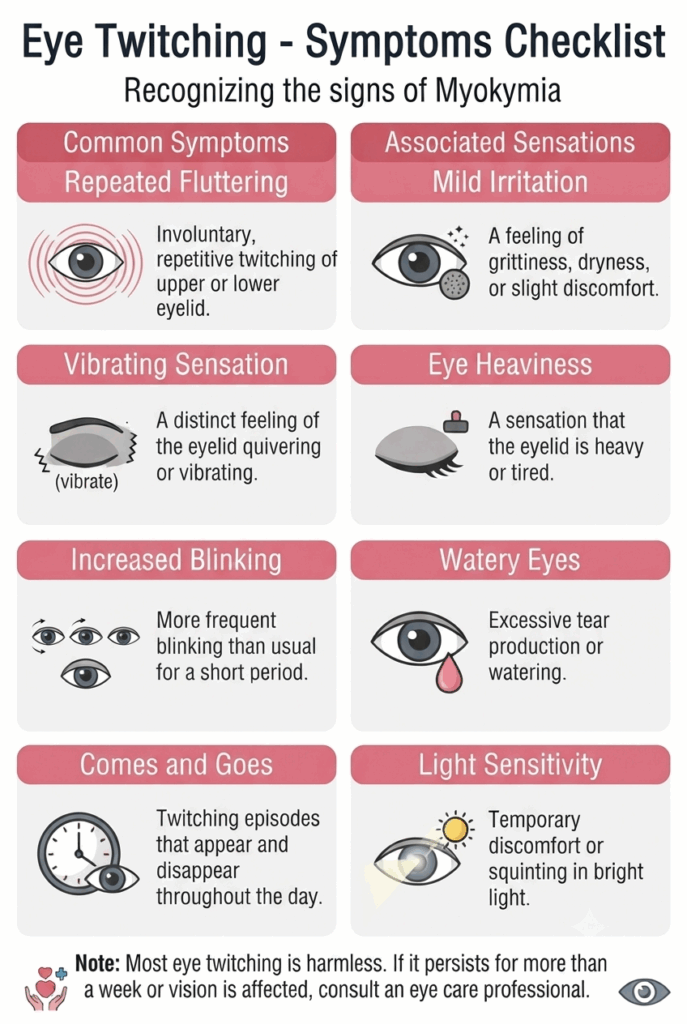
Some people experience eyelid fluttering once in a while, while others notice repeated spasms that interfere with daily activities.
Some common symptoms you may experience are:
You should seek medical advice if the twitching:
Eye twitching is usually nothing more than your body’s reaction to temporary strain or irritation. Recognising the common causes can help you reduce how frequently it occurs.
Lifestyle-related causes
1. Stress:As stress levels rise, muscles throughout the body, including those around the eyes, may become more prone to involuntary spasms.
2. Lack of sleep: Lack of sleep and fatigue put extra strain on the nerves and muscles controlling your eyelids, which can cause twitching.
3. Excessive screen time: Staring at digital screens for long periods reduces your blink rate which leads to eye strain and dryness. This is a common reason for eye twitching among people who work on computers or frequently use smartphones.
4. Too much caffeine or alcohol: Consuming excessive amounts of coffee, tea, energy drinks or alcohol may overstimulate the nervous system and cause eyelid twitching in some people.
Less often, eye twitching can be linked to more specific conditions,
such as:
Most people worry that eye twitching is caused by a vitamin deficiency. However, nutritional deficiencies, such as low vitamin B12 or magnesium, may contribute in some cases, they are far less common than everyday causes like stress, poor sleep and digital eye strain.
Eye twitching is categorised into three major types:
| Type | What it is | Should you be concerned? |
| Eyelid myokymia |
|
Usually no. It is often linked to stress, fatigue, caffeine or eye strain. |
| Benign essential blepharospasm |
|
Yes. It should be evaluated by an ophthalmologist or neurologist. |
| Hemifacial spasm |
|
Yes. Medical assessment is recommended to identify the underlying cause. |
Eye twitching has long been associated with superstitions and cultural beliefs. Many people search for the meaning of right or left eye twitching for females or males, wondering whether it is a sign of good or bad luck or predicts future events. Some traditions believe that right eye twitching is a positive sign for women, while others interpret it differently. Similar beliefs also exist for men and for the left eye.
From a medical perspective, however, there is no scientific evidence that twitching in the right or left eye is linked to luck, future events or gender. In most cases, eye twitching is simply a temporary muscle spasm triggered by factors such as stress, fatigue, excessive caffeine intake or eye strain.
A common concern patients ask
Many people become anxious when only one eye twitches for several days. In most cases, this does not indicate a serious neurological problem. If the twitching is mild and there are no other symptoms, it usually settles once the underlying cause, such as fatigue or stress, is addressed.
If it lasts for more than a week, spreads to other parts of the face or comes along with vision changes or facial weakness, it is best to seek medical advice.
The treatment for eye twitching depends on its underlying cause. Since most cases are temporary and harmless, they can improve without medical treatment.
If you are experiencing twitching more frequently or if it is linked to an underlying condition, your doctor may recommend a necessary treatment.
These treatment options are:
Simple changes to your daily routine can help in reducing eye twitching. Get enough sleep, manage stress, limit caffeine and take regular breaks from digital screens to see the positive results.
If the reason behind this problem is dry eyes, artificial tears or lubricating eye drops may help keep the eyes moist and reduce irritation. Remember to consult an ophthalmologist before buying any over-the-counter eye product.
Conditions such as eye allergies, blepharitis (eyelid inflammation) or an outdated spectacle prescription can irritate you with eye twitching. Treating these problems may resolve the symptoms.
In rare cases where eye twitching is caused by a condition such as benign essential blepharospasm rather than common eyelid myokymia, your ophthalmologist may recommend botulinum toxin (Botox) injections.
Surgery is rarely required and is considered only when severe eyelid spasms do not improve with other treatments.
Remember: Do not take supplements for eye twitching without medical advice. If a nutritional deficiency has not been confirmed, they are unlikely to help and may cause unwanted side effects.
If your eye has just started twitching, a few simple measures may help it settle more quickly.
Although it is not always possible to permanently prevent eye twitching, healthy daily habits can significantly lower the chances of it recurring.
You can reduce your risk by:
Eye twitching is a common and usually harmless condition that most people experience. Superstitions about what right or left eye twitching for women and men means may be deeply rooted in different cultures, but medical science does not back them up. More often than not, the real cause is something everyday, such as stress, poor sleep, eye strain, or dry eyes and it
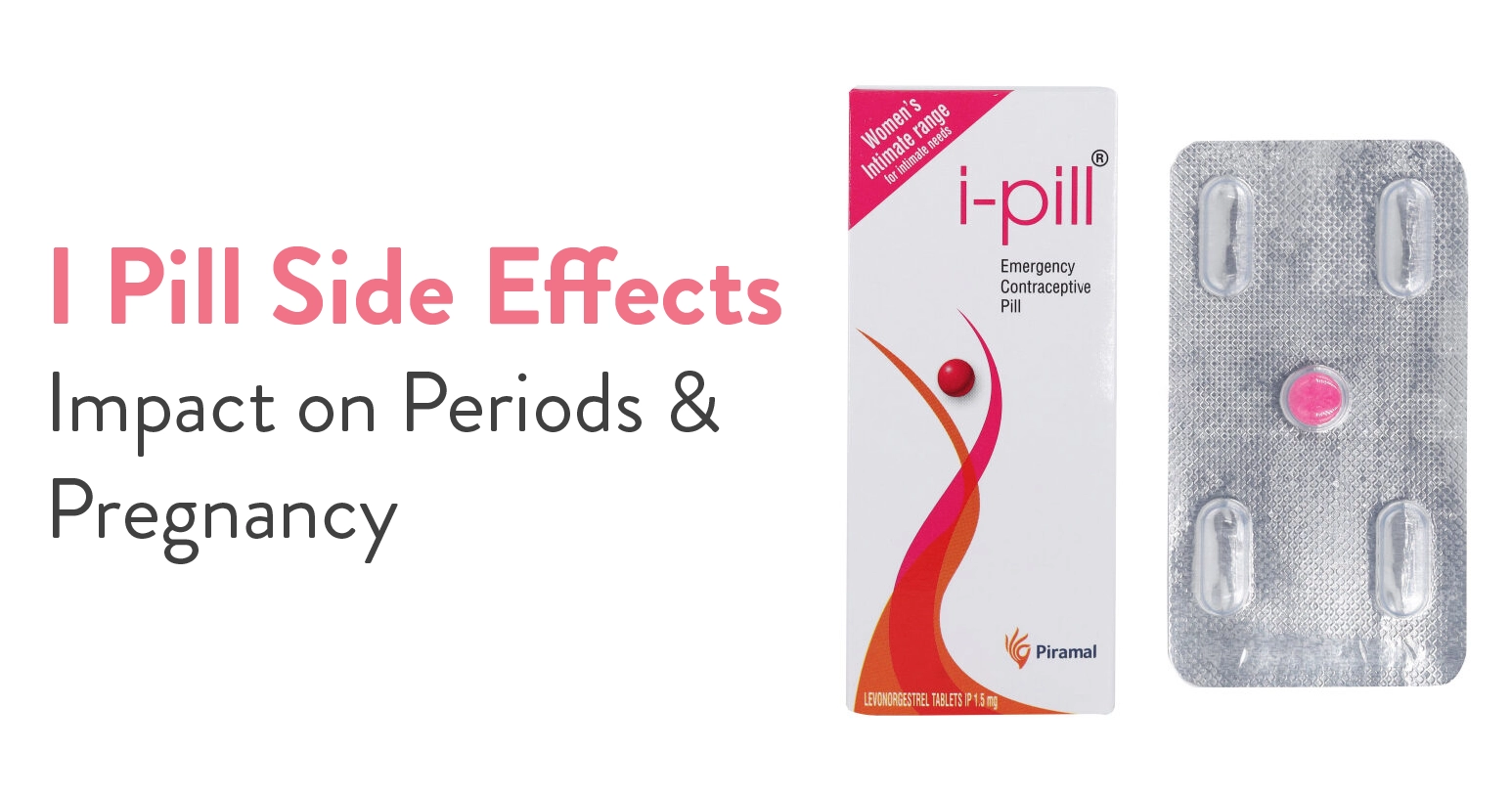
Emergency contraception has given millions of people control over their reproductive choices, but that control should not come without information. One of the most popularly used contraceptives, the i-pill is safe and effective for most people, but like any medication, it comes with side effects you should know about.
Keep reading to find out:
Table of Contents
i-Pill is an emergency contraceptive pill (ECP) used to reduce the risk of pregnancy after unprotected sex or contraceptive failure. It contains levonorgestrel, a synthetic form of the hormone progesterone.
It may be used in situations such as:
i-Pill is designed for emergency use only. It should not be used as a regular method of contraception.
Like all other ECPs, i-Pill works mainly by delaying or preventing ovulation, which is the release of an egg from the ovary. Without an egg, fertilisation cannot occur.
Depending on where you are in your menstrual cycle, i-pill may also:
One common misconception is that i-pill causes an abortion. It does not terminate an existing pregnancy and does not affect an implanted embryo. If pregnancy has already occurred, taking an i-pill will not end it.
Did you know this?
Many women assume emergency contraception works at any point in the cycle. However, it is much less effective if ovulation has already taken place.
The sooner you take the i-pill, the better it works.
Ideally, it should be taken:
Even delaying by one day can reduce its effectiveness.
When taken correctly and within the recommended time, an ECP like i-pill is highly effective at preventing pregnancy. Its effectiveness depends largely on how timely it is taken.
| Time after unprotected sex | Approximate effectiveness |
| Within 24 hours | Highly effective |
| 24 to 48 hours | Very effective, but lower than within 24 hours |
| 48 to 72 hours | Still effective, though protection continues to decline |
| Up to 120 hours | May still provide some protection, but levonorgestrel is less effective than if taken earlier |
Most women experience either no side effects or only mild, temporary symptoms post consuming an ECP that usually settle within a day or two.
Some common i-pill side effects one may experience are:
Your body notices the sudden change in hormone levels and reacts to it, and that reaction is what causes these symptoms.
Note –
Changes in the menstrual cycle are among the most common side effects after taking an ECP like i-Pill.
Your next period may:
Keep in mind that a period delay of up to one week is fairly common. However, for most women, periods return to their usual pattern by the following cycle.
If your period is delayed by more than 7 days or if it is unusually light, you should take a pregnancy test.
You should consult a gynaecologist if:
Something people often overlook is that the i-pill might not be the only reason your period is late. Emotional stress can do that too. The anxiety that follows unprotected sex can, on its own, temporarily delay your menstrual cycle.
One of the biggest myths about emergency contraception is that it causes infertility. However, taking i-Pill:
Some women worry that taking i-Pill more than once permanently harms reproductive health. Women can become pregnant again during the same menstrual cycle if they have unprotected sex after taking i-Pill. This is why doctors recommend starting or resuming a reliable contraceptive method soon after using emergency contraception.
Although repeated use is not recommended because it is less reliable than regular contraception and may lead to irregular bleeding, current evidence shows it does not cause long-term fertility problems.
Also note that i-Pill only protects against one episode of unprotected intercourse. If unprotected sex happens again later in the same cycle, pregnancy is still possible.
An ECP is a temporary solution. It is always advisable to be under the guidance of a gynaecologist to avoid any unnecessary confusions. You should consult a gynaecologist if:
Myth: i-Pill is an abortion pill.
Fact: It prevents pregnancy before fertilisation or implantation. It does not end an established pregnancy.
Myth: Taking an i-pill causes infertility.
Fact: There is no proof that occasional use affects future fertility.
Myth: It protects against sexually transmitted infections (STIs).
Fact: i-Pill prevents pregnancy only. It does not protect against infections such as HIV, chlamydia or gonorrhoea.
Myth: It can be used as regular contraception.
Fact: Emergency contraception is less effective than routine contraceptive methods and should only be used in emergencies.
i-Pill is a safe and effective option for preventing pregnancy after unprotected sex when taken as directed. Mild side effects such as nausea, spotting or temporary changes in your periods are common and usually resolve without treatment.
It does not affect future fertility or harm a future pregnancy. If your periods remain delayed, you experience severe symptoms or you need emergency contraception frequently, speaking with a gynaecologist can help you choose the most suitable long-term contraceptive option.
At the CK Birla Hospital, our experts at the Department of Obstetrics and Gynaecology offer personalised guidance on emergency contraception, menstrual concerns and reproductive health, helping you make informed decisions. We offer a non judgemental space for you to open up about your concerns and get timely solutions to live a healthy and happy life. Simply book a consultation to connect with our specialists.

सुबह उठते ही जिस हवा में हम सांस लेते हैं, क्या कभी आपने सोचा है कि वो असल में हमारे शरीर में क्या घोल रही है? दिल्ली, गुरुग्राम और आसपास के शहरों में सुबह की सैर अब ताजगी नहीं, बल्कि धुंध और जलन भरी आंखों का अनुभव बन चुकी है। खास तौर पर ये समस्या अक्टूबर और नवंबर में एक दम चरमपर आ जाती है। एक हल्की खांसी, थोड़ी थकान या सीढ़ी चढ़ते समय सांस का फूलना, ये सब शुरुआती संकेत हो सकते हैं जिन्हें हम आमतौर पर नजरअंदाज कर देते हैं।
अच्छी खबर यह है कि सही जानकारी और सही आहार से इस नुकसान को काफी हद तक रोका जा सकता है। इस लेख में हम विस्तार से समझेंगे कि प्रदूषण फेफड़ों को कैसे प्रभावित करता है, किसे सबसे ज्यादा खतरा है, और रोजमर्रा की जीवनशैली व आहार में कौन से बदलाव आपके फेफड़ों को मजबूत बना सकते हैं। अगर आपको या आपके परिवार में किसी को सांस लेने में तकलीफ, लगातार खांसी या सीने में भारीपन महसूस हो रहा है, तो इसे सामान्य मानकर टालें नहीं। आप सही जांच के लिए दिल्ली या गुरुग्राम में हमारे अनुभवी पल्मोनोलॉजिस्ट (फेफड़ों के विशेषज्ञ) से संपर्क कर सकते हैं।
Table of Contents
प्रदूषण को अक्सर “साइलेंट किलर” कहा जाता है, और इसकी वजह वाजिब है। ग्लोबल बर्डन ऑफ डिजीज के आंकड़ों के अनुसार, भारत में हर साल वायु प्रदूषण (बाहरी और घरेलू, दोनों मिलाकर) से लाखों लोगों की असमय मौत होती है, और इसका बड़ा हिस्सा PM2.5 जैसे महीन कणों की वजह से होता है। चिंता की बात यह है कि भारत में 90 प्रतिशत से ज्यादा आबादी ऐसी हवा में सांस लेती है, जो विश्व स्वास्थ्य संगठन (WHO) के तय मानकों से कहीं अधिक प्रदूषित है। दिल्ली और आसपास के NCR क्षेत्र में सर्दियों में यह समस्या और गंभीर हो जाती है, जब AQI (एयर क्वालिटी इंडेक्स) खतरनाक स्तर तक पहुंच जाता है।
यह सिर्फ एक पर्यावरणीय समस्या नहीं, बल्कि एक बड़ा स्वास्थ्य संकट बन चुका है। आर्थिक रूप से भी इसका असर बड़ा है, विशेषज्ञों के अनुसार वायु प्रदूषण के कारण होने वाली बीमारियों से भारत को हर साल अरबों डॉलर का आर्थिक नुकसान होता है, जिसमें दिल्ली जैसे शहरों की प्रति व्यक्ति हानि सबसे अधिक आंकी गई है।
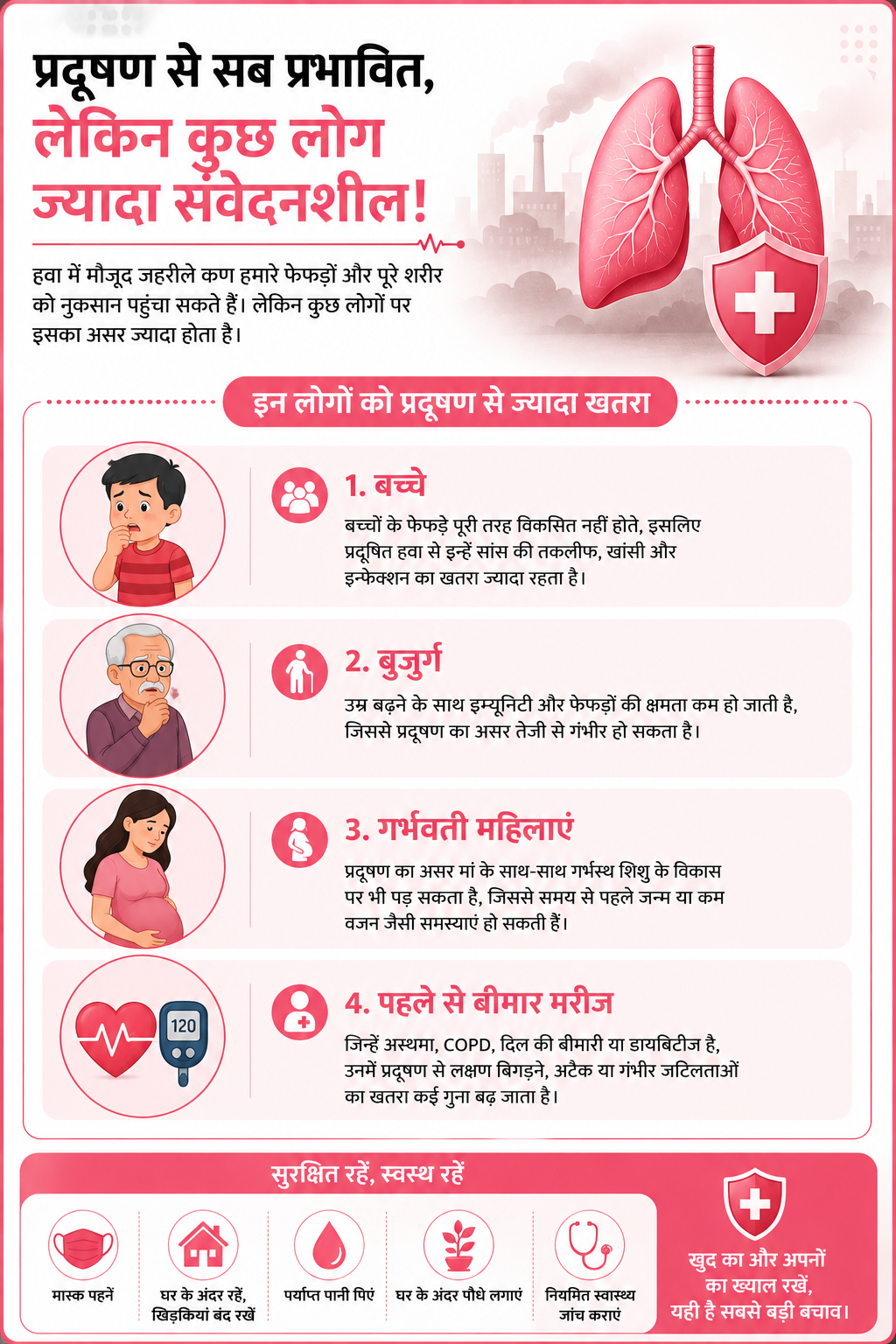
हमारे फेफड़े एक बेहद बारीक फिल्टर सिस्टम की तरह काम करते हैं, लेकिन PM2.5 और PM10 जैसे प्रदूषक कण इतने सूक्ष्म होते हैं कि वे इस फिल्टर को भेदकर सीधे फेफड़ों की सबसे गहरी संरचना (एल्वियोली) तक पहुंच जाते हैं। यहीं से ये कण खून में भी मिल सकते हैं, जिससे सिर्फ सांस ही नहीं बल्कि दिल की सेहत पर भी असर पड़ता है।
लगातार प्रदूषित हवा में सांस लेने से फेफड़ों की भीतरी परत में सूजन (inflammation) आ जाती है, ऑक्सीजन सोखने की क्षमता कम होने लगती है, और वायु मार्ग सिकुड़ने लगते हैं। समय के साथ यह प्रक्रिया फेफड़ों की क्षमता को स्थायी रूप से घटा सकती है, खासकर उन लोगों में जो पहले से धूम्रपान करते हैं या जिन्हें कोई पुरानी सांस की बीमारी है।
OPD में आने वाले मरीजों के लक्षणों पर गौर करें तो सर्दियों के महीनों में सांस से जुड़ी शिकायतें साफ तौर पर बढ़ जाती हैं, जैसे लगातार खांसी, सांस फूलना और सीने में जकड़न। मेडिकल रिसर्च बताते हैं कि प्रदूषण सीधे तौर पर इन समस्याओं से जुड़ा है:
सभी लोग प्रदूषण से प्रभावित होते हैं, लेकिन कुछ वर्ग ज्यादा संवेदनशील होते हैं जैसे कि –
अगर आपके परिवार में कोई इस श्रेणी में आता है, तो सर्दियों के मौसम में विशेष सतर्कता जरूरी है, और लक्षण दिखते ही दिल्ली या गुरुग्राम के किसी अनुभवी पल्मोनोलॉजिस्ट (फेफड़ों के विशेषज्ञ) से संपर्क करना बेहतर रहेगा।
चूंकि यह लेख खास तौर पर आहार और जीवनशैली पर केंद्रित है, आइए समझते हैं कि रोजाना की थाली में कौन-से बदलाव फेफड़ों को प्रदूषण से लड़ने की ताकत दे सकते हैं।
आहार में निम्न खाद्य पदार्थों को शामिल कर सकते हैं। इन्हें आसान तरीके से समझने के लिए हमने नीचे एक टेबल भी दी है –
| पोषक तत्व | मुख्य स्रोत | फेफड़ों के लिए फायदा |
| विटामिन C | आंवला, संतरा, नींबू, शिमला मिर्च | ऑक्सीडेटिव स्ट्रेस और प्रदूषण के नुकसान को कम करता है। |
| ओमेगा-3 | अखरोट, अलसी के बीज, सैल्मन मछली | फेफड़ों की भीतरी परत की सूजन (Inflammation) को घटाता है। |
| एंटी-इंफ्लेमेटरी | हल्दी और अदरक | वायुमार्ग (Airways) को साफ और सुचारू रखने में मददगार। |
| हाइड्रेशन | ग्रीन टी और पर्याप्त पानी | बलगम (Mucus) को पतला कर धूल के कणों को बाहर निकालता है। |
लेकिन एक चीज का ध्यान दें कि अत्यधिक तला-भुना खाना, प्रोसेस्ड और पैकेज्ड फूड, ज्यादा नमक, और शराब व धूम्रपान से पूरी तरह दूरी बनानी चाहिए, क्योंकि ये सब सूजन और फेफड़ों पर दबाव बढ़ाते हैं।
इसके साथ ही नियमित हल्की-फुल्की एक्सरसाइज, प्राणायाम और गहरी सांस लेने के अभ्यास फेफड़ों की क्षमता बढ़ाने में मदद करते हैं, बशर्ते यह साफ हवा वाले माहौल में किया जाए।
रोजमर्रा की आदतों में छोटे बदलाव बड़ा फर्क ला सकते हैं जैसे कि –
वायु प्रदूषण आज की सच्चाई है, और इसे पूरी तरह टाला नहीं जा सकता, लेकिन सही जानकारी, सतर्कता और आहार में समझदारी भरे बदलाव से हम अपने फेफड़ों को इसके असर से काफी हद तक बचा सकते हैं। छोटे-छोटे लक्षणों को नजरअंदाज करने की बजाय समय पर पहचानना और सही विशेषज्ञ से सलाह लेना सबसे जरूरी कदम है। अगर आपको या आपके परिवार में किसी को सांस से जुड़ी कोई भी परेशानी महसूस हो रही है, तो देर न करें, सीके बिरला अस्पताल (दिल्ली और गुरुग्राम)में हमारे अनुभवी फेफड़ों के विशेषज्ञों से आज ही अपॉइंटमेंट बुक करें और अपनी सांसों को सुरक्षित रखें।
रात को सोते वक्त गला हल्का खराब लगा था, आपने सोचा सुबह तक ठीक हो जाएगा। लेकिन सुबह उठते ही कुछ भी निगलना मुश्किल हो गया, आवाज़ भारी हो गई, और चाय का पहला घूंट भी गले में चुभने लगा। ऐसा लगभग हर किसी के साथ साल में एक-दो बार तो होता ही है, फिर भी जब यह तकलीफ बार-बार लौट आए, या हफ्ते भर से ज़्यादा टिकी रहे, तो सवाल उठना लाज़मी है कि आखिर यह गले में इन्फेक्शन है या कुछ और, और अब करना क्या चाहिए?
इस ब्लॉग में हम गले में इन्फेक्शन को पूरी तरह समझेंगे, इसके प्रकार, इसके पीछे छुपे कारण, कारगर घरेलू उपाय, और वह चेतावनी संकेत जिन्हें देखते ही ENT डॉक्टर से मिलना चाहिए। अगर आपका गला बार-बार खराब हो रहा है या आवाज़ लंबे समय से बैठी हुई है, तो देर न करें, हमारे अनुभवी ENT विशेषज्ञों से अभी अपॉइंटमेंट बुक करें और सही डायग्नोसिस पाएं।
Table of Contents
गले में इन्फेक्शन तब होता है जब वायरस, बैक्टीरिया या कभी-कभी फंगस गले के अंदरूनी हिस्से यानी ग्रसनी (Pharynx) पर हमला करते हैं और वहां सूजन पैदा करते हैं। इसे मेडिकल भाषा में फैरिंजाइटिस (Pharyngitis) भी कहा जाता है। ज़्यादातर मामलों में यह हल्का होता है और एक से दो हफ्तों में अपने आप ठीक हो जाता है, लेकिन कुछ बार यह टॉन्सिलाइटिस, साइनसाइटिस या यहां तक कि रूमेटिक बुखार जैसी गंभीर स्थितियों तक भी पहुंच सकता है, इसलिए इसे हल्के में लेना सही नहीं।
सामान्य भाषा में लोग “गले में इन्फेक्शन” और “गले में खराश” को एक ही मान लेते हैं, जबकि खराश सिर्फ एक लक्षण है, इन्फेक्शन उसके पीछे की वजह।
गले के इन्फेक्शन को उसके कारण के आधार पर मुख्यतः पांच श्रेणियों में बांटा जा सकता है।
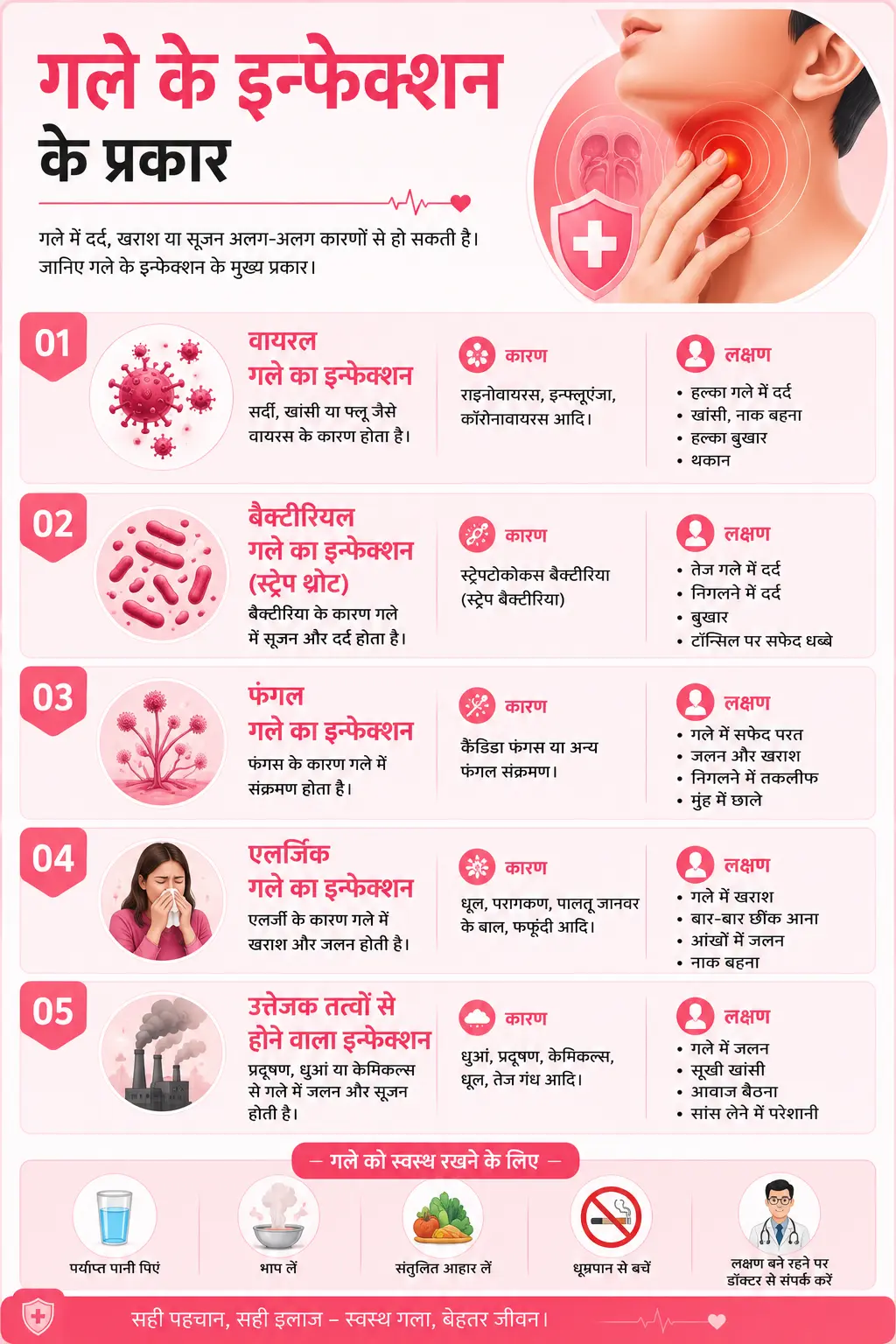
वायरल गले का इन्फेक्शन: यह सबसे आम प्रकार है और आमतौर पर सर्दी-जुकाम, फ्लू या मोनोन्यूक्लियोसिस जैसे वायरस के कारण होता है। इसमें एंटीबायोटिक की ज़रूरत नहीं पड़ती, क्योंकि यह अपने आप ठीक हो जाता है।
बैक्टीरियल गले का इन्फेक्शन (स्ट्रेप थ्रोट): ग्रुप A स्ट्रेप्टोकोकस बैक्टीरिया की वजह से होने वाला यह इन्फेक्शन “स्ट्रेप थ्रोट” कहलाता है। यह वायरल इन्फेक्शन से ज़्यादा तेज़ी से और गंभीर रूप से शुरू होता है, और इसमें एंटीबायोटिक दवाइयों की ज़रूरत पड़ती है। समय पर इलाज न होने पर यह रूमेटिक हार्ट डिज़ीज़ जैसी जटिलता तक पहुंच सकता है, भारत में जिसका प्रचलन बच्चों में प्रति 1000 पर लगभग 1 से 11 मामलों के बीच बताया गया है।
फंगल गले का इन्फेक्शन: यह कम आम है और ज़्यादातर कमज़ोर इम्युनिटी वाले लोगों में देखा जाता है, जैसे कि इनहेल्ड स्टेरॉयड इस्तेमाल करने वाले मरीजों की संख्या अधिक है। कैंडिडा फंगस के कारण होने वाला ओरल थ्रश इसका एक उदाहरण है।
एलर्जिक गले का इन्फेक्शन: धूल, पराग या किसी खास खाने से होने वाली एलर्जी भी गले में जलन और सूजन जैसे लक्षण पैदा कर सकती है, जो देखने में इन्फेक्शन जैसे ही लगते हैं।
उत्तेजक तत्वों से होने वाला इन्फेक्शन: सिगरेट का धुआं, वायु प्रदूषण या रासायनिक धुएं के संपर्क में लगातार रहने से भी गले में जलन और सूजन हो सकती है, जो असली इन्फेक्शन जैसी तकलीफ देती है।
गले में इन्फेक्शन के आम कारण जैसे कि सर्दी-जुकाम या मौसम बदलना तो सभी जानते हैं, लेकिन कुछ ऐसे कारण भी हैं जो अक्सर नज़र से छूट जाते हैं जैसे कि –
हमारे OPD में अक्सर ऐसे मरीज़ आते हैं, खासकर टीचर और कॉल सेंटर में काम करने वाले युवा, जिन्हें महीने में दो-तीन बार गला बैठने या खराश की शिकायत रहती है। जांच में अक्सर पता चलता है कि असली वजह इन्फेक्शन नहीं, बल्कि लगातार आवाज़ का दबाव और सूखी हवा में लंबा समय बिताना होता है। ऐसे मामलों में सिर्फ दवा नहीं, बल्कि आदतों में बदलाव भी उतना ही ज़रूरी होता है।
गले में इन्फेक्शन के लक्षण उसकी वजह पर निर्भर करते हैं, पर कुछ सामान्य संकेत लगभग हर मामले में दिखते हैं –
अगर बुखार तेज़ है, निगलने में बेहद तकलीफ हो रही है, या टॉन्सिल पर सफेद परत दिख रही है, तो यह वायरल से ज़्यादा बैक्टीरियल इन्फेक्शन की तरफ इशारा करता है, और ऐसे में डॉक्टरी सलाह लेना बेहतर रहता है।
हल्के गले के इन्फेक्शन में कुछ घरेलू उपाय राहत देने में काफी असरदार साबित होते हैं। हालांकि, यह ध्यान रखना ज़रूरी है की यह उपाय सहायक देखभाल के लिए हैं, डॉक्टरी इलाज का विकल्प नहीं, खासकर अगर लक्षण गंभीर हों। इन उपायों से आपको काफी हद तक राहत मिल सकती है, लेकिन राहत मिलने पर भी एक बार परामर्श ज़रूर लें।
आवाज का बैठना ज़्यादातर मामलों में हल्के वायरल इन्फेक्शन के कारण होता है और कुछ दिनों में ठीक हो जाता है। लेकिन कुछ स्थितियों में यह गंभीर समस्या का संकेत भी हो सकता है, और इन्हें अनदेखा नहीं करना चाहिए जैसे कि –
गले में इन्फेक्शन आमतौर पर एक हल्की और अस्थायी तकलीफ है, लेकिन इसके पीछे के कारण और लक्षणों को समझना ज़रूरी है, ताकि सही समय पर सही कदम उठाया जा सके। घरेलू उपाय ज़्यादातर मामलों में राहत देते हैं, लेकिन जब लक्षण बार-बार लौटें, लंबे समय तक बने रहें, या आवाज़ में बदलाव कई हफ्तों तक टिका रहे, तो विशेषज्ञ से मिलना सबसे समझदारी भरा फैसला है।
अगर आपको या आपके परिवार में किसी को गले से जुड़ी कोई भी लगातार परेशानी हो रही है, तो सीके बिरला अस्पताल के अनुभवी ENT विशेषज्ञों से अभी अपॉइंटमेंट बुक करें और सही जांच के साथ अपने गले की सेहत को प्राथमिकता दें।
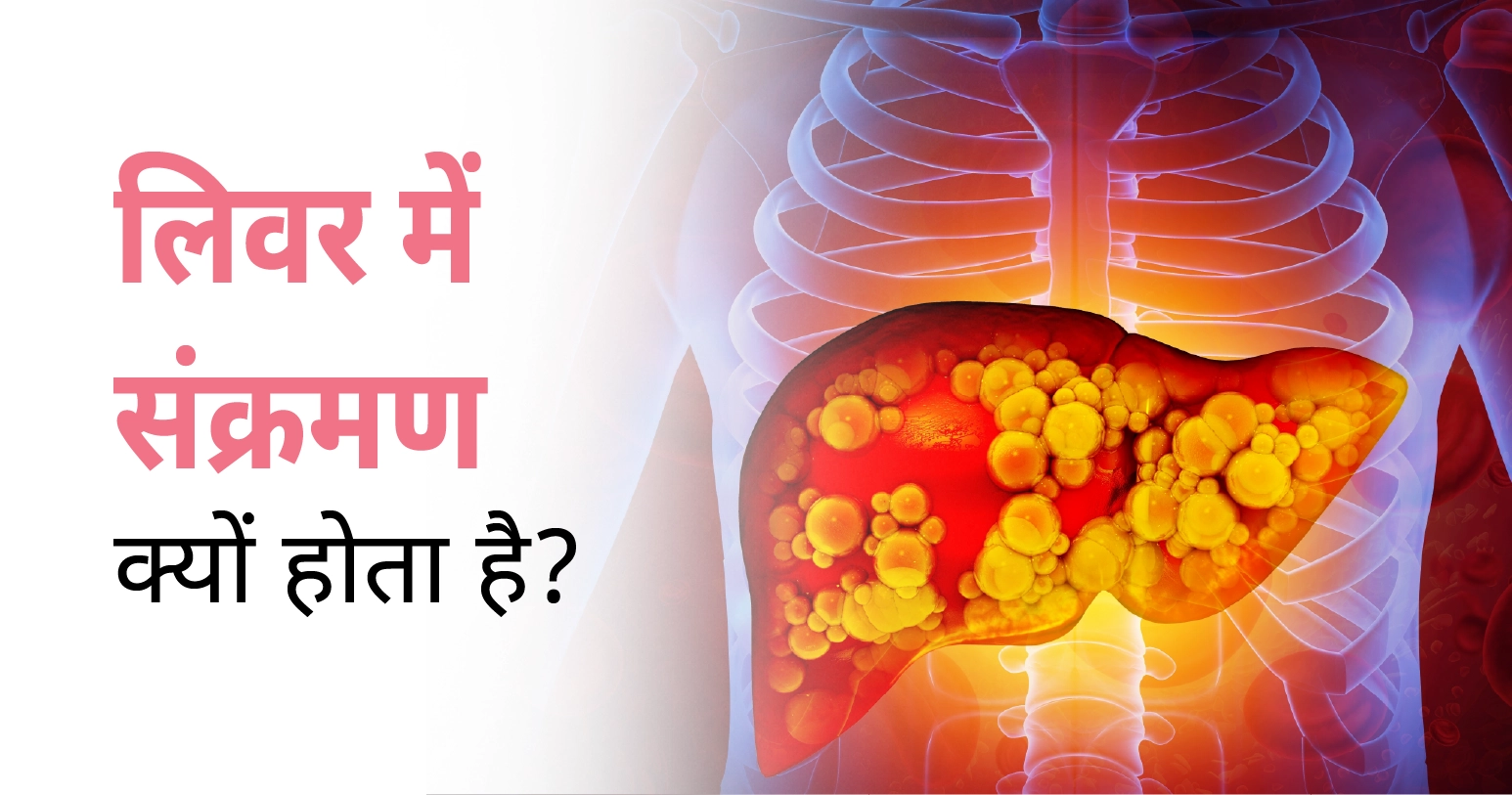
लिवर हमारे शरीर का वह अंग है, जो ओवरटाइम काम करने के बाद भी कभी शिकायत नहीं करता। यह चुपचाप अपना काम करता रहता है, और तभी बोलता है जब नुकसान काफी हद तक हो चुका होता है। यही वजह है कि लिवर संक्रमण को अक्सर “साइलेंट डिज़ीज़” के नाम से भी जाना जाता है। भारत में यह समस्या जितनी आम है, उतनी ही अनदेखी भी की जाती है। WHO की 2024 की गलोबल हेपेटाइटिस रिपोर्ट के अनुसार, साल 2022 में दुनिया भर में हुए कुल हेपेटाइटिस बोझ का करीब 11.6 प्रतिशत हिस्सा अकेले भारत में था, और वायरल हेपेटाइटिस के मामलों में भारत चीन के बाद दूसरे नंबर पर रहा है। यह आंकड़ा बताता है कि यह समस्या कितनी गंभीर है, फिर भी इस पर कितनी कम बात होती है।
इस ब्लॉग में हम विस्तार से समझेंगे कि लिवर संक्रमण आखिर होता क्यों है, इसके कितने प्रकार हैं, कौन-से लक्षण नज़रअंदाज़ नहीं करने चाहिए, और इससे बचाव कैसे किया जा सकता है। अगर आपको या आपके परिवार में किसी को इस ब्लॉग में बताए गए लक्षणों में से कोई भी महसूस हो रहा है, तो देर न करें, हमारे लिवर रोग विशेषज्ञों से अभी अपॉइंटमेंट बुक करें और सही समय पर सही सलाह पाएं।
Table of Contents
लिवर में संक्रमण को समझने से पहले समझना होगा कि आखिरकार लिवर काम क्या करता है। यह खून में मौजूद विषैले पदार्थों को छानकर बाहर निकालता है, पाचन में मदद करने वाला पित्त (Bile) बनाता है, प्रोटीन का निर्माण करता है जो खून के थक्के जमाने (Blood Clotting) में मदद करता है, और शरीर के लिए ज़रूरी ऊर्जा को ग्लाइकोजन के रूप में स्टोर करके रखता है।
मतलब यह कि अगर लिवर पर संक्रमण का हमला होता है, तो इसका असर सिर्फ एक अंग तक सीमित नहीं रहता, बल्कि पाचन, इम्युनिटी और खून की सफाई तक हर चीज़ प्रभावित होने लगती है।
लिवर संक्रमण (Liver Infection) उस स्थिति को कहते हैं जब वायरस, बैक्टीरिया, परजीवी (Parasite) या फंगस लिवर की कोशिकाओं पर हमला करते हैं और उनमें सूजन (Inflammation) पैदा करते हैं, जो उनके काम करने की क्षमता को प्रभावित करते हैं।
यहां एक बात साफ समझ लेनी ज़रूरी है कि लिवर संक्रमण सिर्फ शराब पीने वालों को नहीं होता। यह एक बड़ी गलतफहमी है जो कई मरीज़ों को समय पर जांच कराने से रोकती है। दूषित पानी, असुरक्षित इंजेक्शन, संक्रमित खून, या यहां तक कि परिवार में चलने वाली कोई पुरानी बीमारी भी इसकी वजह बन सकती है।
लिवर संक्रमण को उसके कारण के आधार पर मुख्यतः चार श्रेणियों में बांटा जाता है।
वायरल संक्रमण (हेपेटाइटिस A, B, C, D, E): यह सबसे आम प्रकार है। हेपेटाइटिस A और E आमतौर पर दूषित खाने या पानी से फैलते हैं और ज़्यादातर मामलों में अपने आप ठीक हो जाते हैं। वहीं हेपेटाइटिस B और C संक्रमित खून, असुरक्षित यौन संबंध या असुरक्षित इंजेक्शन से फैलते हैं, और अगर समय पर इलाज न हो तो यह क्रॉनिक (दीर्घकालिक) रूप ले सकते हैं। हेपेटाइटिस D सिर्फ उन लोगों को होता है, जो पहले से हेपेटाइटिस B से संक्रमित हों।
बैक्टीरियल संक्रमण: बैक्टीरिया से होने वाला संक्रमण अक्सर लिवर में फोड़ा (Liver Abscess) बना देता है। यह तब होता है, जब शरीर के किसी और हिस्से का संक्रमण, जैसे कि पेट या आंत का इन्फेक्शन, खून के ज़रिए लिवर तक पहुंच जाता है।
परजीवी संक्रमण – Parasite infection: अमीबा जैसे परजीवी दूषित भोजन-पानी के ज़रिए शरीर में पहुंचकर लिवर में फोड़ा बना सकते हैं। इसे अमीबिक लिवर एब्सेस कहा जाता है, और यह भारत जैसे देशों में स्वच्छता की कमी की वजह से अब भी देखने को मिलता है।
फंगल संक्रमण: यह सबसे कम आम प्रकार है और मुख्यतः उन मरीज़ों में देखा जाता है, जिनकी इम्युनिटी कमज़ोर होती है, जैसे कि कीमोथेरेपी करा रहे मरीज़ या ऑर्गन ट्रांसप्लांट के बाद वाले मरीज़।
लिवर संक्रमण के पीछे अक्सर एक नहीं, बल्कि कई कारण एक साथ मिलकर काम करते हैं।
हमारे OPD में अक्सर ऐसे मरीज़ आते हैं, जिन्हें सिर्फ लगातार थकान और हल्का बुखार रहता है, और जांच में पता चलता है कि यह हेपेटाइटिस B का क्रॉनिक इन्फेक्शन है, जो सालों से शरीर में चुपचाप मौजूद था। ऐसे मामलों में मरीज़ को खुद पता ही नहीं होता कि संक्रमण कब और कैसे हुआ, क्योंकि शुरुआती लक्षण इतने मामूली होते हैं कि उन्हें सामान्य कमजोरी समझकर टाल दिया जाता है।
लिवर संक्रमण की सबसे खतरनाक बात यही है कि इसके शुरुआती लक्षण बहुत हल्के होते हैं। नीचे दिए गए 5 संकेत हैं, जिन्हें ज़्यादातर लोग सामान्य समझकर छोड़ देते हैं, जबकि यह लिवर से जुड़ी परेशानी का पहला इशारा हो सकते हैं।
अगर इनमें से दो या ज़्यादा लक्षण एक साथ दिख रहे हैं और यह कई दिनों तक बने हुए हैं, तो इसे नज़रअंदाज़ करने के बजाय लिवर फंक्शन टेस्ट कराना समझदारी होगी।
यह तीनों शब्द अक्सर एक-दूसरे के साथ उलझा दिए जाते हैं, जबकि इनके बीच का फर्क समझना बेहद ज़रूरी है।
लिवर संक्रमण की पुष्टि के लिए डॉक्टर आमतौर पर एक साथ कई जांचों की सलाह देते हैं, ताकि सिर्फ अनुमान की जगह सटीक निदान हो सके।
लिवर संक्रमण से बचाव पूरी तरह मुमकिन है, बशर्ते कुछ आदतों का लगातार पालन किया जाना चाहिए –
लिवर संक्रमण कोई ऐसी बीमारी नहीं है, जो अचानक और बिना किसी संकेत के आ जाती है। यह अक्सर छोटे-छोटे इशारों के साथ शुरू होता है, जिन्हें हम अक्सर थकान या मौसम बदलने का असर समझकर नज़रअंदाज़ कर देते हैं। सही जानकारी, समय पर जांच और थोड़ी सी सतर्कता से इस बीमारी को शुरुआती स्टेज में ही रोका जा सकता है। इसलिए संकेतों को समझें और सही समय पर सीके बिरला अस्पताल के विशेषज्ञों से परामर्श लेकर इलाज लें और स्थिति को नियंत्रित करें।
If your body is showing yellow pigment, high bilirubin levels may be the reason. But is a high bilirubin level dangerous? Does it mean liver damage? Will it go away on its own? Ending up with a stack of questions after getting recommended a bilirubin test is completely normal. If you are looking for the right answers, keep reading. This blog covers what the test is, why it is done, the normal ranges, and more.
Table of Contents
Bilirubin is a yellow substance your body produces when it breaks down old red blood cells. Normally, your liver processes it and removes it through bile. If bilirubin levels become too high, it may indicate a problem with your liver, bile ducts, gallbladder or red blood cells. High bilirubin can also cause yellowing of the skin and eyes, a condition called jaundice.
A bilirubin test is a simple blood test that measures the amount of bilirubin in your bloodstream. It helps doctors check how well your liver is working and identify conditions affecting your liver, gallbladder, bile ducts or red blood cells. A bilirubin test is considered a safe and routine blood test with very few risks. Most people experience no side effects.
Your doctor may recommend this test if you have symptoms such as:
This test may also be included in routine health checkups or used to monitor existing liver conditions.
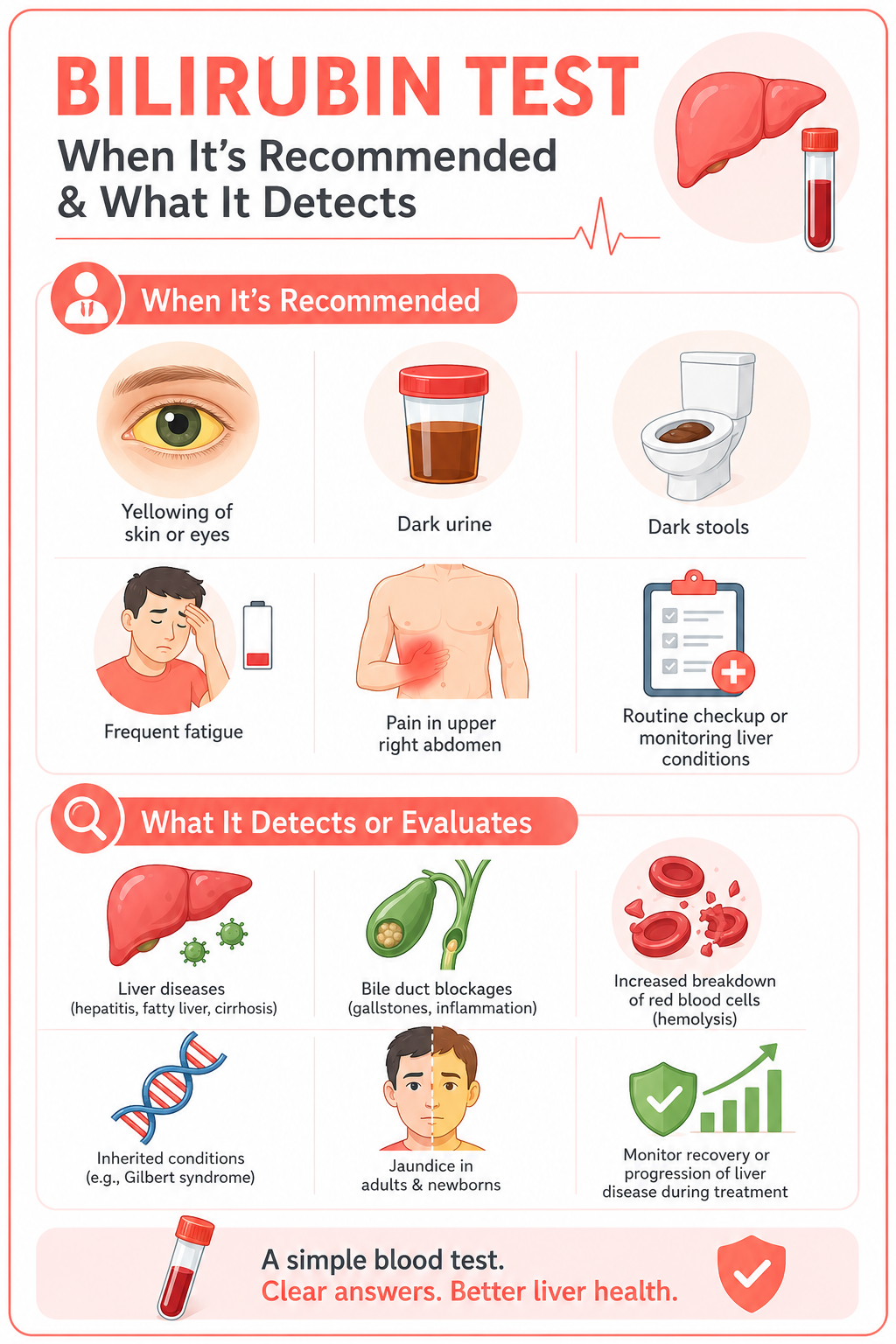
Doctors order a bilirubin blood test to help identify the cause of symptoms or monitor known health conditions. Rather than diagnosing a specific disease on its own, the test acts as an important indicator of how your liver and bile drainage system are functioning.
A bilirubin test may help detect or evaluate:
In some cases, your bilirubin level may be only mildly high without causing symptoms. This is one reason doctors rarely rely on a bilirubin test alone. Instead, they use it alongside other investigations to determine whether the finding is temporary, benign or a sign that further evaluation is needed.
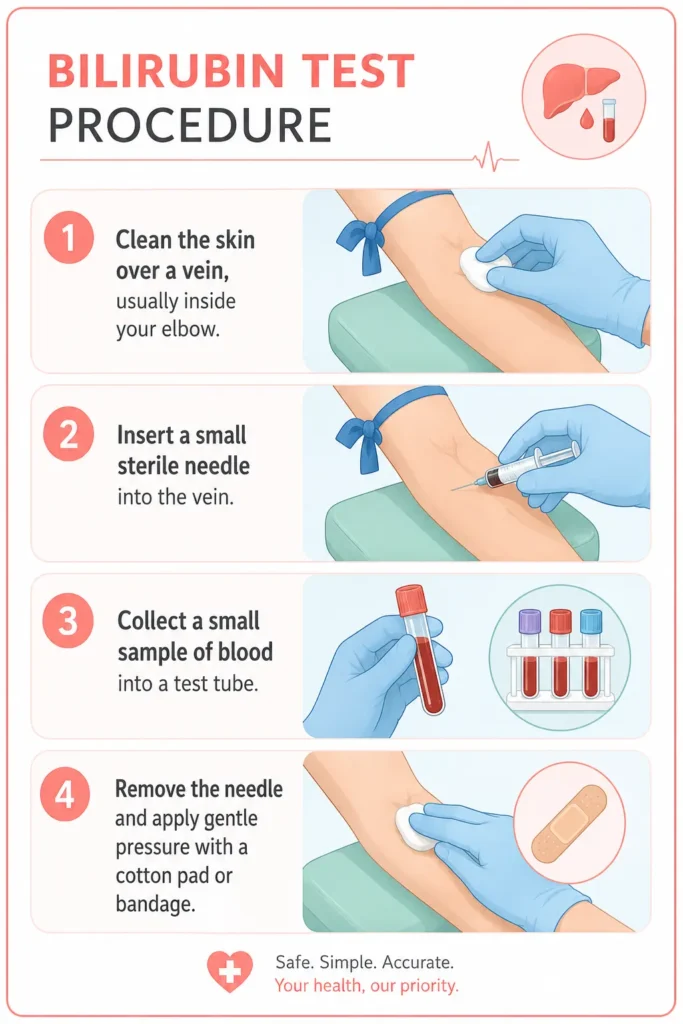
The procedure itself is quick and usually takes only a few minutes.
To collect a blood sample, the healthcare professional first cleans the skin over a vein. Next, a sterile needle is inserted to draw a small amount of blood into a test tube. Afterward, the needle is removed and the site is covered with a cotton pad or bandage.
Most people experience only a brief pinch when the needle is inserted. You can normally return to your daily activities immediately after the blood sample is collected.
The blood sample is then sent to a laboratory, where specialists measure different forms of bilirubin. Results are generally available within the same day or within 24 hours, depending on the laboratory.
Your laboratory report may list more than one bilirubin value. They can be:
A mild increase in indirect bilirubin can also occur in Gilbert syndrome. It is a common inherited condition that is generally harmless and usually discovered during routine blood testing.
“Is my bilirubin level normal?”
This is one of the most common questions people have after receiving their blood test report. While reference values may vary slightly between laboratories due to differences in testing methods and equipment, most healthy adults fall within a similar range.
Doctors interpret your total bilirubin, direct bilirubin and indirect bilirubin together rather than focusing on a single value. This approach helps understand whether your liver is processing bilirubin normally or if additional evaluation may be needed.
| Bilirubin Test | Normal Range |
| Total Bilirubin | 0.2 to 1.2 mg/dL (3.4 to 20.5 µmol/L) |
| Direct (Conjugated) Bilirubin | 0 to 0.3 mg/dL (0 to 5.1 µmol/L) |
| Indirect (Unconjugated) Bilirubin | 0.2 to 0.9 mg/dL (3.4 to 15.4 µmol/L) |
Note: Reference ranges may differ slightly between laboratories. Always use the range printed on your laboratory report and discuss the results with your healthcare provider.
Your healthcare provider will consider various factors to interpret the result. These factors are:
High bilirubin levels, also known as hyperbilirubinemia, can develop when the body produces too much bilirubin. The liver cannot process the high levels of bilirubin efficiently, or bile cannot flow properly into the intestines.
Some of the most common causes are of this condition are:
It is not necessary that everyone with high bilirubin will develop symptoms. When they do occur, they may include:
If these symptoms appear suddenly or are accompanied by fever, severe abdominal pain, confusion, or persistent vomiting, seek medical care promptly.
A bilirubin test is a valuable option for examining liver function and understanding how your body processes the breakdown products of red blood cells. Certainly, abnormal results can understandably cause concern, but they do not directly indicate serious liver disease. Doctors interpret bilirubin levels together with your symptoms, medical history, physical examination and other findings to determine the next steps. If your report shows a high bilirubin level, discussing the results with your healthcare provider is the best way to understand what they mean for your individual health. To get expert advice, you can simply book a consultation at the CK Birla Hospital.

Do you feel tired all the time, notice your hair thinning, or get out of breath easily climbing a flight of stairs? These can be signs of low hemoglobin. This can seep into your daily life and make even simple tasks harder to manage.
However, it is manageable with the right nutrition, healthy lifestyle habits and timely medical care. Read along to understand why your hemoglobin drops, what the normal range looks like and simple ways to raise it naturally.
Table of Contents
Hemoglobin is a protein found inside your red blood cells. It carries oxygen from your lungs to every part of your body and transports carbon dioxide back to your lungs so it can be exhaled.
Nearly everything you do depends on this. Your every organ, muscle and tissue needs a steady oxygen supply to function properly. When you breathe in, oxygen enters your lungs and attaches to hemoglobin inside red blood cells. These cells travel through your bloodstream, delivering oxygen to tissues throughout the body. After releasing oxygen, hemoglobin carries carbon dioxide back to the lungs, where it is removed when you breathe out. Your body repeats this cycle thousands of times a day without you ever thinking about it.
Hemoglobin is made up of several nutrients, especially iron, vitamin B12 and folate. If your body does not get enough of these nutrients or loses blood faster than it can replace it, hemoglobin levels may fall.
Problems show up when hemoglobin levels drop. Less hemoglobin means less oxygen reaching your tissues and that is when fatigue and weakness tend to interfere.
In a nutshell, healthy hemoglobin levels help your body:
When hemoglobin is low, your heart has to work harder to deliver oxygen, which is why some people notice a fast heartbeat or become breathless during routine activities.
Normal ranges vary depending on your age, sex and pregnancy. Labs may use slightly different reference ranges, but the following values are commonly accepted.
If your numbers fall outside these ranges, your doctor may recommend additional tests, such as complete blood count (CBC), serum ferritin or a vitamin B12 test that can help pin down what is actually causing it.
Low hemoglobin is not a disease itself. It is a sign that your body may not be producing enough healthy red blood cells, may be losing blood or may be breaking down red blood cells faster than it can replace them.
It is important to understand the causes because treatment depends on the underlying problem.
Iron Deficiency
It is the most common cause of low hemoglobin worldwide. Iron is needed to make hemoglobin, so without enough iron, your body cannot produce healthy red blood cells. The low iron levels can be due to:
These vitamins are very important for making healthy red blood cells. A deficiency can lead to larger, abnormal red blood cells that do not function properly. Older adults or those with digestive disorders may have difficulty absorbing vitamin B12. Folate deficiency may result from poor diet, increased needs during pregnancy or certain medications.
Blood loss can gradually reduce hemoglobin levels. Some possible causes can be:
Long-term medical conditions like kidney problems, inflammatory conditions, certain infections and some cancers can interrupt the production of red blood cells. In these situations, treating the underlying condition is just as important as improving nutrition.
Some inherited conditions like thalassemia and sickle cell disease also affect your body’s ability to produce normal hemoglobin.
Usually, symptoms develop gradually, especially when hemoglobin falls slowly.
As hemoglobin continues to fall, symptoms may become more noticeable. They can include:
If the above-mentioned symptoms show up suddenly or worsen quickly, seek a medical evaluation promptly. Your doctor may recommend blood tests to determine whether the cause is iron deficiency, a vitamin deficiency, chronic illness or another medical condition.
If your low hemoglobin is linked to a nutritional deficiency, making a few dietary and lifestyle changes can help improve your levels over time. However, there is no overnight solution, but consistently following healthy habits can improve the overall health.
Iron is the primary nutrient your body uses to produce hemoglobin. Including a variety of iron-rich foods in your daily meals can help replenish iron stores and improve production of healthy red blood cells.
There are two types of dietary iron:
Good sources of iron include lean red meat, chicken, fish, eggs, lentils, chickpeas, beans, spinach, soy products, pumpkin seeds and fortified cereals. Rather than relying on a single superfood, you should aim for a balanced diet with a mix of iron-rich foods throughout the week.
Vitamin C helps your body absorb non-heme iron more effectively. Pairing foods rich in iron with vitamin C-rich fruits and vegetables can significantly improve iron absorption.
Simple combinations can look like:
This is especially helpful for vegetarians and vegans, whose diets mainly provide non-heme iron.
Many people focus only on eating more iron but overlook how well their body absorbs it. To improve iron absorption you follow these simple tips:
Low hemoglobin may persist even with a healthy diet if your body cannot absorb nutrients properly. Conditions such as celiac disease, inflammatory bowel disease or certain stomach surgeries can reduce iron absorption and require medical evaluation.
Some foods and beverages can reduce iron absorption if consumed at the same time as iron-rich meals. They are:
You don’t need to avoid these foods completely. Instead, try consuming them at least one to two hours before or after your iron-packed meal or iron supplement.
If you want to stay healthy, feel energetic, concentrate well and improve your overall wellbeing, it is important to maintain healthy hemoglobin levels. A balanced diet that includes iron, vitamin B12, folate and vitamin C, combined with healthy lifestyle habits, can help improve your hemoglobin naturally.
If your hemoglobin remains low, your symptoms worsen or blood tests reveal a more complex cause, your healthcare provider can recommend additional investigations and appropriate treatment. If you have any concerns about your health or would like to better understand your hemoglobin levels, book a consultation with the experienced haematologists and other specialists at the CK Birla Hospital.

