Filter :
Many times, irregular periods get brushed off as stress. Acne gets blamed on hormones in general. Trouble losing weight feels like a lifestyle issue. Struggling to get pregnant can seem unrelated to any of it. But sometimes, these are not separate problems at all. They are different faces of the same condition.
That condition is PMOS, or polyendocrine metabolic ovarian syndrome, previously known as PCOS, or polycystic ovary syndrome. The name changed in 2026 to better capture the wider aspect of this condition, affecting menstrual health, hormones, metabolism and fertility, often all at once.
September is PMOS Awareness Month, and at the CK Birla Hospital, we are using this time to help more women understand it.
This month, getting familiar with the symptoms, health effects, diagnosis and treatment of PMOS can help you recognise changes in your own body sooner and know when it is time to see a doctor.
Table of Contents
Polyendocrine metabolic ovarian syndrome (PMOS) is a long-term hormonal and metabolic condition that can affect menstrual cycles, ovulation, androgen levels, metabolism, skin, hair and fertility.
It was previously called polycystic ovary syndrome (PCOS). PMOS affects around 1 in 8 women, or more than 170 million women worldwide. Still, many women live with it for years before they get a name for what is going on.
PMOS does not look the same in every woman. Some may mainly notice irregular periods, whereas others may seek help for acne, excess facial hair, difficulty conceiving or metabolic concerns.
The change from PCOS to PMOS is not a change from one disease to another. PMOS is the new name for the condition previously known as PCOS.
The earlier name could make it sound as though ovarian cysts were the defining feature. In reality, the condition involves much more than the ovaries. Hormonal changes, metabolic health, reproductive health, skin and hair changes, and psychological wellbeing can all be part of the picture.
The new name was developed through a global process and was announced on May 12, 2026, with a transition period planned before the new terminology is fully incorporated into the 2028 international guideline update.
| Earlier name | New name |
| Polycystic Ovary Syndrome (PCOS) | Polyendocrine Metabolic Ovarian Syndrome (PMOS) |
| Could suggest the condition is mainly about ovarian cysts | Reflects its broader hormonal and metabolic features |
This means you may see PCOS and PMOS used interchangeably during the transition, particularly in older medical records and online resources.
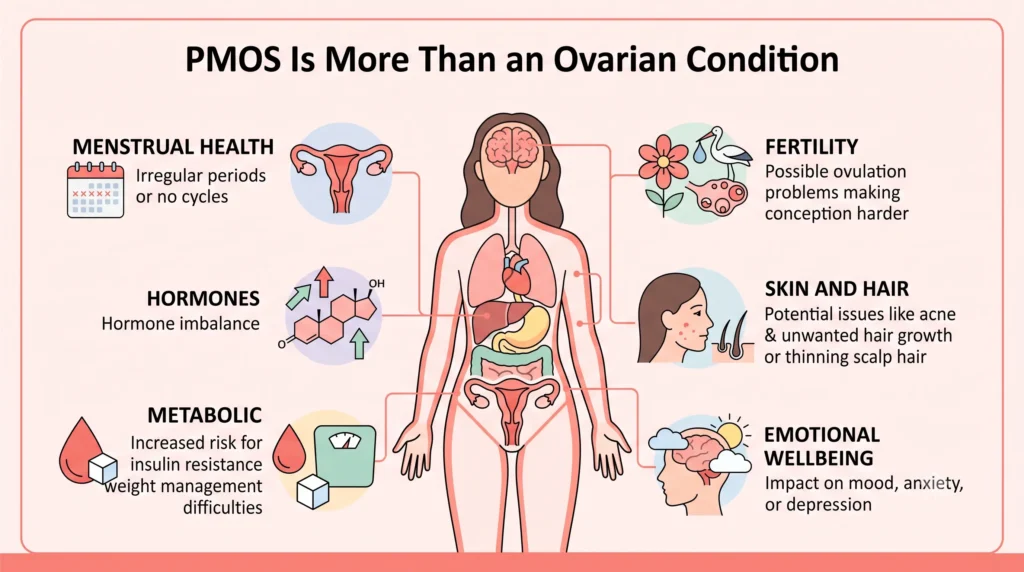
PMOS symptoms can vary considerably. Common signs include:
You do not need to have every symptom to have PMOS.
Another common misconception is that a woman must have ovarian cysts to have the condition. That is not the case. The name change partly addresses this misunderstanding.
A gynaecologist usually considers a combination of factors for its diagnosis, including:
Yes. PMOS can affect fertility, mainly because irregular ovulation can make it harder to predict when an egg will be released.
But having PMOS does not mean you cannot become pregnant.
For women who are trying to conceive, treatment can focus on improving ovulation and addressing other factors that may affect fertility. The appropriate approach depends on the individual’s health, symptoms and pregnancy goals. It is also worth discussing PMOS with a gynaecologist before or during pregnancy, as some women may have a higher risk of certain pregnancy-related complications.
Management depends on the symptoms, health risks and whether pregnancy is currently a goal.
Treatment may include:
Importantly, there is no single PMOS diet or exercise routine that every woman needs to follow. Treatment should be based on the person’s symptoms, health and goals.
You should consider speaking to a gynaecologist if you have persistent irregular periods, new or worsening acne or excess facial hair, unexplained menstrual changes, difficulty conceiving or concerns about metabolic health.
You do not need to wait until several symptoms appear before seeking an evaluation.
Sometimes the most useful first step is simply understanding whether seemingly unrelated changes could have a common cause.
PMOS Awareness Month is a reminder to pay attention to changes in your periods, hormones, metabolism, fertility or overall wellbeing. Knowing the condition and recognising symptoms early can help you seek the right medical advice.
If you have symptoms that concern you, discussing them with a Gynaecology and Obstetrics specialist at the CK Birla Hospital can help you understand whether they could be related to PMOS and what evaluation or treatment may be appropriate. You can book a consultation to discuss your symptoms and health goals in a personalised setting.
If your health report mentions Grade 1 fatty liver, don’t panic, but don’t ignore it either. Grade 1 is the earliest stage and it is quite common, especially if you have a sedentary lifestyle, eat processed food often, or don’t sleep well.
The reason to take it seriously is timing. Because in this early stage, with the right lifestyle changes and appropriate medication, you can reduce the amount of fat in your liver and lower the risk of it getting worse.
Keep reading to learn what actually helps at this stage.
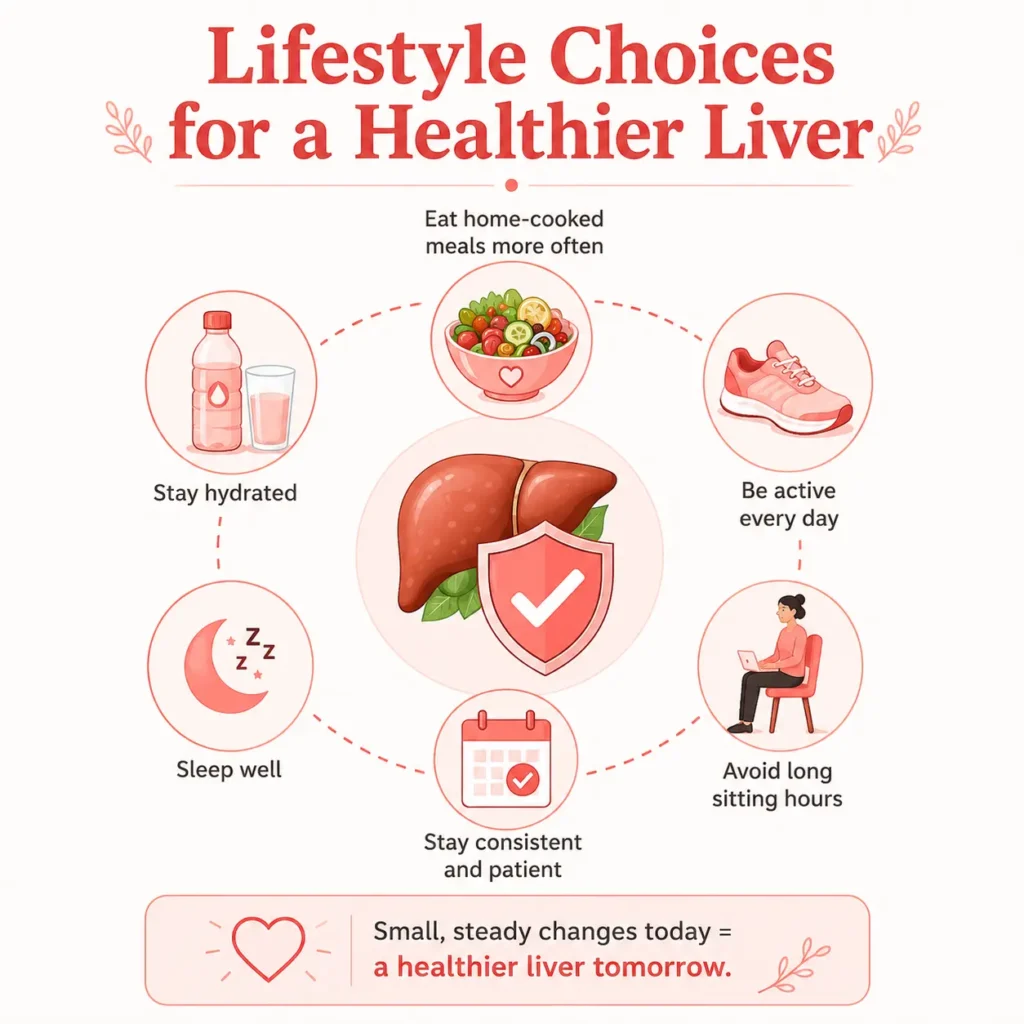
Table of Contents
Fatty liver means that too much fat has built up inside your liver. A small amount of fat in the liver can be normal, but when the amount becomes excessive, it may affect how the liver functions.
One of the most common types is metabolic dysfunction-associated steatotic liver disease (MASLD), previously known as non-alcoholic fatty liver disease (NAFLD). MASLD is linked with excess weight, insulin resistance, type 2 diabetes, high cholesterol and other metabolic health problems. Alcohol also causes fat to build up in the liver.
Fatty liver does not cause any evident symptoms initially. It may be found during a routine ultrasound or blood tests.
Finding fatty liver early gives you an opportunity to make changes before it progresses. Grade 1 fatty liver is generally considered an early stage, and lifestyle changes can help reduce the amount of fat in the liver.
In many cases, early fatty liver can improve significantly when the factors causing fat accumulation are addressed. However, the timeline can differ from person to person. How quickly the liver improves depends on your weight, diet, physical activity, blood sugar, cholesterol, alcohol intake and other health factors.
Do not assume that reversal means losing weight as quickly as possible. Crash diets, extreme fasting or skipping meals will not help in the long run. Instead, focus on gradual weight loss, regular physical activity and better metabolic health.
Your doctor may also recommend follow up blood tests or imaging tests to see how your liver is responding to these changes.
As mentioned earlier, Grade 1 fatty liver can be improved in many cases and the amount of fat in the liver can be reduced, especially when it is identified early. But a single medicine, food or drink cannot make your fatty liver disappear.
The treatment mainly depends on why the fat has accumulated in the liver in the first place. For some people, excess weight and poor metabolic health may be the main reason. For others, diabetes, high cholesterol, alcohol, certain medicines or another health condition may be contributing.
This is why the treatment plan can be different for everyone. In most cases, it starts with improving everyday habits and managing the health conditions linked with fatty liver.
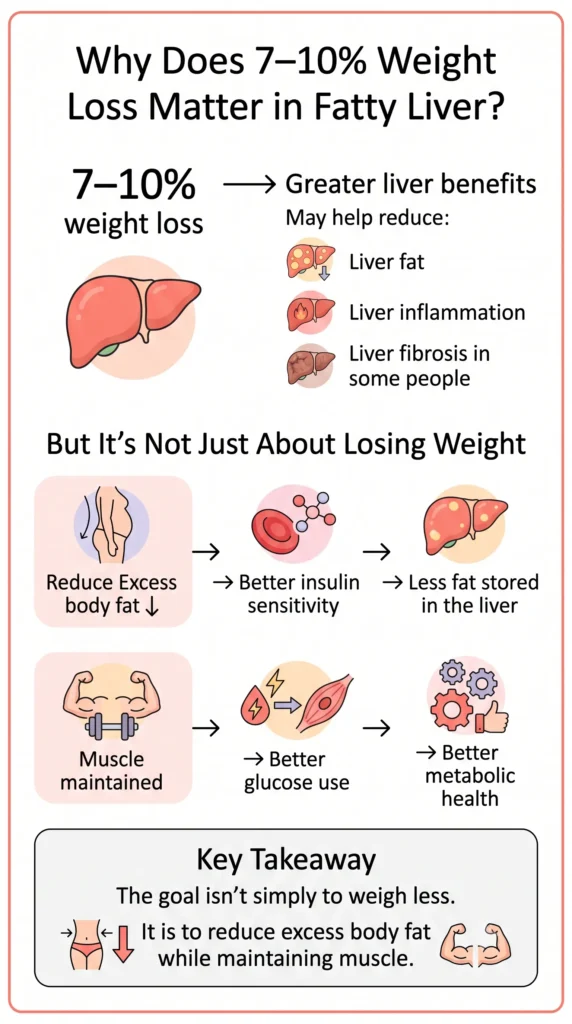
If you are overweight or obese, losing weight can make positive improvements in your health. Research suggests that losing around 3% to 5% of your body weight can help reduce liver fat. Greater weight loss, around 7% to 10%, may provide additional benefits for liver inflammation and fibrosis, particularly in people with more advanced liver disease. But remember, two people can have the same weight but very different amounts of body fat and muscle. So, when managing fatty liver, the goal should be to reduce excess body fat while maintaining muscle.
Be aware of what you eat regularly, how much you eat and how balanced your meals are.
Try to have more:
Try to cut down on:
Your overall eating pattern and how consistently you follow it matter a lot. If you are not sure what your diet should look like, it is better to consult a dietitian. They can help you create a practical diet plan based on your health, lifestyle and nutritional needs.
If you need personalised guidance, you can also consult the experienced dietitians at the CK Birla Hospital.
Regular physical activity can help reduce liver fat and improve insulin sensitivity. Both aerobic exercise and resistance training can be beneficial.
You can start with activities such as:
If you have been inactive for a long time, start slowly. Even a regular 20 to 30 minute walk can be a good beginning.
Over time, you can work towards increasing the level of physical activity, depending on your fitness level and medical condition.
The main thing is consistency. A manageable routine you actually follow is more useful than an intense workout plan you give up after a few days.
Fatty liver is closely connected with metabolic health.
If you have:
managing these conditions becomes an important part of treating fatty liver too.
This is why your doctor may also look at your blood sugar, lipid levels, blood pressure, weight and other metabolic risk factors. Improving these numbers is not only good for your liver. It also benefits your heart and overall health.
If you have been diagnosed with fatty liver, tell your doctor how much and how often you drink. Whether you need to reduce alcohol or avoid it completely will depend on the cause of your fatty liver, how healthy your liver is and whether any fibrosis is present. People with significant fibrosis are generally advised to avoid alcohol.
Once people find out that they have fatty liver, one of the first things they may come across is a juice, powder, herbal product or supplement claiming to detox the liver. There is no special detox product that removes fat from the liver.
Some herbal and dietary supplements can even harm the liver or interact with medicines you are already taking. You should always discuss the supplements with a healthcare professional before using them for fatty liver.
Grade 1 fatty liver is a sign that your liver needs some attention. Small, consistent changes in your diet, physical activity, weight and overall metabolic health can help reduce fat in the liver and lower the risk of progression. It is important to make changes you can follow in the long run and keep up with any treatment recommended by your doctor.
If you have been diagnosed with Grade 1 fatty liver and are unsure where to start, book a consultation with our expert liver disease specialists at the Gastroenterology or Hepatology department of the CK Birla Hospital for personalised advice based on your health and lifestyle.
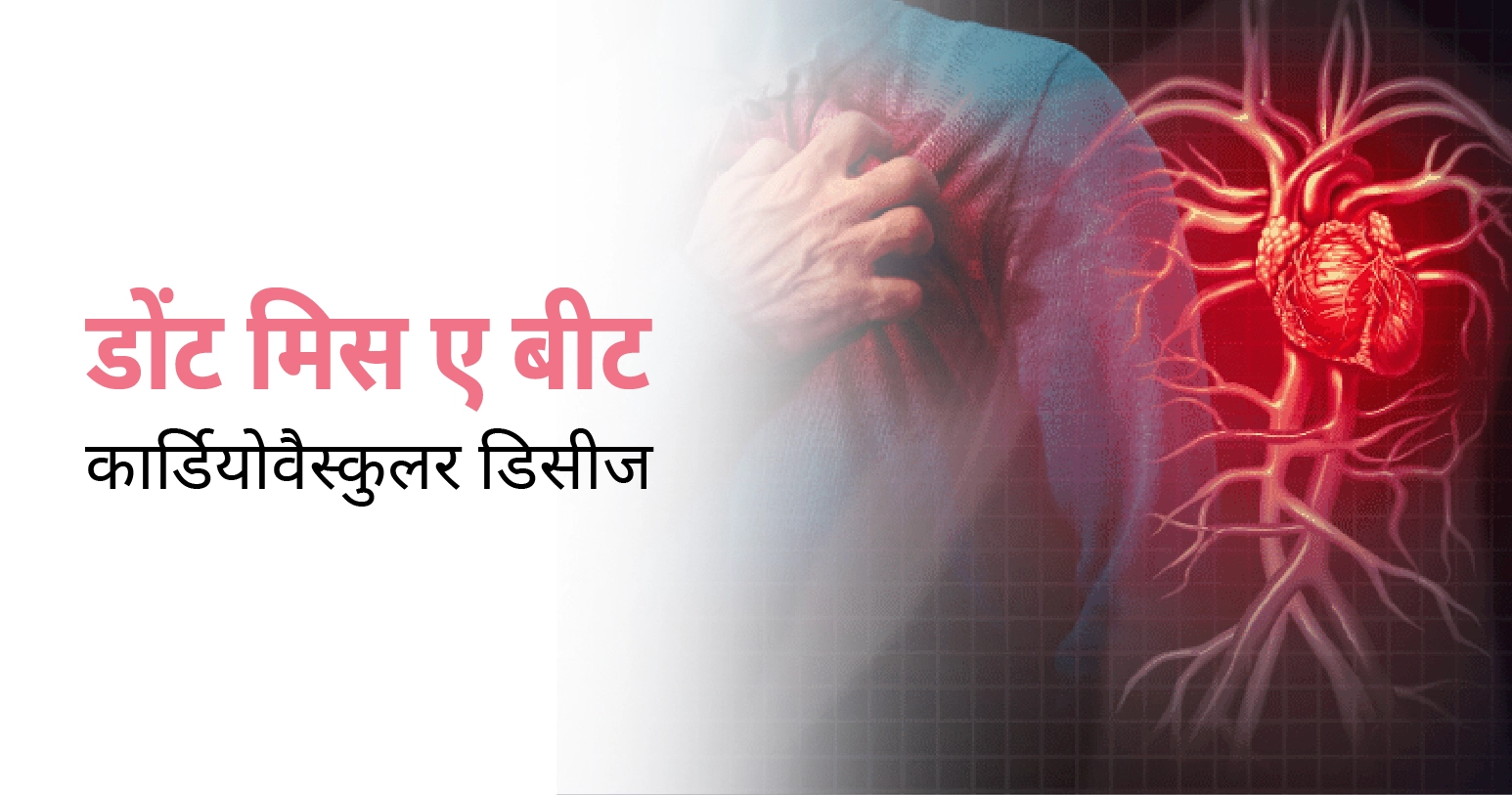
सीढ़ियां चढ़ते समय सांस फूलना या थकान महसूस होना केवल उम्र का असर नहीं, बल्कि आपके दिल का शुरुआती इशारा हो सकता है। आज की भागदौड़ भरी लाइफ स्टाइल और बढ़ते स्ट्रेस के कारण भारत में युवाओं में भी कार्डियोवैस्कुलर डिजीज (हृदय रोगों) का खतरा तेजी से बढ़ा है। यही वजह है कि वर्ल्ड हार्ट डे जैसे अवसर हमें याद दिलाते हैं कि दिल की सेहत के प्रति सजग रहना कितना जरूरी है और इन शुरुआती संकेतों को अनदेखा करना भारी पड़ सकता है।
सीके बिरला अस्पताल की कार्डियोलॉजी टीम एडवांस डायग्नोस्टिक और सही इलाज के साथ आपके दिल को स्वस्थ रखने के लिए तैयार है। अगर आपको या आपके अपनों को सीने में बेचैनी या सांस फूलने की समस्या है, तो देर न करें, आज ही हमारे एक्सपर्ट कार्डियोलॉजिस्ट से अपॉइंटमेंट बुक करें।
Table of Contents
वर्ल्ड हार्ट फेडरेशन (World Heart Federation) ने 2026 के लिए भी अपनी कैंपेन थीम “Don’t Miss a Beat” को आगे बढ़ाया है। इस साल की थीम का मुख्य फोकस है, कार्डियोवैस्कुलर डिजीज (CVD) के संकेतों और लक्षणों को समय पर पहचानना और उन्हें नजरअंदाज न करना। वर्ल्ड हार्ट फेडरेशन के मुताबिक दुनियाभर में हर तीन में से एक मौत की वजह हृदय रोग है, और साल 2022 में करीब 1.98 करोड़ लोगों की जान सिर्फ हार्ट अटैक और स्ट्रोक की वजह से गई। सबसे चिंताजनक बात यह है कि इनमें से ज्यादातर मौतों को समय पर पहचान और जांच से रोका जा सकता था।
भारत की स्थिति इस मामले में और भी गंभीर है। रिसर्च बताती है कि भारत में CVD के मामले साल 1990 में 2.57 करोड़ थे, जो 2023 तक बढ़कर करीब 6.4 करोड़ हो गए हैं। WHO के अनुसार दुनियाभर में CVD से होने वाली मौतों में भारत का हिस्सा करीब एक-पांचवां है, और वो भी खासकर युवा आबादी में। भारत में CVD से होने वाली मौतों की दर प्रति एक लाख आबादी पर 272 है, जो ग्लोबल औसत 235 से कहीं ज्यादा है। यही वजह है कि अब वर्ल्ड हार्ट डे सिर्फ एक दिन का इवेंट नहीं, बल्कि हर उम्र के लोगों के लिए अपने दिल की सेहत पर ध्यान देने का सालाना रिमाइंडर बन गया है।
कार्डियोवैस्कुलर डिजीज एक छाता टर्म है, जिसके अंदर दिल और रक्त वाहिकाओं (Blood Vessels) से जुड़ी कई बीमारियां आती हैं। इनमें कोरोनरी आर्टरी डिजीज (Coronary Artery Disease), हार्ट फेलियर (Heart Failure), अरिदमिया यानी दिल की अनियमित धड़कन (Arrhythmia), वाल्व से जुड़ी बीमारियां और स्ट्रोक जैसी स्थितियां शामिल हैं। ज्यादातर मामलों में CVD की जड़ होती है धमनियों में फैट और कोलेस्ट्रॉल का जमा होना, जिसे एथेरोस्क्लेरोसिस (Atherosclerosis) कहते हैं। समय के साथ यह जमाव धमनियों को संकरा कर देता है, जिससे दिल तक खून और ऑक्सीजन पहुंचना मुश्किल हो जाता है।
सबसे खास बात यह है कि CVD किसी एक उम्र, जेंडर या फिटनेस लेवल तक सीमित नहीं है। आजकल 30 से 40 साल की उम्र के युवाओं में भी हार्ट अटैक के मामले तेजी से बढ़ रहे हैं। स्टडी के मुताबिक भारत में लगभग आधी CVD से जुड़ी मौतें 50 साल की उम्र से पहले हो जाती हैं, और करीब एक-चौथाई हार्ट अटैक 40 साल से कम उम्र के लोगों में देखे जाते हैं। डायबिटीज, हाई ब्लड प्रेशर, मोटापा, धूम्रपान और अनुवांशिक कारण इस जोखिम को और बढ़ा देते हैं।
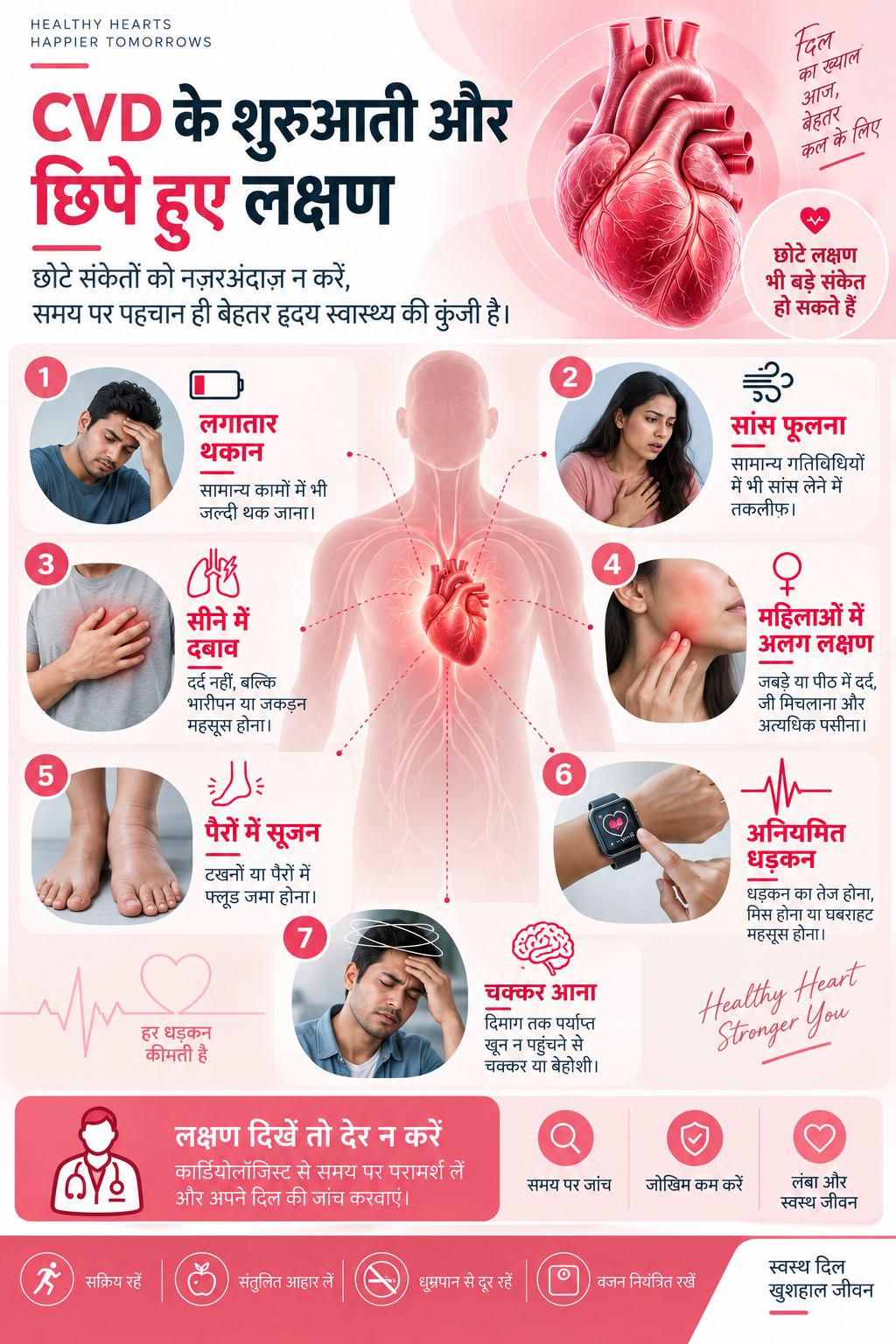
हृदय रोग हमेशा फिल्मों की तरह सीने में अचानक तेज दर्द से शुरू नहीं होता। ज्यादातर मामलों में इसके शुरुआती संकेत इतने मामूली होते हैं कि लोग इन्हें स्ट्रेस, गैस या थकान समझ कर टाल देते हैं –
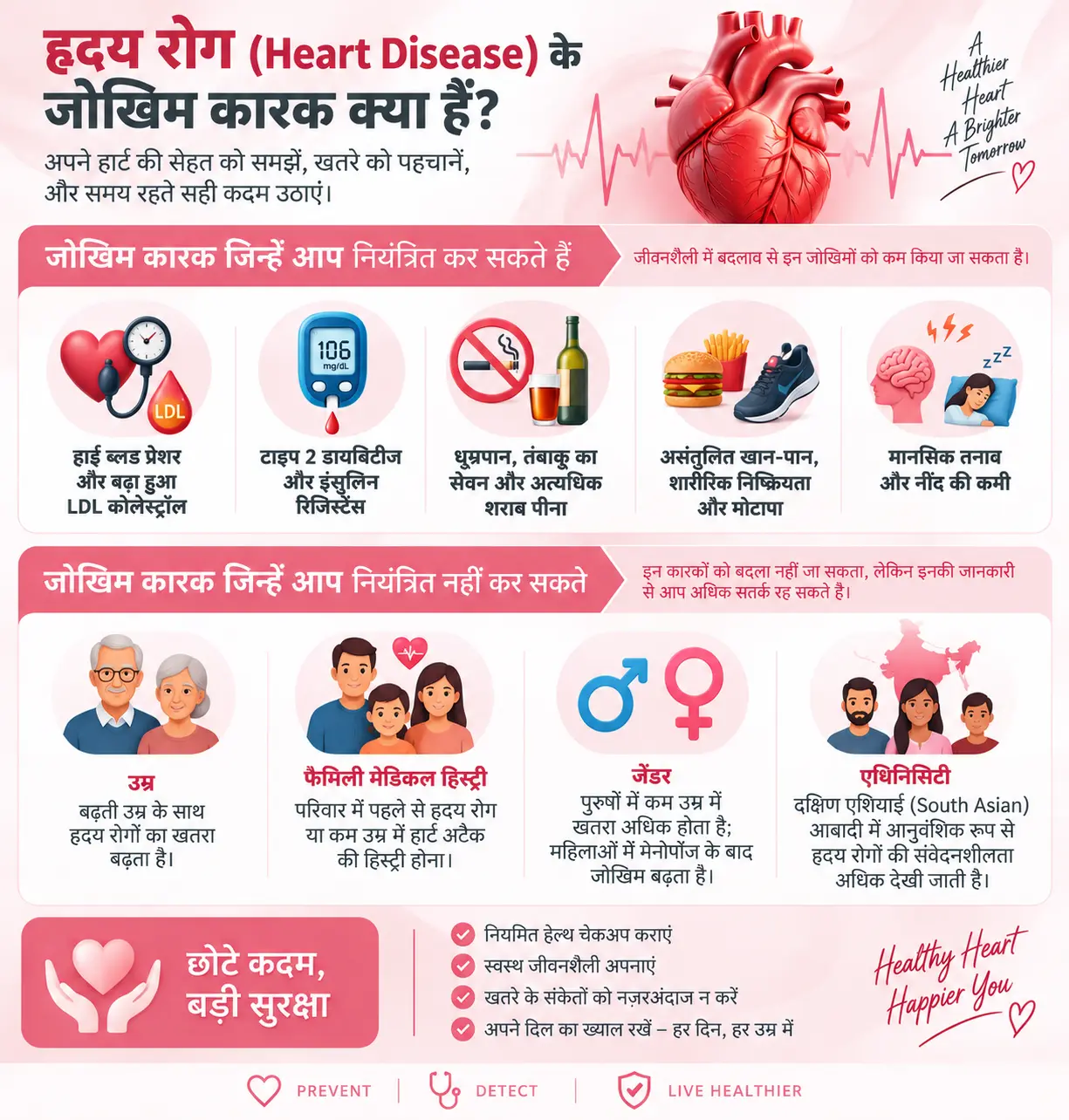
जोखिम कारक जिन्हें आप नियंत्रित कर सकते हैं –
जोखिम कारक जिन्हें आप नियंत्रित नहीं कर सकते –
चूंकि CVD के शुरुआती लक्षण अक्सर हल्के और भ्रामक होते हैं, इसलिए नियमित स्क्रीनिंग सबसे भरोसेमंद तरीका है। 30 की उम्र पार करते ही, खासकर अगर परिवार में हार्ट डिजीज, डायबिटीज या हाई बीपी की हिस्ट्री रही हो, तो सालाना जांच करवाना समझदारी है। सीके बिरला अस्पताल में हमारी कार्डियक स्क्रीनिंग में निम्न टेस्ट कराए जाते हैं –
यह जांचें धमनियों में ब्लॉकेज, दिल की पंपिंग क्षमता और हार्ट रिदम की सही तस्वीर सामने लाती हैं, जिससे इलाज की दिशा तय करना आसान हो जाता है।
आज कार्डियोवैस्कुलर डिजीज का इलाज पहले से कहीं अधिक सटीक और एडवांस हो चुका है। बीमारी की गंभीरता और मरीज की स्थिति के आधार पर इलाज के मुख्य विकल्प निम्न हैं –
दर्द असहनीय होने का इंतजार न करें; इन स्थितियों में तुरंत डॉक्टर से संपर्क करें –
समय पर पहचान न केवल इलाज आसान बनाती है, बल्कि जान भी बचाती है।
दिल की सेहत को लेकर लापरवाही अब कोई विकल्प नहीं है। वर्ल्ड हार्ट डे 2026 की थीम “Don’t Miss a Beat” हमें यही सिखाती है कि दिल के हर संकेत को गंभीरता से लें, क्योंकि छोटी सी अनदेखी बड़ी मुश्किल में बदल सकती है। अच्छी खबर यह है कि सही जानकारी, समय पर जांच और सही इलाज के साथ CVD को काफी हद तक रोका और मैनेज किया जा सकता है। अगर आप या आपका कोई अपना इनमें से किसी भी लक्षण से जूझ रहा है, तो तुरंत हमारी एक्सपर्ट कार्डियोलॉजी टीम के साथ अपॉइंटमेंट बुक करें और अपने दिल की धड़कन को नजरअंदाज न करें।

It is normal to get a headache once in a while after a long, tiring day. You rest, drink some water and move on. But sometimes the pain sticks around, throbs on one side of your head, or comes with sensitivity to light and sound. That is usually a sign it is not a regular headache. It could be a migraine.
The two are often confused, but they are different conditions with different causes and treatments. Here’s how to spot the difference between migraines and other common headaches, and when it is worth seeing a doctor.
Table of Contents
Let’s look at some major differences between a migraine and a normal headache.
| Feature | Normal Headache | Migraine |
| Area of pain | It can affect both sides of the head or feel spread across the head. | It often affects one side of the head, but can occur on both sides. |
| Type of pain | Usually feels like pressure, tightness or a dull ache | Throbbing or pulsating |
| Pain intensity | Usually mild to moderate | Moderate to severe |
| Duration | Can last from a few hours to a day | Can last 4 to 72 hours if untreated |
| Nausea or vomiting | Less common | Common, and vomiting can occur |
| Sensitivity to light or sound | Less common | Common |
| Physical activity | Usually does not significantly worsen the pain | Routine physical activity can make the pain worse |
| Aura | Not common | Some people experience aura, such as flashing lights, blind spots, tingling or difficulty speaking, before or during an attack |
| Triggers | Can be linked to stress, tiredness, dehydration, poor posture or lack of sleep | Can be triggered by hormonal changes, stress, lack of sleep, certain foods, dehydration, bright light and other individual triggers |
| Related symptoms | Usually limited to head pain | May include nausea, vomiting, light/sound sensitivity, visual symptoms and other neurological symptoms |
| Recurring pattern | It may occur occasionally depending on the cause. | It usually follows a recurring pattern, with attacks that can vary in frequency and severity. |
Everyone can experience migraine differently. The pain may be:
As mentioned earlier, a person with migraine may also suffer with nausea, vomiting, sensitivity to light, sound or smells, dizziness, neck discomfort or difficulty concentrating.
Some people develop allodynia, where everyday sensations, such as brushing your hair or lightly touching your skin, can actually feel painful. It is a migraine symptom that is easy to overlook.
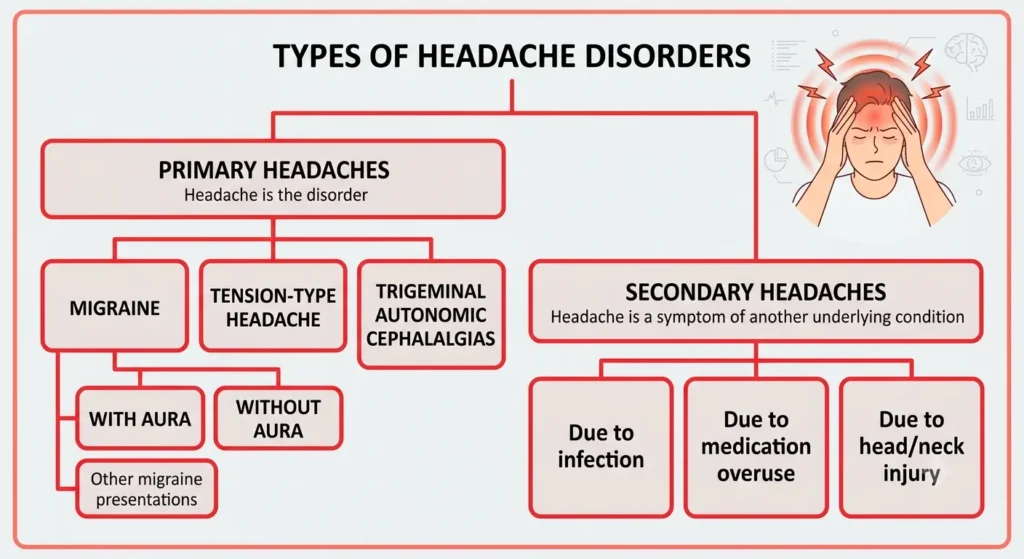
Migraine symptoms can vary from one person to another. Here are some of the common types you should know about.
Migraine usually does not require a specific blood test or brain scan for diagnosis. To confirm the condition, migraine treatment doctors (neurologists) look at the overall pattern.
A neurologist will ask about the nature, duration and frequency of your headaches, related symptoms, medical history and family history. A physical and neurological examination may also be performed.
Imaging such as an MRI or CT scan may be recommended in some situations when the doctor needs to look for another possible cause.
Important Tip: Keeping a headache diary can be useful. Record when the headache starts, how long it lasts, where the pain occurs, symptoms, possible triggers, menstrual timing if relevant, medicines taken and how the headache responds. Noting down these patterns can help during the consultation.
Getting a headache occasionally is common. But when headaches keep coming back or begin to affect your work, sleep, studies, exercise or everyday routine, it is worth talking to a neurologist.
Get yourself evaluated if:
If you suddenly get a severe headache unlike anything you have felt before, especially along with weakness, numbness, trouble speaking, confusion, blurred or lost vision, a stiff neck with fever, or fainting, don’t wait it out. These can be signs of a secondary headache, where something else in the body is causing it and it needs to be checked out right away.
Most occasional headaches are not serious, and rest, water, or a painkiller usually works. But if they keep coming back, feel different from usual, or start interfering with your day to day life, you should get it checked instead of just pushing through.
The Neurology and Neurosciences Department at the CK Birla Hospital can help figure out what’s causing your headaches and the right way to manage them. You can simply book a consultation to get a better understanding of your headaches and the next steps in care.
Do you know someone who’s had a heart issue? A friend, a relative, maybe even a celebrity whose story made headlines. Chances are, yes, you do. Heart disease has become so common that almost everyone knows someone affected by it.
But common should not mean overlooked. Early awareness and prevention still save lives and that’s precisely what World Heart Day 2026 is calling for, with this year’s message: Don’t Miss a Beat. Recognising the symptoms that hide before they become emergencies.
Table of Contents
Cardiovascular disease, the umbrella term for conditions affecting the heart and blood vessels, is the world’s leading cause of death.
According to the WHO, an estimated 19.8 million people died from CVDs in 2022, accounting for around 32% of all deaths globally. Heart attacks and strokes were responsible for 85% of these CVD deaths.
Cardiovascular disease (CVD) includes conditions such as:
And here is something many people overlook: some of the factors that increase your heart disease risk do not cause symptoms. One major study found that more than 45% of heart attacks were silent, with no recognised symptoms at the time.
Many people feel perfectly well while having:
That is why prevention is not only about reacting to symptoms, but also about knowing your risk before any obvious warning signs.
Some symptoms can be easy to overlook or attribute to stress, lack of sleep or ageing. These can be unusual tiredness, shortness of breath or reduced ability to do everyday activities. These symptoms can have many causes and do not always mean that you have any heart disease. But if these signs are persistent or getting worse, you should see a cardiologist.
A heart attack does not always begin with severe chest pain. Some possible symptoms are:
If you think you or someone around you could be having a heart attack, seek emergency medical care immediately.
Yes. Some heart conditions can be present for years without causing any noticeable symptoms.
Coronary artery disease (CAD), for example, can develop as plaque builds up and narrows the arteries that supply blood to the heart. Some people may not have symptoms until the condition becomes more advanced or complicated. That is why knowing your risk factors and getting appropriate health checks can help identify potential heart problems early.
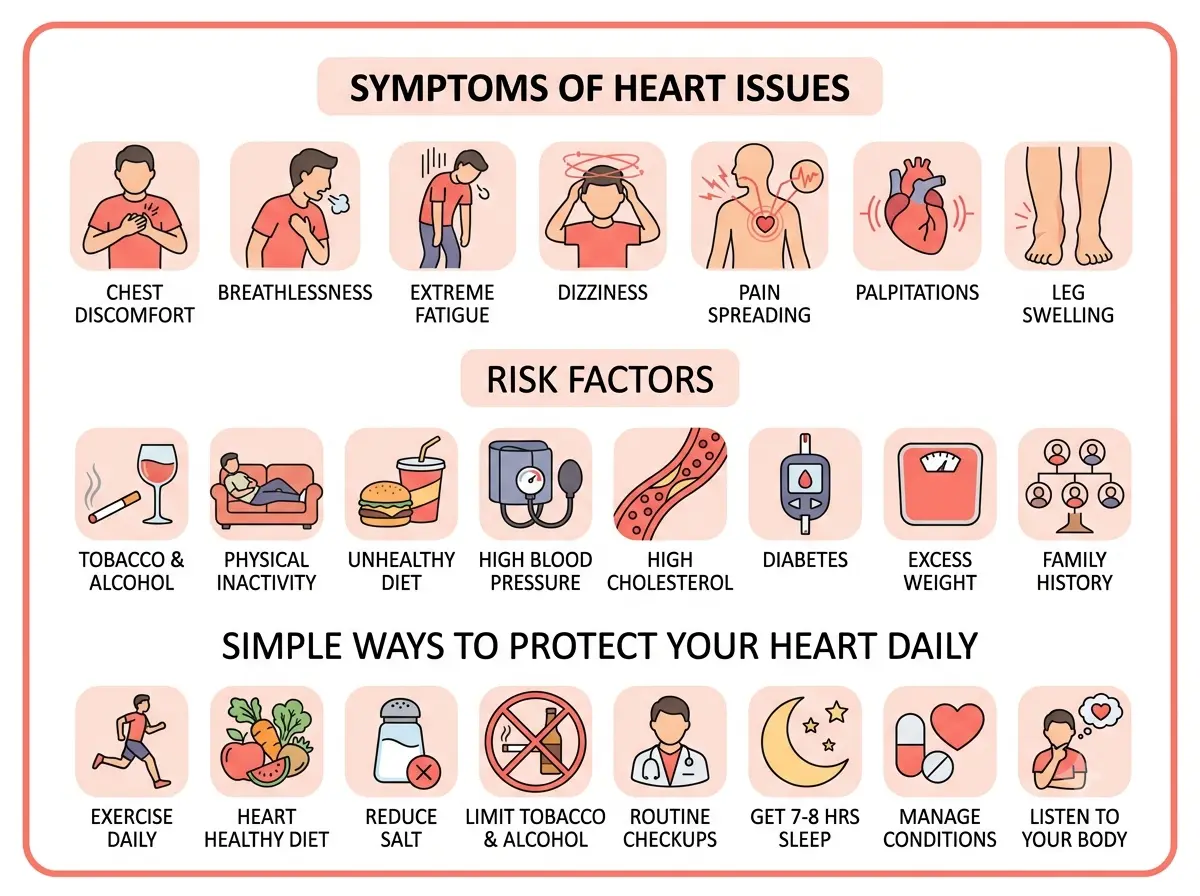
Your heart health is influenced by a combination of lifestyle, medical and inherited factors.
The WHO identifies tobacco use, an unhealthy diet, physical inactivity and harmful alcohol use as important behavioural risk factors for cardiovascular disease (CVD).
Depending on your symptoms and risk factors, the cardiologists may suggest a few tests to check your heart health and identify the potential risks.
It records the heart’s electrical activity and can help identify abnormal heart rhythms and certain signs of heart problems.
These cardiac stress tests monitor your heart while you exercise and can help evaluate how it responds when it is working harder.
It is a portable ECG that records your heart rhythm for an extended period, helping detect irregular heartbeats that may not appear during a short ECG.
Based on your symptoms and risk, a cardiologist may recommend tests such as CT coronary calcium scoring or coronary angiography to look more closely at the coronary arteries.
You may not need all of these tests. Your cardiologist will recommend investigations based on your symptoms, medical history and individual risk factors.
“Don’t Miss a Beat” – that’s the message behind World Heart Day 2026, and it applies no matter your age. Whether you are in your 20s or your 60s, your heart does not wait for a certain age to start needing attention. Sometimes the warning signs are obvious and sometimes the changes build gradually. Either way, most cardiovascular risk factors can be managed when identified early.
If you have been noticing recurring symptoms, have a few risk factors, a family history of heart disease, or a change in your health, don’t wait it out. Book a consultation with our Cardiology Department at the CK Birla Hospital for a detailed evaluation and personalised guidance.

As the season changes, do you start feeling feverish, achy, and exhausted? Chances are, it is viral fever that comes along with the shift in weather. It might seem like a minor illness, but it can leave your body feeling drained and make it hard to keep up with daily work. So why does this viral infection catch up with you, what actually causes it, and how do you treat it? Let’s get into these questions in this blog.
Table of Contents
Viral fever refers to the fever that develops when a virus, a microscopic infectious agent that multiplies inside your body’s cells, provokes your immune system into action. In response, your body raises its internal temperature as a natural defence.
This happens because many viruses are less able to multiply efficiently at higher temperatures. In that sense, the fever you are experiencing is a sign that your immune system is actively working. Or, we can say that the fever itself is actually your body’s defence mechanism.
Normal body temperature is generally around 98.6°F (37°C), and anything above 100.4°F (38°C) is classified as fever.
Dozens of viruses can cause fever, but a select few are the most frequently diagnosed:
| Type of Viral Fever | Cause of Spread | Common Symptoms |
| Influenza (flu) | Spreads through respiratory droplets | Sudden high fever with severe body aches |
| Common cold viruses (rhinoviruses) | Spreads through respiratory droplets and contact | Mild fever with runny nose and sore throat |
| Dengue fever | Transmitted by Aedes mosquitoes, common in tropical regions | High fever with intense joint pain |
| COVID-19 | Caused by the SARS-CoV-2 virus, spreads through respiratory droplets | Ranges from mild fever to more serious respiratory illness |
| Viral gastroenteritis (stomach flu) | Spreads through contaminated food, water or contact | Fever along with vomiting and diarrhoea |
| Chikungunya and other mosquito-borne viruses | Transmitted by mosquitoes, increasingly common during monsoon season in many parts of India | High fever with joint and muscle pain |
| Chickenpox (Varicella) | Spreads through respiratory droplets and contact with fluid from blisters | Causes fever along with an itchy, blister-like rash |
| Measles | Highly contagious and spreads via respiratory droplets | Fever with painful swelling of the salivary glands (below the ears/jaw) |
| Viral Hepatitis (A/E) | Spreads through contaminated food or water | Fever along with fatigue, nausea, and yellowing of skin/eyes (jaundice) |
Depending on the virus, you may experience different symptoms, but some of the most common ones are:
Many people feel drained even before they experience a high fever. This early exhaustion is one of the most overlooked early signs, so if you are feeling unusually tired for no clear reason, get it checked by an Internal Medicine doctor.
In most cases, the diagnosis of viral fever does not need extensive testing. Here is what that process generally looks like:
Yes, for most cases of viral fever, home care helps, but you must remember that home remedies don’t kill the virus directly. They may help in easing your symptoms and support your body when your immune system is fighting off the infection.
Home remedies should never replace medication or treatment prescribed by a specialist doctor, especially if the fever is high, does not improve, or comes with other concerning symptoms.
A few things that can help:
Busting the Myth: Cold water baths or wrapping up in heavy blankets to sweat it out don’t help. They can actually make you feel worse.
Most viral fevers go away within 3 to 7 days, but the exact timeline can vary depending on the virus and the person. Here is a general idea of what to expect:
Flu (Influenza): Fever usually eases off within 3 to 5 days.
Dengue: Fever can last up to a week, followed by a longer stretch of fatigue as the body recovers.
Children: They may run slightly higher or more spiking fevers than adults, simply because their immune systems are still learning to recognise common viruses.
Feeling tired for a week or two even after the fever is completely gone is normal as the body is still catching up on rest and recovery.
Most viral fevers are manageable with the right care, but that does not mean you should self-diagnose and assume it will resolve on its own. Complications are uncommon, but they are real, which is exactly why doctors emphasise monitoring instead of dismissing a fever that does not follow the usual pattern.
You should get it checked by a doctor if you notice:
If you notice any of these signs, it is best not to wait it out. You can book a consultation at the CK Birla Hospital and get evaluated by our experienced Internal Medicine doctors.

According to the Centers for Disease Control and Prevention (CDC), more than a million people worldwide are infected with leptospirosis every year. Yet most people have never heard of it until a doctor mentions it after a fever that won’t go away or after wading through a flooded street back home during monsoon. With the rainy season already here, it is important to know what this infection is and how to recognise it early. Keep reading to know more!
Table of Contents
Leptospirosis is a bacterial infection caused by a group of corkscrew-shaped bacteria called Leptospira. It is classified as a zoonotic disease, meaning it passes from animals to humans. Rodents, cattle, dogs, pigs and other mammals can carry the bacteria in their kidneys and shed it through their urine, usually without appearing sick themselves.
The World Health Organization describes leptospirosis as a zoonotic disease with epidemic potential, particularly after heavy rainfall, that people pick up through direct contact with infected animal urine or a urine contaminated environment.
This makes the disease especially common in areas with poor sanitation, stagnant water and flooding. If you live in a city that experiences monsoon flooding or has stray animals and open drains nearby, your risk of exposure may be higher, as these conditions create an environment where the bacteria can spread more easily.
It is true that leptospirosis spreads from animals to humans, but direct contact with an infected animal is not usually necessary. What actually causes infection is exposure to water or soil the animal’s urine has contaminated.
The bacteria enter the body through broken skin, even a minor cut or scrape or through the soft tissue of the eyes, nose or mouth. Standing water and damp soil are the most common carriers, which explains why such cases rise after floods.
When floodwater spreads, so does the contamination, putting anyone who wades through it, cleans up after it or walks barefoot through it at greater risk.
Certain occupations and living situations face higher exposure. Farmers, sewer workers, veterinarians, dairy workers and field or military personnel are all in regular contact with soil, water or animals as part of the job. This naturally raises their risk of getting affected with such infection.
Where you live also impacts your risk of getting affected. Areas with poor drainage, frequent flooding or a large rodent population (common in both urban slums during monsoon and rural areas near livestock) see higher exposure regardless of occupation.
As mentioned earlier, leptospirosis is caused by leptospira bacteria, which are commonly found in the urine of infected animals. The bacteria can survive for weeks or even months in fresh water, wet soil and muddy environments, especially in warm and humid conditions.
Some common sources of infection are:
Leptospirosis is not usually spread from one person to another. Rare cases of human-to-human transmission have been reported through breastfeeding, sexual contact and from a pregnant mother to her baby.
Its early symptoms look almost identical to the flu. Some common early symptoms you may notice are:
In some cases, the infection progresses to a more serious form known as severe leptospirosis (Weil’s disease). This can affect multiple organs and requires immediate medical attention.
Symptoms of severe leptospirosis are:
The illness usually unfolds in two phases:
Mild cases (outpatient):
Severe cases (hospitalization required):
Key points:
If you are suffering with fever, chills or body aches within a month of wading through floodwater, working outdoors or handling animals, it is best not to assume a routine viral fever. A consultation with an internal medicine doctor or infectious disease specialist can help catch it early.
Because the early symptoms mimic so many other illnesses such as dengue, malaria, influenza and typhoid, diagnosis leans heavily on two things together:
To confirm the diagnosis, your doctor may recommend:
Prevention from this infection is mostly about reducing contact between broken skin and potentially contaminated water or soil. A few simple tips may help:
From a distance, leptospirosis seems like just another flu-like illness, easy to lump in with dengue, influenza or malaria. But it has its own distinct pattern, signs and treatment path. Knowing the difference helps you catch it early. It responds well to treatment and most people recover fully.
If you have recently been exposed to floodwater or animals and notice a fever that does not seem to follow the usual pattern, the internal medicine doctors and infectious disease specialists at the CK Birla Hospital can help you get a clear diagnosis and the right treatment, without delay. Book a consultation to get expert advice!
“बस यह आखिरी सिगरेट है”, यह वाक्य शायद हर उस इंसान ने खुद से सैकड़ों बार कहा होगा, जो धूम्रपान छोड़ने की कोशिश कर रहा है। कुछ घंटे, कुछ दिन निकल भी जाते हैं, लेकिन फिर वही बेचैनी, वही तलब लौट आती है, और हाथ फिर से सिगरेट तक पहुंच जाता है। अगर आप भी इस चक्र से गुजर चुके हैं, तो सबसे पहले यह समझ लीजिए, यह आपकी कमजोर इच्छाशक्ति नहीं, बल्कि निकोटीन की लत का असली और वैज्ञानिक असर है। यह लत सिर्फ आदत नहीं, बल्कि दिमाग की रसायन विज्ञान से जुड़ी एक जटिल प्रक्रिया है, और यही वजह है कि इसे अकेले छोड़ना ज्यादातर लोगों के लिए इतना कठिन साबित होता है।
इस ब्लॉग में हम समझेंगे कि आखिर धूम्रपान छोड़ना इतना मुश्किल क्यों लगता है, और इसे आसान बनाने के असरदार तरीके क्या हैं। अगर आप या आपका कोई अपना धूम्रपान की लत से जूझ रहा है, तो अकेले जूझने की जरूरत नहीं, हमारे अनुभवी विशेषज्ञों से मिलकर सही मार्गदर्शन और सहयोग पाएं, आज ही अपॉइंटमेंट बुक करें।
Table of Contents
सिगरेट में मौजूद निकोटीन कुछ ही सेकंड में दिमाग तक पहुंच जाता है और डोपामिन नाम के “फील गुड” रसायन को रिलीज करता है। समय के साथ दिमाग इस डोपामिन रिलीज का आदी हो जाता है, और जब निकोटीन नहीं मिलता तो दिमाग असंतुलित महसूस करने लगता है। यही वजह है कि धूम्रपान छोड़ना सिर्फ आदत बदलने जितना आसान नहीं, बल्कि यह मस्तिष्क की एक वास्तविक रासायनिक निर्भरता से लड़ने जैसा है। इसके साथ ही सिगरेट पीने का समय, जगह और मूड से जुड़ाव भी एक व्यावहारिक लत बना देता है, जैसे चाय के साथ सिगरेट या तनाव में सिगरेट पीने की आदत। यही दोहरी लत, शारीरिक और मानसिक, इसे छोड़ना इतना चुनौतीपूर्ण बना देती है।
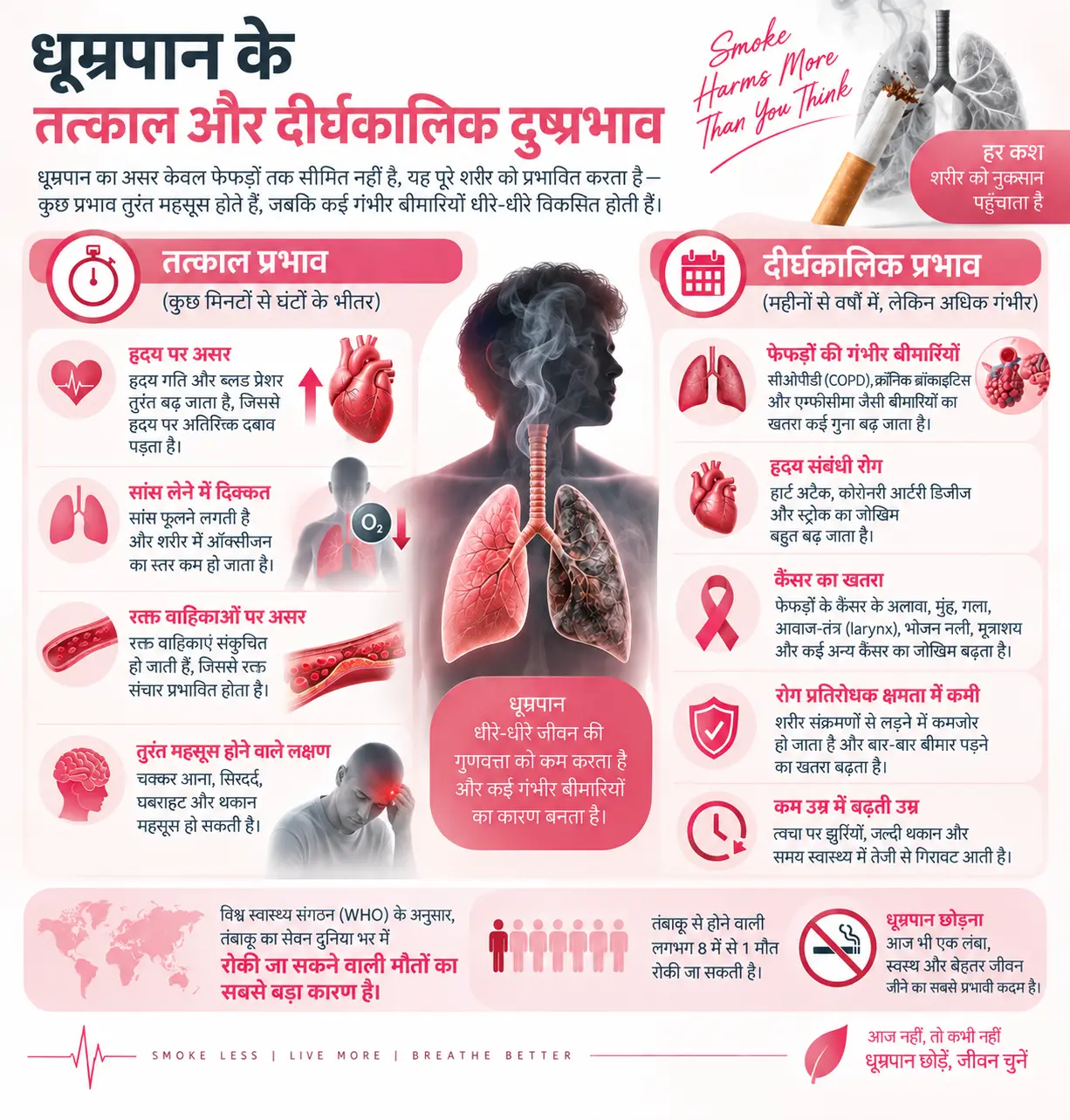
नोट: विश्व स्वास्थ्य संगठन (WHO) के अनुसार, तंबाकू का सेवन दुनिया भर में रोकी जा सकने वाली मौतों का सबसे बड़ा कारण है।
जब कोई व्यक्ति धूम्रपान छोड़ता है, तो शरीर निकोटीन की कमी के प्रति प्रतिक्रिया देना शुरू करता है, जिसे निकोटीन विदड्रॉअल कहा जाता है। आमतौर पर ये लक्षण छोड़ने के कुछ घंटों के भीतर शुरू होकर पहले तीन दिनों में सबसे तेज महसूस होते हैं –
ज्यादातर मामलों में ये लक्षण दो से चार हफ्तों के भीतर धीरे-धीरे कम होने लगते हैं, हालांकि हल्की तलब कई महीनों तक भी बनी रह सकती है। यह समझना जरूरी है कि यह विथड्रॉवल खतरनाक नहीं, बल्कि शरीर के ठीक होने की प्रक्रिया का हिस्सा है।
स्मोकिंग छोड़ने का कोई एक निश्चित तरीका नहीं होता। हर किसी का रूटीन और आदतें अलग होती हैं, इसलिए वही तरीका चुनें जो आपके लिए सबसे सही बैठे।
डॉक्टर की सलाह और निकोटीन थेरेपी (NRT) निकोटीन गम, पैच या इनहेलर आपके शरीर को सिगरेट के धुएं और जहरीले केमिकल्स के बिना बहुत हल्की मात्रा में निकोटीन देते हैं। इससे तलब कंट्रोल में रहती है। रिसर्च के अनुसार NRT से स्मोकिंग छूटने की संभावना काफी बढ़ जाती है। अगर आदत बहुत पुरानी है, तो डॉक्टर कुछ ऐसी दवाएं भी लिख सकते हैं जो दिमाग में सिगरेट की इच्छा को कम करती हैं। कोई भी दवा या थेरेपी बिना डॉक्टर की सलाह के शुरू न करें।
आदतों पर कंट्रोल और अपनों का साथ सिगरेट छोड़ना सिर्फ शरीर की नहीं, दिमाग की भी लड़ाई है। सबसे पहले अपने ट्रिगर्स पहचाने, जैसे तनाव में, चाय-कॉफी के साथ, ऑफिस ब्रेक में या दोस्तों के बीच सिगरेट पीने की इच्छा होना। इन ट्रिगर्स से बचने के लिए अपनी आदतें बदलें। फैमिली और दोस्तों का सपोर्ट लें और अपना माइंडसेट पक्का रखें। जब सही आदतों के साथ निकोटीन थेरेपी का सहारा लिया जाता है, तो सफलता मिलना काफी आसान हो जाता है।
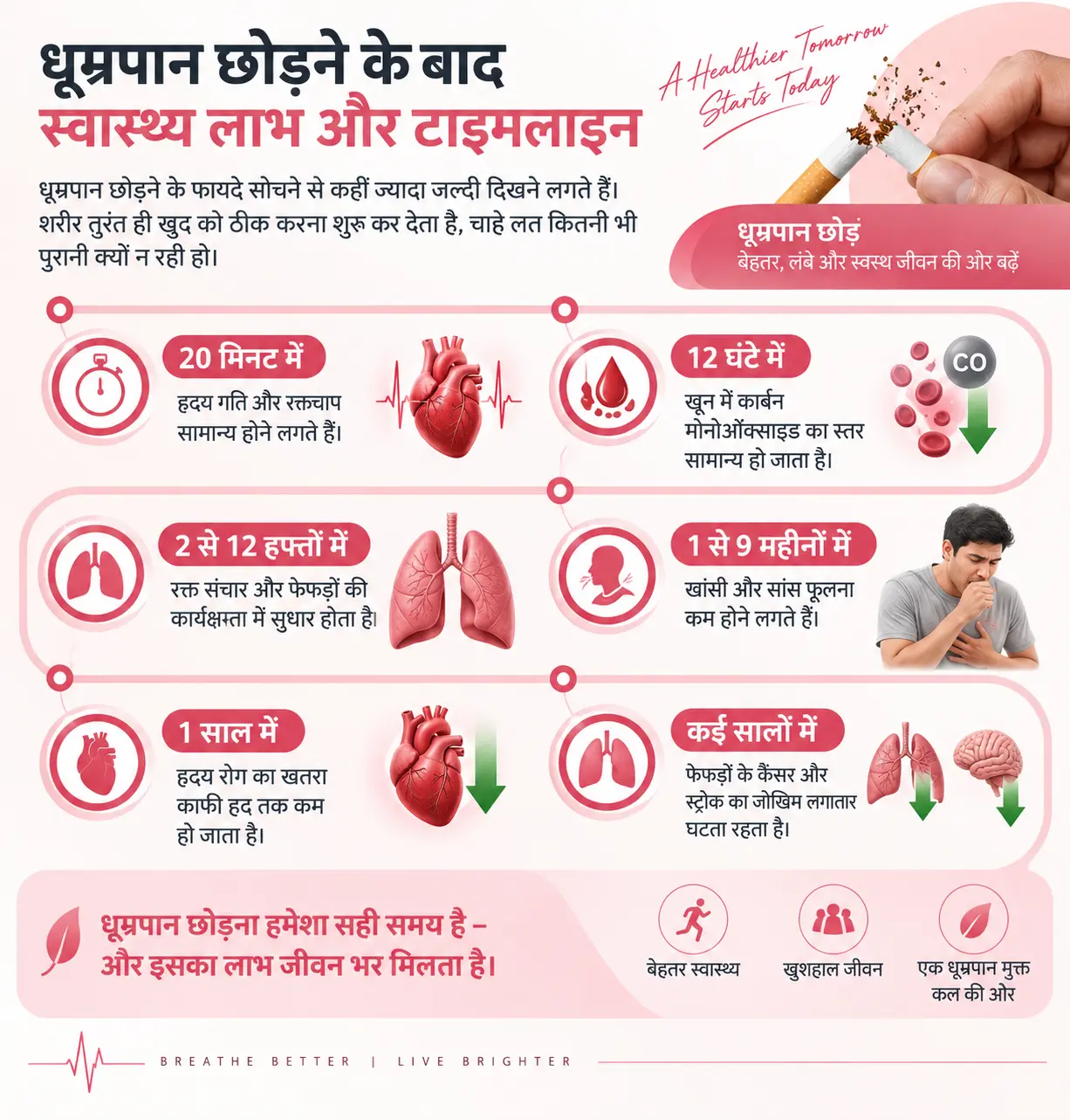
धूम्रपान छोड़ने के फायदे सोचने से कहीं ज्यादा जल्दी दिखने लगते हैं –
यह टाइमलाइन दिखाती है कि शरीर धूम्रपान छोड़ने के तुरंत बाद ही खुद को ठीक करना शुरू कर देता है, चाहे लत कितनी भी पुरानी क्यों न रही हो।
एक आम गलतफहमी यह है कि निकोटीन की लत सिर्फ शारीरिक होती है, और अगर शरीर से निकोटीन निकल जाए तो लत खत्म हो जाती है। लेकिन सच्चाई इससे कहीं ज्यादा व्यापक है। निकोटीन की लत मानसिक और व्यवहारिक स्तर पर भी उतनी ही गहरी होती है, जितनी शारीरिक स्तर पर। यही वजह है कि सिर्फ शरीर से निकोटीन साफ हो जाने के बाद भी कई बार पुरानी आदतें, तनाव या सामाजिक स्थितियां दोबारा सिगरेट की तरफ खींच सकती हैं। इसलिए सफल और स्थायी रूप से धूम्रपान छोड़ने के लिए शारीरिक और मानसिक, दोनों पहलुओं पर काम करना जरूरी है।
अगर छोड़ने के बाद दोबारा सिगरेट पीने की स्थिति बन भी जाए, तो इसे असफलता मानने की बजाय सीखने का मौका समझें। ज्यादातर लोग धूम्रपान पूरी तरह छोड़ने से पहले कई बार कोशिश करते हैं, और हर कोशिश उन्हें अगली बार ज्यादा तैयार बनाती है। ट्रिगर्स को पहचानना, तनाव प्रबंधन के तरीके सीखना और जरूरत पड़ने पर फिर से विशेषज्ञ की मदद लेना, यह सब प्रक्रिया का हिस्सा है। खुद के प्रति सख्त होने की बजाय धैर्य रखना, दोबारा प्रयास की सफलता की संभावना को काफी बढ़ा देता है।
धूम्रपान छोड़ना आसान नहीं, लेकिन असंभव भी नहीं है। यह समझना जरूरी है कि यह सिर्फ इच्छाशक्ति की कमी नहीं, बल्कि दिमाग और शरीर दोनों में बनी एक गहरी निर्भरता है, जिसे सही जानकारी, सही सहयोग और सही योजना से दूर किया जा सकता है। अगर आप या आपका कोई अपना धूम्रपान की लत से बाहर निकलने की कोशिश कर रहा है, तो हमारे अस्पताल के अनुभवी विशेषज्ञ आपकी पूरी मदद कर सकते हैं। आप दोनों में से किसी भी सेंटर पर जाकर सही जांच, सही सलाह और सही सहयोग पा सकते हैं, अपनी सेहत की दिशा में यह पहला कदम आज ही उठाएं।
कभी-कभी हमारे मां कुछ चीजें एक जगह पर रख कर भूल जाती हैं। हो सकता है कि ये कोई सामान्य बात हो या फिर उम्र का पड़ाव हो, लेकिन ऐसी ही समस्या अब हर उम्र के लोगों में बहुत ज्यादा देखने को मिल रही है। शुरुआत में लगता है, “बड़े होने पर तो भूलना आम बात है।” लेकिन जब भूलना रोज़मर्रा की ज़िंदगी को उलझाने लगे, अपनों के चेहरे धुंधले पड़ने लगें, तो यह सिर्फ उम्र का असर नहीं, बल्कि एक गंभीर मस्तिष्क रोग का संकेत हो सकता है।
भारत में इस वक्त करीब 5.3 मिलियन (53 लाख) लोग डिमेंशिया के साथ जी रहे हैं, और यह संख्या 2050 तक लगभग तीन गुनी होने का अनुमान है। यही वजह है कि सही समय पर सही जानकारी होना बीमारी से लड़ने की पहली सीढ़ी बन जाता है। इस ब्लॉग में हम अल्जाइमर रोग को हर एंगल से समझेंगे, कारण से लेकर इलाज तक। अगर आपको या आपके किसी अपने में ऐसे लक्षण नज़र आ रहे हैं, तो देर मत कीजिए, हमारे अनुभवी स्पेशलिस्ट से अपॉइंटमेंट बुक करें और सही दिशा में पहला कदम उठाएं।
Table of Contents
अल्जाइमर रोग (Alzheimer’s disease) एक धीरे-धीरे बढ़ने वाली न्यूरोडिजेनरेटिव बीमारी है, यानी वो बीमारी जिसमें मस्तिष्क की कोशिकाएं धीरे-धीरे कमज़ोर होकर नष्ट होने लगती हैं। यह मनोभ्रंश रोग या डिमेंशिया (dementia) का सबसे आम प्रकार है और दुनियाभर में डिमेंशिया के कुल मामलों में इसकी हिस्सेदारी लगभग 60 से 80 प्रतिशत तक है। सीधे शब्दों में कहें तो हर डिमेंशिया अल्जाइमर नहीं होता, पर ज़्यादातर अल्जाइमर के मरीज डिमेंशिया की श्रेणी में आते हैं।
यह बीमारी सबसे पहले याददाश्त को प्रभावित करती है, फिर धीरे-धीरे सोचने, बोलने, फैसले लेने और रोज़मर्रा के काम करने की क्षमता को भी छीनने लगती है। दिलचस्प बात यह है कि शुरुआती दौर में मरीज पुरानी बातें बखूबी याद रख पाता है, लेकिन कल क्या खाया या किससे मिला, यह भूल जाता है। यही विरोधाभास इसे सामान्य भूलक्कड़पन से अलग बनाता है।
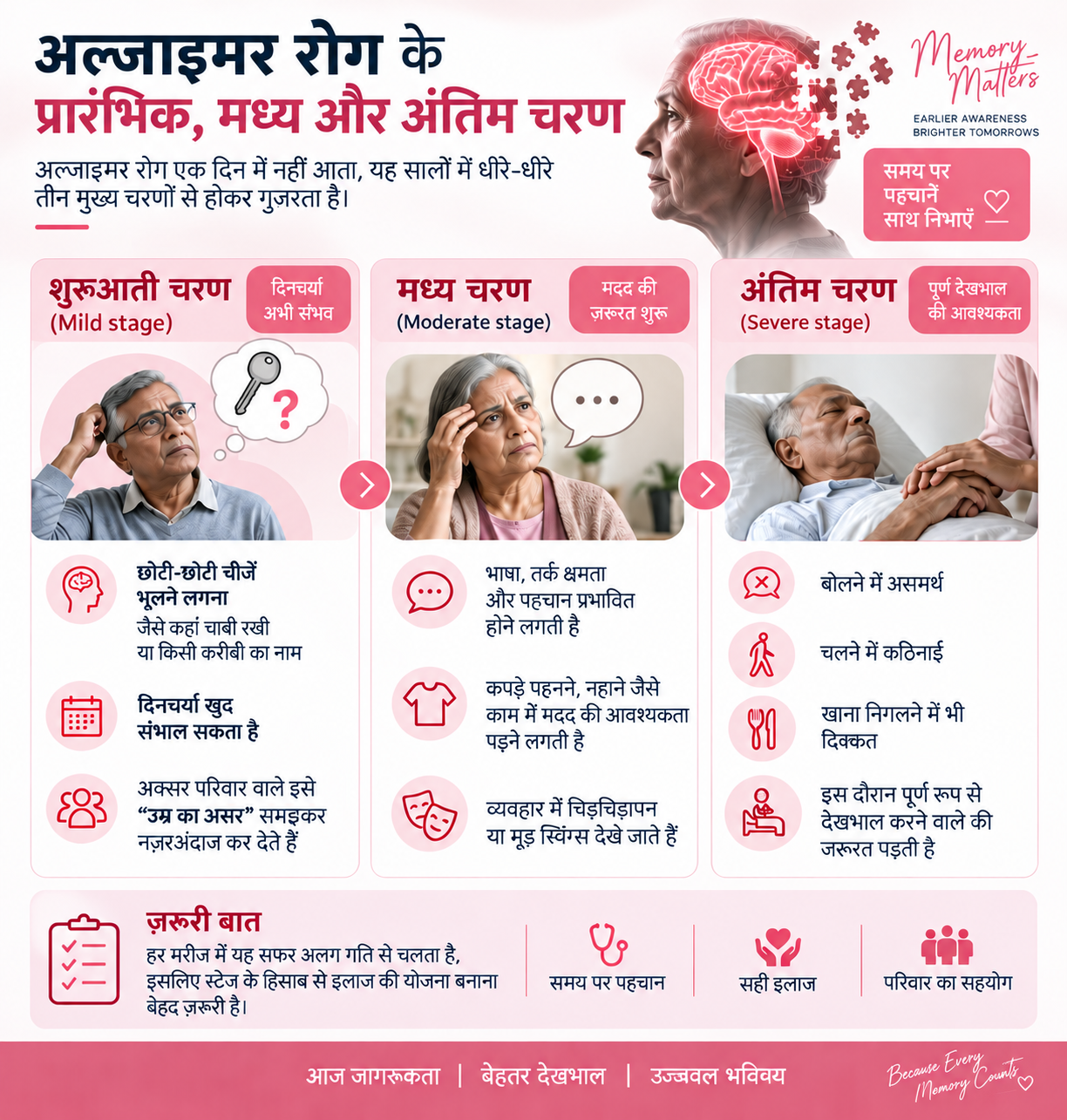
अल्जाइमर रोग एक दिन में नहीं आता, यह सालों में धीरे-धीरे तीन मुख्य चरणों से होकर गुज़रता है।
हर मरीज में यह सफर अलग गति से चलता है, इसलिए स्टेज के हिसाब से इलाज की योजना बनाना बेहद ज़रूरी है।
अल्जाइमर रोग के लक्षण अक्सर इतने मामूली होते हैं कि लोग उन्हें पहचान ही नहीं पाते। कुछ आम संकेत इस तरह हैं –
अगर आपके घर में किसी बुज़ुर्ग में ये लक्षण बार-बार दिख रहे हैं, तो इसे “उम्र होने पर ऐसा होता ही है” कहकर टालना खतरनाक साबित हो सकता है। समय पर पहचान से इलाज की दिशा बदल सकती है।
अभी तक अल्जाइमर रोग के होने का कोई एक निश्चित कारण साबित नहीं हुआ है, पर रिसर्च बताती है कि यह मस्तिष्क में एमिलॉयड प्लाक (amyloid plaques) और टाऊ टैंगल्स (tau tangles) नाम की असामान्य प्रोटीन संरचनाओं के जमा होने से जुड़ा है, जो धीरे-धीरे न्यूरॉन्स (तंत्रिका कोशिकाओं) को नुकसान पहुंचाती हैं।
कुछ जोखिम कारक इस बीमारी की आशंका बढ़ा देते हैं –
एक अहम बात यह है कि विशेषज्ञों के अनुसार करीब 40 प्रतिशत डिमेंशिया के मामलों को जीवनशैली में सुधार लाकर टाला या देर किया जा सकता है, यानी यह बीमारी पूरी तरह किस्मत के भरोसे नहीं छोड़ी जा सकती।
निदान की प्रक्रिया में कई चरण शामिल होते हैं, क्योंकि सिर्फ एक टेस्ट से यह बीमारी कन्फर्म नहीं होती। डॉक्टर आमतौर पर इन तरीकों को मिलाकर आकलन करते हैं –
एक बात साफ समझ लेनी चाहिए, अभी तक अल्जाइमर रोग का कोई स्थायी इलाज उपलब्ध नहीं है। लेकिन इसका मतलब यह बिल्कुल नहीं कि कुछ किया नहीं जा सकता। सही उपचार लक्षणों को नियंत्रित करने और बीमारी की रफ्तार धीमी करने में काफी असरदार साबित होता है।
हर मरीज की दवा और थेरेपी उसकी स्टेज, उम्र और अन्य बीमारियों को ध्यान में रखकर तय की जाती है, इसलिए बिना विशेषज्ञ की सलाह के कोई भी दवा शुरू करना उचित नहीं।
अल्जाइमर की रोकथाम की गारंटी कोई नहीं दे सकता, पर जोखिम घटाने के रास्ते ज़रूर मौजूद हैं। रोज़मर्रा की आदतों में यह बदलाव मस्तिष्क को लंबे समय तक सक्रिय रख सकते हैं –
छोटी लगने वाली ये आदतें लंबे समय में मस्तिष्क की सेहत पर बड़ा फर्क डालती हैं।
अल्जाइमर सिर्फ मरीज की बीमारी नहीं होती, यह पूरे परिवार की परीक्षा बन जाती है। देखभाल करने वाले अक्सर थकान, चिड़चिड़ापन और भावनात्मक तनाव से गुज़रते हैं, और यह बिल्कुल सामान्य है।
अल्जाइमर को लेकर समाज में कई गलतफहमियां फैली हुई हैं, जो सही समय पर इलाज में देरी की बड़ी वजह बनती हैं। मिथक और तथ्यों को आप नीचे बताए गए टेबल से पढ़ सकते हैं –
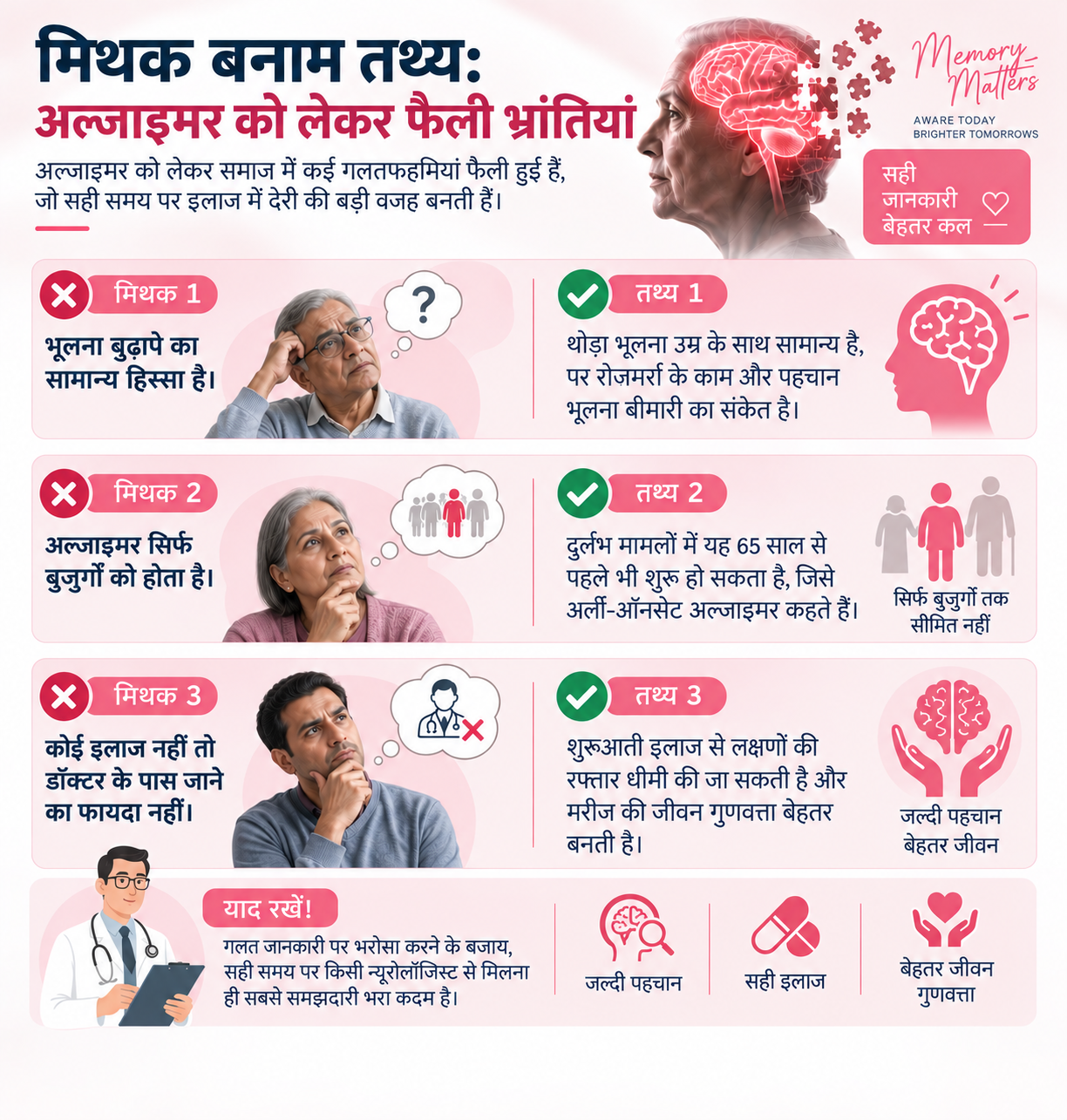
हमारे अस्पताल पर परिवारों को न सिर्फ मेडिकल इलाज, बल्कि केयरगिवर काउंसलिंग जैसी सहायता भी दी जाती है, ताकि यह सफर आप अकेले न तय करें। बिना देर किए हमारे अनुभवी विशेषज्ञों से परामर्श लें और सही दिशा में इलाज लें।

