With PCOS recently renamed PMOS, the spotlight has finally moved beyond reproductive symptoms and onto the metabolic factors driving this condition. Insulin resistance, in particular, is now being looked at more seriously.
In this blog, we will discuss how insulin resistance and PMOS are connected, and why it matters for how you manage it. Keep reading to find out!
| PMOS (Polyendocrine Metabolic Ovarian Syndrome) | Insulin resistance |
| It is a chronic hormonal condition and metabolic disorder that can affect your menstrual cycle, ovulation, fertility and overall health. | It is a state in which the body’s cells respond less effectively to insulin. |
| This condition can cause irregular periods, problems with ovulation, acne and excess hair growth. | The pancreas may produce more insulin to keep blood glucose within range. |
| Symptoms and severity vary from person to person | Can occur before prediabetes or type 2 diabetes |
Insulin is a hormone that helps glucose move from the bloodstream into cells, where it can be used for energy. When the body becomes less responsive to insulin, the pancreas may produce more insulin to compensate. This is called insulin resistance.
A 2026 international consensus published in The Lancet introduced a new name for what was previously called PCOS: Polyendocrine Metabolic Ovarian Syndrome (PMOS).
The term PCOS placed a strong focus on the ovarian cysts only. However, decades of research have shown that the condition can affect reproductive, hormonal and metabolic health, not just the ovaries. Following a global consensus process, the condition was renamed Polyendocrine Metabolic Ovarian Syndrome (PMOS).
This name change also helps bring metabolic health into the conversation alongside menstrual and reproductive health.
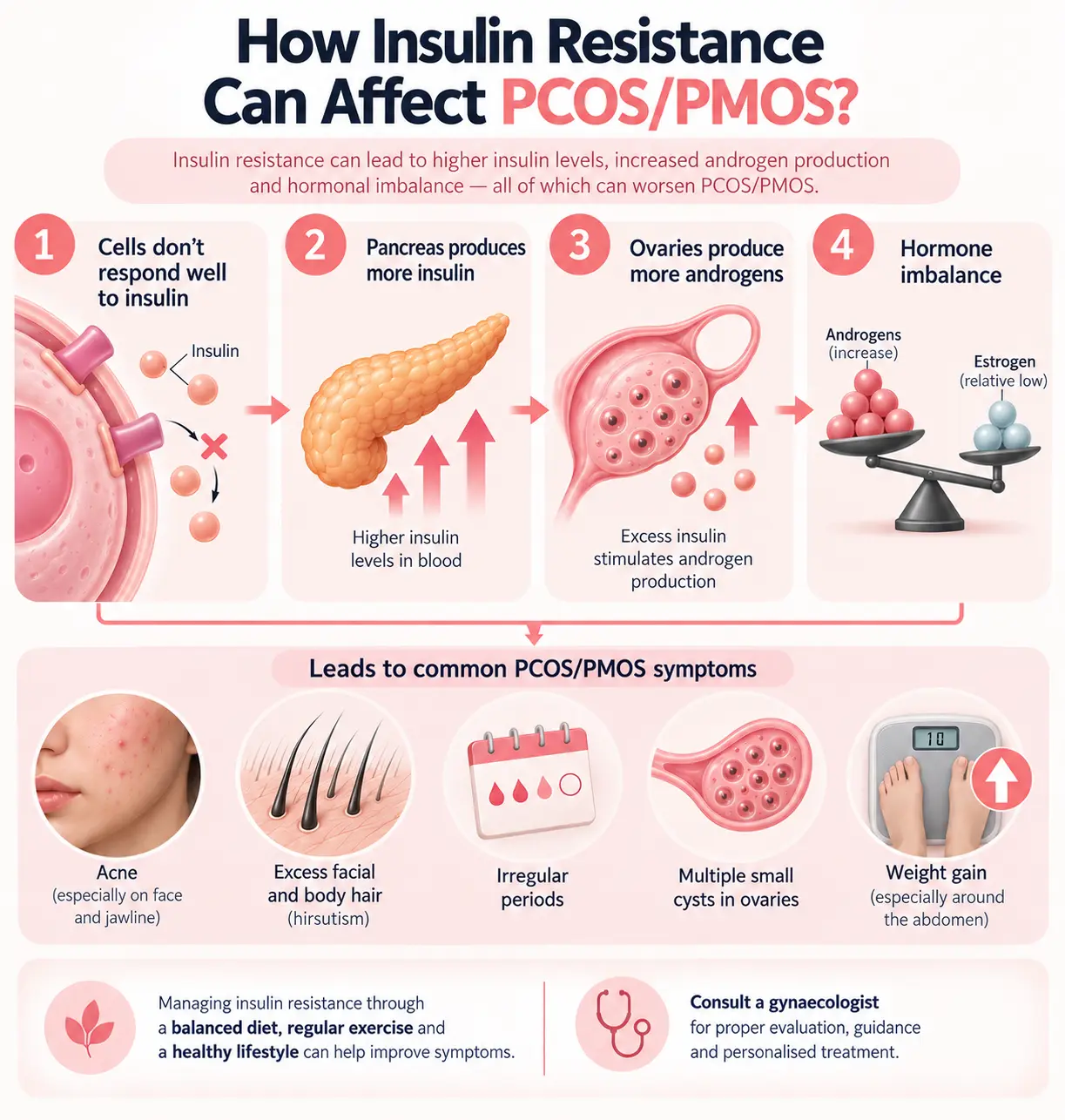
Insulin resistance can lead to higher levels of insulin in the blood, meaning your body pumps out more of it and that extra insulin signals your ovaries to produce more androgens (like testosterone) than usual. This can cause acne, excess hair growth, hair thinning, and irregular or irregular periods.
Higher androgens also affect ovulation, which is a big reason fertility issues are common with PMOS. The resulting hormonal imbalance may lead to weight gain, which can worsen insulin resistance further, creating a cycle that keeps reinforcing itself.
If it is not managed timely, it can raise the risk of type 2 diabetes and contributes to fatigue, sugar cravings, and stubborn weight.
In short, insulin resistance is not just about your blood sugar level, but it is also a major driver behind the hormone imbalance that shows up as PMOS symptoms.
A simplified way to understand the relationship is:
Insulin resistance → Higher insulin levels → Changes in ovarian hormone activity → Ovulation may become irregular →Periods may become irregular
But remember that PMOS is not simply an insulin-resistance disorder. Your genetics, hormones, body composition and other metabolic factors also influence the condition. That means two people can have the same diagnosis but very different symptoms and health concerns.
Weight and insulin resistance can influence each other, but the relationship is more complex than insulin resistance simply causing weight gain.
Some people with PMOS find weight management difficult. Excess body fat can also worsen insulin resistance. At the same time, hormonal and metabolic changes may make weight management more challenging for some people with PMOS.
This is why metabolic health cannot be judged by weight alone.
A recent 2026 review of PMOS highlights earlier research showing insulin resistance in 75% of lean women with PCOS and 95% of women with overweight and PCOS. This is an important finding because it shows that insulin resistance can be seen even when a person is not overweight.
You can have PMOS and metabolic risk at different body sizes. International guidelines recommend checking glucose regulation in people with PMOS/PCOS regardless of BMI.
Yes. Insulin resistance can develop before blood glucose reaches the range used to diagnose prediabetes or diabetes. The body may initially compensate by producing more insulin, allowing blood glucose to remain within the normal range.
Over time, some people may develop prediabetes, when blood glucose is higher than normal but not yet in the diabetes range. Others may go on to develop type 2 diabetes.
This is particularly relevant in PMOS because the condition is associated with an increased risk of abnormal glucose regulation.
| Test | Normal | Prediabetes | Diabetes |
| Fasting blood glucose | Below 100 mg/dL | 100–125 mg/dL | 126 mg/dL or higher |
| HbA1c | Below 5.7% | 5.7–6.4% | 6.5% or higher |
| 2-hour glucose during an OGTT | Below 140 mg/dL | 140–199 mg/dL | 200 mg/dL or higher |
Since you can’t always spot insulin resistance from symptoms alone, doctors use a few standard tests to check for it:
If you have PMOS, don’t skip checking your insulin and glucose levels, even if your weight or symptoms don’t seem to point to it. Speak with a gynaecologist to get expert advice based on your overall health. They can evaluate your hormonal and reproductive health, and guide you on what tests you need and what lifestyle changes might help.
At the CK Birla Hospital, you can consult with some of the most experienced gynaecologists, who can give you the best advice for your individual health. Simply book a consultation to get answers specific to you.
Written and Verified by:

Similar Gynaecology Blogs
Request a call back


