Many times, irregular periods get brushed off as stress. Acne gets blamed on hormones in general. Trouble losing weight feels like a lifestyle issue. Struggling to get pregnant can seem unrelated to any of it. But sometimes, these are not separate problems at all. They are different faces of the same condition.
That condition is PMOS, or polyendocrine metabolic ovarian syndrome, previously known as PCOS, or polycystic ovary syndrome. The name changed in 2026 to better capture the wider aspect of this condition, affecting menstrual health, hormones, metabolism and fertility, often all at once.
September is PMOS Awareness Month, and at the CK Birla Hospital, we are using this time to help more women understand it.
This month, getting familiar with the symptoms, health effects, diagnosis and treatment of PMOS can help you recognise changes in your own body sooner and know when it is time to see a doctor.
Polyendocrine metabolic ovarian syndrome (PMOS) is a long-term hormonal and metabolic condition that can affect menstrual cycles, ovulation, androgen levels, metabolism, skin, hair and fertility.
It was previously called polycystic ovary syndrome (PCOS). PMOS affects around 1 in 8 women, or more than 170 million women worldwide. Still, many women live with it for years before they get a name for what is going on.
PMOS does not look the same in every woman. Some may mainly notice irregular periods, whereas others may seek help for acne, excess facial hair, difficulty conceiving or metabolic concerns.
The change from PCOS to PMOS is not a change from one disease to another. PMOS is the new name for the condition previously known as PCOS.
The earlier name could make it sound as though ovarian cysts were the defining feature. In reality, the condition involves much more than the ovaries. Hormonal changes, metabolic health, reproductive health, skin and hair changes, and psychological wellbeing can all be part of the picture.
The new name was developed through a global process and was announced on May 12, 2026, with a transition period planned before the new terminology is fully incorporated into the 2028 international guideline update.
| Earlier name | New name |
| Polycystic Ovary Syndrome (PCOS) | Polyendocrine Metabolic Ovarian Syndrome (PMOS) |
| Could suggest the condition is mainly about ovarian cysts | Reflects its broader hormonal and metabolic features |
This means you may see PCOS and PMOS used interchangeably during the transition, particularly in older medical records and online resources.
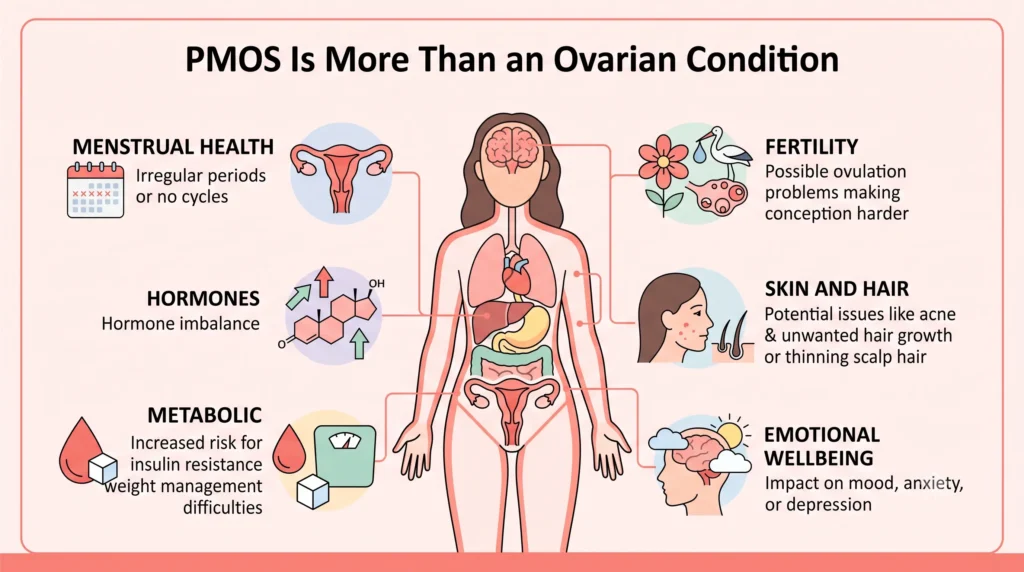
PMOS symptoms can vary considerably. Common signs include:
You do not need to have every symptom to have PMOS.
Another common misconception is that a woman must have ovarian cysts to have the condition. That is not the case. The name change partly addresses this misunderstanding.
A gynaecologist usually considers a combination of factors for its diagnosis, including:
Yes. PMOS can affect fertility, mainly because irregular ovulation can make it harder to predict when an egg will be released.
But having PMOS does not mean you cannot become pregnant.
For women who are trying to conceive, treatment can focus on improving ovulation and addressing other factors that may affect fertility. The appropriate approach depends on the individual’s health, symptoms and pregnancy goals. It is also worth discussing PMOS with a gynaecologist before or during pregnancy, as some women may have a higher risk of certain pregnancy-related complications.
Management depends on the symptoms, health risks and whether pregnancy is currently a goal.
Treatment may include:
Importantly, there is no single PMOS diet or exercise routine that every woman needs to follow. Treatment should be based on the person’s symptoms, health and goals.
You should consider speaking to a gynaecologist if you have persistent irregular periods, new or worsening acne or excess facial hair, unexplained menstrual changes, difficulty conceiving or concerns about metabolic health.
You do not need to wait until several symptoms appear before seeking an evaluation.
Sometimes the most useful first step is simply understanding whether seemingly unrelated changes could have a common cause.
PMOS Awareness Month is a reminder to pay attention to changes in your periods, hormones, metabolism, fertility or overall wellbeing. Knowing the condition and recognising symptoms early can help you seek the right medical advice.
If you have symptoms that concern you, discussing them with a Gynaecology and Obstetrics specialist at the CK Birla Hospital can help you understand whether they could be related to PMOS and what evaluation or treatment may be appropriate. You can book a consultation to discuss your symptoms and health goals in a personalised setting.
Written and Verified by:

Similar Gynaecology Blogs
Request a call back