
The proposed name change from PCOS to PMOS helps better reflect the condition's hormonal and metabolic effects, making it easier to understand diagnosis, treatment, and long-term health risks. The content is easy to read, informative, and optimized for relevant search terms. For accuracy, consistently refer to PMOS as the proposed new name for PCOS.
What is in a name?
Medically, everything.
The name of a disease tells doctors where to look, what to treat, and what to ignore. For approximately 170 million women with Polycystic Ovary Syndrome, that name pointed the treatment toward reproductive health, mainly the ovaries and the cysts. But the disorder was always rooted in something broader like metabolic dysfunction, insulin resistance, and hormonal dysregulation that extended far beyond the reproductive system.
After years of research, the focus is finally shifting in the right direction. PCOS is now being renamed PMOS. Read further to understand why this renaming is needed and what it means for diagnosis, symptoms, risk factors, and treatment.
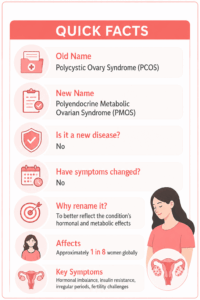
Women diagnosed with PCOS have long been told they have ‘polycystic ovaries’. This name does not point to complete symptoms and overlooks the bigger hormonal and metabolic picture of what this condition actually does to the body.
In reality, many women diagnosed with PCOS do not have polycystic ovaries on ultrasound. And some women with ovarian cysts do not have PCOS. This mismatch led to years of confusion and misguided treatment.
That’s exactly why a major international panel decided it was time for a change.
A 2026 international consensus published in The Lancet (one of the world’s oldest and most prestigious medical journals) brought together experts, healthcare organisations, researchers, and patient advocacy groups from around the world. Their conclusion suggested that the name PCOS no longer accurately reflects the condition.
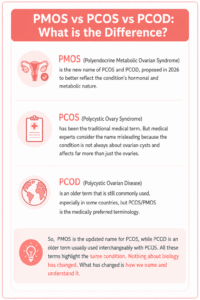
PMOS (Polyendocrine Metabolic Ovarian Syndrome) is the newly proposed name for Polycystic Ovary Syndrome (PCOS).
The word ‘polycystic’ puts all the attention on ovarian cysts. It leads many people to assume that women with this disorder will not be able to conceive and it will severely affect their fertility. However, PCOS, now PMOS, affects much more than reproductive health.
The renaming of this condition was the result of a coordinated global effort. The process of giving a more accurate name to this disorder involved many medical organisations and patient representatives worldwide who came together with a goal to improve understanding and eradicate stigma.
After renaming PCOS to PMOS, it is now understood to be a complex endocrine disorder. An endocrine disorder affects the glands that produce necessary hormones. It is also closely connected to your metabolic health, meaning how the body processes glucose and insulin. This name change encourages earlier diagnosis and focuses on overall care rather than focusing solely on fertility concerns.
One of the strongest reasons behind the PMOS name is the recognition that metabolic health is central to the condition. A significant proportion of people with PMOS experience insulin resistance regardless of their body size or weight. When the body’s cells do not respond effectively to insulin, it is called insulin resistance. As a result, the pancreas produces more insulin, which can worsen hormonal imbalances and increase androgen production. Androgens, also called male hormones that can cause symptoms such as acne, unwanted hair growth, and irregular periods.
Preventive Health Checkups Your Doctor May Recommend
Long-Term Risks Involved
Without appropriate management, insulin resistance may increase the risk of:
Irregular ovulation is one of the most common concerns that come up after a PMOS diagnosis. When ovaries do not release eggs regularly, conception becomes more difficult.
Women diagnosed with PMO may face increased risks of:
Do not interpret these risks as meaning you cannot conceive successfully. If you have been diagnosed with PMOS and are planning a pregnancy, consult a gynaecologist early. You can book a consultation with our expert gynecologists at the CK Birla Hospital. They will provide timely medical guidance and can help identify and manage potential risks. Many women with PCOS/PMOS conceive successfully with the right care.
PMOS / PCOS |
|||
| Symptoms | Causes | Diagnosis | Treatment |
|
|
|
|
The rename from PCOS to PMOS has understandably raised questions. If you have been living with this diagnosis, here is what you need to know.
Medical experts agree that a new name alone would not cure everything. But the way we name a condition shapes how we think around it, how we research it, and how we treat it. This is particularly relevant for patients whose symptoms were not reflected in imaging results, leading to delayed or missed diagnoses. We can say that renaming PCOS to PMOS is not a treatment in itself, but it is a step toward more accurate diagnosis and better long-term care.
If you have been experiencing irregular periods, unexpected hair growth, acne, weight changes, or fertility concerns or if you have already been diagnosed with PCOS or PMOS and want to understand what it means for your overall health, talking to a specialist is the right next step.
The experienced Obstetrics & Gynaecology and Endocrinology teams at the CK Birla Hospital can provide personalised guidance, required screening, and treatment that suit your overall health. Book a consultation now!
Similar Gynaecology Blogs
Request a call back


