Checking the weather before heading out is second nature to many of us. But checking the air quality? Not so much.
Every winter, smog takes over many Indian cities. But the bigger concern is what we breathe in. Polluted air can irritate your eyes and throat, trigger coughing and affect your lung health.
You can’t always avoid pollution, but a few simple steps can help reduce your exposure. Here is how you can protect yourself and your family.
The pollutant that raises particular health concerns is PM2.5. These are fine particles measuring 2.5 micrometres or less in diameter, roughly 30 times thinner than a strand of human hair. They can travel deep into your lungs, and some can enter the bloodstream.
Short-term exposure can cause eye irritation, coughing, throat irritation and breathlessness. Long-term exposure is linked to worsening asthma and COPD, as well as a higher risk of heart disease and stroke.
If you can’t see or smell smoke, it does not mean the air is fine. Air can look clear and still contain high levels of PM2.5.
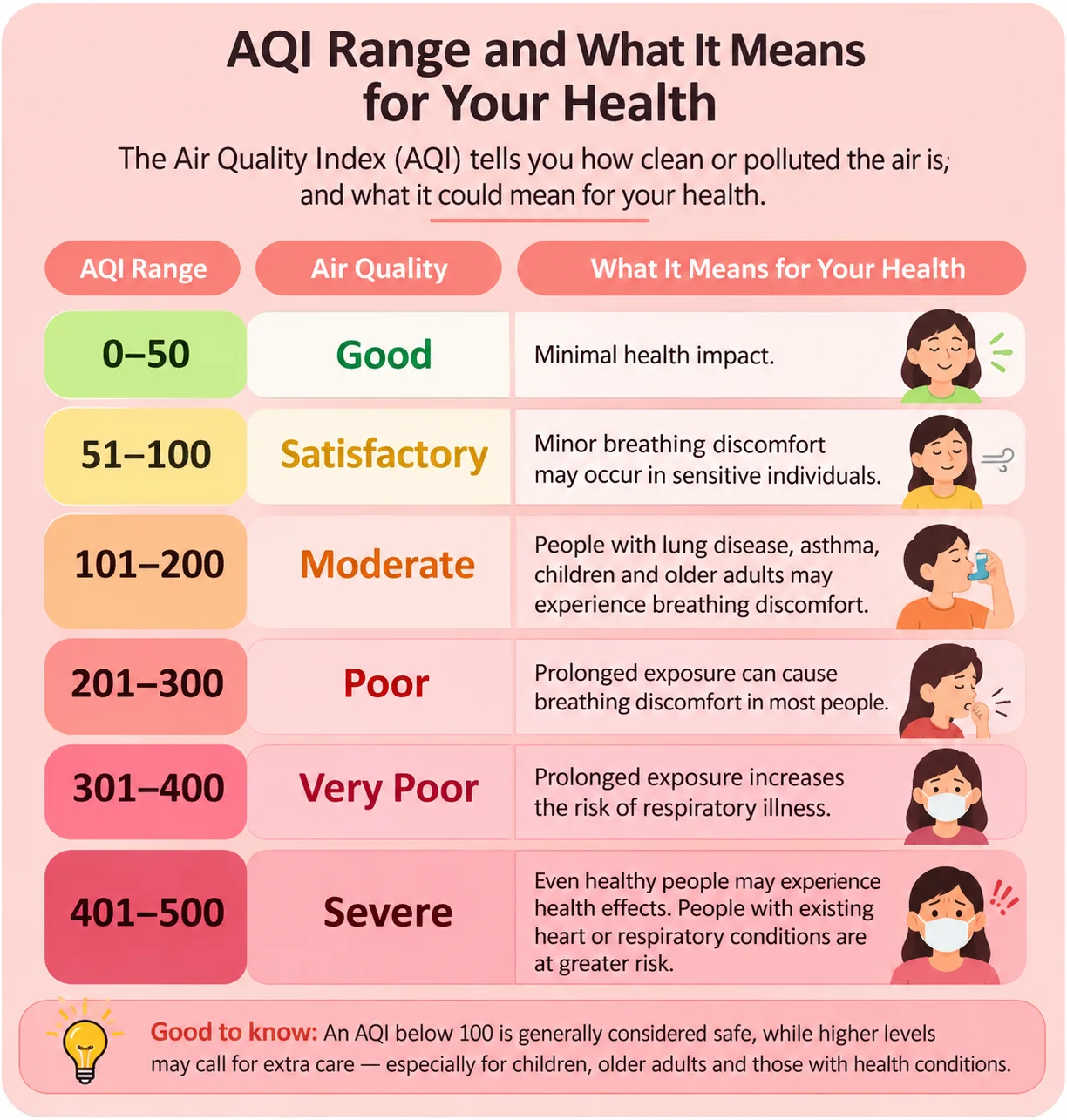
Source: Central Pollution Control Board (CPCB)
Here is what each AQI band means for your health, as defined by the CPCB:
| AQI | Category | Possible health impact |
| 0–50 | Good | Minimal impact |
| 51–100 | Satisfactory | Minor breathing discomfort in sensitive people |
| 101–200 | Moderate | Breathing discomfort for people with lung disease such as asthma, heart disease, children and older adults |
| 201–300 | Poor | Breathing discomfort for most people on prolonged exposure |
| 301–400 | Very poor | Respiratory illness on prolonged exposure |
| 401–500 | Severe | Affects healthy people and seriously affects those with existing disease |
Also Read: Impact of Air Pollution on Your Health: What You Need to Know
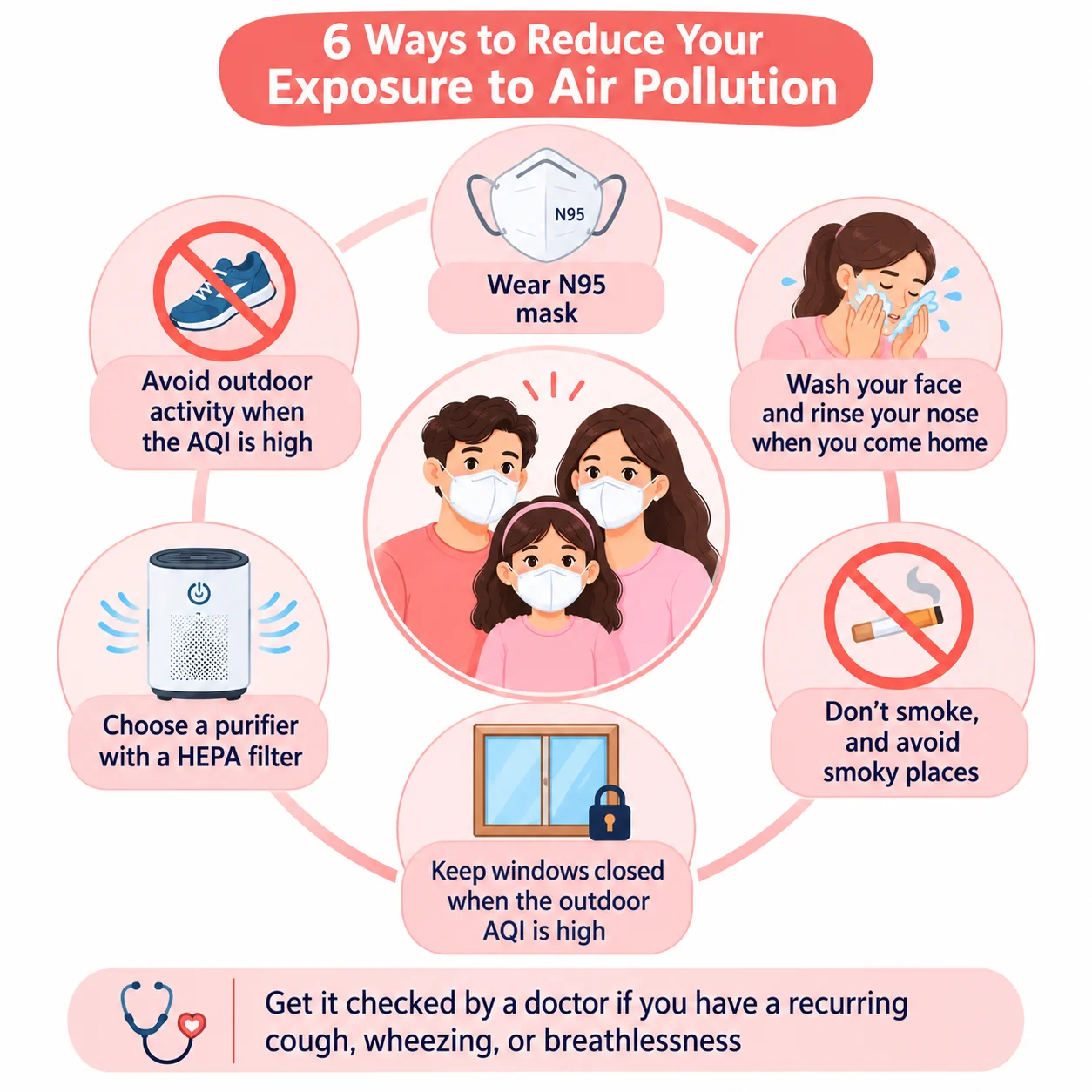
Early morning is usually the best time to exercise, but not when AQI warnings are in effect.
Pollution levels can vary throughout the day, and colder weather can sometimes trap pollutants close to the ground. So, check your local AQI before heading outdoors.
On days with poor to severe air quality (AQI above 200), avoid outdoor exercise, especially running, jogging or brisk walking. Try an indoor workout instead, preferably in a space with clean air.
You don’t have to skip exercise altogether. Regular physical activity is important for your health. Just change where and when you exercise to avoid breathing in too much polluted air.
Also Read: Deep Breathing Exercises for Lungs and Increasing Lungs Capacity
A cloth or surgical mask won’t do much against PM2.5. Those particles are too fine for them to block.
A well-fitting N95 or FFP2 respirator can filter out these tiny particles. But it should perfectly fit. If there are gaps around your nose or cheeks, polluted air can enter without being filtered.
Keep in mind to wear your mask over both your nose and mouth, and make sure it fits snugly.
If you have a heart or lung condition and find it difficult to breathe comfortably while wearing an N95, speak to your doctor.
N95 masks are designed for adults and are hard to fit on young children. For children, focus on limiting time outdoors on poor-air days and keeping indoor air clean, and ask your paediatrician whether a child-sized mask is suitable.
You can’t control the city, but you can improve the room where you sleep.
Purifiers reduce pollution indoors. They don’t remove it entirely, and they don’t undo hours spent in smog outdoors.
Some people feel the effects sooner and more severely:
If this is you or someone you look after, keep prescribed inhalers and medicines on hand and don’t skip doses. Check the AQI before planning outdoor activity, and make sure your doctor has given you an action plan for flare-ups.
Also Read: Asthma in Children: Recognizing Symptoms & Providing Treatment
Avoid self-medicating or taking supplements for lung detox. There is no strong scientific evidence that these products can flush out inhaled pollutants or protect you from their effects. If you have breathing problems or other symptoms, speak to your doctor instead of relying on these products.
Also Read: Tips to Strengthen Lungs & Increase the Oxygen Levels at Home
A mild cough or sore throat during a bad-air week is common. See a doctor if you notice:
Chest pain, severe breathlessness, bluish lips, or confusion need emergency care straight away.
You can’t opt out of the air, but you can reduce how much of it reaches your lungs. Check the AQI, adjust your outdoor timings, keep your bedroom air as clean as you can, and use a well-fitted N95 mask. Pay closer attention if you or someone at home has a heart or lung condition.
If symptoms like a persistent cough, wheezing, or breathlessness keep coming back, or you are unsure whether it is more than seasonal irritation, consider a checkup with a pulmonologist at the CK Birla Hospital. They can help find the cause and guide you on managing it. You can book an appointment online.
Written and Verified by:

Similar Pulmonology Blogs
Request a call back


