
You sleep for seven or eight hours. You wake up tired. By afternoon, you are tired and sleepy again. You blame it on work, stress, late nights or simply a lack of sleep.
But what if you are sleeping enough and still not sleeping well?
For people living with obesity, insulin resistance, type 2 diabetes or fatty liver disease, this is an important question. One possible answer is obstructive sleep apnea (OSA), a sleep-related breathing disorder that can affect both sleep quality and metabolic health.
In Obstructive Sleep Apnea (OSA), our upper airway repeatedly narrows or becomes blocked during sleep. Breathing may stop and restart several times through the night, often without the person knowing it. These interruptions can fragment sleep and contribute to daytime sleepiness, fatigue and difficulty concentrating.
More importantly, obstructive sleep apnea frequently overlaps with the metabolic conditions that are increasingly common today.
There is a difference between not sleeping enough and not sleeping well. If you regularly sleep five or six hours, daytime fatigue may simply reflect insufficient sleep. But if you are spending seven or eight hours in bed and still waking up exhausted, the quality of your sleep deserves attention.
With obstructive sleep apnea, the airway repeatedly becomes obstructed. The brain responds by briefly arousing you so that normal breathing can resume. These arousals may be so brief that you do not remember them the next morning.
Your sleep may therefore look uninterrupted on the clock while being repeatedly disrupted physiologically. That can leave you asking: “Why am I still sleepy after 8 hours?”
Everyone feels tired after a demanding day. Daytime sleepiness is different. It is the tendency to feel that you could actually fall asleep during routine activities.
You may struggle to stay alert during a meeting, nod off while watching television or find yourself reaching for caffeine throughout the day. That colleague you see snoozing between meetings, is actually unaware of the choke hold this condition has on them.
Concentration may become harder, and you may feel as though you have started the day already exhausted. You may need several alarms to wake up. Loud or habitual snoring, gasping during sleep or breathing pauses noticed by a partner make obstructive sleep apnea more relevant.
Consider a patient who says: “I have no energy anymore.” They may already have obesity, diabetes, insulin resistance or fatty liver. The fatigue could reasonably be attributed to their existing condition, lifestyle or stress. For this we need to explore the link between OSA & Metabolic Health.
Obstructive sleep apnea does not exist in isolation. It frequently occurs alongside obesity, insulin resistance, type 2 diabetes and hypertension. They not only complicate matters but also increase the likelihood of developing OSA.
Excess weight: Especially around the neck, narrows the upper airway increasing risk of obstruction in sleep.
Fragmented sleep, gasping & reduced oxygen: This further influences glucose regulation and insulin sensitivity.
Unaware of how sleep disorder symptoms are concealed within daily habits, a person may be managing their weight and blood sugar all the while being overexhausted from their undiagnosed condition during the day.
Why does it matter? It is because persistent sleepiness make healthy routines harder to maintain. Exercise may feel more difficult, staying awake is a struggle, concentration and motivation may suffer.
But sleep apnea doesn’t cause obesity or diabetes in every person, it is an effect that creates bigger troubles when ignored. Metabolic disorders have multiple contributing factors. But when obesity, insulin resistance or diabetes occur alongside loud snoring and unrefreshing sleep, OSA deserves consideration.
The connection between obstructive sleep apnea and the liver is particularly interesting.
Metabolic dysfunction-associated steatotic liver disease (MASLD), previously known as NAFLD, commonly occurs alongside obesity, insulin resistance and type 2 diabetes. Research has also identified an association between OSA and fatty liver disease.
Studies have linked OSA with features of liver disease including hepatic steatosis, inflammation and fibrosis. One potential explanation is intermittent hypoxia.
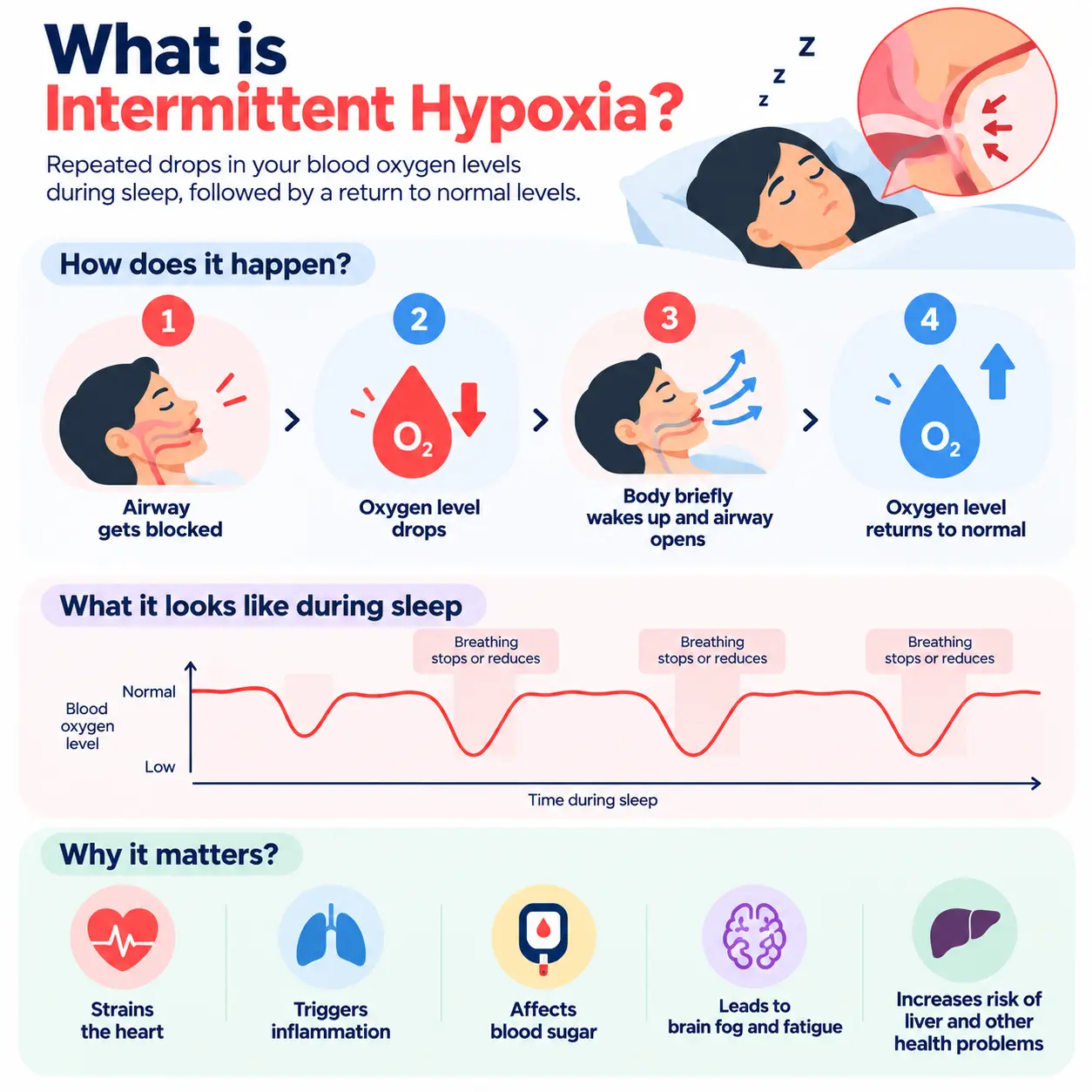
When the airway repeatedly closes during sleep, oxygen levels can fall and then recover when breathing resumes. Repeated fluctuations in oxygen may contribute to oxidative stress, inflammation and metabolic disturbances. OSA and MASLD share several biological and lifestyle risk factors, making it difficult to separate the contribution of each condition. But the overlap is clinically relevant.
The brain is one of the main organs affected by obstructive sleep apnea (OSA). OSA affects the brain through three overlapping mechanisms:
1. Repeated drops in oxygen: When the airway repeatedly closes, oxygen levels can fall and then recover when breathing resumes. This is called intermittent hypoxia.
2. The brain keeps being pulled out of sleep: Every apnea episode can trigger a brief arousal so that breathing resumes.
3. It may impact brain structure and connectivity: Some neuroimaging studies have reported changes in grey matter and white matter in people with OSA, including findings involving the hippocampus and frontal regions.
Obstructive sleep apnea is treatable. Treatment depends on the severity of OSA, symptoms, anatomy and the individual’s overall health.
CPAP or PAP therapy is an established treatment that uses positive airway pressure to keep the airway open during sleep. It can reduce breathing interruptions and improve symptoms such as excessive daytime sleepiness.
Selected patients may benefit from oral appliances, positional therapy or other approaches. Weight management can also be important when excess weight contributes to OSA. In certain anatomical situations, surgery ma=y be considered.
Treating OSA should not currently be presented as a stand-alone treatment for fatty liver or liver fibrosis. However, a patient with obesity + insulin resistance + MASLD + OSA may benefit from addressing all of these interconnected factors rather than viewing sleep as an unrelated problem.
Sleep assessment can therefore become another piece of a broader metabolic-health strategy.
Sometimes, the answer really is lack of sleep. Sometimes it is stress, medication, another medical condition or another sleep disorder. But if you consistently spend enough time in bed and still wake up tired and sleepy, it is worth asking a different question:
What is happening while I sleep? – Do you snore loudly? Has someone noticed that your breathing pauses? Do you wake up unrefreshed? Do you have obesity, insulin resistance, diabetes or fatty liver? Are you struggling with daytime sleepiness even after what seems like a full night’s sleep?
These questions do not diagnose obstructive sleep apnea. They tell you when it may be worth looking further. Afterall, sleep is part of metabolic health.
Written and Verified by:

Similar Pulmonology Blogs
Request a call back