You are eating more protein. You have started going to the gym. You are walking more, cutting down on sugar and watching your portions. Yet the weighing scale barely moves. And eventually, you start wondering: “What am I doing wrong?”
Sometimes, the answer is not another workout, a stricter diet or another protein shake. It may be worth looking at something that is often overlooked: sleep.
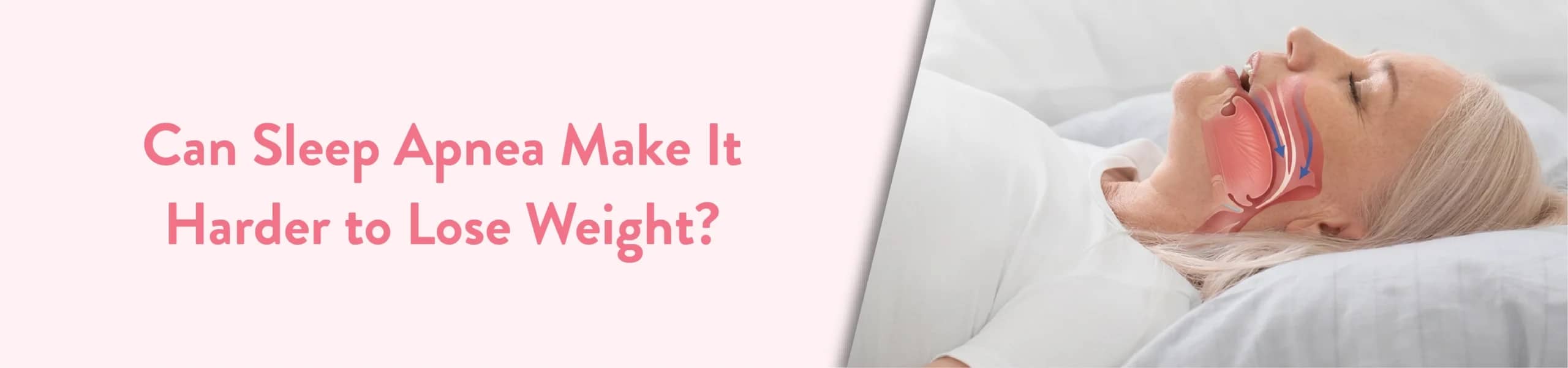
More specifically, it may be worth considering obstructive sleep apnea (OSA), a common sleep disorder in which the upper airway repeatedly narrows or becomes blocked during sleep. Breathing can stop and restart multiple times through the night, fragmenting sleep and sometimes causing repeated drops in oxygen levels.
This matters because sleep is closely connected to metabolic health. Poor or disrupted sleep can affect appetite, energy levels and insulin sensitivity, while obesity, insulin resistance, type 2 diabetes and PCOS are themselves closely associated with sleep apnea. Research suggests that restricted or disrupted sleep can increase hunger and energy intake and reduce insulin sensitivity.
So, can sleep apnea make it harder to lose weight? It can be part of the picture.
OSA does not automatically cause weight gain, but untreated OSA may make weight management and overall metabolic health more difficult.
Sleep is not simply the time when your body switches off. It is an important part of metabolic regulation.
When sleep is consistently restricted or disrupted, research has found changes in hunger, food intake and insulin sensitivity. A meta-analysis of randomised controlled trials found that sleep restriction increased subjective hunger, increased daily energy intake and reduced insulin sensitivity. That does not mean that one late night will make you gain weight. The concern is persistent poor-quality or insufficient sleep.
If you are constantly tired, maintaining an exercise routine may become harder. You may have less energy to move, poorer recovery after exercise and greater difficulty maintaining healthy eating habits.
Poor sleep does not mean you will gain weight. But consistently poor sleep can make the behaviours and metabolic processes involved in weight management more challenging. And when the poor sleep is being caused by something like OSA, simply trying to “sleep more” may not solve the problem.
Obstructive sleep apnea occurs when the upper airway repeatedly becomes narrowed or blocked while you sleep. You may not fully wake up each time your breathing is interrupted. Instead, your sleep can become repeatedly fragmented as your body responds to the obstruction.This can leave you with a strange experience:
You spent eight hours in bed – but you still wake up feeling exhausted. Over time, repeated breathing interruptions, sleep fragmentation and intermittent drops in oxygen can become relevant to metabolic health. OSA is particularly important to consider in people living with obesity and in those with metabolic conditions such as insulin resistance and type 2 diabetes. It can also coexist with PCOS and fatty liver disease.
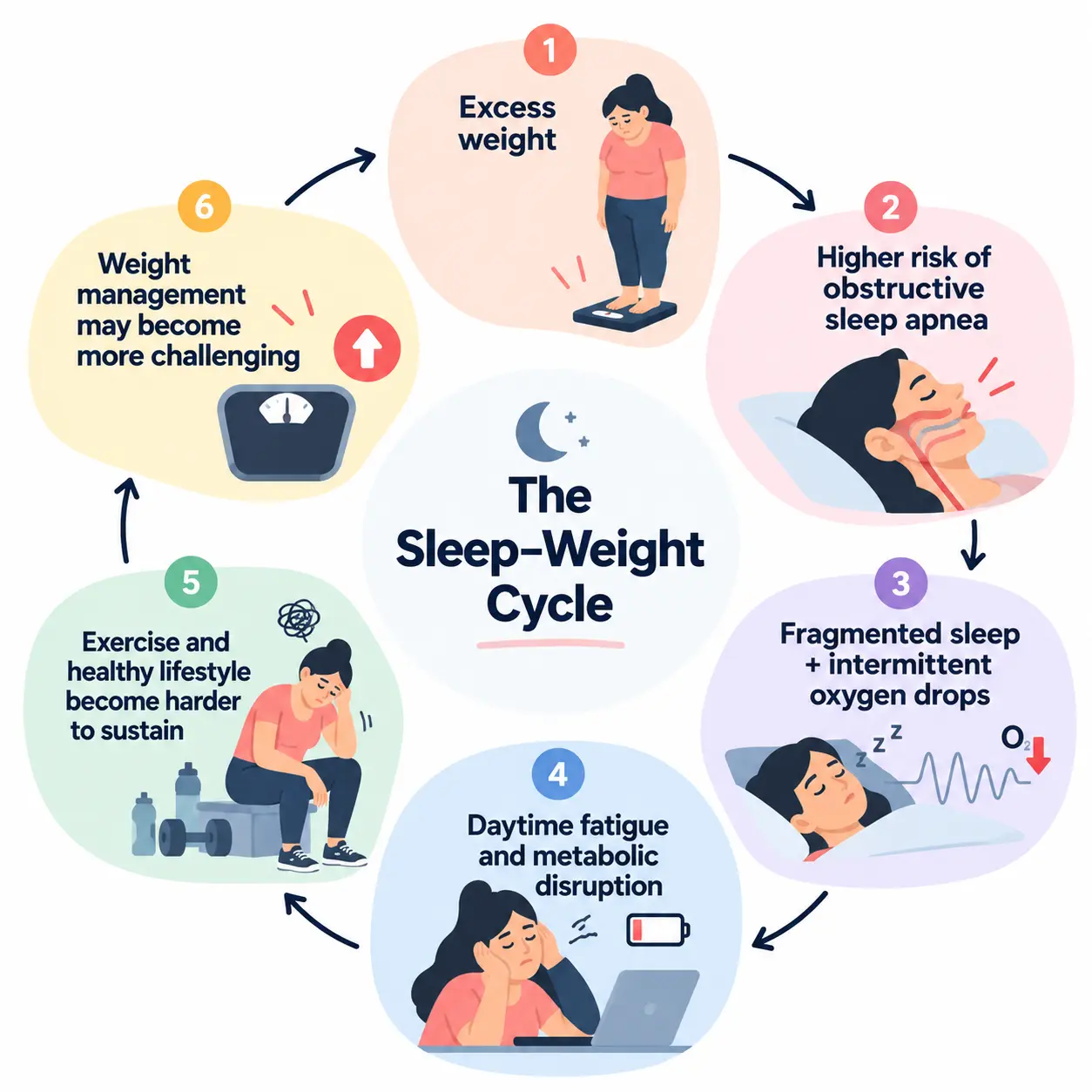
The relationship between sleep apnea and weight is not as simple as saying “sleep apnea causes weight gain.” Excess weight can increase the risk of OSA. At the same time, untreated OSA can contribute to fragmented sleep, daytime sleepiness and metabolic disturbances that may make weight management more difficult. Think of it as a cycle – not a universal cycle, and it does not mean that everyone with obesity has sleep apnea. It simply highlights why sleep deserves to be considered alongside diet, physical activity and other metabolic factors.
You may be doing strength training three or four times a week, increased your protein intake, started tracking calories and improved your daily step count. But if you are constantly exhausted, it may be worth asking a different question: “Am I actually sleeping well?”
Ask yourself:
Exercise remains an important part of metabolic health and weight management. But exercise cannot compensate for every underlying health problem. If untreated OSA is leaving you chronically sleepy, sustaining an active lifestyle may simply become harder.
The answer is not necessarily to work harder. It may be to find out what is making it harder to recover in the first place.
For women with polycystic ovary syndrome (PCOS), the connection deserves particular attention. PCOS commonly occurs alongside metabolic factors such as obesity and insulin resistance. OSA can also occur alongside these conditions, creating overlapping metabolic risk factors.
Research has found an association between PCOS and OSA, and an updated meta-analysis published in 2024 found that OSA was present in a substantial proportion of women with PCOS. Women with both conditions also showed worse metabolic parameters than women with PCOS alone in the studies reviewed.
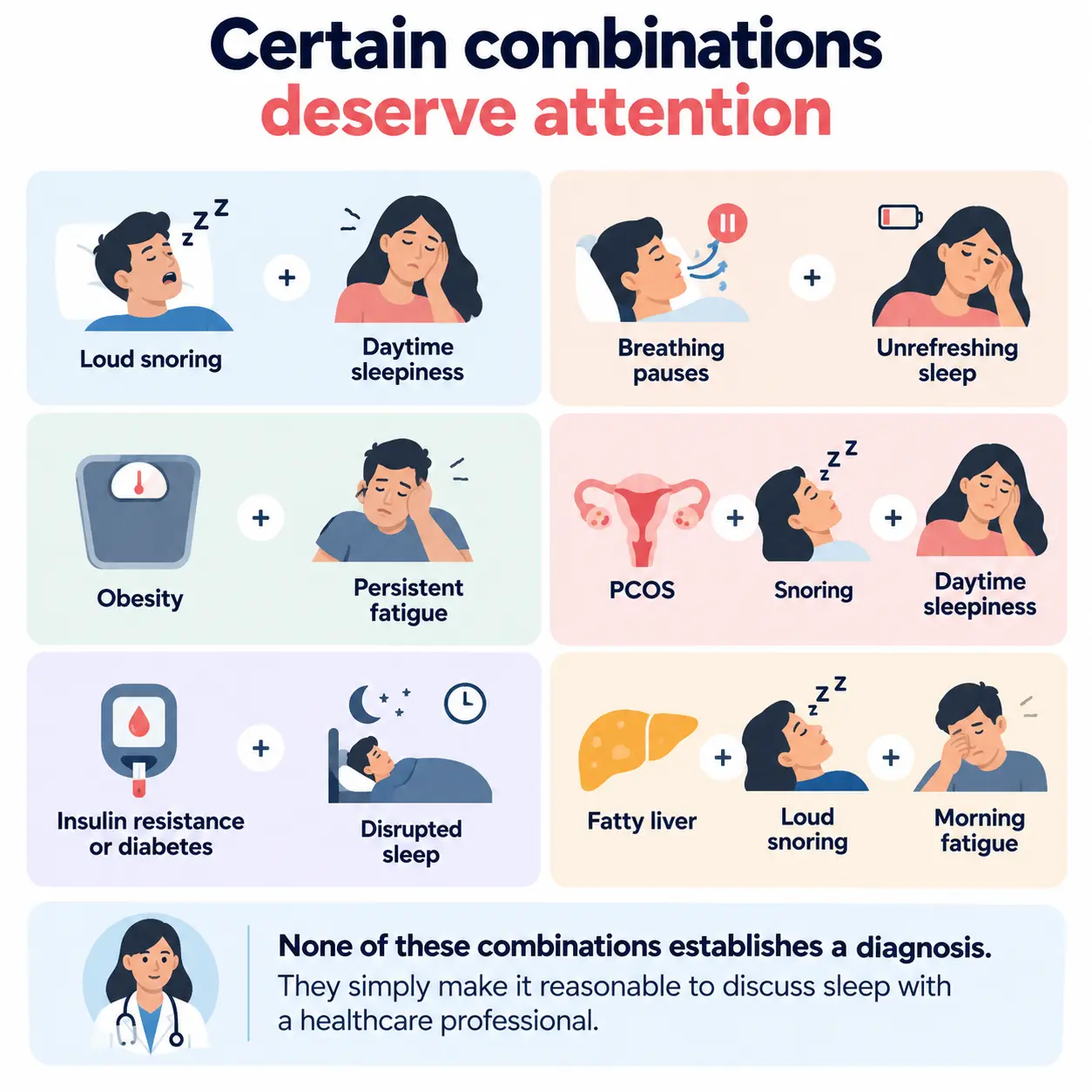
This does not mean that PCOS causes sleep apnea. But if someone with PCOS also has: Loud snoring + daytime sleepiness + unrefreshing sleep =>it is worth discussing whether sleep apnea could be contributing to the broader metabolic picture. Persistent fatigue should not automatically be attributed to PCOS.
Sleep and glucose metabolism are closely linked. Experimental research has found that sleep restriction can reduce insulin sensitivity, while broader evidence connects poor sleep with metabolic dysfunction and type 2 diabetes risk. OSA adds another layer because repeated breathing interruptions can cause intermittent hypoxia and sleep fragmentation.
If someone has obesity, insulin resistance or diabetes alongside loud snoring and excessive daytime sleepiness, sleep health becomes relevant to the overall assessment. Instead of looking at blood sugar, weight and sleep as completely separate problems, it can be useful to understand how they interact.
The sleep–metabolism connection extends to the liver too. Metabolic dysfunction-associated steatotic liver disease, or MASLD, commonly occurs alongside obesity, insulin resistance and type 2 diabetes. One possible mechanism is intermittent hypoxia.
When breathing repeatedly stops during OSA, oxygen levels can fall and then recover. Repeated fluctuations may contribute to oxidative stress, inflammation and metabolic disturbances. However, this relationship should not be oversimplified.
OSA does not automatically cause fatty liver, just as fatty liver does not mean someone has sleep apnea. But if obesity, insulin resistance or MASLD occur alongside loud snoring and unrefreshing sleep, assessing sleep health may be relevant to the bigger metabolic picture.
Persistent fatigue is common, and it has many possible causes. You may feel tired because you are not getting enough sleep. But fatigue can also be associated with stress, anaemia, thyroid disorders, medications, other sleep disorders and several underlying medical conditions.
So being tired does not automatically mean you have sleep apnea. The pattern matters. For example, persistent daytime sleepiness combined with loud snoring, witnessed breathing pauses or unrefreshing sleep is more reason to discuss your sleep with a healthcare professional.
The same applies if you regularly wake after seven or eight hours of sleep but feel as though you barely slept.
Snoring alone cannot diagnose sleep apnea.
A doctor will usually consider your symptoms, medical history, risk factors and physical health before deciding whether testing is appropriate. A sleep study may then be recommended.
Depending on the individual and the clinical setting, this may involve a home sleep apnea test or an overnight polysomnography conducted in a sleep laboratory.
These tests monitor breathing and other physiological changes during sleep to determine whether sleep apnea is present and, if so, how severe it is.
Smartwatches and smartphone apps may identify sleep patterns or signs that encourage you to seek medical advice, but they should not be treated as a substitute for a proper clinical assessment or diagnostic sleep study.
If you regularly wake tired despite spending enough time in bed, snore loudly, experience breathing pauses or struggle with excessive daytime sleepiness, speak with a healthcare professional about whether obstructive sleep apnea could be part of the picture.
Weight management is influenced by much more than food and exercise. Sleep, metabolism, hormones, blood sugar, liver health and body weight are interconnected parts of your overall health. That does not mean every weight-loss plateau is caused by poor sleep.
It means that when the usual advice, eat better, exercise more and sleep well, doesn’t seem to be enough, it may be time to look more closely at how well you are actually sleeping.
Written and Verified by:

Similar Pulmonology Blogs
Request a call back