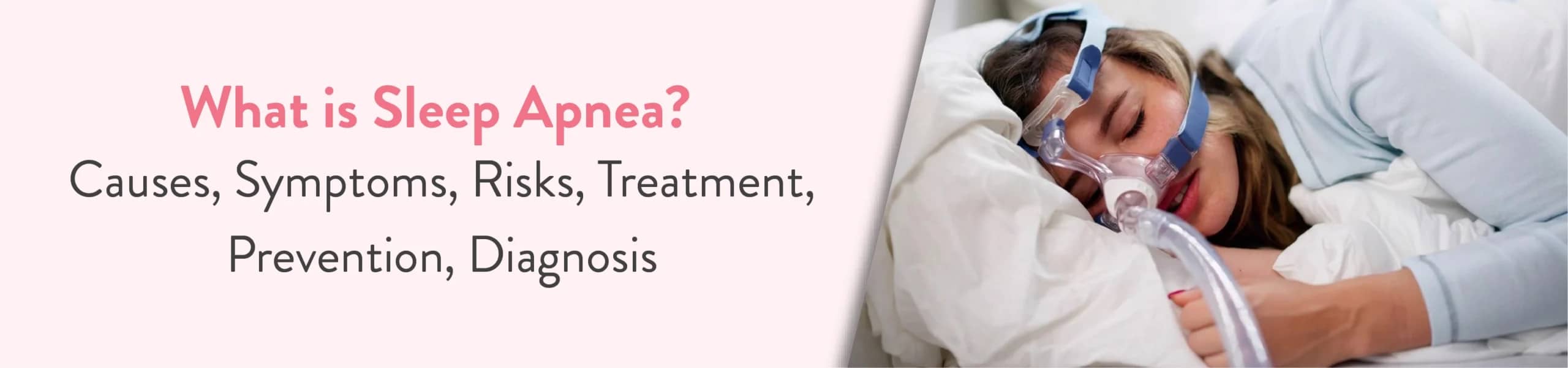
Understand the common symptoms of sleep apnea, including loud snoring, interrupted breathing, morning headaches, and excessive daytime sleepiness.
Explore the causes and risk factors of sleep apnea, including excess body weight, airway anatomy, age, and family history.
Discover how untreated sleep apnea can affect heart health, blood pressure, insulin sensitivity, and metabolic health.
Learn how sleep apnea is diagnosed through clinical evaluation and sleep studies, and explore treatment options such as CPAP therapy, oral appliances, and lifestyle changes.
Find out when to consult a doctor about persistent snoring, breathing interruptions during sleep, and unexplained daytime fatigue.
You snore. You wake up tired. You need three alarms to get out of bed. By afternoon, you are fighting the urge to nod off at your desk. It is easy to blame it on a hectic schedule, late nights or simply “not getting enough sleep.”
A restless night occasionally is normal. Persistent snoring, disrupted breathing and daytime exhaustion are different. The real problem is not how long you sleep but how well you breathe in your sleep. That is why it is essential to understand the concept of Sleep Apnea.
Sleep apnea is a common sleep disorder in which breathing repeatedly stops or becomes reduced during sleep. The most common form is obstructive sleep apnea (OSA), which occurs when the upper airway becomes repeatedly narrowed or blocked.
During normal sleep, breathing continues automatically. In obstructive sleep apnea, the muscles and tissues around the upper airway relax enough to partially or completely obstruct airflow.
Breathing may stop for short periods before the brain triggers a brief arousal and breathing starts again. These interruptions can happen many times through the night, often without the person being aware of them.
The result can be fragmented sleep, drops in blood oxygen and repeated stress on the body, even when you have spent seven or eight hours in bed.
And that is why persistent snoring and daytime sleepiness deserve more attention than they usually get.
Snoring alone does not mean you have sleep apnea. Common symptoms include:
When any of the above signs are noticeable, it is worth discussing with a doctor.
Obstructive Sleep Apnea can have several contributing factors.
In Central Sleep Apnea, the brain temporarily fails to send the appropriate signals to the muscles responsible for breathing. Its causes and treatment are different from obstructive sleep apnea. This is why persistent symptoms should be evaluated rather than assumed to be simply a consequence of lifestyle.
Every episode of interrupted breathing can cause changes in oxygen levels and trigger brief arousals from sleep. The body’s stress-response system may become repeatedly activated throughout the night.
Over time, if left untreated, this obstructive sleep apnea gives way to high blood pressure. If someone has persistent snoring, poor-quality sleep and daytime fatigue alongside hypertension, it may be worth considering whether an undiagnosed sleep disorder is contributing to the picture.
Several cardiovascular conditions, including coronary artery disease, heart failure, abnormal heart rhythms and stroke, become probable due to the rising blood pressure levels. Other than this, there can be various metabolic factors that might be triggered due to sleep apnea that in turn affect cardiac health.
This does not mean sleep apnea is the sole cause of cardiovascular disease. Heart health is influenced by multiple factors, including genetics, diet, physical activity, smoking, blood pressure, cholesterol, diabetes and age.
But untreated sleep apnea can be one of the factors that deserves attention.
The relationship between sleep and metabolism goes both ways.
Research has linked obstructive sleep apnea with insulin resistance and type 2 diabetes, as well as other cardiometabolic conditions. This becomes particularly relevant when several issues appear together.
For example, someone may be dealing with:
Weight gain + snoring + daytime fatigue + high blood pressure + abnormal blood sugar
It is tempting to treat each as an independent lifestyle problem. But sometimes, an underlying sleep disorder may be part of the larger health picture. That is why sleep health increasingly needs to be considered alongside metabolic and cardiovascular health, rather than as a completely separate concern.
This is a common concern of every patient with Sleep Apnea. The answer is simple: eight hours in bed does not translate to eight hours of restorative sleep. If you have sleep apnea, the following is a regular occurrence at night:
Some patients describe it simply as feeling like they have “never really slept.” This resultant daytime sleepiness is also more than an inconvenience. It affects concentration, reaction time, work performance and everyday safety.
Sleep apnea cannot be diagnosed reliably by snoring alone. A sleep specialist will typically consider your symptoms, medical history and risk factors before deciding whether a sleep study is appropriate.
Depending on the situation, testing may include a home sleep apnea test or an overnight polysomnography, commonly known as a sleep study. These tests monitor factors such as breathing patterns, oxygen levels and other physiological signals during sleep.
Smartwatches and smartphone applications can sometimes identify sleep patterns that prompt further investigation, but they cannot replace a clinical sleep evaluation or diagnostic sleep study.
Yes. Treatment depends on the type and severity of sleep apnea, as well as the individual’s health and preferences.
For obstructive sleep apnea, treatment may include:
Treatment is not necessarily about choosing one solution for everyone. A proper diagnosis helps determine what is appropriate.
Not every case of sleep apnea can be prevented. Anatomy, age and genetic factors can play a role. However, several measures can reduce risk or help manage the condition:
The bigger idea is simple: sleep symptoms can sometimes be health signals.
A partner complaining about your snoring may be pointing to more than a noisy night. Repeatedly waking exhausted may not simply mean you need another cup of coffee.
Consider seeking medical evaluation if you or people around you start noticing these things:
The goal is not to label every snorer as having sleep apnea. But to recognise when a pattern deserves investigation.
Sleep apnea is a treatable medical condition, and leaving persistent symptoms unexplored can mean leaving an important cardiovascular or metabolic risk factor unaddressed.
So if you regularly find yourself fighting sleep during meetings, while reading, watching television or even during routine daytime activities, it is worth looking beyond caffeine and late nights. Talking to your doctor will help you address the underlying causes that lead to sleep apnea and take care of the condition before it gets worse.
Written and Verified by:

Similar Pulmonology Blogs
Request a call back