
Understand what sarcoidosis is, its causes, and how it affects different organs.
Recognise common symptoms, including persistent cough, breathlessness, fatigue, and swollen lymph nodes.
Explore the diagnostic tests used to identify sarcoidosis and distinguish it from other conditions.
Learn about treatment options, including corticosteroids, supportive care, and regular monitoring.
Discover when to consult a doctor and how early diagnosis and follow-up can help manage sarcoidosis.
Did you know, there are multiple overlapping symptoms of various medical conditions that often go unnoticed. A persistent cough, unexplained fatigue, shortness of breath or swollen lymph nodes can be caused by several conditions. These are symptoms common to Lymphoma, TB and Sarcoidosis.
This disease is not limited to the lungs, and can manifest in various parts. A big contributing factor to this disease is inflammation. Therefore understanding sarcoidosis, its diagnosis and treatment requires recognising the signs and seeking medical advice at the right time.
Sarcoidosis is an inflammatory condition in which tiny clusters of immune cells, called granulomas, form in one or more organs. These clusters develop when the immune system triggers an inflammatory response that doesn’t settle as it normally should.
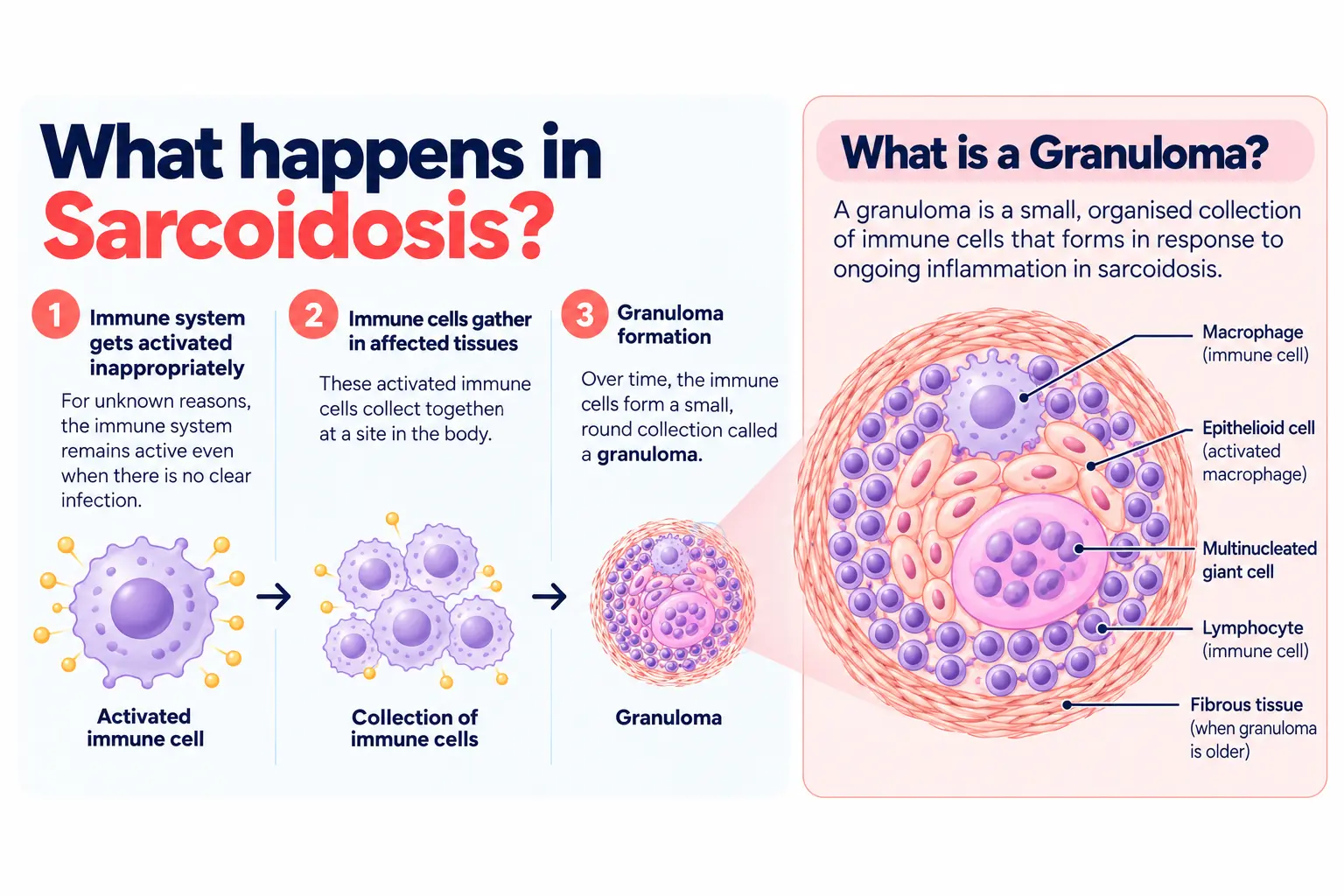
In a majority of pulmonary conditions, lungs and lymph nodes in the chest are commonly affected regions. In case of sarcoidosis, skin, eyes, heart, nervous system and other organs may also be involved.
Some people have no surface level symptoms, and the condition is often discovered accidentally during a chest X-ray or CT scan. However, some patients exhibit a persistent cough, breathlessness, fatigue or symptoms directly linked to the affected organ.
One important thing to know is that sarcoidosis is not contagious. It cannot be passed from one person to another.
Genetic aspect: Some studies suggest it may develop when genetic susceptibility, and an abnormal immune response interact. Some specific genetic variations have been linked to sarcoidosis, but it does not necessarily mean those who have it are bound to get this disease.
Environmental aspects: Possible triggers being studied include dust, mould, certain chemicals and some infections. Although the spectrum is still wide since a single substance or organism has not been linked to the cause.
While the source remains debatable, it ultimately ends up causing inflammation and granuloma formation. And is not transmitted from someone else.
Sarcoidosis doesn’t look the same in everyone. Symptoms depend on which organs are affected. Commonly the symptoms may include:
The lungs are the most commonly affected organs, making pulmonary sarcoidosis one of the main forms of the condition. Symptoms may include:
Persistent dry cough: A cough that continues without an obvious cause can be an early sign.
Shortness of breath: Breathlessness may first become noticeable during exercise or other physical activity. In some people, it can worsen as lung involvement progresses.
Chest discomfort: Some people experience chest pain or discomfort, although this is less common than cough and breathlessness.
Not everyone develops respiratory symptoms. In some cases, an unrelated chest X-ray or CT scan may reveal the condition.
Yes. Although the pulmonary organs and lymph nodes are most commonly affected, sarcoidosis can involve several other organs, making it difficult to pin down in one go. Some of the other forms of sarcoidosis include:
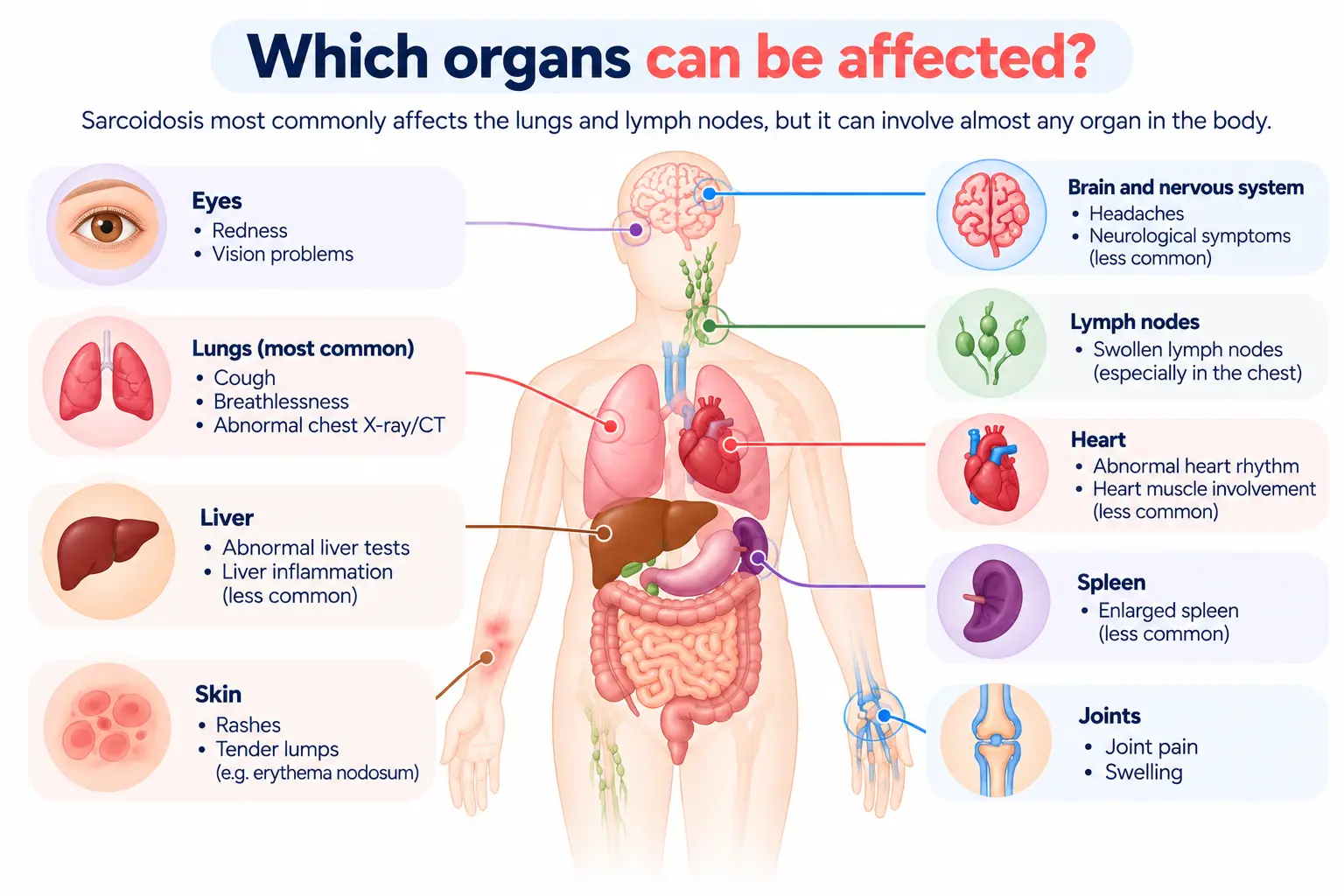
Due to its overlapping symptoms a clear diagnosis requires a combination of investigative procedures. Upon reviewing the patient’s symptoms, medical history, physical examination and test results, specialists first rule out other conditions that can cause similar inflammation, particularly tuberculosis and certain fungal infections.
Depending on the suspected organ involvement, investigations may include:
However, finding granulomas doesn’t automatically confirm sarcoidosis. Doctors must consider these possibilities before confirming the diagnosis.
Pulmonary sarcoidosis is often described using four radiographic stages, based on what doctors see on a chest X-ray.
Stage I: Enlarged lymph nodes in both hilar regions, where the main airways and blood vessels enter the lungs, without visible lung tissue abnormalities.
Stage II: Enlarged hilar lymph nodes along with abnormalities in the lung tissue.
Stage III: Abnormalities in the lung tissue without the characteristic hilar lymph node enlargement.
Stage IV: Pulmonary fibrosis, or permanent scarring of the lung tissue.
These stages describe the appearance of the lungs on imaging. They don’t necessarily indicate how severe a person’s symptoms will be or predict exactly how the disease will progress.
Not everyone diagnosed with sarcoidosis needs medication.
The decision depends on the individual’s symptoms, the organs involved and whether the condition is progressing. Regular follow-up helps doctors identify changes and decide when treatment may be necessary.
When treatment is needed, a four step approach is the ideal way forward:
For the first two the usual course of action is
Further, monitoring and follow up will reveal the next step, which includes:
Yes. Many people with sarcoidosis improve or enter remission without needing long-term systemic treatment. However, the condition doesn’t follow the same course in everyone.
Some people recover completely, while others experience recurring inflammation or develop chronic disease that can gradually damage affected organs.
Persistent follow-up is crucial even when symptoms improve or disappear. Depending on the person’s condition, monitoring may include chest imaging, lung function tests, blood tests, an ECG and assessments of other affected organs. Regular reviews help doctors identify changes early and adjust treatment when necessary.
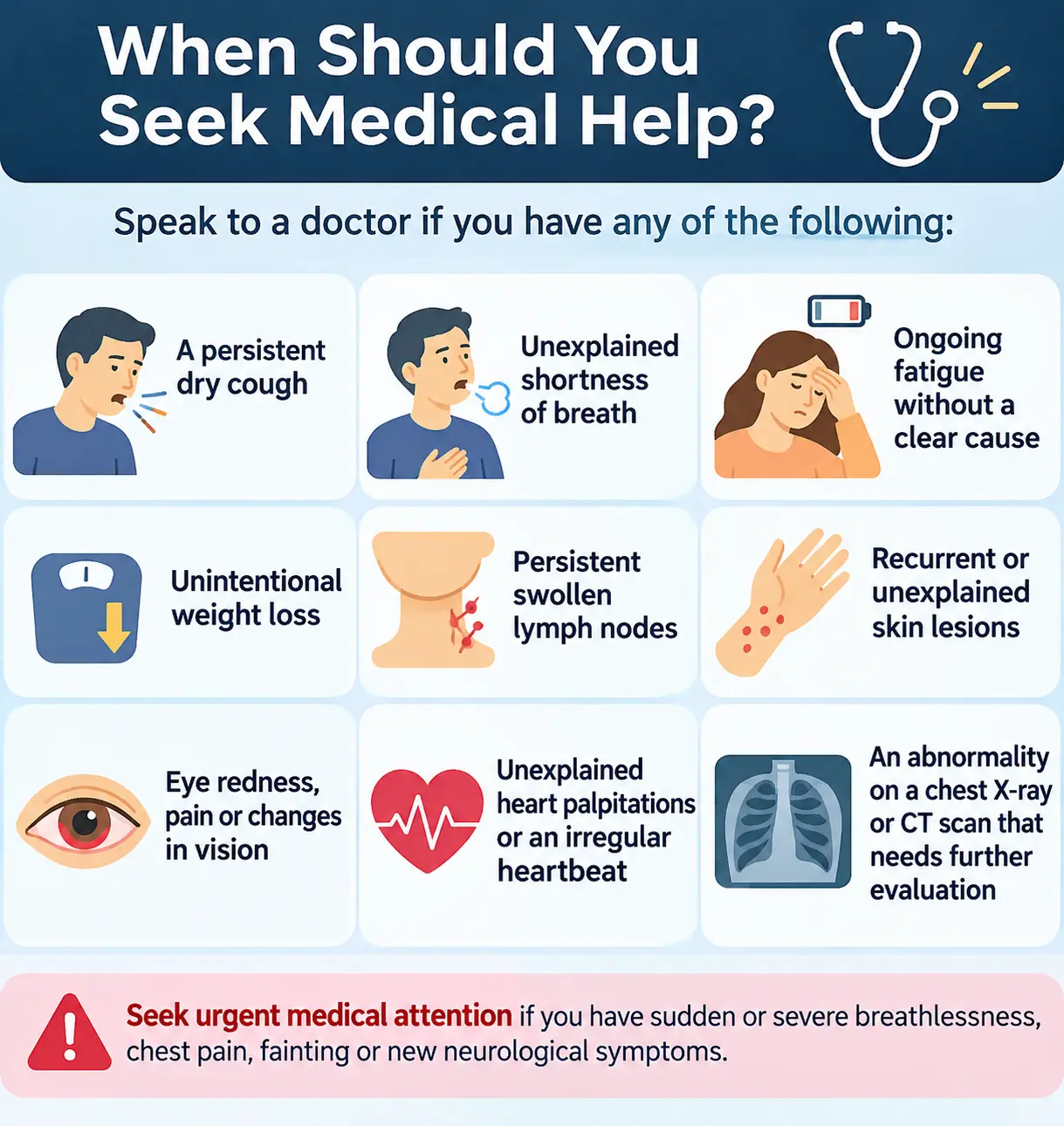
A persistent cough or unexplained breathlessness can have many causes, including allergies, respiratory infections and other lung conditions. If these symptoms continue, it’s worth getting them assessed rather than assuming they will go away on their own.
Speak to a doctor if you experience: Sudden or severe breathlessness, chest pain, fainting or new neurological symptoms warrant urgent medical attention.
Since sarcoidosis can resemble several other inflammatory and respiratory conditions, an appropriate evaluation is important to establish the cause of your symptoms and determine whether treatment is needed.
Sarcoidosis is an inflammatory condition in which clusters of immune cells called granulomas develop in one or more organs. The lungs and lymph nodes in the chest are most commonly affected, but the condition can also involve the skin, eyes, heart and nervous system.
Symptoms range from none at all to persistent cough, breathlessness, fatigue and problems affecting other organs. Diagnosis usually involves a combination of clinical assessment, imaging and other investigations, sometimes including a biopsy.
Treatment depends on the organs involved, the severity of the condition and whether it is progressing. Some people need only regular monitoring, while others may require corticosteroids or other medicines that modify the immune response.
The encouraging news is that many people improve or go into remission. For those with persistent or more serious disease, appropriate treatment and follow-up can help control inflammation and protect organ function.
If you’ve been experiencing persistent respiratory symptoms or have an unexplained abnormality on a chest scan, the first step is to find out what’s causing it. An accurate diagnosis can help you and your doctor decide on the most appropriate course of action.
Written and Verified by:

Similar Pulmonology Blogs
Request a call back


