
Have you noticed a dark patch of skin on your neck, under your arms, or in the folds of your elbows and knees? One that does not go away no matter how much you wash or scrub? You may have assumed it is dirt, a tan line, or dry skin, but that’s usually not the case.
This is a skin condition called Acanthosis Nigricans, and it points to some health changes happening in your body, such as insulin resistance, hormonal changes, or PCOS. So before you start scrubbing hard to get rid of this patch, read this blog to know what causes it, what it may indicate, and how to treat it.
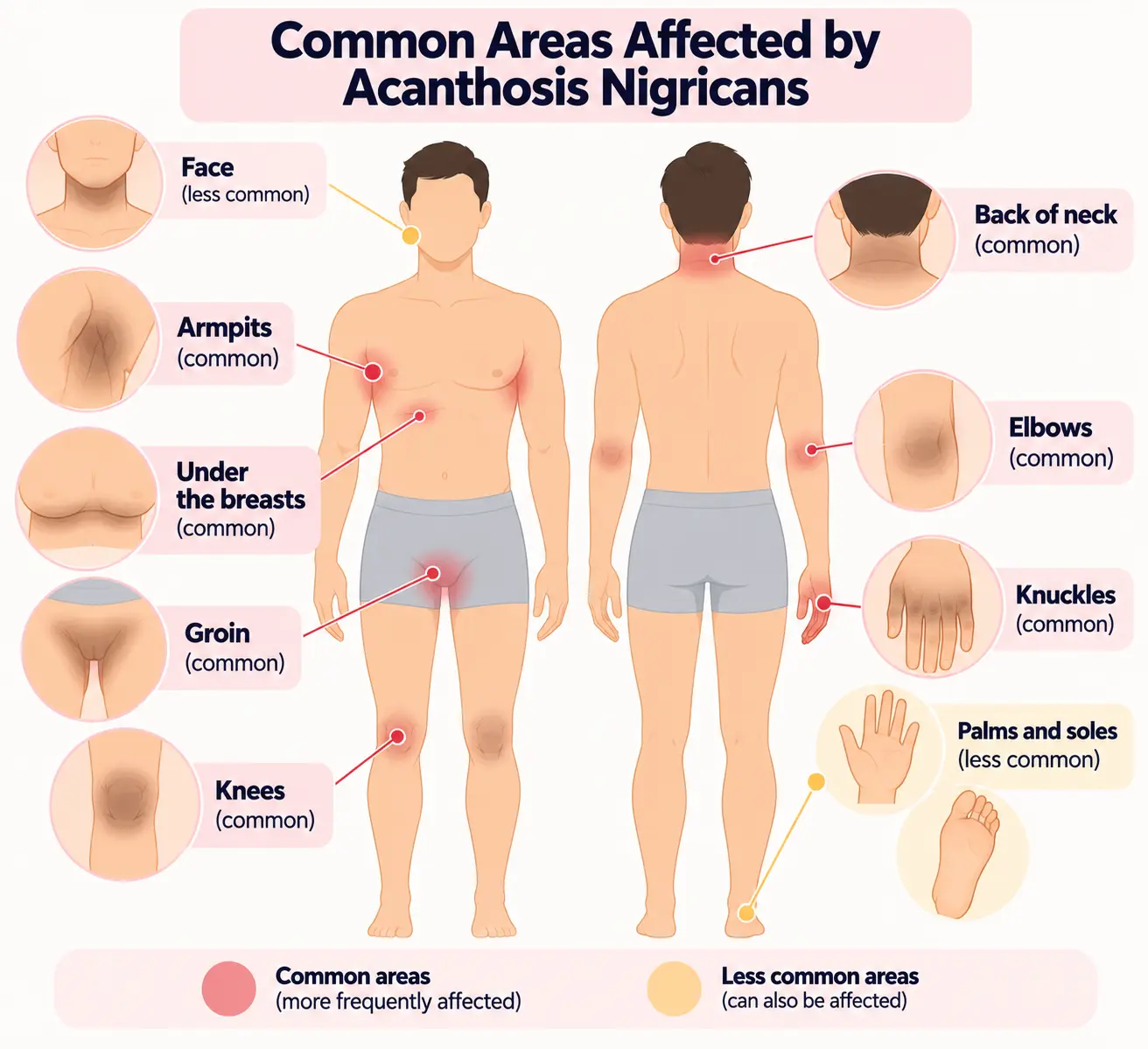
Acanthosis nigricans is a skin condition that causes areas of skin to become darker, thicker and velvety. It most commonly develops in skin folds and creases, especially the back of the neck, armpits and groin. It can also be seen on your elbows, knees, knuckles, under the breasts and other areas.
The condition is not contagious and cannot spread from one person to another. It is also not caused by dirt or lack of cleanliness. Scrubbing the affected skin harder will not remove it and may irritate the area.
One of the reasons this condition gets medical attention is its connection to insulin resistance.
Insulin is a hormone that helps the body use glucose, or sugar, from the blood. When the body’s cells do not respond to insulin effectively, the body may produce more insulin to compensate. Higher insulin levels can contribute to the skin changes seen in acanthosis nigricans.
But remember acanthosis nigricans does not always mean that you have diabetes. It can also be seen in people without diabetes or another underlying illness.
The skin changes are usually gradual and may develop over months or years.
Some common acanthosis nigricans symptoms are:
The back of the neck is a particularly common area. Some people first notice the condition when the skin looks darker in photographs or when a collar area becomes visibly different. It can also occur on your knuckles, elbows, knees, face, palms and soles.
Acanthosis nigricans can be due to several possible causes. The most common causes are linked to excess weight and insulin resistance, but these are not the only possibilities.
This is one of the biggest causes to watch out for. Insulin resistance can start well before your blood sugar levels are high enough to be called diabetes. That means Acanthosis Nigricans can show up even if you have not been diagnosed with prediabetes or insulin resistance yet. This is exactly why a new dark, velvety patch on your skin should not be brushed off as just a cosmetic issue.
Excess body weight is a common risk factor for acanthosis nigricans. When insulin resistance is also part of the problem, working on your overall metabolic health like managing weight and blood sugar can help improve the skin too.
Conditions that affect hormone levels can be linked with acanthosis nigricans. These include PMOS (Polyendocrine Metabolic Ovarian Syndrome) and certain thyroid or adrenal disorders.
Some medicines can result in these dark, velvety patches as a side effect. If you think a medicine you are taking might be causing your skin changes, don’t stop taking it on your own. Talk to your doctor first, they can figure out if switching to a different option makes sense for you.
Some people develop Acanthosis Nigricans simply because of their family history. In rare cases, it can also be linked to certain inherited conditions.
If there is a possibility of an underlying condition, your doctor may recommend tests based on your symptoms and medical history. These may include blood tests to check blood glucose and evaluate for conditions such as diabetes.
Your doctor may also ask about:
If you have noticed these dark patches, you can initially consult an internal medicine doctor. Based on your condition, they will refer you to the right specialist.
Over-the-counter creams and soaps are not a cure for acanthosis nigricans. The right treatment depends on what is causing it in the first place.
If insulin resistance, prediabetes, diabetes or another hormonal condition are the reason behind your skin changes, managing that condition is usually the priority.
If your condition is related to excess weight and insulin resistance, working on these areas can help. Gradual weight loss, regular physical activity, and better eating habits can improve how your body handles insulin and as that improves, your skin often starts to normal too.
If your skin changes are the side effects of certain medicine, your doctor may consider changing the medicine when appropriate.
There is no guaranteed home remedy that can remove acanthosis nigricans by itself.
If insulin resistance or excess weight is contributing to the condition, healthy lifestyle habits can be useful as part of medical care.
Note: These habits work alongside your medical treatment. They are meant to support it, not replace it.
Avoid aggressive home remedies
Lemon juice, baking soda, harsh scrubs and unprescribed bleaching products are not reliable treatments for this condition. They can irritate your skin and potentially make pigmentation more evident.
If you notice any new dark, thick, or velvety patches, particularly around the neck, armpits, or groin, you can initially consult an internal medicine doctor. Based on your condition, they may refer you to the right specialist if needed.
Seek medical evaluation promptly if the changes:
Don’t just treat the dark patch, treat the cause. Take this skin condition as a message from your body that something needs attention, and the right treatment starts with figuring out what that is. So the next time you notice a new dark, velvety patch, skip the scrubbing and the home remedies and go see a doctor instead. At the CK Birla Hospital, we have a multidisciplinary team of doctors who can help you get to the bottom of it. Book a consultation today to find the right answers for your condition.
Written and Verified by:

Similar Dermatology Blogs
Request a call back


