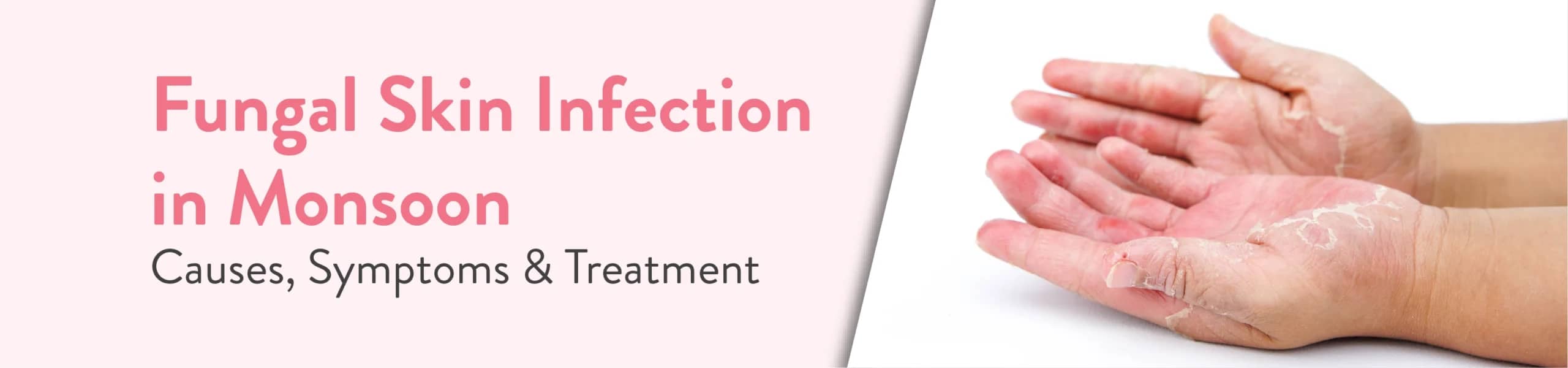
Grey skies, greenery all around and the refreshing scent of the first monsoon shower make the season a favourite for many. What often goes unnoticed, however, is the humidity that creates the perfect environment for fungal skin infections. Dermatologists see more cases of itchy, red and flaky skin rashes during the monsoon, as warm and damp conditions allow fungi to thrive. These infections can cause itching and discomfort, but they are highly treatable, with many people beginning to feel better within days of the right treatment.
Recognising the signs early and seeking timely treatment can help prevent the infection from spreading or recurring. Keep reading to learn why fungal skin infections become more common during the monsoon, how to identify them, the treatment options available and when you should consult a doctor.
Small amounts of fungus live on everyone’s skin normally without causing any harm. Your skin keeps it in check without any effort on your part. Problems occur when that balance is disturbed. Sweat, humidity, tight clothing or even a small scrape can give these organisms room to multiply faster than your skin can control.
That is essentially what a fungal skin infection is: microscopic fungi that thrive in warm, damp conditions, growing more than they should on the surface of your skin.
It is also more common than most people assume. According to the World Health Organization (WHO), fungal skin infections affect more than 650 million people worldwide at any given time, making them one of the most common skin conditions globally.
Most cases are caused by a group of fungi called dermatophytes. These feed on keratin, the protein that makes up the outer layer of your skin, your hair and your nails, which is exactly why infections tend to show up in those areas.
Fungus follows the moisture. Wherever sweat or dampness stays longest on your body, that is usually where you will spot an infection and the type varies accordingly. The most common ones during the rains:
1. Ringworm (tinea corporis): Because of the ring-shaped rash it leaves behind, it is called ringworm. It appears as a red, scaly patch with a clearer centre, usually on the torso or limbs.
2. Athlete’s foot (tinea pedis): It affects the skin between the toes, especially in people whose feet stay damp inside shoes for long hours.
3. Jock itch (tinea cruris): This one occurs in the groin and inner thighs, areas that trap moisture and warmth.
4. Fungal infection on the face (tinea faciei): It is less common but increasingly seen, often mistaken for an allergy or acne because it can appear as a mild rash before the usual ring shape develops.
5. Fungal skin infection on hands and legs: It is commonly picked up through direct contact with an infected person, pet or shared item like a towel or gym mat.
6. Candidiasis: It is caused by a different type of fungus (yeast), mostly in skin folds, under the breasts or in nappy areas.
Monsoon weather brings high humidity, warm temperatures and low airflow; practically everything that fungus needs to thrive. Beyond the season itself, some common causes of fungal infection are:
Also, fungus does not need direct skin to skin contact to spread. Spores can survive on bathroom tiles, mats and shoes for weeks, which is part of why reinfection is so common even after the original rash has healed.
Fungal infection symptoms vary depending on the area of the body affected, but they usually follow a recognisable pattern.
It is commonly seen that the itch from a fungal infection tends to intensify right after you remove sweaty clothes or shoes, not while you are wearing them.
Most dermatologists can identify a fungal infection through a visual examination alone, given how characteristic the ring-like pattern is. When the diagnosis isn’t obvious — or when a rash isn’t responding to treatment — your doctor may take a small skin scraping and examine it under a microscope using a potassium hydroxide (KOH) test, or send a sample for fungal culture. This step matters more than patients often assume, because a handful of other skin conditions, including eczema and psoriasis, can look deceptively similar in early stages. Treating the wrong condition for weeks only delays real relief.
A dermatologist can usually diagnose a fungal skin infection based on your symptoms and by examining the affected skin. If the diagnosis is unclear or the infection is not responding to treatment, additional tests may be recommended, such as:
These tests help distinguish fungal skin infections from conditions with similar symptoms, such as eczema, psoriasis or dermatitis, ensuring you receive the most appropriate treatment.
Medicine for fungal infection on skin generally falls into two categories:
Some home measures can really help your skin recover faster:
These habits won’t cure an infection on their own, but they create the kind of environment fungus struggles to survive in, which lowers your risk of reinfection too.
What about remedies like turmeric paste, coconut oil or diluted apple cider vinegar?
They are popular, but the clinical evidence behind them is thin. At best, they may soothe irritation. But relying on them instead of an actual antifungal medicine usually just gives the infection more time to spread.
There is also the skin-type factor. What works gently on one person’s skin can irritate another’s. Rather than experimenting on your own, it is worth checking with a dermatologist, especially if the rash is not improving, since early guidance almost always saves more time than home remedies do.
Healing of fungal skin infection depends on where the infection is and how early treatment starts.
Most mild fungal infections can be managed with over-the-counter treatment, but it is worth seeing a dermatologist if:
Fungal skin infections can feel irritating especially when the itching disrupts sleep or the rash keeps reappearing. But they respond well to treatment and most people see improvement once they are on the right medicine and give their skin the dry, breathable environment it needs to heal.
If a rash is not healing or you are unsure what you are dealing with, the Dermatology team at the CK Birla Hospital is there to help you get an accurate diagnosis and a treatment suited to your skin.
Written and Verified by:

Similar Dermatology Blogs
Request a call back


