
“How to reduce belly fat” is one of the most searched questions online, and it is easy to see why. A belly pouch is common, and many people feel self-conscious about it. Most start with a home remedy or a diet trend, which is fine. But it helps to know what is causing the fat in the first place, because for some people the answer is their metabolic health. In this blog, we will discuss what belly fat actually is, how it connects to your metabolic health, the mistakes people often make when trying to get rid of it, and what you can do about it.
Belly fat and metabolic health are closely linked. Visceral fat, the deep fat around your organs, can cause insulin resistance, which raises the risk of type 2 diabetes, fatty liver, high blood pressure and heart disease. Measuring your waist is a simple way to spot this risk early.
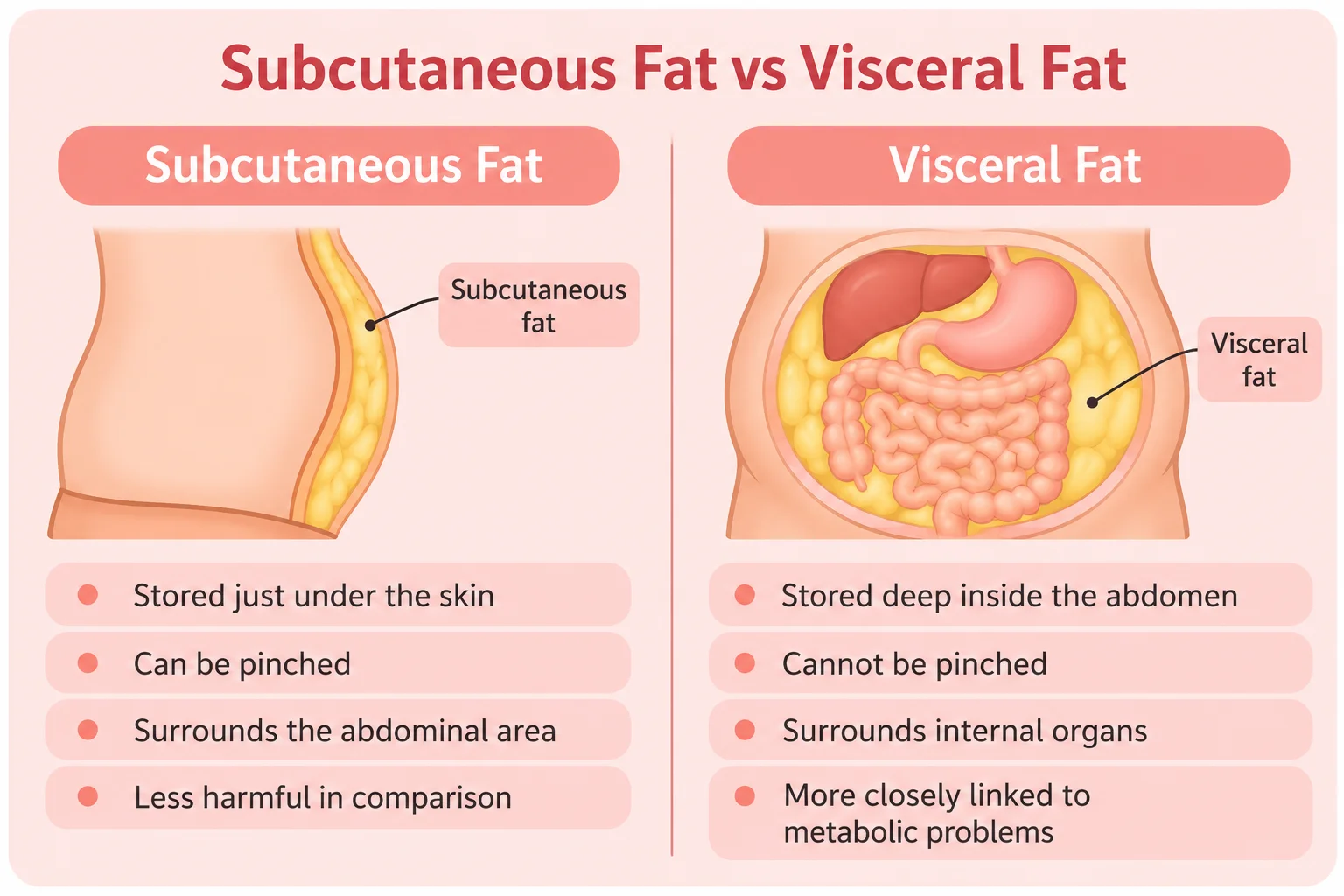
There are two types of fat around your belly. Both contribute to your waistline, but they differ in where they are stored and how they affect your health.
Visceral fat is particularly concerning because it is metabolically active. It releases inflammatory chemicals and fatty acids directly toward the liver. Over time, the body’s cells respond less well to insulin, the hormone that moves sugar from your blood into your cells. This is called insulin resistance, and it is a key driver of many problems like:
When several of these show up together, doctors call it metabolic syndrome. A larger waist is one of its defining features.
Also Read: Body Fat Analysis: What It Tells You
It is a common assumption that belly fat is only seen in people who look overweight. But that is not always the case, especially among South Asians.
According to a study, Indians tend to have a higher proportion of body fat and more abdominal fat at lower BMI levels than many other populations. You may have normal BMI, look slim and still have excess abdominal fat. This is sometimes described as being ‘thin on the outside, fat on the inside’.
This is why your waist measurement is important alongside your body weight. For Asian Indians, a waist circumference of 90 cm (about 35.5 inches) or more in men and 80 cm (about 31.5 inches) or more in women points to an increased risk of metabolic health problems.
Another quick check is your waist-to-height ratio. Divide your waist size by your height, both in centimetres. A result above 0.5 suggests a higher metabolic risk.
| Measure (Asian Indian adults) | Men | Women |
|---|---|---|
| Waist circumference linked to higher risk | 90 cm or more (about 35.5 in) | 80 cm or more (about 31.5 in) |
| Waist-to-height ratio linked to higher risk | Above 0.5 | Above 0.5 |
| BMI: overweight | 23 to 24.9 | 23 to 24.9 |
| BMI: obesity | 25 or more | 25 or more |
To measure it at home, stand up straight and wrap a tape around your waist at the level of your navel. Breathe out normally, don’t suck in, and read the number. Do it in the morning, ideally once a month.
Belly fat can be due to various reasons, and more than one factor is involved.
Some factors are within your control, while others, such as family history, are not. Knowing what puts you at risk can help you take steps early.
Also Read: Easy Ways to Stay Fit and Healthy for Desk Employees
Women with PCOS/PMOS may follow all the standard advice and still find the belly pouch slow to respond. Hormonal changes are part of the reason, and insulin resistance is one of the most common. PMOS (polyendocrine metabolic ovarian syndrome) is the new name for PCOS, agreed by international experts in 2026 to better reflect the condition’s hormonal and metabolic effects.
In PCOS/PMOS, insulin resistance is common, and it can be present even with a normal BMI. When the body responds poorly to insulin, it makes more of it to keep blood sugar in range. Higher insulin levels can:
Other things that can add to it:
More belly fat can then worsen insulin resistance, so the two feed into each other. That’s why the fat can feel slow to shift, even with effort.
Note: Insulin resistance is not present in everyone with the condition, and it is not the only reason for belly fat. Sleep, stress, diet, activity levels and genetics contribute too.
Also Read: PCOD Diet Chart
Many people work hard to lose belly fat but get stuck because of a few common mistakes:
Aim for around 150 minutes of brisk walking a week. That could be 30 minutes, five days a week, or a 10-minute walk after each meal. A short walk after eating may help your body handle blood sugar better. Add two days of strength training, even with body weight (squats, push-ups, resistance bands), since muscle improves how your body uses insulin. Make sure you are doing the workout under professional guidance.
Swapping sugary drinks, packaged juices, and sweetened teas for water or unsweetened options brings a positive change. You can add protein and fibre to meals, such as pulses, paneer, eggs, sprouts, vegetables, and whole grains. A plate where half is vegetables keeps you fuller than one that is mostly rice or roti.
Aim for seven or more hours. Regularly not sleeping enough can raise appetite and cravings, which makes everything else harder.
A daily walk, time outdoors, or even a fixed time to log off from work counts.
It does not mean you need a flat stomach or visible abs to be healthy. Some belly fat is normal, and bodies differ. It also does not mean you must lose a huge amount of weight. Studies consistently show that losing even 5 to 10 percent of body weight can improve blood sugar, blood pressure, and liver health.
If you have obesity or related conditions and lifestyle changes alone are not working, your doctor may discuss medicines. For some people with severe obesity, weight-loss (bariatric) surgery may be an option. These are medical decisions to make with a specialist.
Also Read: High-Fibre Foods You Should Eat
If your waist is above the range, you have a family history of diabetes or heart disease, or you have been gaining weight steadily, consider checking:
Book a consultation sooner if you have increased thirst, frequent urination, constant tiredness, darkened skin around the neck or armpits, or irregular periods along with weight gain.
Also Read: FibroScan Liver Test: What It Shows
Belly fat can be an early sign that your insulin, liver or heart need attention, which is a reason to take it seriously. Check your waist, get the basic tests done, and start with easy lifestyle changes you can keep up. Your doctor can help personalise the plan to your age, health history, and lifestyle.
If you are concerned about your waist size or metabolic health, you can speak with a metabolic health specialist at the CK Birla Hospital to get a personalised evaluation.
Written and Verified by:

Similar Internal Medicine Blogs
Request a call back