Does your chest look fuller than you’d like, sometimes making you feel self-conscious?
For many men, the chest is one of the areas where excess body fat becomes very noticeable. If you are looking for ways to reduce it, keep reading to learn what causes chest fat, which diet and exercise changes work, and the daily habits that can help.
Chest fat is usually linked to an increase in overall body fat. When the body stores excess energy as fat, some of it may accumulate around the chest.
Genetics also influence where a person tends to store fat, so two men with similar body weights may notice fat in different areas.
Some common causes and contributing factors are:
Being overweight can also make your chest look enlarged because fatty tissue can develop around the breast area. In some men, this is called pseudogynecomastia, which means increased fat tissue without enlargement of the breast gland.
There is another possibility: gynecomastia. This happens when breast gland tissue grows, often because of changes in the balance between testosterone and estrogen. Certain medicines, anabolic steroids, puberty, ageing and some health conditions affecting the thyroid, liver, kidneys or testes can be associated with gynecomastia.
This is one of the most common questions men have when they notice chest enlargement.
| Chest fat (pseudogynecomastia) | Gynecomastia |
| Mainly excess fatty tissue | Enlargement of breast gland tissue |
| Associated with overall weight gain | Linked to hormonal changes or certain medicines |
| May decrease as overall body fat decreases | May not disappear simply through exercise |
| Usually feels soft | May feel like a firm, rubbery area beneath the nipple |
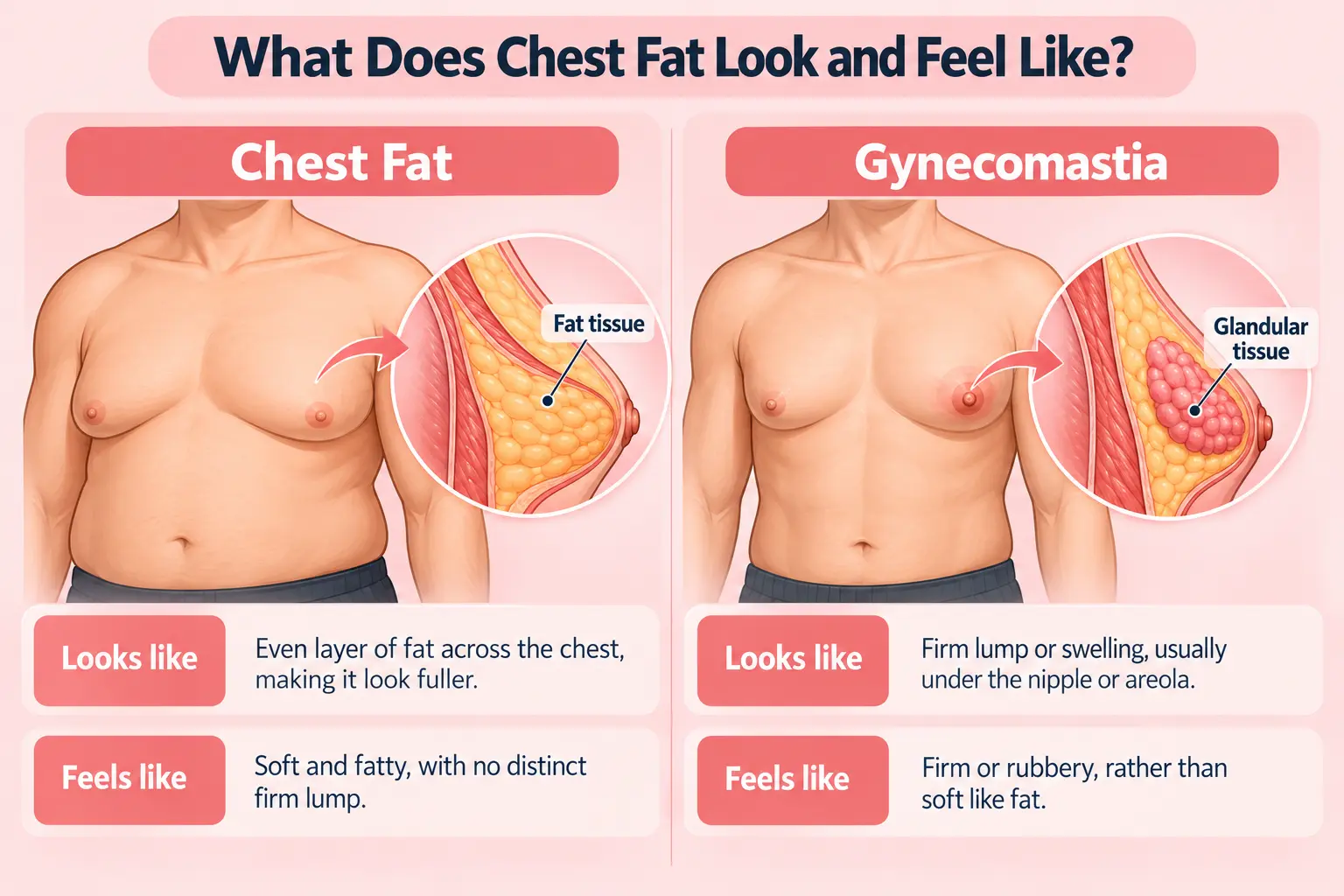
Chest fat and gynecomastia can also occur together. If you are unsure what is causing your chest enlargement, a healthcare professional, ideally an Aesthetic and Plastic Surgeon, can examine the area and, when needed, recommend blood tests or imaging tests to identify the cause.
If excess body fat is the reason behind your enlarged chest, the goal is overall fat loss, instead of trying to burn fat from the chest area alone.
You cannot choose exactly where your body loses fat first. Instead, focus on a combination of regular physical activity, strength training and a balanced eating pattern.
Chest exercises are useful, but there is a common misconception that they directly burn chest fat. Exercises such as push-ups and bench presses strengthen the chest muscles underneath the fat; they do not selectively remove fat from that area.
A practical exercise routine can include:
Remember: If chest enlargement is due to gynecomastia, exercise can improve overall chest appearance but cannot remove the underlying glandular tissue.
There is no specific food that burns chest fat. Instead, your diet should support gradual, sustainable reduction in overall body fat.
Build most meals around:
At the same time, try to reduce frequent consumption of sugary drinks, highly processed snacks, deep fried foods and foods that are very high in calories but low in nutritional value.
A very restrictive diet is also not necessarily a better diet. Rapid weight loss attempts can be difficult to sustain and may also result in loss of lean tissue. That’s why a moderate, consistent approach is generally more practical for long-term weight management.
Lifestyle Changes That Can Help
Small, consistent changes outside your workout can also help in healthy fat loss. Aim for:
You do not need to make drastic changes overnight; building habits you can maintain is more likely to support lasting results.
It is not necessary. However, you do need to be disciplined and exercise regularly. Since chest fat is part of overall body fat, regular physical activity that helps you manage your weight can be effective.
Brisk walking, cycling, swimming, climbing stairs and bodyweight exercises such as push-ups and squats are good options. What matters most is consistency. If you are mostly sedentary, start with a daily walk and gradually increase your activity.
If you are new to exercise, consider professional guidance to learn proper form and choose exercises suited to your fitness level.
It is worth getting a medical check-up if you notice any of the following:
These signs can point to something other than excess body fat, so it is best not to assume and wait.
For any questions about your body fat or other health concerns, our multidisciplinary healthcare team at the CK Birla Hospital is always here to help. You can start with our internal medicine specialists, who can refer you to an aesthetic or plastic surgeon for specialised treatment when needed. Simply call us to book a consultation.
Written and Verified by:

Similar Internal Medicine Blogs
Request a call back