Prediabetes means your blood sugar is higher than normal but not yet high enough to be diagnosed as diabetes. In many people, the body still produces insulin, but the cells in the muscles, liver and fat tissue do not respond to it as effectively. This is called insulin resistance. The pancreas may compensate by producing more insulin to keep blood sugar levels from rising further. Over time, however, it may struggle to keep up.
The main concern is that prediabetes usually has no clear symptoms. Signs such as extreme thirst or frequent urination are more commonly seen with significantly elevated blood sugar levels. This means you cannot rely on how you feel to know whether your blood sugar is high.
In India, an estimated 136 million people had prediabetes in 2021, according to the ICMR-INDIAB study. That’s roughly 1 in 7 adults, and many don’t know it.
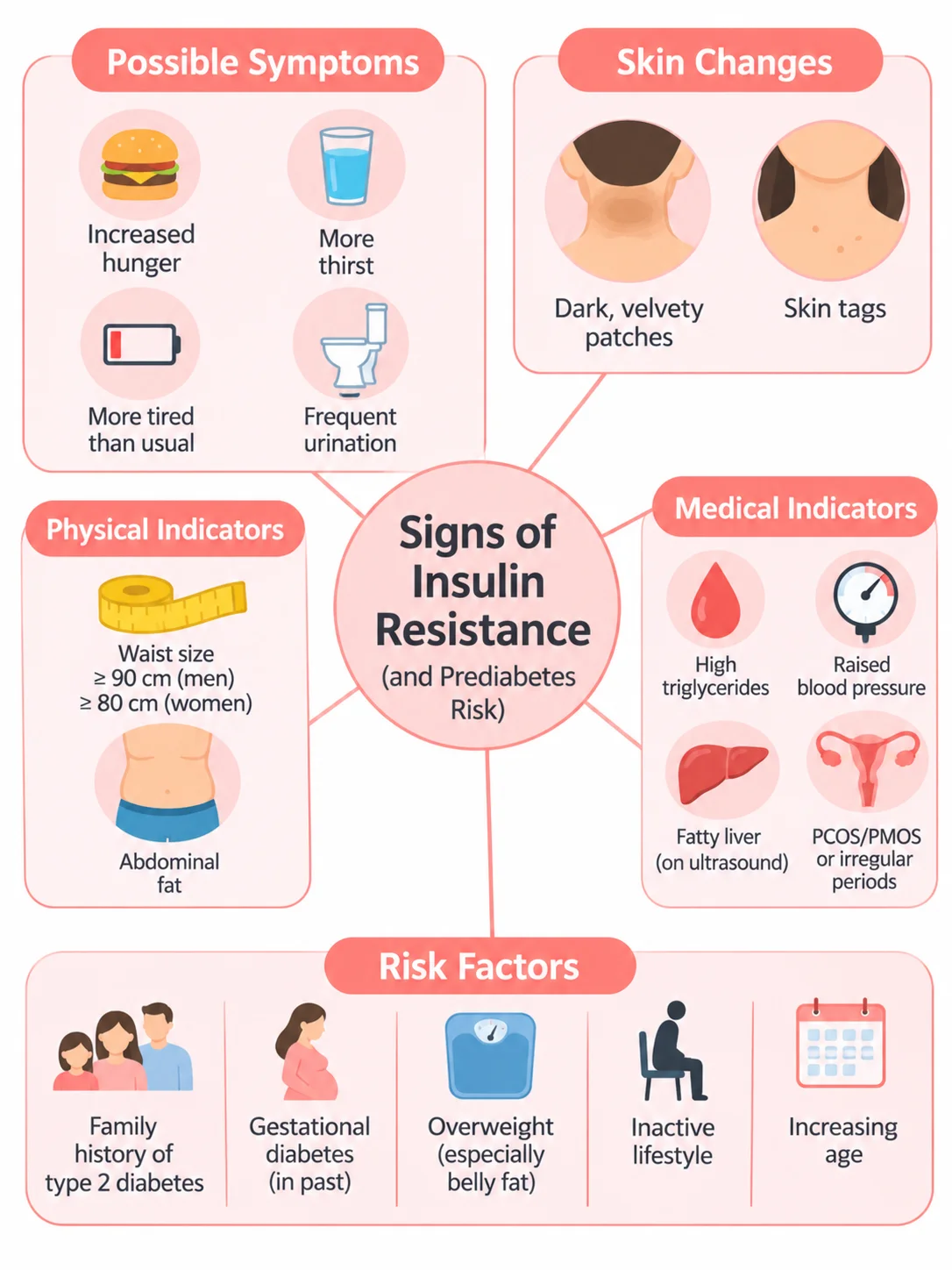
Many people have no symptoms. When there are signs, they are usually mild:
None of these is specific to prediabetes. Tiredness has dozens of causes, and a dark neck can also be tanning or friction. Treat them as reasons to get tested, not as a diagnosis.
See a doctor promptly if you notice blurred vision, tingling in the feet, slow-healing cuts or unexplained weight loss. These can be signs that blood sugar has already risen into the diabetes range.
Insulin resistance usually comes before prediabetes. Apart from the skin changes mentioned above, other signs and risk factors include:
Many people think prediabetes only affects those who are visibly overweight, but that is not true. You can develop insulin resistance even at a lower body weight because many South Asians tend to store more fat around the belly and internal organs.
Also Read: PMOS and Insulin Resistance: Understanding the Connection
Any one of these three tests can help diagnose prediabetes:
This test reflects your average blood sugar levels over the past 2 to 3 months and does not require fasting.
It requires at least 8 hours of fasting, during which you can drink plain water. Diabetologists usually recommend getting this test done in the morning, before breakfast, so you can complete the required 8 hour fast overnight.
The OGTT involves drinking a glucose solution and being tested two hours later.
Who should get tested? The American Diabetes Association advises testing all adults from age 35, and earlier for anyone who is overweight (for Indians, a BMI of 23 or more) and has another risk factor, such as a family history of diabetes. If your result falls in the prediabetes range, repeat the test at least once a year.
Also Read: Normal Glucose Levels after Eating
| Test | Normal | Prediabetes | Diabetes |
| HbA1c | Below 5.7% | 5.7–6.4% | 6.5% or above |
| Fasting glucose | Below 100 mg/dL | 100–125 mg/dL | 126 mg/dL or above |
| 2-hour glucose (OGTT) | Below 140 mg/dL | 140–199 mg/dL | 200 mg/dL or above |
These ranges follow American Diabetes Association (ADA) criteria, which are also used in India. However, WHO uses 110 mg/dL as the lower cut-off for prediabetes in fasting blood sugar tests. Your doctor may consider this difference when interpreting your results.
Prediabetes is a warning sign, not a definite prediction of diabetes. With changes to your diet, physical activity and weight management, you may be able to bring your blood sugar levels back to normal. Still, it is important to take it seriously because prediabetes is also associated with a higher risk of heart disease and stroke.
Also Read: Complications in Diabetes and How to Avoid Them
In the Diabetes Prevention Program trial, losing at least 7% of body weight and getting 150 minutes of moderate-intensity physical activity each week, such as brisk walking, reduced the incidence of type 2 diabetes by 58%.
In practice, this might look like:
This does not mean you have to give up your favourite foods forever. Extreme crash diets often backfire and are hard to sustain. Nor does it mean medicines are never needed. Some people, particularly those with other risk factors, may be advised by a diabetologist to take certain medicines.
World Diabetes Day: A Timely Reminder
World Diabetes Day falls on 14 November, and this year’s theme, “Early action on diabetes,” focuses on early diagnosis and risk reduction. Prediabetes is where that idea applies most directly. It is the stage when a simple blood test and a few ordinary habit changes can alter the course.
The absence of symptoms is the reason regular testing is important. If you have a family history of diabetes, extra weight around the waist or any signs of insulin resistance, ask for an HbA1c or fasting glucose test. If the result is in the prediabetes range, you have time to act, and that’s the useful part.
If you are unsure about your risk, you can speak with our diabetologist and metabolic physician at the CK Birla Hospital for expert guidance on testing and a plan that fits your routine. You can also book an appointment online.
Written and Verified by:

Similar Diabetics Blogs
Request a call back


