
GLP-1 medicines do not cure PMOS. They may help manage related metabolic concerns, such as excess weight and insulin resistance, particularly alongside lifestyle changes. They are not fertility medicines, though improved metabolic health may indirectly support more regular ovulation in some women. A gynaecologist or metabolic specialist should assess individual suitability before starting treatment.
If you have PMOS (formerly known as PCOS), you have probably heard that managing your weight and metabolic health can be an important part of treatment. But that can be easier said than done. PMOS can involve insulin resistance, higher levels of androgens such as testosterone, and metabolic changes that may make weight management more challenging for some people.
That is one reason GLP-1 medicines have entered the PMOS conversation. These medicines are used for conditions such as obesity and type 2 diabetes, and research is exploring their potential role in women with PMOS who have metabolic concerns. But exactly how can GLP-1 medicines help in managing PMOS, and who might benefit from them? Keep reading to find out.
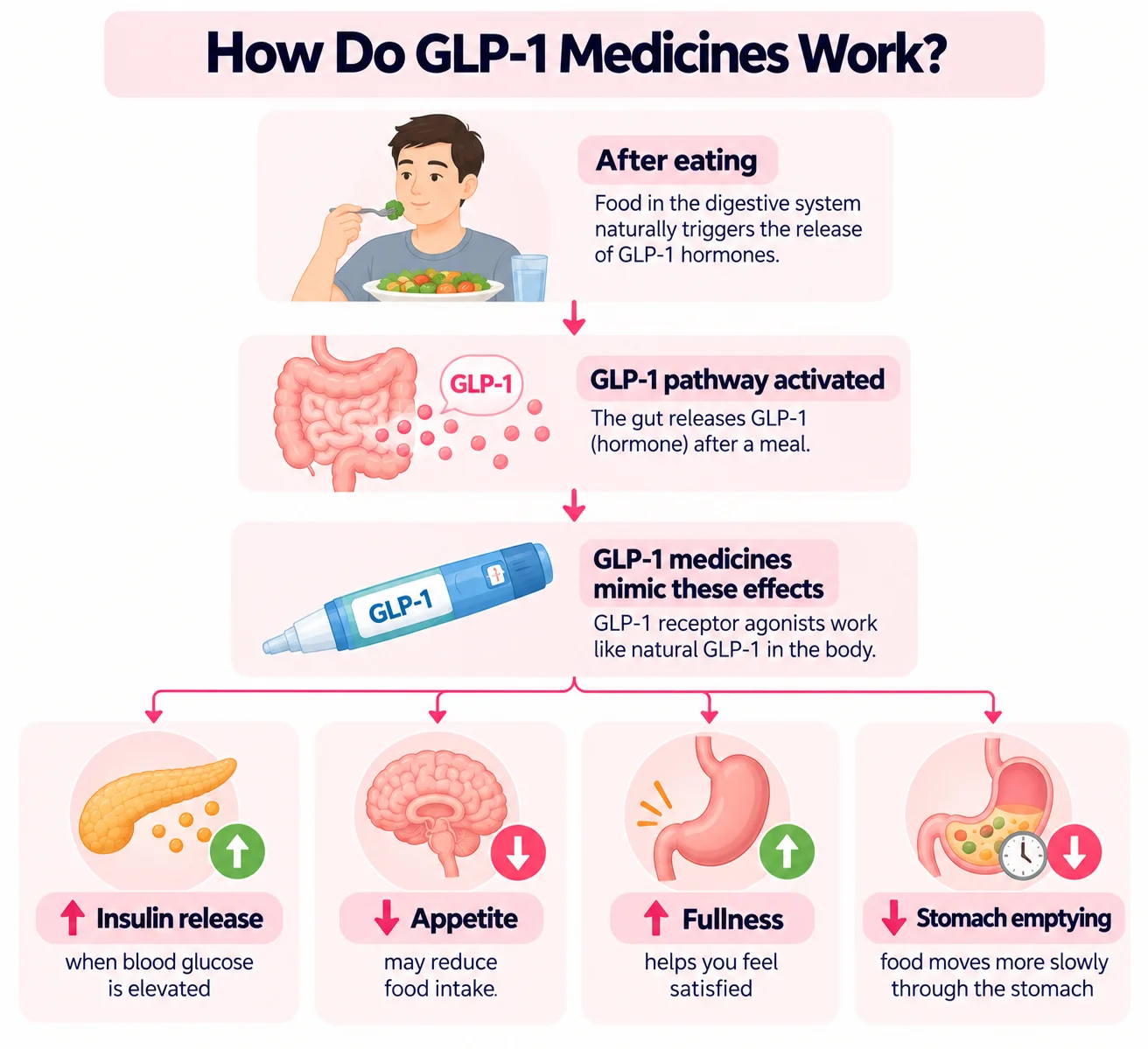
GLP-1 stands for glucagon-like peptide-1, a hormone naturally produced by the body after eating. It helps regulate your blood sugar and also influences appetite and digestion.
GLP-1 receptor agonists are medicines that mimic some of these effects. They can:
Semaglutide and liraglutide are GLP-1 receptor agonists. Tirzepatide works on GLP-1 as well as another hormone pathway called GIP.
PMOS (Polyendocrine Metabolic Ovarian Syndrome) can involve both reproductive and metabolic changes. Some people experience insulin resistance, which means the body’s cells do not respond to insulin as effectively as they should. The pancreas may compensate by producing more insulin.
This matters because metabolic changes can interact with the hormonal features of PMOS. At the same time, not everyone with PMOS has the same metabolic profile, so a GLP-1 medicine is not always appropriate just because someone has PMOS.
No. GLP-1 medicines do not treat PMOS as a whole. They may help with certain metabolic concerns associated with the condition, particularly higher weight and some measures of insulin resistance.
A PMOS diagnosis alone is not enough to decide whether you need a GLP-1 medicine.
A gynaecologist may consider factors such as:
For weight management, medicines are generally considered when excess weight is affecting health and when the person meets relevant prescribing criteria.
An important point that is sometimes missed is that healthy lifestyle changes can benefit PMOS even when they do not result in weight loss. The international PMOS guideline recognises that healthy lifestyle behaviours can provide health benefits even in the absence of weight loss.
That means treatment should focus on metabolic and reproductive health, not simply the number on the weighing scale.
Some studies have reported more regular menstrual cycles and improved natural pregnancy rates among women with PCOS taking GLP-1 receptor agonists. These effects may be indirect. By helping with weight management and some aspects of metabolic health, GLP-1 medicines may improve the hormonal and metabolic environment that influences ovulation in some women.
So, GLP-1 medicines should not be viewed as fertility medicines. Any improvement in ovulation or periods may be related partly to changes in weight and metabolic health, and more research is needed.
Most side effects of GLP-1 medicines are not permanent. They are more likely to occur when you first start treatment or when the dose is increased, and become milder as your body adjusts to the medicine.
Digestive symptoms are among the most common side effects. These can include:
This is why GLP-1 medicines are usually started at a lower dose and increased gradually. If side effects are severe, persistent or affecting your ability to eat or drink normally, speak with your doctor instead of changing or stopping the medicine yourself.
No. GLP-1 medicines and metformin work differently and are not interchangeable.
Metformin is a medicine that improves the body’s response to insulin and is commonly used in metabolic management of PMOS. GLP-1 medicines act through hormone pathways that influence appetite, blood sugar and digestion.
In some situations, a doctor may consider using different medicines together. The choice depends on the individual’s health.
GLP-1 medicines have opened another option for managing metabolic health in some people with PMOS, particularly when higher weight or related health problems are present. But they are not a treatment for every aspect of PMOS and should not be viewed as a quick fix for hormonal symptoms or fertility. The right treatment plan considers your symptoms, metabolic health, medications, weight and reproductive goals.
If you have PMOS and are wondering whether a GLP-1 medicine is a right option for you, a personalised discussion with a gynaecologist or metabolic specialist can help you understand where it fits into your overall care. The multidisciplinary healthcare team at the CK Birla Hospital can help you discuss your symptoms, metabolic concerns and treatment options in the context of your individual health goals. Simply book a consultation to get expert advice.
Written and Verified by:

Similar Diabetics Blogs
Request a call back

