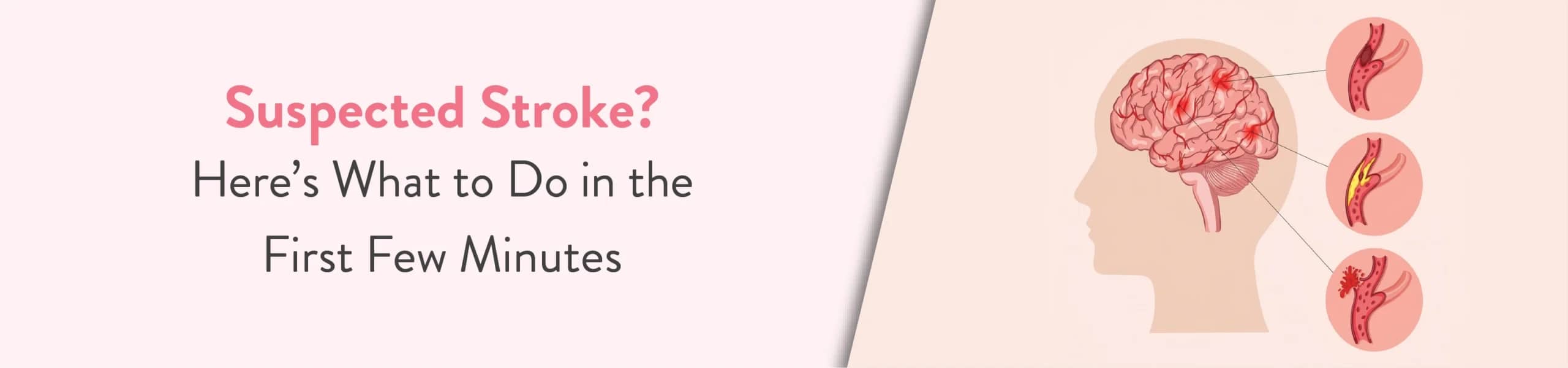
Stroke is a medical emergency in which you cannot afford to waste even a single second. Knowing what to look for, and what to do next, can help protect a person’s life, which is exactly what this year’s World Stroke Day theme, ‘Every Minute Counts,’ encourages us to do. In this blog, we will look at how to spot the signs of a stroke and what to do in the first few minutes, so that we can all #ActFAST.
Most strokes are caused by a blood clot blocking an artery that carries blood to the brain. This is called an ischaemic stroke.
In the remaining cases, a blood vessel in the brain bursts and causes bleeding. This is called a haemorrhagic stroke.
Either way, brain cells in that area stop getting oxygen, and they begin to die within minutes.
This is why doctors say ‘time is brain.’ The sooner blood flow is restored or the bleeding is controlled, the more brain tissue can be saved.
Also Read: What is Cholesterol? Type, Normal Range, Diagnosis and Treatment
Many people assume that a stroke will hurt, with a clutching chest and obvious pain. But, a stroke is often painless. That is exactly why it gets dismissed as tiredness, low blood pressure, or poor sleep.
Another common belief is that strokes only affect older people. The risk does rise with age, and strokes are more common after 60. However, they can also occur in people in their 30s and 40s. In younger adults, they are usually due to uncontrolled high blood pressure, diabetes, high cholesterol, smoking, or heart rhythm problems. Long-term stress and poor sleep may also add to the risk.
Also Read: How Sleep Deprivation Affects Your Mental and Neurological Health
You don’t need to be certain it’s a stroke. If something looks off, and it came on suddenly, that’s reason enough to act. Remember the acronym BE FAST.
Also Read: Seizure vs Fainting: How to Tell the Difference
If even one BE-FAST sign is present, act right away. You can follow these steps:
In India, dial 112, or 108 in many states. Don’t wait to see whether the symptom passes. If you’re alone with the person, make the call before anything else.
Try to establish the exact time the symptoms started. This information helps neurologists assess which treatments may be suitable. Do not delay the ambulance call while trying to establish the exact time.
Let them sit or lie down comfortably, with the head slightly raised. If the person is drowsy or vomiting, turn them gently onto their side. Loosen tight clothing.
If they are unconscious but breathing normally, follow the emergency operator’s instructions about positioning. If they are not breathing normally, begin CPR if you can and follow the operator’s instructions.
A list of their medicines (especially blood thinners), any known conditions like diabetes or atrial fibrillation, and a family member who can give the history at the hospital.
This is where well-meaning people go wrong.
Here is a quick summary of what to do and what to avoid:
| Do | Don’t |
| Call an ambulance straight away | Wait to see if the symptoms pass |
| Note when the symptoms started | Give aspirin or any other medicine |
| Turn a drowsy or vomiting person onto their side | Give food, water or tea |
| Loosen tight clothing and stay with them | Try home remedies such as pricking fingers |
| Keep their medicine list ready for the doctors | Drive them yourself if an ambulance can come |
Yes. Although stroke risk increases with age, it can also affect younger adults. Common risk factors of stroke are:
Some people have no evident symptoms or known risk factors before their first stroke. Regular health checks and appropriate management of existing conditions can help reduce risk, but they cannot eliminate it entirely.
Do not dismiss sudden neurological symptoms because the person is young, physically active, or has never experienced a similar problem before.
Also Read: Hypertension: Causes, Symptoms and Associated Risks
At the CK Birla Hospital, our 24×7 emergency care is equipped to respond to stroke emergencies. Our experienced neurologists, neurosurgeons, and multidisciplinary team work together to evaluate and treat patients quickly. If you or someone near you shows any sign of a stroke, call 112 or an ambulance first, and head to the CK Birla Hospital’s emergency department.
For a stroke risk check after a mini-stroke, or follow-up care after a stroke, you can book an appointment with our neurology team.
Written and Verified by:

Similar Neurology Blogs
Request a call back


