According to the Indian Stroke Association, nearly 1.8 million people in India suffer a stroke each year, most caused by a blood clot cutting off blood flow to the brain. These rising numbers are a reminder to stay informed, so we can recognise the signs and act quickly when it is needed most.
In this blog, we will understand what a blood clot in the brain actually is, what causes it, whether it can be treated, and what you can do to lower the risk.
What is a Blood Clot in the Brain?
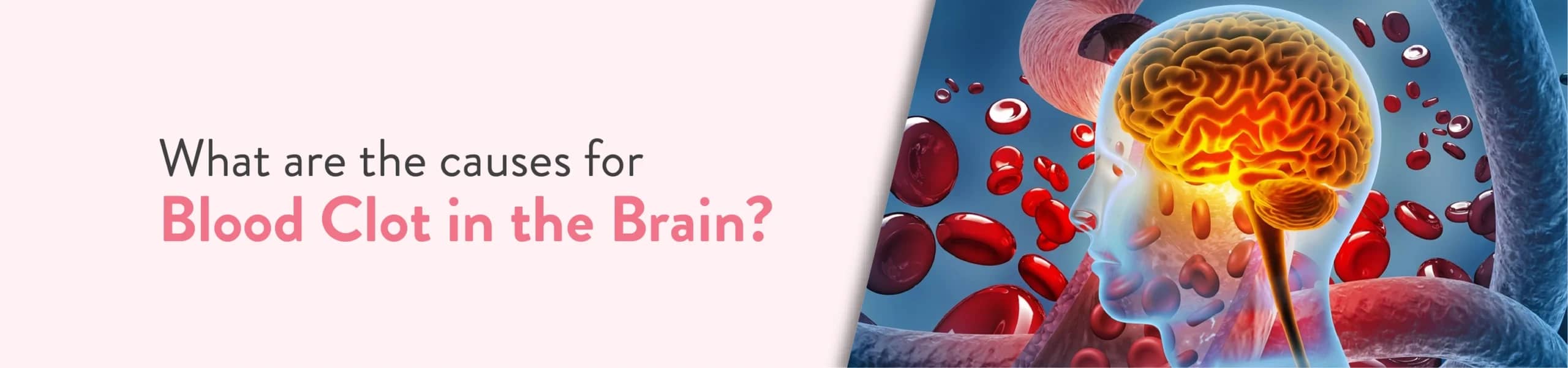
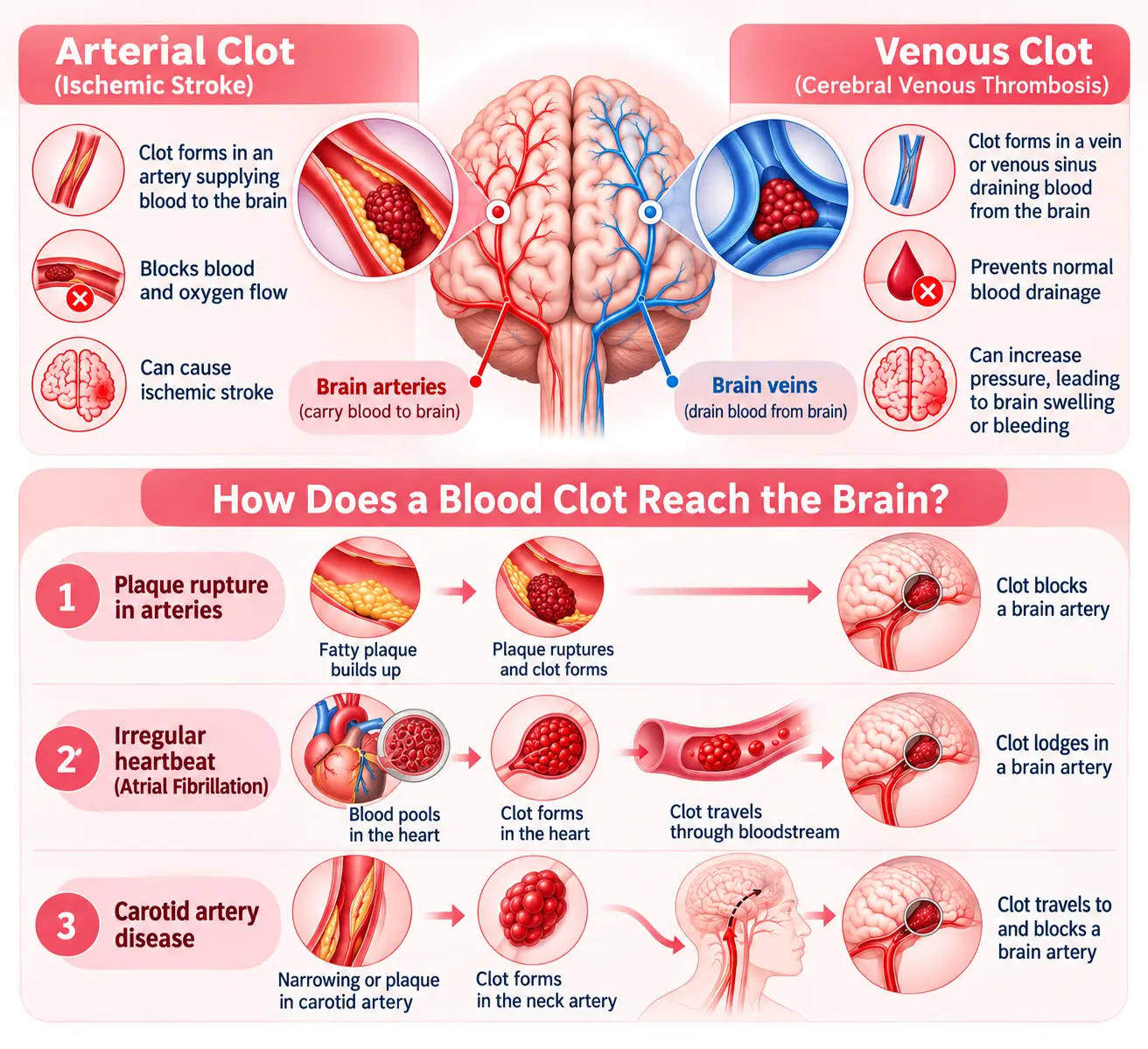
A brain clot is a buildup of thickened blood that obstructs blood flow through an artery or vein supplying or draining the brain.
Depending on where the clot forms, it can interfere with the brain’s blood supply or prevent blood from draining normally. This can lead to conditions such as an ischemic stroke or cerebral venous thrombosis (CVT).
In an ischemic stroke, a clot blocks an artery supplying blood and oxygen to the brain. The clot may form directly in the artery (thrombosis) or travel from another part of the body, such as the heart, and become lodged in a brain artery (embolism).
In CVT, also called cerebral venous sinus thrombosis (CVST),the clot develops in a vein or venous sinus that normally drains blood from the brain. When this drainage is blocked, blood and pressure can build up, which may cause swelling or bleeding in the brain.
| Condition |
Where the clot forms |
Main problem |
| Ischemic stroke |
Brain artery |
Blood and oxygen cannot reach part of the brain |
| Cerebral venous thrombosis |
Brain vein or venous sinus |
Blood cannot drain normally |
Note – Unlike many common arterial strokes, cerebral venous thrombosis can affect younger adults and people without traditional cardiovascular risk factors.
What Causes a Blood Clot in the Brain?
A blood clot in the brain is the leading cause of stroke and it can form in two different places:
in the arteries carrying blood to the brain or in the veins that drain blood away from it. The causes differ depending on which type is involved.
Arterial Clots (Cause Most Strokes)
These clots block blood flow into the brain and are responsible for the majority of strokes.
- Atherosclerosis: Fatty plaque can build up inside artery walls. If the plaque ruptures, the body may form a blood clot around the damaged area. The clot may block the artery there or break away and travel to an artery supplying the brain.
- Atrial Fibrillation (AFib): An irregular heartbeat lets blood pool in the heart instead of moving through smoothly. Clots can form in that stagnant blood, then travel through the bloodstream and lodge in a brain artery.
- Carotid Artery Disease: Narrowing or damage to the carotid arteries in the neck encourages clot formation, which can then travel upward into the brain.
- Heart Defects: Normally, clots from the legs (deep vein thrombosis) travel to the lungs, not the brain. But a hole in the heart can let a clot cross from the right side to the left, bypassing the lungs and heading straight to the brain.
Venous Clots (Cerebral Venous Sinus Thrombosis)
A less common but important condition where the clot forms directly in the brain’s draining veins and not in an artery, blocking blood from properly leaving the brain.
- Blood-Clotting Disorders (Thrombophilia): Some people are genetically prone to clotting (e.g., Factor V Leiden, protein C/S deficiency), whereas others develop a tendency later in life.
- Pregnancy and Childbirth: Pregnancy naturally increases clotting to limit bleeding during delivery, and this risk stays high for several weeks postpartum. A new mother with an unusual headache plus vision changes, confusion, or weakness should not dismiss it as ordinary exhaustion.
- Hormonal Contraceptives: Birth control pills that contain estrogen can modestly increase clotting risk.
- Cancer and Blood Disorders: Cancer can make the blood clot more easily. Some blood cell disorders can do the same
- Nearby Infections: Sinus, ear, facial, or neck infections can sometimes trigger clot formation.
- Head Injury or Surgery: Trauma or certain surgical procedures can affect blood vessels in the brain and raise clotting risk.
- Autoimmune Conditions: Autoimmune disorders are linked to a higher clotting tendency.
- High blood pressure
- Diabetes
- High cholesterol
- Smoking
- Obesity and sedentary lifestyle
- Older age
- Certain genetic clotting disorders (e.g., Factor V Leiden)
- Hormonal factors (some birth control pills, pregnancy)
- Prolonged immobility (long flights, bed rest)
- Certain cancers
- Certain autoimmune conditions
- Head injury
Symptoms of Brain Clot: Are They an Emergency?
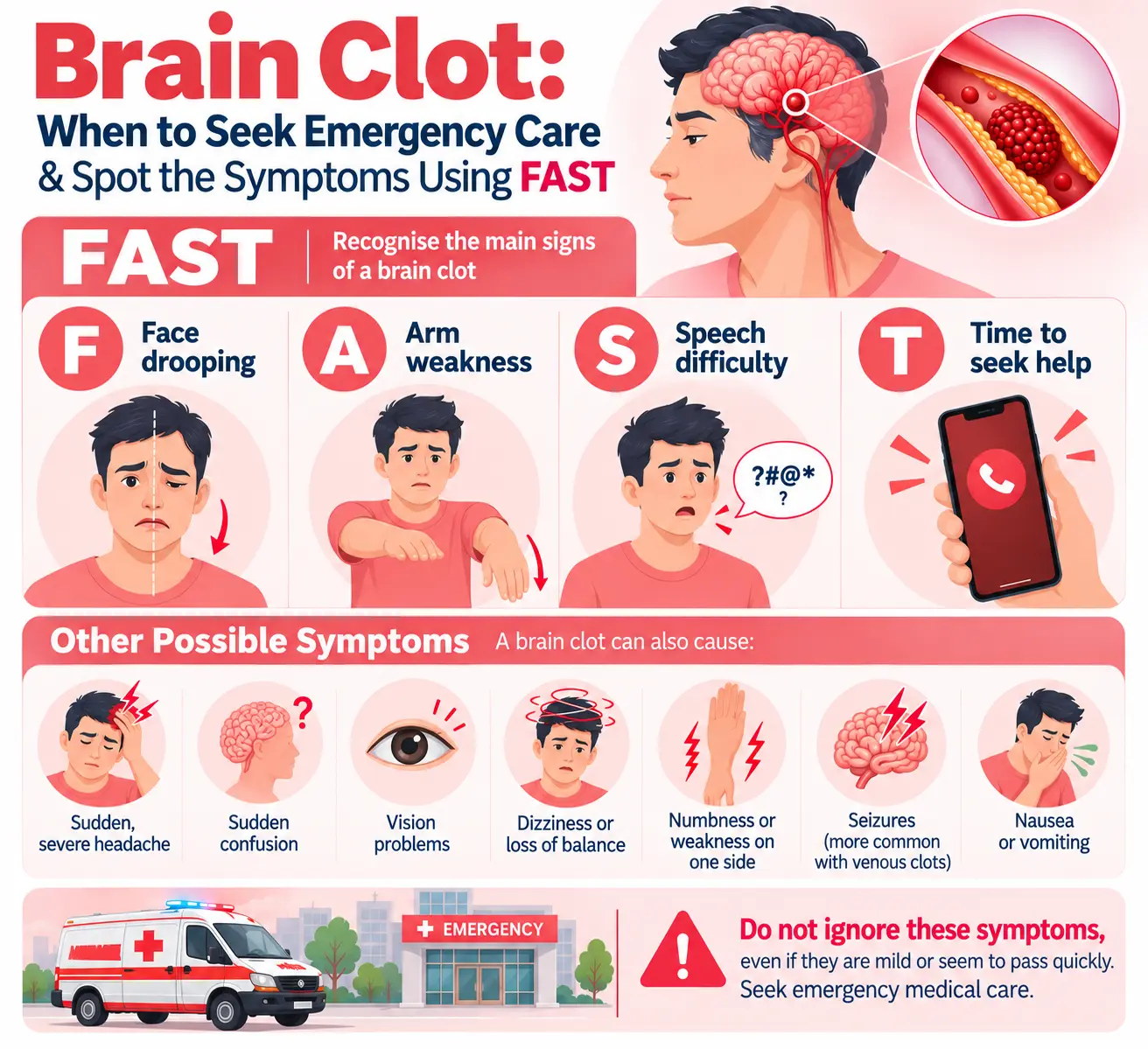
Symptoms tend to come on suddenly and when they do, it is a medical emergency that needs immediate attention. Remember the acronym FAST to spot the signs quickly:
F – Face Drooping
One side of the face may droop or feel numb. Ask the person to smile. If it looks uneven, that’s a red flag.
A – Arm Weakness
One arm may feel weak or numb. Ask the person to raise both arms. If one drifts downward, take it seriously.
S – Speech Difficulty
Speech may become slurred, garbled, or hard to understand. The person may also struggle to speak at all.
T – Time to Call Emergency Services
If you notice any of these signs, call emergency services immediately, even if symptoms are mild.
Other Symptoms to Watch For
Other than FAST, a blood clot in the brain can also cause:
- Sudden, severe headache
- Sudden confusion
- Sudden vision problems in one or both eyes
- Sudden dizziness, loss of balance, or trouble walking
- Numbness or weakness on one side of the body
- Seizures (more common with venous clots)
- Nausea or vomiting alongside other symptoms
So, Is It Always an Emergency?
Yes, essentially always. Even if symptoms are mild or seem to pass quickly, they should never be ignored.
How is a Blood Clot in the Brain Diagnosed?
Doctors use the patient’s symptoms, medical history, neurological examination and brain imaging to diagnose a cerebral clot. Depending on the situation, following tests may recommended:
- CT scan to get clear images of the brain and identify certain complications
- CT venography (CTV) to examine the brain’s veins using CT imaging
- MRI provides detailed images of brain tissue
- MR venography (MRV) helps identify abnormalities or clots in the brain’s venous system
- Blood tests may help identify clotting disorders, infections or other underlying conditions
How is a Blood Clot in the Brain Treated?
Treatment depends on the type and location of the clot, symptoms and underlying cause.
Emergency Treatment (Ischemic Stroke)
- Clot-Dissolving Medication: Certain medicines are given to dissolve the clot and restore blood flow. It only works if given within a few hours of symptoms starting, so reaching a hospital fast is very critical.
- Mechanical Thrombectomy: It is an endovascular treatment. For bigger clots, neurologists can go in through a blood vessel and physically remove it.
- Blood-Thinning Medication: Doctors may prescribe medicines to stop clots from growing or forming again, especially for conditions like an irregular heartbeat.
Treatment for Venous Clots (CVST)
- Anticoagulation Therapy: This is the main treatment for clots in the brain’s veins, usually continued for several months as advised by a neurologist. It helps in reducing the blood’s ability to form additional clots while the body works to clear the existing clot.
- Treating the Root Cause: If an infection or a clotting disorder caused the clot, treating that condition helps prevent it from happening again.
Surgery (When Needed)
- Decompressive Surgery: If brain swelling becomes dangerous, neurosurgeons may briefly remove a part of the skull to relieve pressure.
- Carotid Surgery: If a blocked neck artery is the cause, surgery to clear it can help prevent future strokes.
Recovery After a Blood Clot Treatment
Recovery varies from person to person.
- Physiotherapy, speech therapy, or occupational therapy to regain lost function
- Managing blood pressure, sugar, and cholesterol
- Lifestyle changes like quitting smoking, staying active, eating well
- Long-term medicines as prescribed by a doctor
If you notice any signs of a brain clot in yourself or someone around you, don’t ignore them. Get to emergency care immediately.
You can also reach out to our team at the CK Birla Hospital. We have a dedicated Neurology Department along with Emergency and Trauma Care, ready to help.