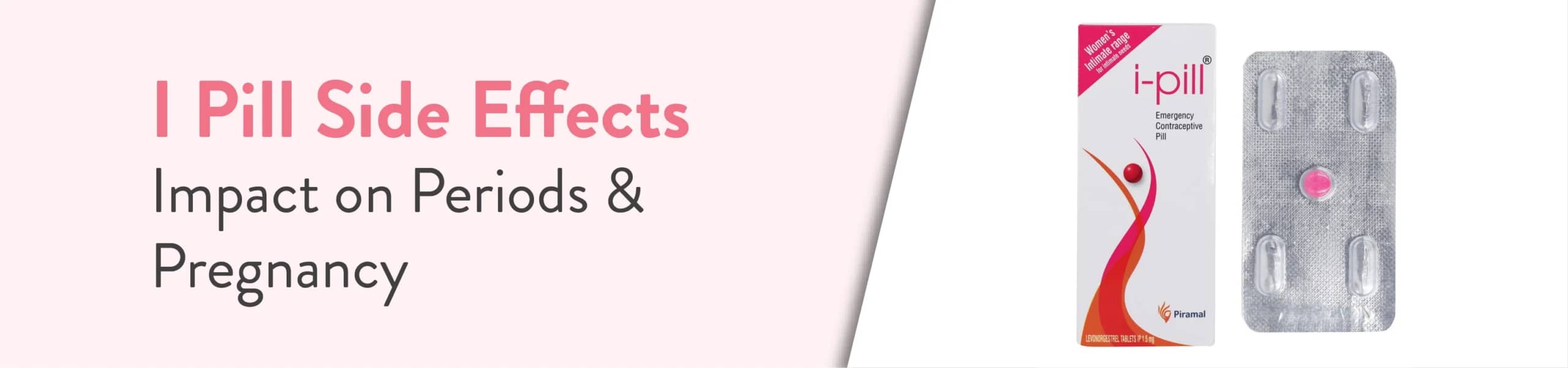
Emergency contraception has given millions of people control over their reproductive choices, but that control should not come without information. One of the most popularly used contraceptives, the i-pill is safe and effective for most people, but like any medication, it comes with side effects you should know about.
Keep reading to find out:
i-Pill is an emergency contraceptive pill (ECP) used to reduce the risk of pregnancy after unprotected sex or contraceptive failure. It contains levonorgestrel, a synthetic form of the hormone progesterone.
It may be used in situations such as:
i-Pill is designed for emergency use only. It should not be used as a regular method of contraception.
Like all other ECPs, i-Pill works mainly by delaying or preventing ovulation, which is the release of an egg from the ovary. Without an egg, fertilisation cannot occur.
Depending on where you are in your menstrual cycle, i-pill may also:
One common misconception is that i-pill causes an abortion. It does not terminate an existing pregnancy and does not affect an implanted embryo. If pregnancy has already occurred, taking an i-pill will not end it.
Did you know this?
Many women assume emergency contraception works at any point in the cycle. However, it is much less effective if ovulation has already taken place.
The sooner you take the i-pill, the better it works.
Ideally, it should be taken:
Even delaying by one day can reduce its effectiveness.
When taken correctly and within the recommended time, an ECP like i-pill is highly effective at preventing pregnancy. Its effectiveness depends largely on how timely it is taken.
| Time after unprotected sex | Approximate effectiveness |
| Within 24 hours | Highly effective |
| 24 to 48 hours | Very effective, but lower than within 24 hours |
| 48 to 72 hours | Still effective, though protection continues to decline |
| Up to 120 hours | May still provide some protection, but levonorgestrel is less effective than if taken earlier |
Most women experience either no side effects or only mild, temporary symptoms post consuming an ECP that usually settle within a day or two.
Some common i-pill side effects one may experience are:
Your body notices the sudden change in hormone levels and reacts to it, and that reaction is what causes these symptoms.
Note –
Changes in the menstrual cycle are among the most common side effects after taking an ECP like i-Pill.
Your next period may:
Keep in mind that a period delay of up to one week is fairly common. However, for most women, periods return to their usual pattern by the following cycle.
If your period is delayed by more than 7 days or if it is unusually light, you should take a pregnancy test.
You should consult a gynaecologist if:
Something people often overlook is that the i-pill might not be the only reason your period is late. Emotional stress can do that too. The anxiety that follows unprotected sex can, on its own, temporarily delay your menstrual cycle.
One of the biggest myths about emergency contraception is that it causes infertility. However, taking i-Pill:
Some women worry that taking i-Pill more than once permanently harms reproductive health. Women can become pregnant again during the same menstrual cycle if they have unprotected sex after taking i-Pill. This is why doctors recommend starting or resuming a reliable contraceptive method soon after using emergency contraception.
Although repeated use is not recommended because it is less reliable than regular contraception and may lead to irregular bleeding, current evidence shows it does not cause long-term fertility problems.
Also note that i-Pill only protects against one episode of unprotected intercourse. If unprotected sex happens again later in the same cycle, pregnancy is still possible.
An ECP is a temporary solution. It is always advisable to be under the guidance of a gynaecologist to avoid any unnecessary confusions. You should consult a gynaecologist if:
Myth: i-Pill is an abortion pill.
Fact: It prevents pregnancy before fertilisation or implantation. It does not end an established pregnancy.
Myth: Taking an i-pill causes infertility.
Fact: There is no proof that occasional use affects future fertility.
Myth: It protects against sexually transmitted infections (STIs).
Fact: i-Pill prevents pregnancy only. It does not protect against infections such as HIV, chlamydia or gonorrhoea.
Myth: It can be used as regular contraception.
Fact: Emergency contraception is less effective than routine contraceptive methods and should only be used in emergencies.
i-Pill is a safe and effective option for preventing pregnancy after unprotected sex when taken as directed. Mild side effects such as nausea, spotting or temporary changes in your periods are common and usually resolve without treatment.
It does not affect future fertility or harm a future pregnancy. If your periods remain delayed, you experience severe symptoms or you need emergency contraception frequently, speaking with a gynaecologist can help you choose the most suitable long-term contraceptive option.
At the CK Birla Hospital, our experts at the Department of Obstetrics and Gynaecology offer personalised guidance on emergency contraception, menstrual concerns and reproductive health, helping you make informed decisions. We offer a non judgemental space for you to open up about your concerns and get timely solutions to live a healthy and happy life. Simply book a consultation to connect with our specialists.
Written and Verified by:

Similar Gynaecology Blogs
Request a call back