Understand how sleep deprivation affects brain function, memory and concentration.
Explore the link between poor sleep, anxiety, stress and emotional well-being.
Learn how insufficient sleep may affect neurological health and cognitive function.
Identify signs of poor sleep quality, including daytime fatigue and difficulty concentrating.
Discover practical tips to improve sleep habits and know when to consult a doctor.
So, were you up all night finishing work? Or did ‘just one more episode’ turn into an entire web series? Maybe you spent hours doomscrolling social media and pushed sleep aside without even realising it.
Whatever the reason, losing a few hours of sleep can feel harmless when there is always something else demanding our attention. But when this becomes a pattern, the effects can go beyond morning tiredness. Sleep deprivation can influence how your brain manages memory, concentration, emotions and stress, making it closely connected to both mental and neurological health.
Sleep is not simply a period when your body switches off. While you sleep, the brain remains active, carrying out processes involved in learning, memory, emotional regulation and overall brain health.
When you regularly get less sleep than your body needs, some of these processes can become less efficient.
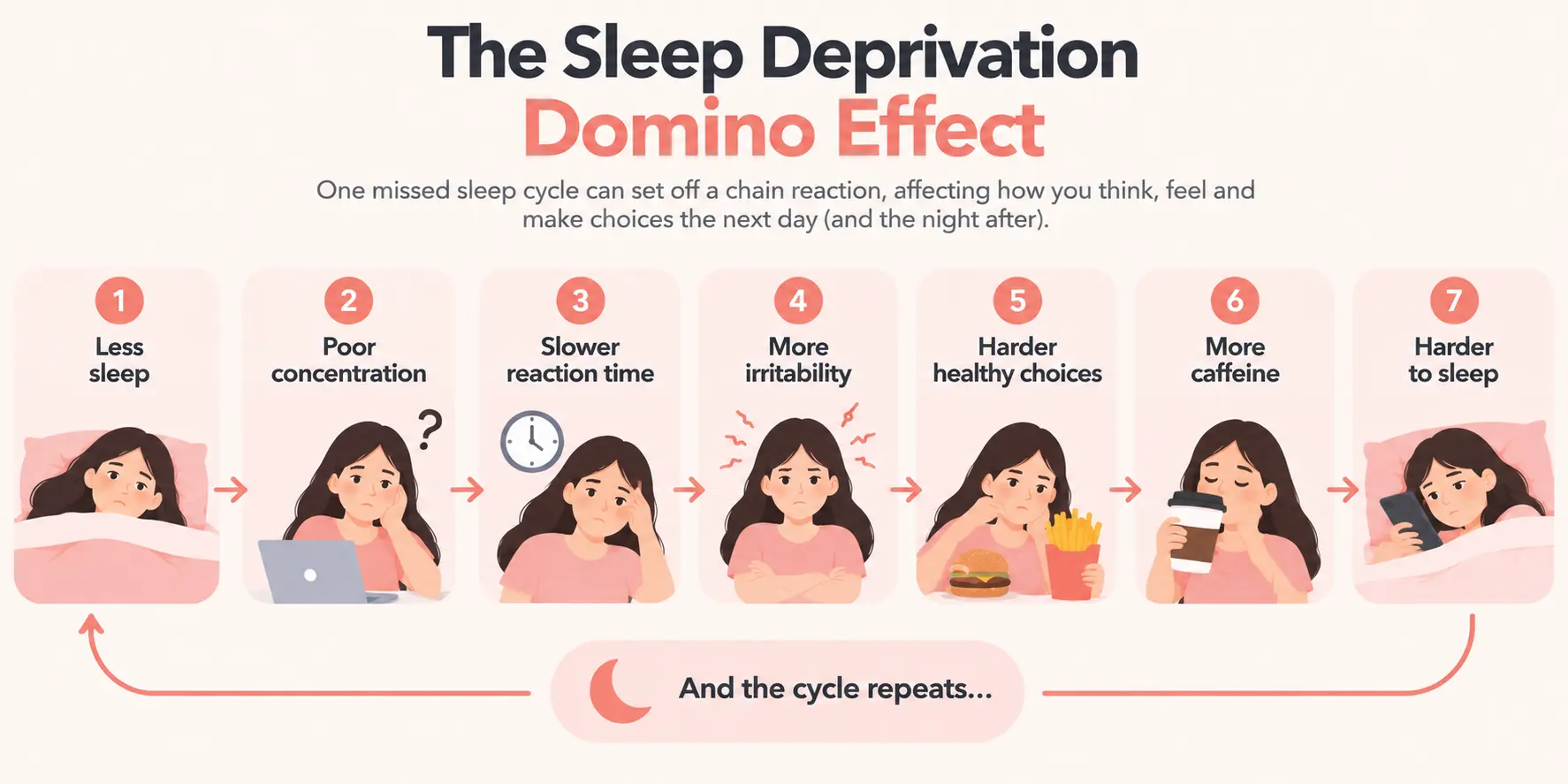
One of the first changes people notice is difficulty concentrating. You may find yourself checking an email repeatedly, forgetting why you walked into a room or struggling to follow a conversation. Reaction time and decision-making can also be affected.
This is partly because sleep supports our brain systems involved in attention and executive functions like the mental skills you use to plan, organise, solve problems and control impulses.
So, staying awake for another two hours to finish work does not necessarily mean getting two extra productive hours. You may finish the task, but tiredness can increase the likelihood of mistakes, slower thinking and poor decisions.
Poor sleep can make you more irritable, emotionally sensitive or worried the following day. If the problem continues, poor sleep and mental health symptoms can begin to reinforce each other.
Does poor sleep mean you have a mental health condition?
Not always. A few nights of poor sleep do not mean you have anxiety, depression or another mental health condition. The concern is when sleep problems become persistent and start affecting your mood, concentration or everyday life.
That is particularly relevant around World Mental Health Day 2026, whose theme is ‘Lived experiences heard: real voices, real change.’ Sleep is one part of mental health that people often experience very personally: lying awake with racing thoughts, struggling through the next day or feeling unlike themselves after weeks of poor sleep. Paying attention to these experiences can be an important part of recognising when support may be needed.
Sleep supports our emotional processing.
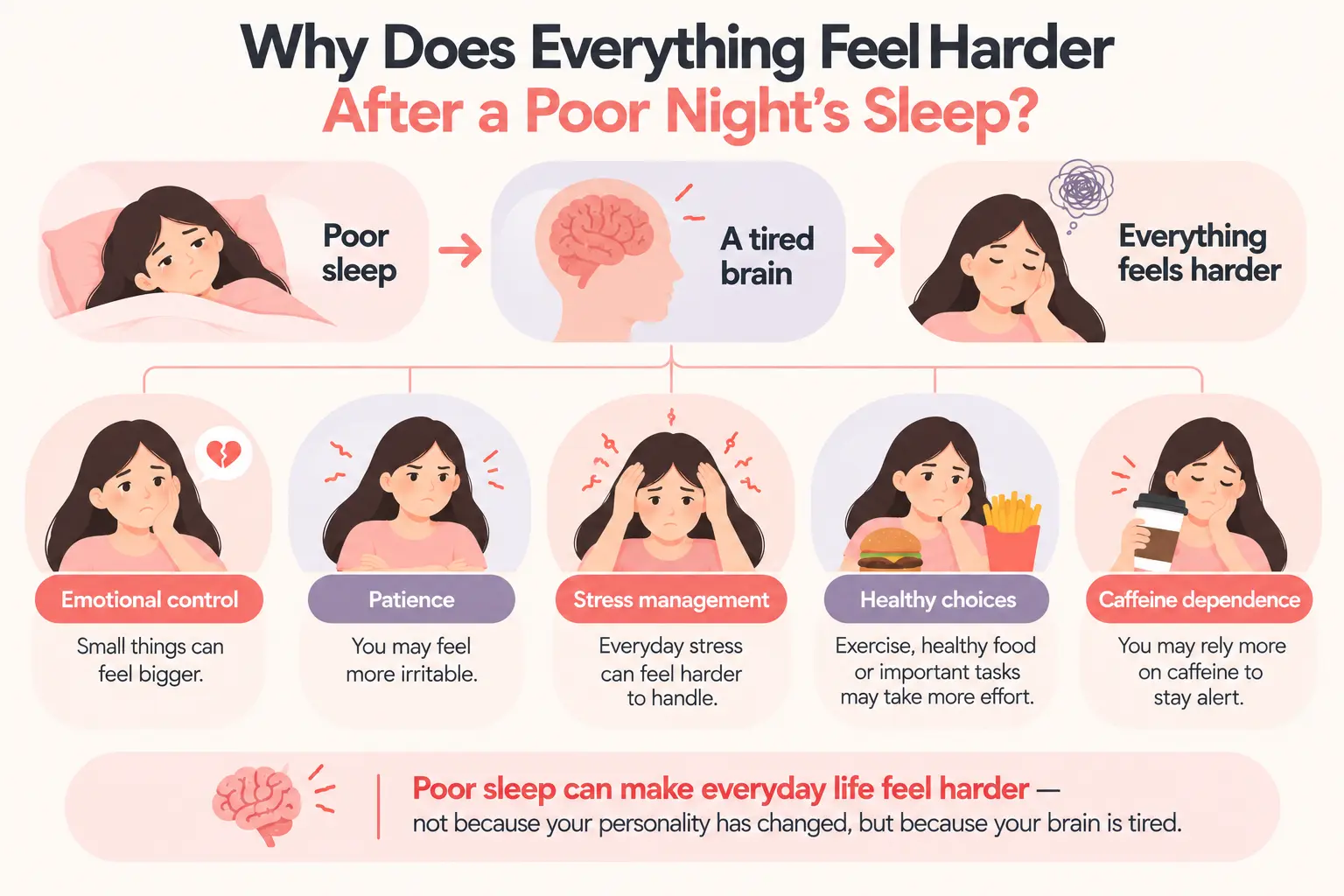
When you are sleep deprived, even ordinary situations can feel more difficult to manage. This does not mean sleep deprivation changes your personality. It means a tired brain may have fewer resources available to regulate emotional responses and cope with everyday stress.
So, when you are exhausted due to sleep deprivation, healthy choices can require more effort. You may skip your usual walk, order whatever food is easiest, postpone an important task or depend on caffeine to get through the afternoon.
Yes, it can affect the memory and neurological health.
During sleep, the brain processes and consolidates information gathered during the day. This is one reason sleeping after learning something can help you retain it better than simply staying awake and repeatedly going over the same material.
Sleep deprivation can therefore affect learning, concentration and recall. You might remember spending three hours studying but struggle to retrieve the information during an exam.
Persistent sleep problems are also associated with several aspects of neurological health. Poor or disrupted sleep has been linked with conditions such as migraine and has been studied in relation to cognitive decline and brain ageing. However, these relationships are complex. Poor sleep should not be described as the single cause of a neurological disorder.
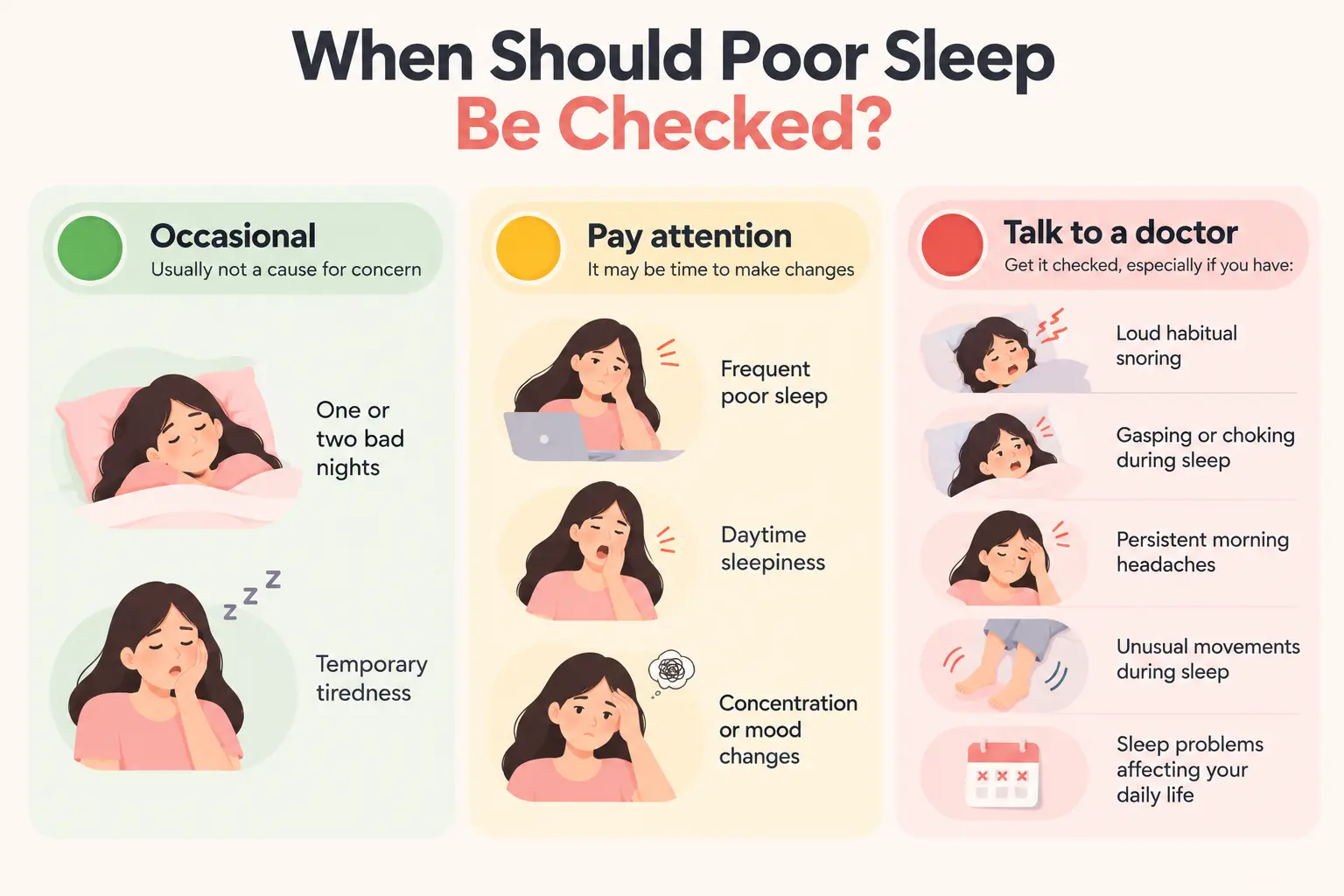
An occasional sleepless night is common and does not always signal a neurological problem. But if you frequently struggle with poor sleep and notice changes in your mood, memory or daily functioning, it is worth paying attention.
Spending eight hours in bed does not mean you are getting good-quality, restorative sleep. Repeated awakenings, an irregular sleep schedule, sleep apnea, restless legs, certain medicines and other factors can interfere with your sleep.
For example, someone who snores heavily, wakes up gasping or has repeated pauses in breathing during sleep may have obstructive sleep apnoea. They may spend enough time in bed but still wake with headaches, daytime sleepiness or difficulty concentrating.
If this sounds familiar, the answer may not be an earlier bedtime alone. The underlying reason for disrupted sleep may need to be checked by a doctor.
If poor sleep has become a regular part of your routine, you do not try to change everything at once. Start by looking at what may be keeping you from getting enough sleep.
Try to go to bed and wake up around the same time each day. Moving your bedtime earlier gradually may be easier than suddenly trying to sleep several hours earlier.
The last part of your evening can affect how easily you fall asleep. If possible, finish demanding work earlier, reduce screen use before bedtime and avoid turning your bed into a place for emails, meetings or work.
Caffeine can help you feel more alert when you are tired, but having too much or consuming it later in the day may make it harder to fall asleep. If you find yourself relying on several cups of coffee to get through the day, it may be worth looking at your sleep routine as well.
Sleeping longer on weekends may help you feel less tired after a few short nights, but it cannot fully replace a regular sleep schedule. Getting adequate sleep consistently is more helpful than repeatedly trying to catch up at the end of the week.
If poor sleep has become a regular concern, you can start with a consultation with an Internal Medicine specialist at the CK Birla Hospital. Our multidisciplinary healthcare team can assess your symptoms, understand possible underlying causes and, if needed, guide you to the appropriate specialist for further evaluation and treatment.
Simply book a consultation with our Internal Medicine team to discuss your sleep concerns.
Written and Verified by:

Similar Neurology Blogs
Request a call back