Understand how prolonged stress can affect blood pressure, blood sugar and overall heart health.
Explore the benefits of regular physical activity, including walking, cycling and swimming.
Learn how quality sleep and healthy eating habits support cardiovascular health.
Discover stress management techniques such as deep breathing, meditation, yoga and mindfulness.
Know which lifestyle habits and preventive heart health checks can help reduce cardiovascular risks.
We know that eating well, staying active and getting regular health checks are good for the heart. But there’s something else that deserves a place in that conversation: how we manage stress.
Think about how a busy week usually goes. Work runs late, meals get pushed back, sleep takes a hit and the time you planned for yourself disappears. You tell yourself you’ll slow down once things settle. But there’s always another deadline, another responsibility or something else that needs your attention.
When this becomes a way of life, it can affect more than your mood. Prolonged stress may influence blood pressure, blood sugar, sleep and the everyday habits that support heart health.
You don’t need to make dramatic changes to your routine. Start with a few things you can actually stick to. Over time, these small steps can make a difference.
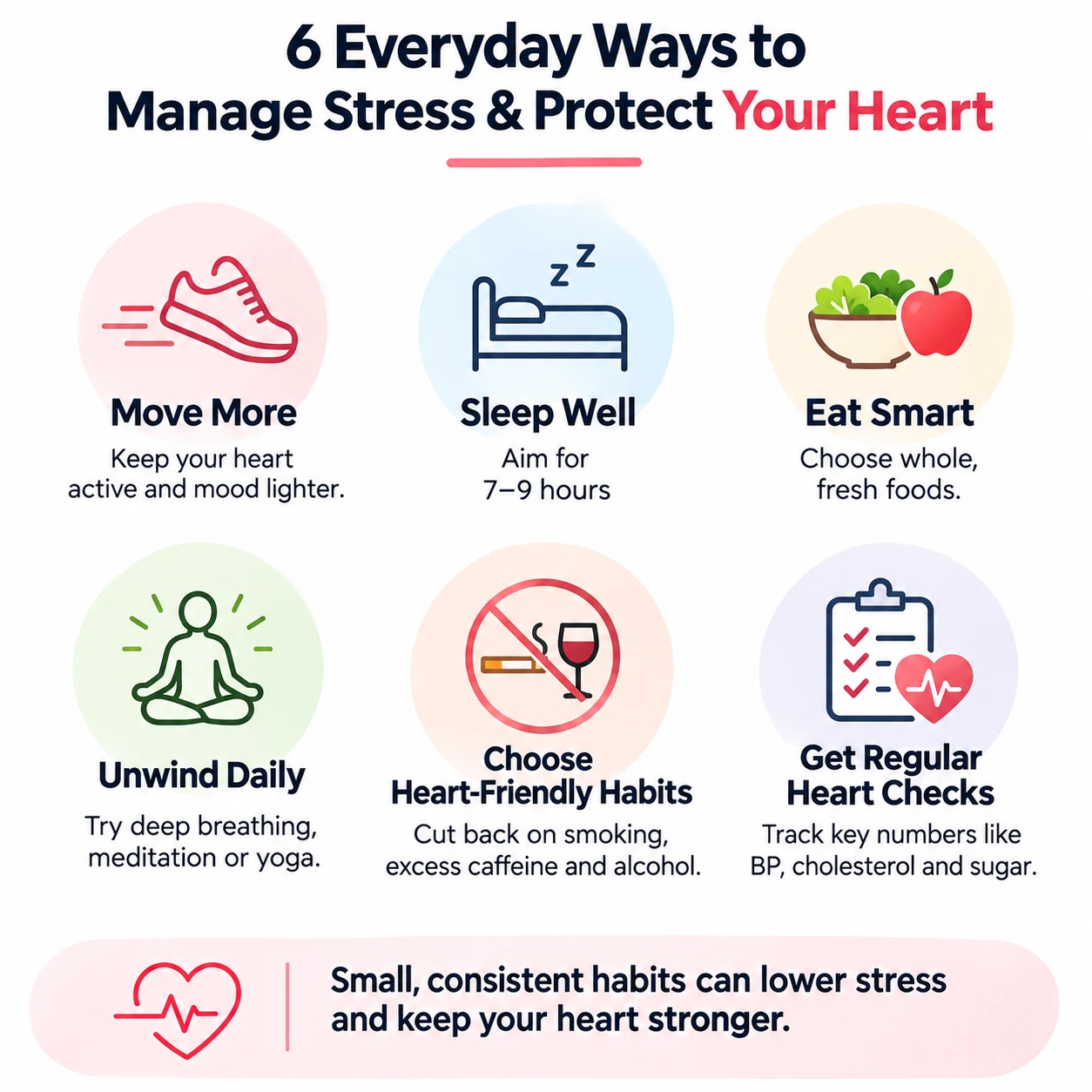
Here are six ways to look after your heart while managing everyday stress.
After a long day, putting on your walking shoes may not sound particularly appealing. But you don’t have to begin with a gym membership or a demanding workout.
A walk around your neighbourhood, a cycling session or a swim can all get you moving. Regular activity helps your heart pump blood more efficiently, supports healthy blood pressure, improves insulin sensitivity and helps maintain a healthy weight. It can also lift your mood and give you a break from whatever has been occupying your mind.
For most adults, the recommended target is:
You can spread this across the week rather than trying to fit it all in at once. A brisk 30-minute walk on most days is a good starting point.
If you have a heart condition or haven’t exercised regularly, check with your doctor before increasing your activity.
One more email, one more episode or a little more time on your phone. It’s easy to let bedtime slip, particularly when the day hasn’t gone as planned.
But sleep isn’t simply downtime. It gives your body time to recover and helps regulate blood pressure, metabolism, appetite and blood sugar. Most adults need around seven to nine hours of sleep each night. Regularly getting less can affect your health and is associated with a higher risk of cardiovascular problems.
A few simple changes may help you sleep better:
There’s another thing worth watching: persistent snoring, waking up gasping or feeling exhausted despite a full night’s sleep. These may be signs of obstructive sleep apnoea, a condition in which breathing repeatedly stops and starts during sleep. It is associated with high blood pressure and abnormal heart rhythms. If these symptoms sound familiar, speak to your doctor about whether a sleep assessment is needed.
When work gets hectic, eating well can quickly become an afterthought. You might skip lunch, grab whatever is available or reach for something sweet to get through the afternoon.
It happens. But when these choices become routine, they can affect your weight, blood sugar and cholesterol.
You don’t need an elaborate diet plan to eat better. Start by making room for more of the foods that support heart health:
Also, keep an eye on how much salt, added sugar and highly processed food you’re eating.
If you have diabetes, high blood pressure or raised cholesterol, your food choices may need to be tailored to your condition. A doctor or qualified dietitian can help you work out what suits you.
Sometimes the hardest part of a busy day is switching off. Even when you’re away from work, your mind may still be going over a conversation, thinking about tomorrow’s tasks or worrying about something you haven’t finished.
That’s why making time to pause matters.
You could try a few minutes of deep breathing, meditation, yoga or mindfulness. You don’t need to get everything right or spend an hour doing it. The aim is simply to give yourself a little breathing space.
Here are a few ways to begin:
Try different approaches and see what feels comfortable. A short daily practice that you enjoy is more likely to become part of your routine than something that feels like another obligation.
And if stress, anxiety or low mood is affecting your sleep, relationships or everyday life, consider speaking to a mental health professional. You don’t have to manage everything on your own.
Stress doesn’t always show up as worry or restlessness. Sometimes it shows up in our habits.
You may find yourself smoking more often, drinking more frequently, relying on coffee to stay alert or skipping exercise because you’re too tired. These changes can be easy to overlook when you’re already dealing with a lot.
Over time, smoking, excess alcohol, poor sleep and inactivity can affect blood pressure, cholesterol and heart health. Too much caffeine may also cause palpitations or disturb sleep in some people.
Rather than trying to change everything at once, pick one habit that you’d like to work on.
For example:
The changes don’t have to be perfect. What matters is finding healthier ways to deal with stress that you can maintain over time.
Feeling fine doesn’t always mean everything is fine. High blood pressure, raised cholesterol and elevated blood sugar can develop without noticeable symptoms.
That’s why preventive health checks are important, particularly if you have other cardiovascular risk factors.
Depending on your age, medical history and symptoms, your doctor may recommend:
You may not need all these tests. Your doctor can recommend the right assessments and how often you should have them.
If you have diabetes, high blood pressure, high cholesterol, a family history of premature heart disease or a previous cardiac condition, make sure you discuss a preventive care plan with your doctor.
A racing heartbeat after a stressful day may seem harmless, but recurring symptoms deserve attention. Stress can cause physical reactions, but similar symptoms can also have a cardiac cause.
Speak to a doctor if you experience repeated palpitations, unexplained fatigue, breathlessness or a noticeable change in your ability to exercise.
Don’t wait for a routine appointment if you have chest pressure or pain, sudden severe breathlessness, fainting or discomfort spreading to your arm, jaw or back. Seek emergency medical attention. These symptoms should never be dismissed as stress or anxiety.
There will always be weeks when work is demanding, family needs your attention and life doesn’t quite go to plan. You may not be able to remove every source of stress, but you can make a few changes to how you look after yourself.
Take that walk. Get enough sleep. Make time for a proper meal. Find something that helps you unwind. And don’t keep postponing your routine health checks.
Managing stress won’t replace medical care, but it can be an important part of looking after your cardiovascular health.
Looking after your heart isn’t just about what you eat or how much you exercise. It’s also about giving your body enough time to rest, recover and cope with everyday pressures.
For guidance on cardiovascular risk assessment and preventive heart care, consult the cardiology specialists at CK Birla Hospital.
Written and Verified by:

Similar Cardiology Blogs
Request a call back


