Understand how chronic stress triggers the body's fight-or-flight response and affects heart health.
Explore five ways prolonged stress can impact the heart, including high blood pressure and impaired blood circulation.
Learn how stress hormones such as cortisol and adrenaline influence blood sugar, inflammation and cardiovascular function.
Discover the connection between chronic stress, blood clotting and increased cardiovascular risk.
Understand how lifestyle changes, regular health check-ups and stress management can help protect your heart.
A demanding day at work, financial worries, family responsibilities or simply trying to keep up with everything life throws at you. Stress has become so familiar that many of us barely stop to think about it.
You may notice your heart beating faster during an argument or feel your pulse quicken before an important meeting. These are common responses to stress. But what happens when that feeling doesn’t go away? Can being under constant pressure for months or years affect your heart? The answer is worth paying attention to.
Stress doesn’t automatically lead to heart disease, but prolonged psychological stress can influence several factors that affect cardiovascular health, including blood pressure, blood vessel function, inflammation and blood sugar levels.
Here’s a closer look at what happens inside your body and why managing stress is also an important part of looking after your heart.
Think about how your body reacts when something suddenly startles you. Your heart starts racing, your breathing becomes quicker and you may feel a rush of energy. This is your body’s natural fight-or-flight response.
When your brain senses a threat or stressful situation, it signals the release of hormones such as adrenaline and noradrenaline. These hormones make your heart beat faster and contract more forcefully. They also narrow certain blood vessels, causing your blood pressure to rise and directing more blood towards your muscles.
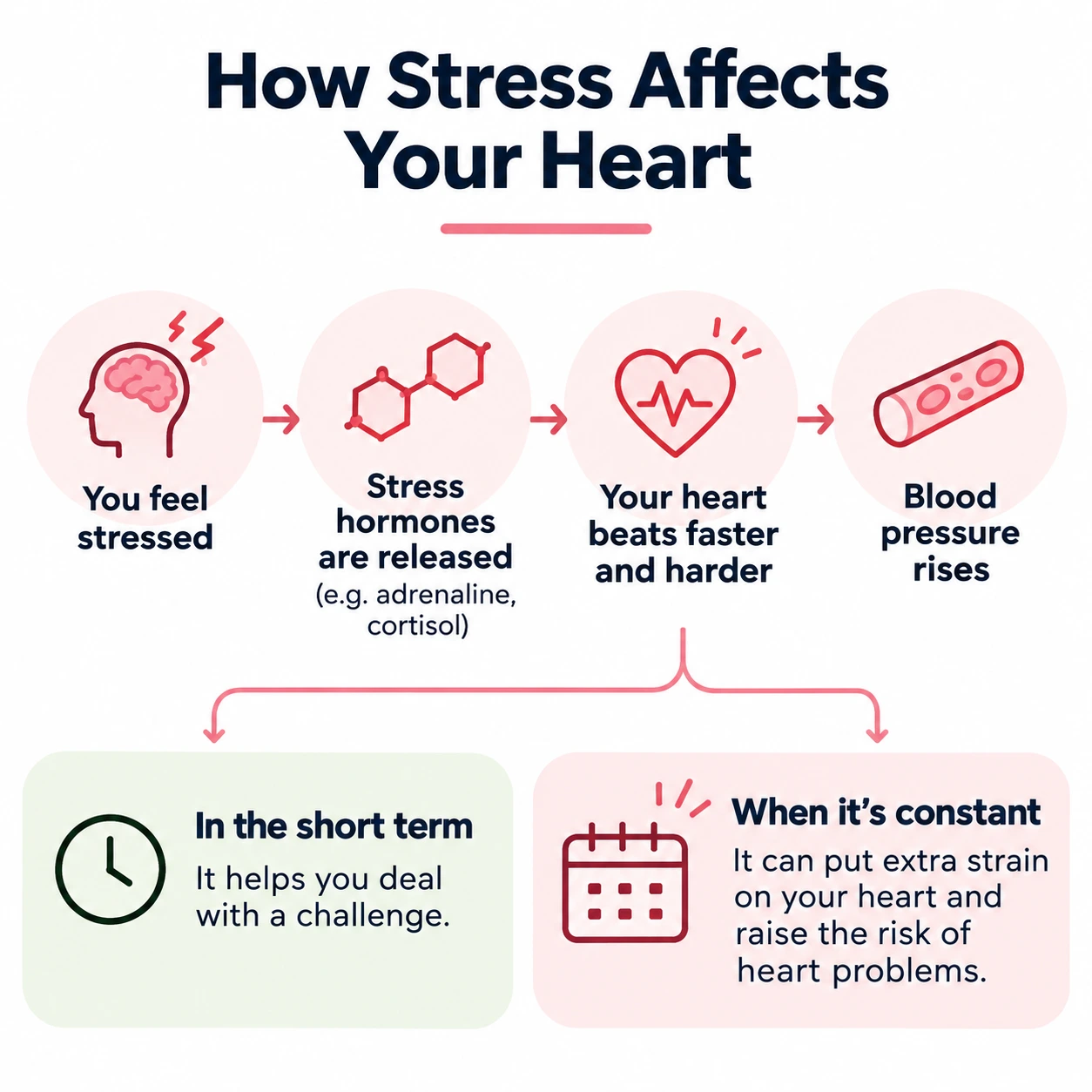
Another hormone involved in this response is cortisol. Released through the hypothalamic-pituitary-adrenal (HPA) axis, cortisol helps regulate metabolism, blood sugar and the body’s response to stress.
In the short term, this response is useful. It helps you deal with a difficult situation and usually settles once the immediate pressure has passed.
The problem is that everyday stress doesn’t always come with a clear beginning or end. Work deadlines, financial concerns, caregiving responsibilities and ongoing personal challenges can keep the body in a heightened state of alertness. When this happens repeatedly, the effects may begin to show up in your cardiovascular health.
Have you noticed your heart racing when you’re anxious or upset? Your blood pressure may rise at the same time.This happens because stress hormones temporarily increase your heart rate and narrow certain blood vessels.
These short-lived changes are usually normal. However, when stress responses happen frequently, they may add to the strain on your cardiovascular system.
The relationship between chronic stress and long-term high blood pressure is still being studied. Stress can also affect the habits that influence blood pressure, such as sleep, physical activity, eating patterns and alcohol or tobacco use.
Why does this matter? High blood pressure puts extra pressure on artery walls and makes the heart work harder. If it remains uncontrolled over time, it can increase the risk of coronary artery disease, heart failure and stroke.
Your blood vessels do much more than carry blood around the body. They constantly adjust their width to regulate blood flow and maintain healthy circulation. This process is partly controlled by the autonomic nervous system, which manages functions such as heart rate and blood vessel activity without requiring conscious effort.
Chronic stress may disturb the balance between the sympathetic nervous system, which prepares the body for action, and the parasympathetic nervous system, which helps it return to a resting state.
It may also affect the endothelium, the thin layer of cells lining the inside of blood vessels. A healthy endothelium helps blood vessels relax and respond to changes in blood flow.
When endothelial function is impaired, blood vessels may not respond as effectively. Over time, this can contribute to processes associated with atherosclerosis, where fatty deposits build up inside the arteries.
Inflammation is the body’s natural response to injury or infection. It helps protect us, but persistent inflammatory activity can become harmful.
Research suggests that prolonged psychological stress may influence the body’s inflammatory and immune responses. It may also affect platelet activity. Platelets are tiny blood components that help stop bleeding by forming clots.
Why is this relevant to heart health?
In people with coronary artery disease, fatty plaques can sometimes become unstable and rupture. A blood clot may then form at the site and block blood flow to the heart muscle, resulting in a heart attack.
Stress is not the sole cause of plaque build-up or blood clots. However, its effects on inflammation and other biological processes may form part of the wider picture of cardiovascular risk.
Stress doesn’t just affect your heart rate. It can also influence how your body manages energy.
When you’re under stress, cortisol helps make more glucose available to meet the body’s immediate energy needs. This is a normal response. But prolonged changes in stress-hormone signalling may affect how the body regulates blood sugar and responds to insulin.
Over time, this may be particularly relevant for people who already have insulin resistance, prediabetes, diabetes or abdominal obesity.
These conditions are important cardiovascular risk factors in their own right. For example, persistently high blood sugar can damage blood vessels and increase the risk of heart disease.
This is why managing metabolic health through appropriate medical care, nutrition and physical activity is just as important as addressing stress itself.
When your heart beats faster and blood pressure rises, your heart muscle needs more oxygen to keep working.
For someone with healthy coronary arteries, these temporary changes are generally well tolerated. But the situation can be different for someone who already has narrowed coronary arteries.
In such cases, the heart may not receive enough oxygen-rich blood to meet the increased demand. This is known as myocardial ischaemia and can cause chest discomfort or angina.
This helps explain why emotional stress can sometimes bring on chest discomfort in people with existing coronary artery disease. It is also a reminder not to dismiss new or unexplained chest symptoms as anxiety.
Research increasingly points to a link between prolonged psychological stress and cardiovascular disease. But stress is only one part of the picture. It doesn’t affect everyone in the same way, and it should not be considered a standalone cause of heart disease.
Other factors matter too: smoking, high blood pressure, diabetes, high cholesterol, physical inactivity, age and family history. In many people, more than one risk factor is present.
That’s why a cardiac assessment should consider your overall health rather than focus on stress or an individual symptom in isolation.
Stress is a part of life. You may not always be able to avoid it, but you can take steps to manage how it affects your health.
When stress becomes a constant presence, its effects may extend beyond your mental well-being. Blood pressure, circulation, inflammation and metabolic health can all be affected.
If you have high blood pressure, diabetes, high cholesterol or a family history of heart disease, it’s worth discussing your cardiovascular risk with a doctor. Managing stress can be one part of a wider plan that also includes regular physical activity, adequate sleep, balanced nutrition and appropriate medical care.
Your heart responds to more than physical exertion. The way your body handles prolonged stress matters too.
For an assessment of your cardiovascular health and guidance on managing your risk factors, consult the cardiology specialists at CK Birla Hospital.
Written and Verified by:

Similar Cardiology Blogs
Request a call back


