Filter :

HCG (Human Chorionic Gonadotropin) is a pregnancy hormone produced by the placenta, and its levels help doctors track how your pregnancy is progressing. Monitoring HCG can also indicate concerns like miscarriage risk, multiple pregnancy, or ectopic pregnancy if levels rise too slowly or abnormally.

Sciatica occurs when the sciatic nerve is compressed, causing radiating pain from the lower back to the legs with possible numbness or weakness. Regular stretching exercises can help reduce discomfort and improve mobility.
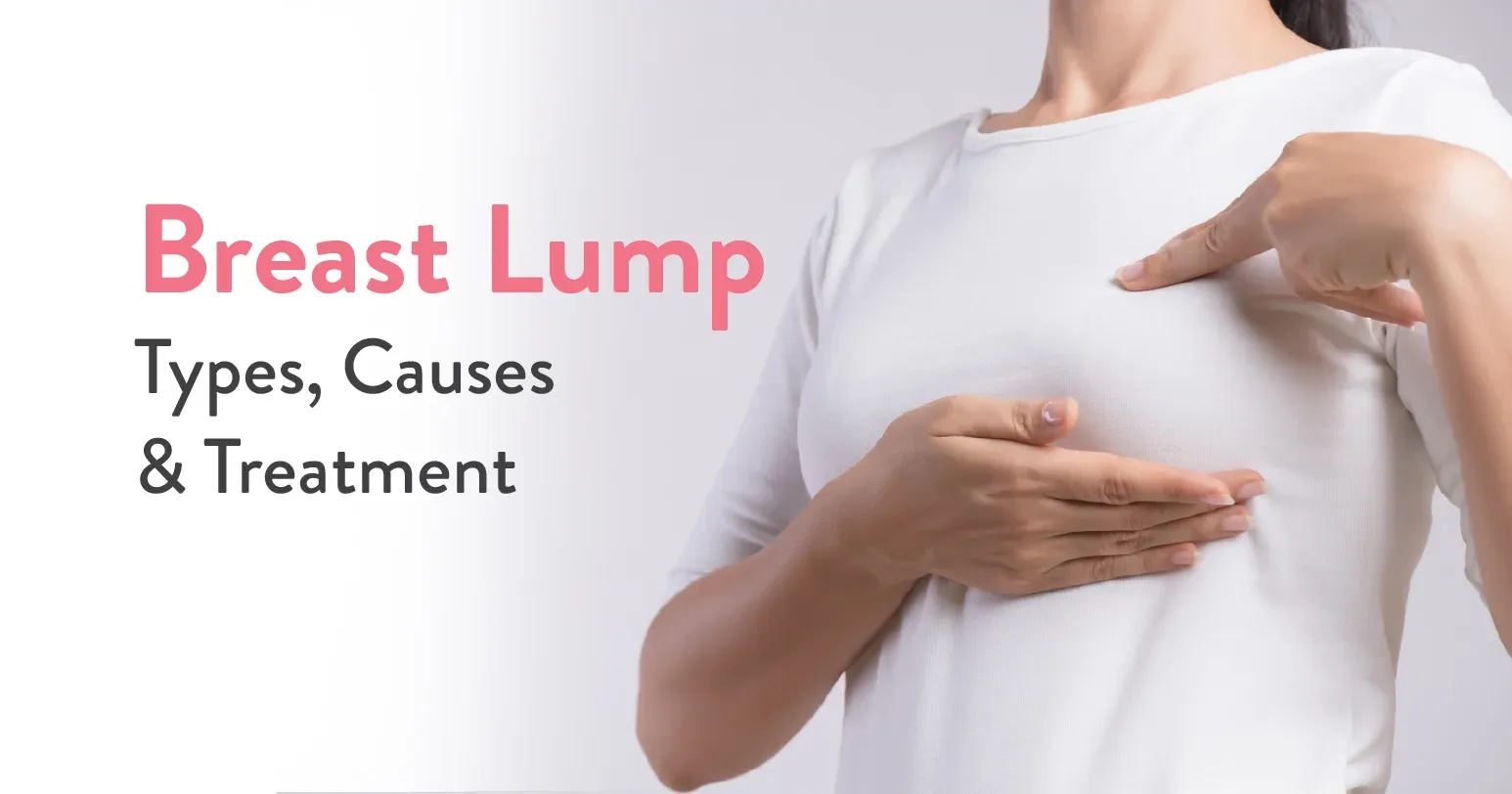
A breast lump is a swelling or growth in the breast tissue that may feel hard, soft, smooth, or movable, and can occur due to cysts, infections, or other conditions. Although breast lumps can be a sign of cancer, most (around 80%) are non-cancerous and still require timely medical evaluation if persistent or unusual.
According to the Centers for Disease Control and Prevention (CDC), more than a million people worldwide are infected with leptospirosis every year. Yet most people have never heard of it until a doctor mentions it after a fever that won’t go away or after wading through a flooded street back home during monsoon. With the rainy season already here, it is important to know what this infection is and how to recognise it early. Keep reading to know more!
Table of Contents
Leptospirosis is a bacterial infection caused by a group of corkscrew-shaped bacteria called Leptospira. It is classified as a zoonotic disease, meaning it passes from animals to humans. Rodents, cattle, dogs, pigs and other mammals can carry the bacteria in their kidneys and shed it through their urine, usually without appearing sick themselves.
The World Health Organization describes leptospirosis as a zoonotic disease with epidemic potential, particularly after heavy rainfall, that people pick up through direct contact with infected animal urine or a urine contaminated environment.
This makes the disease especially common in areas with poor sanitation, stagnant water and flooding. If you live in a city that experiences monsoon flooding or has stray animals and open drains nearby, your risk of exposure may be higher, as these conditions create an environment where the bacteria can spread more easily.
It is true that leptospirosis spreads from animals to humans, but direct contact with an infected animal is not usually necessary. What actually causes infection is exposure to water or soil the animal’s urine has contaminated.
The bacteria enter the body through broken skin, even a minor cut or scrape or through the soft tissue of the eyes, nose or mouth. Standing water and damp soil are the most common carriers, which explains why such cases rise after floods.
When floodwater spreads, so does the contamination, putting anyone who wades through it, cleans up after it or walks barefoot through it at greater risk.
Certain occupations and living situations face higher exposure. Farmers, sewer workers, veterinarians, dairy workers and field or military personnel are all in regular contact with soil, water or animals as part of the job. This naturally raises their risk of getting affected with such infection.
Where you live also impacts your risk of getting affected. Areas with poor drainage, frequent flooding or a large rodent population (common in both urban slums during monsoon and rural areas near livestock) see higher exposure regardless of occupation.
As mentioned earlier, leptospirosis is caused by leptospira bacteria, which are commonly found in the urine of infected animals. The bacteria can survive for weeks or even months in fresh water, wet soil and muddy environments, especially in warm and humid conditions.
Some common sources of infection are:
Leptospirosis is not usually spread from one person to another. Rare cases of human-to-human transmission have been reported through breastfeeding, sexual contact and from a pregnant mother to her baby.
Its early symptoms look almost identical to the flu. Some common early symptoms you may notice are:
In some cases, the infection progresses to a more serious form known as severe leptospirosis (Weil’s disease). This can affect multiple organs and requires immediate medical attention.
Symptoms of severe leptospirosis are:
The illness usually unfolds in two phases:
Mild cases (outpatient):
Severe cases (hospitalization required):
Key points:
If you are suffering with fever, chills or body aches within a month of wading through floodwater, working outdoors or handling animals, it is best not to assume a routine viral fever. A consultation with an internal medicine doctor or infectious disease specialist can help catch it early.
Because the early symptoms mimic so many other illnesses such as dengue, malaria, influenza and typhoid, diagnosis leans heavily on two things together:
To confirm the diagnosis, your doctor may recommend:
Prevention from this infection is mostly about reducing contact between broken skin and potentially contaminated water or soil. A few simple tips may help:
From a distance, leptospirosis seems like just another flu-like illness, easy to lump in with dengue, influenza or malaria. But it has its own distinct pattern, signs and treatment path. Knowing the difference helps you catch it early. It responds well to treatment and most people recover fully.
If you have recently been exposed to floodwater or animals and notice a fever that does not seem to follow the usual pattern, the internal medicine doctors and infectious disease specialists at the CK Birla Hospital can help you get a clear diagnosis and the right treatment, without delay. Book a consultation to get expert advice!
“बस यह आखिरी सिगरेट है”, यह वाक्य शायद हर उस इंसान ने खुद से सैकड़ों बार कहा होगा, जो धूम्रपान छोड़ने की कोशिश कर रहा है। कुछ घंटे, कुछ दिन निकल भी जाते हैं, लेकिन फिर वही बेचैनी, वही तलब लौट आती है, और हाथ फिर से सिगरेट तक पहुंच जाता है। अगर आप भी इस चक्र से गुजर चुके हैं, तो सबसे पहले यह समझ लीजिए, यह आपकी कमजोर इच्छाशक्ति नहीं, बल्कि निकोटीन की लत का असली और वैज्ञानिक असर है। यह लत सिर्फ आदत नहीं, बल्कि दिमाग की रसायन विज्ञान से जुड़ी एक जटिल प्रक्रिया है, और यही वजह है कि इसे अकेले छोड़ना ज्यादातर लोगों के लिए इतना कठिन साबित होता है।
इस ब्लॉग में हम समझेंगे कि आखिर धूम्रपान छोड़ना इतना मुश्किल क्यों लगता है, और इसे आसान बनाने के असरदार तरीके क्या हैं। अगर आप या आपका कोई अपना धूम्रपान की लत से जूझ रहा है, तो अकेले जूझने की जरूरत नहीं, हमारे अनुभवी विशेषज्ञों से मिलकर सही मार्गदर्शन और सहयोग पाएं, आज ही अपॉइंटमेंट बुक करें।
Table of Contents
सिगरेट में मौजूद निकोटीन कुछ ही सेकंड में दिमाग तक पहुंच जाता है और डोपामिन नाम के “फील गुड” रसायन को रिलीज करता है। समय के साथ दिमाग इस डोपामिन रिलीज का आदी हो जाता है, और जब निकोटीन नहीं मिलता तो दिमाग असंतुलित महसूस करने लगता है। यही वजह है कि धूम्रपान छोड़ना सिर्फ आदत बदलने जितना आसान नहीं, बल्कि यह मस्तिष्क की एक वास्तविक रासायनिक निर्भरता से लड़ने जैसा है। इसके साथ ही सिगरेट पीने का समय, जगह और मूड से जुड़ाव भी एक व्यावहारिक लत बना देता है, जैसे चाय के साथ सिगरेट या तनाव में सिगरेट पीने की आदत। यही दोहरी लत, शारीरिक और मानसिक, इसे छोड़ना इतना चुनौतीपूर्ण बना देती है।
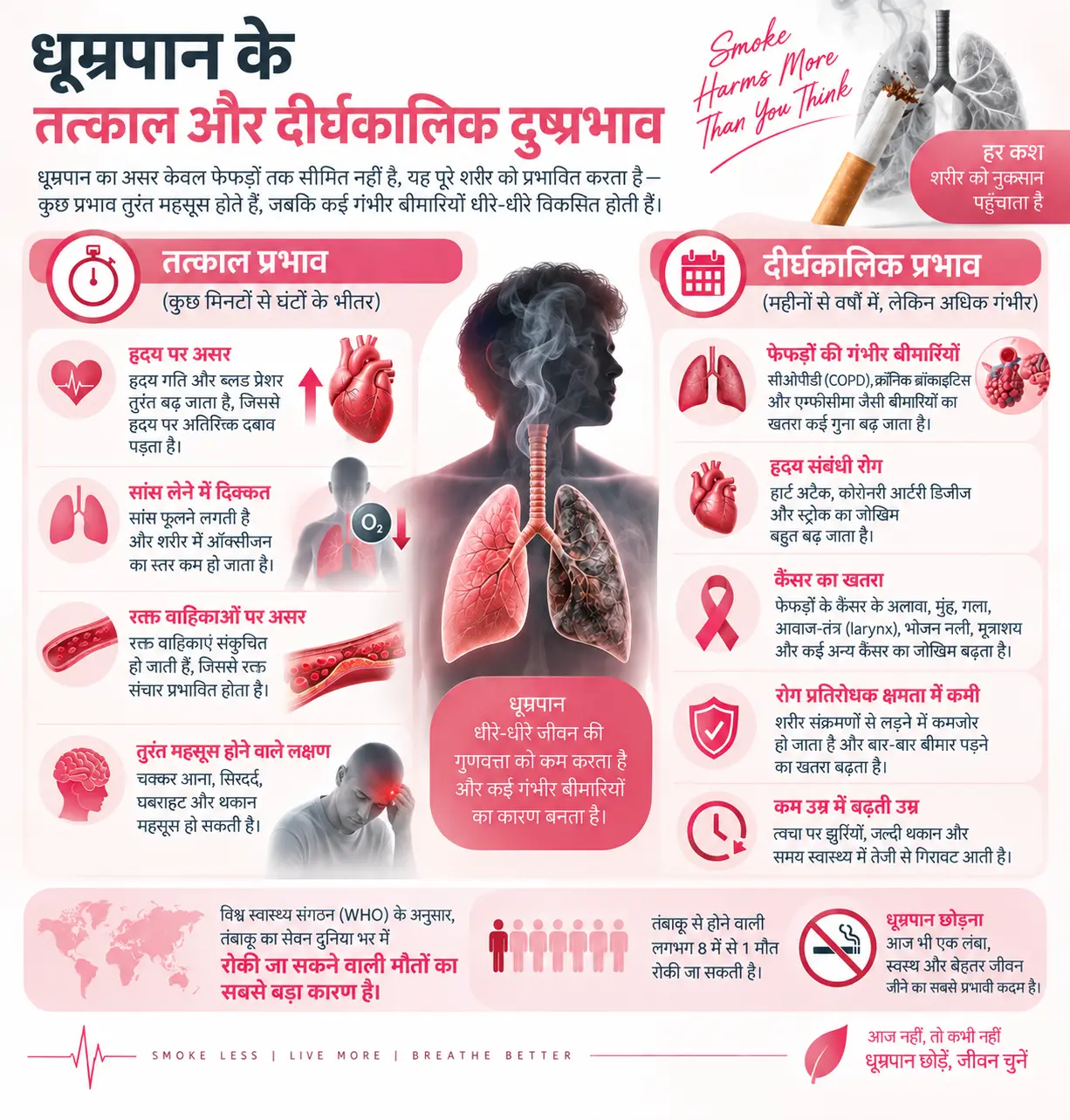
नोट: विश्व स्वास्थ्य संगठन (WHO) के अनुसार, तंबाकू का सेवन दुनिया भर में रोकी जा सकने वाली मौतों का सबसे बड़ा कारण है।
जब कोई व्यक्ति धूम्रपान छोड़ता है, तो शरीर निकोटीन की कमी के प्रति प्रतिक्रिया देना शुरू करता है, जिसे निकोटीन विदड्रॉअल कहा जाता है। आमतौर पर ये लक्षण छोड़ने के कुछ घंटों के भीतर शुरू होकर पहले तीन दिनों में सबसे तेज महसूस होते हैं –
ज्यादातर मामलों में ये लक्षण दो से चार हफ्तों के भीतर धीरे-धीरे कम होने लगते हैं, हालांकि हल्की तलब कई महीनों तक भी बनी रह सकती है। यह समझना जरूरी है कि यह विथड्रॉवल खतरनाक नहीं, बल्कि शरीर के ठीक होने की प्रक्रिया का हिस्सा है।
स्मोकिंग छोड़ने का कोई एक निश्चित तरीका नहीं होता। हर किसी का रूटीन और आदतें अलग होती हैं, इसलिए वही तरीका चुनें जो आपके लिए सबसे सही बैठे।
डॉक्टर की सलाह और निकोटीन थेरेपी (NRT) निकोटीन गम, पैच या इनहेलर आपके शरीर को सिगरेट के धुएं और जहरीले केमिकल्स के बिना बहुत हल्की मात्रा में निकोटीन देते हैं। इससे तलब कंट्रोल में रहती है। रिसर्च के अनुसार NRT से स्मोकिंग छूटने की संभावना काफी बढ़ जाती है। अगर आदत बहुत पुरानी है, तो डॉक्टर कुछ ऐसी दवाएं भी लिख सकते हैं जो दिमाग में सिगरेट की इच्छा को कम करती हैं। कोई भी दवा या थेरेपी बिना डॉक्टर की सलाह के शुरू न करें।
आदतों पर कंट्रोल और अपनों का साथ सिगरेट छोड़ना सिर्फ शरीर की नहीं, दिमाग की भी लड़ाई है। सबसे पहले अपने ट्रिगर्स पहचाने, जैसे तनाव में, चाय-कॉफी के साथ, ऑफिस ब्रेक में या दोस्तों के बीच सिगरेट पीने की इच्छा होना। इन ट्रिगर्स से बचने के लिए अपनी आदतें बदलें। फैमिली और दोस्तों का सपोर्ट लें और अपना माइंडसेट पक्का रखें। जब सही आदतों के साथ निकोटीन थेरेपी का सहारा लिया जाता है, तो सफलता मिलना काफी आसान हो जाता है।
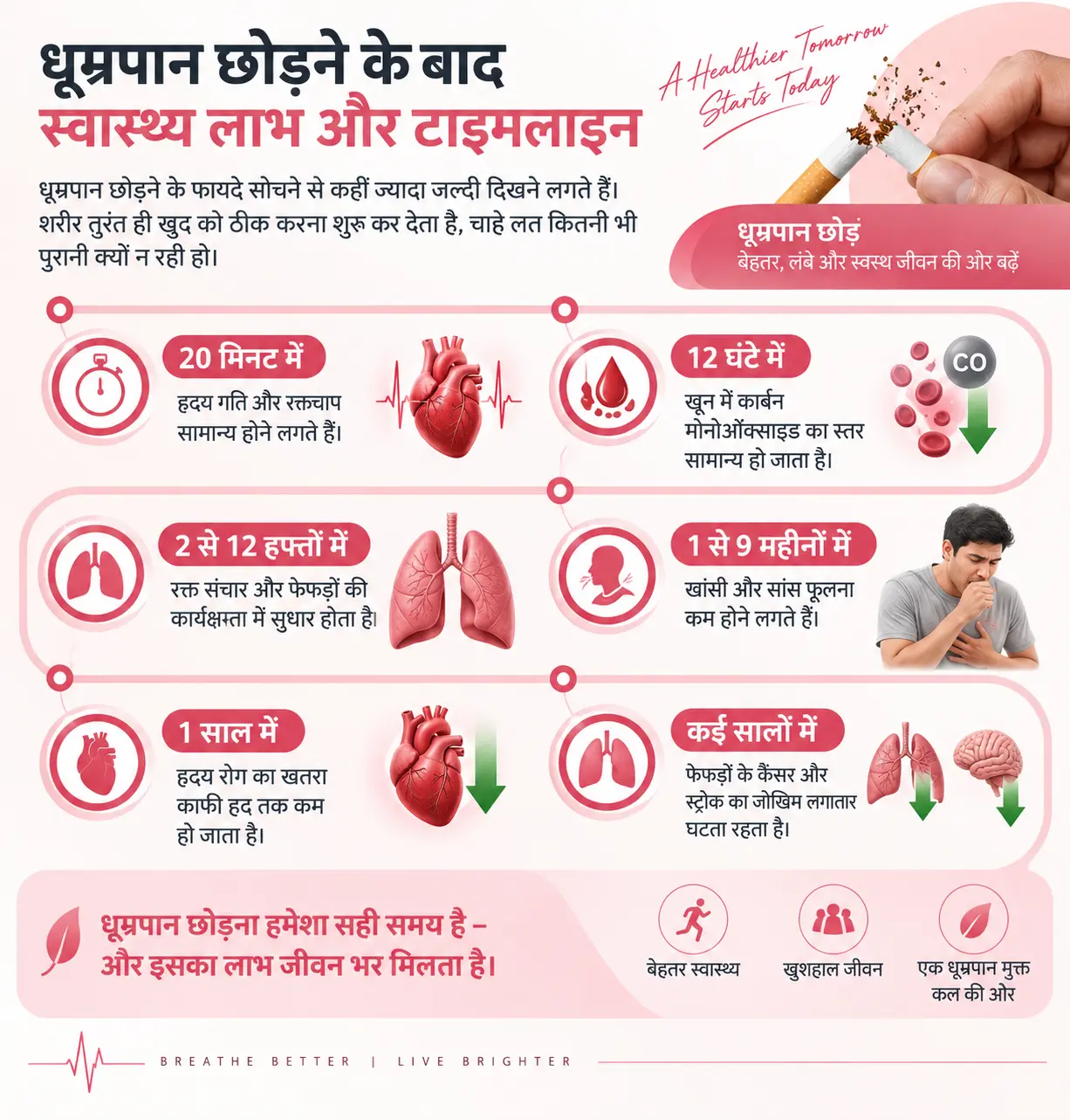
धूम्रपान छोड़ने के फायदे सोचने से कहीं ज्यादा जल्दी दिखने लगते हैं –
यह टाइमलाइन दिखाती है कि शरीर धूम्रपान छोड़ने के तुरंत बाद ही खुद को ठीक करना शुरू कर देता है, चाहे लत कितनी भी पुरानी क्यों न रही हो।
एक आम गलतफहमी यह है कि निकोटीन की लत सिर्फ शारीरिक होती है, और अगर शरीर से निकोटीन निकल जाए तो लत खत्म हो जाती है। लेकिन सच्चाई इससे कहीं ज्यादा व्यापक है। निकोटीन की लत मानसिक और व्यवहारिक स्तर पर भी उतनी ही गहरी होती है, जितनी शारीरिक स्तर पर। यही वजह है कि सिर्फ शरीर से निकोटीन साफ हो जाने के बाद भी कई बार पुरानी आदतें, तनाव या सामाजिक स्थितियां दोबारा सिगरेट की तरफ खींच सकती हैं। इसलिए सफल और स्थायी रूप से धूम्रपान छोड़ने के लिए शारीरिक और मानसिक, दोनों पहलुओं पर काम करना जरूरी है।
अगर छोड़ने के बाद दोबारा सिगरेट पीने की स्थिति बन भी जाए, तो इसे असफलता मानने की बजाय सीखने का मौका समझें। ज्यादातर लोग धूम्रपान पूरी तरह छोड़ने से पहले कई बार कोशिश करते हैं, और हर कोशिश उन्हें अगली बार ज्यादा तैयार बनाती है। ट्रिगर्स को पहचानना, तनाव प्रबंधन के तरीके सीखना और जरूरत पड़ने पर फिर से विशेषज्ञ की मदद लेना, यह सब प्रक्रिया का हिस्सा है। खुद के प्रति सख्त होने की बजाय धैर्य रखना, दोबारा प्रयास की सफलता की संभावना को काफी बढ़ा देता है।
धूम्रपान छोड़ना आसान नहीं, लेकिन असंभव भी नहीं है। यह समझना जरूरी है कि यह सिर्फ इच्छाशक्ति की कमी नहीं, बल्कि दिमाग और शरीर दोनों में बनी एक गहरी निर्भरता है, जिसे सही जानकारी, सही सहयोग और सही योजना से दूर किया जा सकता है। अगर आप या आपका कोई अपना धूम्रपान की लत से बाहर निकलने की कोशिश कर रहा है, तो हमारे अस्पताल के अनुभवी विशेषज्ञ आपकी पूरी मदद कर सकते हैं। आप दोनों में से किसी भी सेंटर पर जाकर सही जांच, सही सलाह और सही सहयोग पा सकते हैं, अपनी सेहत की दिशा में यह पहला कदम आज ही उठाएं।
कभी-कभी हमारे मां कुछ चीजें एक जगह पर रख कर भूल जाती हैं। हो सकता है कि ये कोई सामान्य बात हो या फिर उम्र का पड़ाव हो, लेकिन ऐसी ही समस्या अब हर उम्र के लोगों में बहुत ज्यादा देखने को मिल रही है। शुरुआत में लगता है, “बड़े होने पर तो भूलना आम बात है।” लेकिन जब भूलना रोज़मर्रा की ज़िंदगी को उलझाने लगे, अपनों के चेहरे धुंधले पड़ने लगें, तो यह सिर्फ उम्र का असर नहीं, बल्कि एक गंभीर मस्तिष्क रोग का संकेत हो सकता है।
भारत में इस वक्त करीब 5.3 मिलियन (53 लाख) लोग डिमेंशिया के साथ जी रहे हैं, और यह संख्या 2050 तक लगभग तीन गुनी होने का अनुमान है। यही वजह है कि सही समय पर सही जानकारी होना बीमारी से लड़ने की पहली सीढ़ी बन जाता है। इस ब्लॉग में हम अल्जाइमर रोग को हर एंगल से समझेंगे, कारण से लेकर इलाज तक। अगर आपको या आपके किसी अपने में ऐसे लक्षण नज़र आ रहे हैं, तो देर मत कीजिए, हमारे अनुभवी स्पेशलिस्ट से अपॉइंटमेंट बुक करें और सही दिशा में पहला कदम उठाएं।
Table of Contents
अल्जाइमर रोग (Alzheimer’s disease) एक धीरे-धीरे बढ़ने वाली न्यूरोडिजेनरेटिव बीमारी है, यानी वो बीमारी जिसमें मस्तिष्क की कोशिकाएं धीरे-धीरे कमज़ोर होकर नष्ट होने लगती हैं। यह मनोभ्रंश रोग या डिमेंशिया (dementia) का सबसे आम प्रकार है और दुनियाभर में डिमेंशिया के कुल मामलों में इसकी हिस्सेदारी लगभग 60 से 80 प्रतिशत तक है। सीधे शब्दों में कहें तो हर डिमेंशिया अल्जाइमर नहीं होता, पर ज़्यादातर अल्जाइमर के मरीज डिमेंशिया की श्रेणी में आते हैं।
यह बीमारी सबसे पहले याददाश्त को प्रभावित करती है, फिर धीरे-धीरे सोचने, बोलने, फैसले लेने और रोज़मर्रा के काम करने की क्षमता को भी छीनने लगती है। दिलचस्प बात यह है कि शुरुआती दौर में मरीज पुरानी बातें बखूबी याद रख पाता है, लेकिन कल क्या खाया या किससे मिला, यह भूल जाता है। यही विरोधाभास इसे सामान्य भूलक्कड़पन से अलग बनाता है।
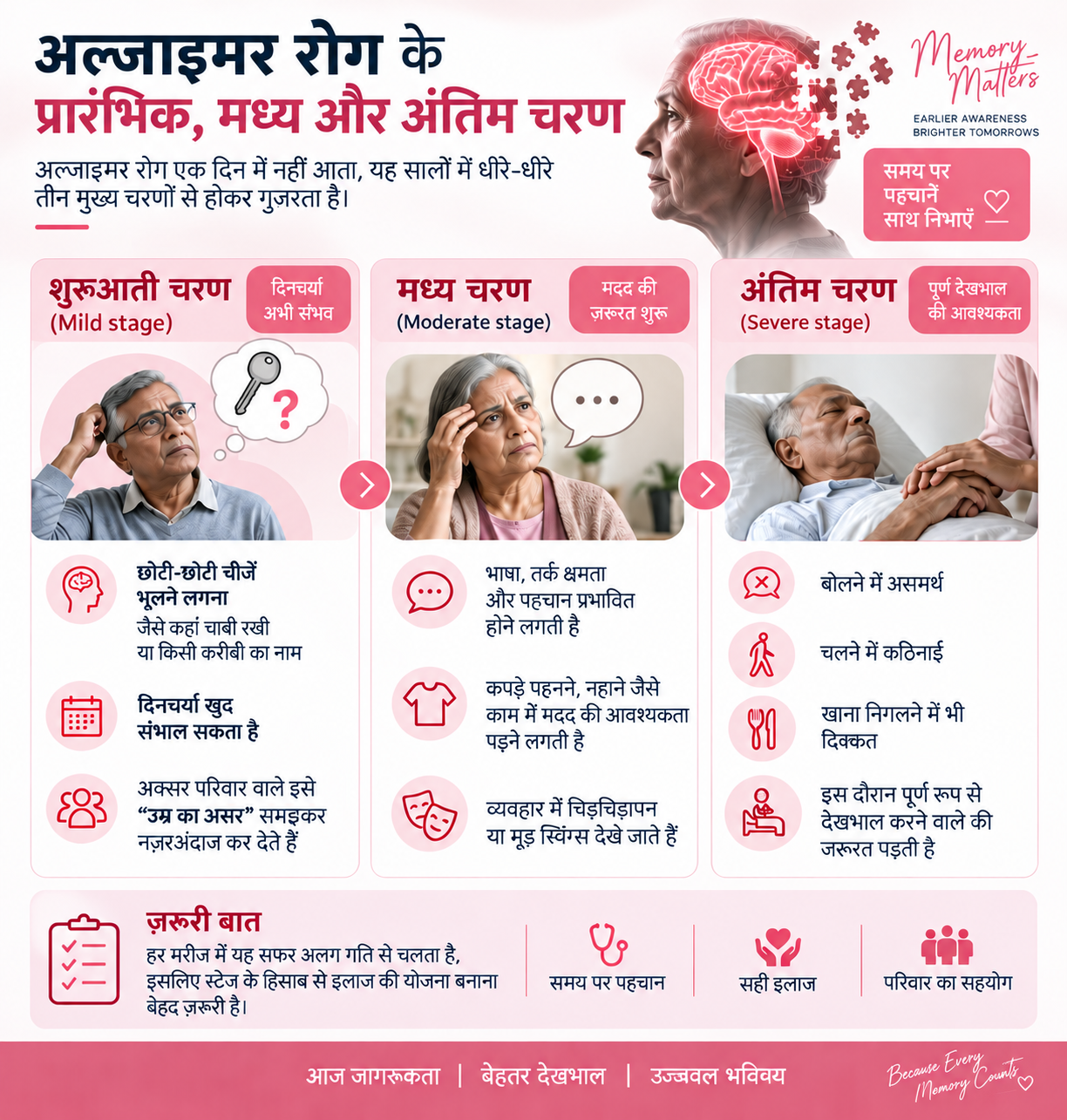
अल्जाइमर रोग एक दिन में नहीं आता, यह सालों में धीरे-धीरे तीन मुख्य चरणों से होकर गुज़रता है।
हर मरीज में यह सफर अलग गति से चलता है, इसलिए स्टेज के हिसाब से इलाज की योजना बनाना बेहद ज़रूरी है।
अल्जाइमर रोग के लक्षण अक्सर इतने मामूली होते हैं कि लोग उन्हें पहचान ही नहीं पाते। कुछ आम संकेत इस तरह हैं –
अगर आपके घर में किसी बुज़ुर्ग में ये लक्षण बार-बार दिख रहे हैं, तो इसे “उम्र होने पर ऐसा होता ही है” कहकर टालना खतरनाक साबित हो सकता है। समय पर पहचान से इलाज की दिशा बदल सकती है।
अभी तक अल्जाइमर रोग के होने का कोई एक निश्चित कारण साबित नहीं हुआ है, पर रिसर्च बताती है कि यह मस्तिष्क में एमिलॉयड प्लाक (amyloid plaques) और टाऊ टैंगल्स (tau tangles) नाम की असामान्य प्रोटीन संरचनाओं के जमा होने से जुड़ा है, जो धीरे-धीरे न्यूरॉन्स (तंत्रिका कोशिकाओं) को नुकसान पहुंचाती हैं।
कुछ जोखिम कारक इस बीमारी की आशंका बढ़ा देते हैं –
एक अहम बात यह है कि विशेषज्ञों के अनुसार करीब 40 प्रतिशत डिमेंशिया के मामलों को जीवनशैली में सुधार लाकर टाला या देर किया जा सकता है, यानी यह बीमारी पूरी तरह किस्मत के भरोसे नहीं छोड़ी जा सकती।
निदान की प्रक्रिया में कई चरण शामिल होते हैं, क्योंकि सिर्फ एक टेस्ट से यह बीमारी कन्फर्म नहीं होती। डॉक्टर आमतौर पर इन तरीकों को मिलाकर आकलन करते हैं –
एक बात साफ समझ लेनी चाहिए, अभी तक अल्जाइमर रोग का कोई स्थायी इलाज उपलब्ध नहीं है। लेकिन इसका मतलब यह बिल्कुल नहीं कि कुछ किया नहीं जा सकता। सही उपचार लक्षणों को नियंत्रित करने और बीमारी की रफ्तार धीमी करने में काफी असरदार साबित होता है।
हर मरीज की दवा और थेरेपी उसकी स्टेज, उम्र और अन्य बीमारियों को ध्यान में रखकर तय की जाती है, इसलिए बिना विशेषज्ञ की सलाह के कोई भी दवा शुरू करना उचित नहीं।
अल्जाइमर की रोकथाम की गारंटी कोई नहीं दे सकता, पर जोखिम घटाने के रास्ते ज़रूर मौजूद हैं। रोज़मर्रा की आदतों में यह बदलाव मस्तिष्क को लंबे समय तक सक्रिय रख सकते हैं –
छोटी लगने वाली ये आदतें लंबे समय में मस्तिष्क की सेहत पर बड़ा फर्क डालती हैं।
अल्जाइमर सिर्फ मरीज की बीमारी नहीं होती, यह पूरे परिवार की परीक्षा बन जाती है। देखभाल करने वाले अक्सर थकान, चिड़चिड़ापन और भावनात्मक तनाव से गुज़रते हैं, और यह बिल्कुल सामान्य है।
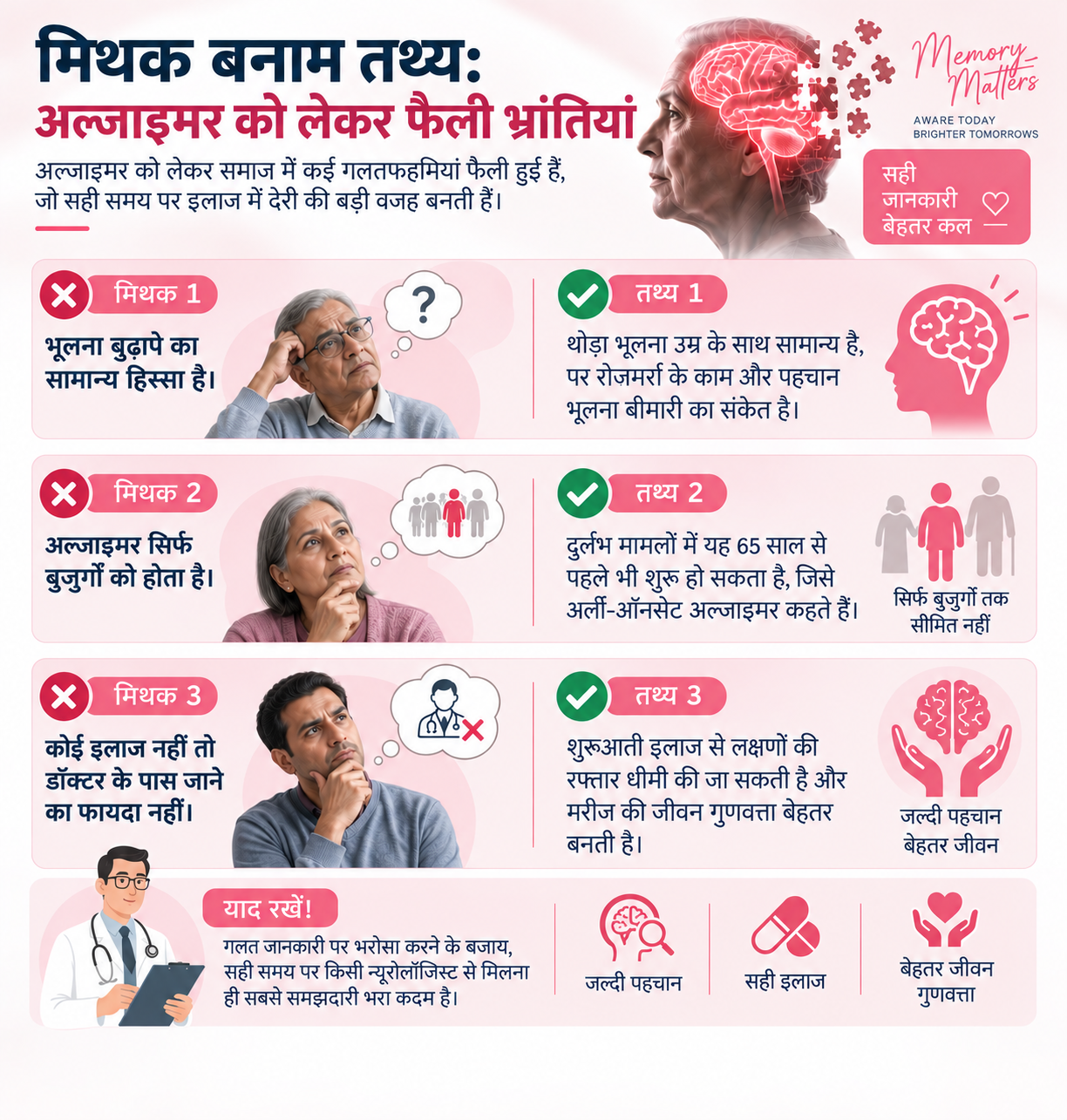
अल्जाइमर को लेकर समाज में कई गलतफहमियां फैली हुई हैं, जो सही समय पर इलाज में देरी की बड़ी वजह बनती हैं। मिथक और तथ्यों को आप नीचे बताए गए टेबल से पढ़ सकते हैं –
हमारे अस्पताल पर परिवारों को न सिर्फ मेडिकल इलाज, बल्कि केयरगिवर काउंसलिंग जैसी सहायता भी दी जाती है, ताकि यह सफर आप अकेले न तय करें। बिना देर किए हमारे अनुभवी विशेषज्ञों से परामर्श लें और सही दिशा में इलाज लें।

Has this happened with someone close to you, a family member or friend asking the same question again and again, or misplacing things more often than usual?
It is easy to laugh it off as habitual forgetfulness. But it could also be an early sign of Alzheimer’s disease, one that is easy to miss.
Recognizing these signs early, instead of dismissing them, is exactly what World Alzheimer’s Day 2026 wants people to focus on, under this year’s theme:
“The Earlier You Know, The More You Can Do: A Dementia Diagnosis Matters.”
This global effort is meant to build awareness, help people catch symptoms sooner and understand how to manage them.
Table of Contents
Everyone forgets things sometimes. We can occasionally forget where we left our keys, struggle to recall someone’s name or walk into a room and forget why we went there. Increasing age can make it a bit frequent.
It becomes different and concerning when it starts interfering with your daily life and keeps happening.
If you notice carefully, ‘example B’ is more concerning because the changes are repeated and are beginning to affect independence. Often, the person going through it does not always notice it themselves. It is usually someone else who spots the pattern first. This is the kind of pattern that can point in the direction of Alzheimer’s and is worth getting checked by a neurologist.
Alzheimer’s disease is a progressive brain disorder that damages nerve cells over time. And it is not just memory, this condition can also affect:
It is the most common cause of dementia.
But dementia and Alzheimer’s are not the same thing.
Dementia is a general term, a group of symptoms like:
Several diseases can cause dementia, Alzheimer’s is the most common, but conditions like vascular dementia, Lewy body dementia, and Parkinson’s disease dementia can also lead to similar symptoms.
This disease causes abnormal changes in the brain that includes the buildup of two types of proteins like:
Over time, this damages brain cells and the connections between them.
Important to Note – Memory can be affected by several factors, including poor sleep, stress, anxiety, depression, certain medicines, vitamin deficiency and some medical conditions. Some causes of cognitive symptoms may be treatable. That is one reason self diagnosis can be misleading.
The earliest changes can seem normal and easy to dismiss. That is also the reason many families sometimes do not seek medical help in the early stages.
Some common symptoms of Alzheimer’s disease may include:
When These Changes Start Affecting Daily Life
A particularly useful observation for families is whether the person is compensating for the problem or increasingly depending on others. Someone may start writing more reminders or using a calendar. That is not necessarily concerning. But if they can no longer manage tasks they previously handled independently, the situation needs medical attention.
Early diagnosis is the heart of the 2026 theme. A proper evaluation does three things:
Knowing earlier means having more time to make informed choices.
There are various tests that need to be done to confirm Alzheimer’s disease. Depending on your individual situation, a neurologist may recommend the following:
Before the appointment:
If possible, bring a family member who can describe changes they have noticed.
Not entirely. Age and genetics play a role that you cannot control.
But WHO’s updated 2026 guidelines estimate that up to 45% of dementia risk comes down to modifiable factors:
None of this guarantees anything. Someone can do everything right and still develop Alzheimer’s. Someone with several risk factors might never get it. However, staying active, managing blood pressure and diabetes, and staying socially connected are worth doing anyway.
When memory lapses become frequent and begin affecting your everyday life, they are worth discussing with a healthcare professional. An early evaluation can help identify whether the cause is Alzheimer’s, or a potentially treatable condition. If dementia is diagnosed, knowing sooner gives the person and family more time to explore care options, plan ahead and make important decisions together. The message of World Alzheimer’s Day 2026 is recognising the signs early can open the door to timely evaluation, care and planning.
If you are noticing persistent changes in memory or everyday functioning, in yourself or someone close to you, the Neurology team at the CK Birla Hospital can help you get a clear evaluation and next steps.

दालचीनी – क्या आप इसे सिर्फ बिरयानी या किसी सब्जी में डाला जाने वाला साधारण मसाला मानते हैं? यदि हां, तो आप इसके अद्भुत और प्रमाणित आयुर्वेदिक गुणों से अभी अनजान हैं। यह सिर्फ खाने का स्वाद बढ़ाने वाली सामग्री नहीं, बल्कि सेहत का एक ऐसा खजाना है जिसे आज पूरी दुनिया फिर से अपना रही है।
हाल के वर्षों में जब लोग अनियंत्रित ब्लड शुगर, बढ़ते वजन और थकान भरी जीवनशैली से जूझ रहे हैं, तब दालचीनी एक बार फिर सुर्खियों में आ गई है—इस बार सिर्फ पुरानी परंपरा के तौर पर नहीं, बल्कि वैज्ञानिक रिसर्च के ठोस आधार पर।
इस ब्लॉग में हम दालचीनी के बेहतरीन फायदे, इसके इस्तेमाल का सही तरीका और उन जरूरी बातों को समझेंगे जिन्हें अक्सर लोग नजरअंदाज कर देते हैं।
नोट: अगर आपडायबिटीज, बढ़ते वजन या हार्मोनल असंतुलन जैसी किसी समस्या से परेशान हैं और तमाम कोशिशों के बाद भी राहत नहीं मिल रही है, तो हमारे विशेषज्ञ डॉक्टरों से सलाह लेना आपके लिए सबसे सुरक्षित कदम होगा। आज ही अपना अपॉइंटमेंट बुक करें।
Table of Contents
दालचीनी एक पेड़ की छाल से बनने वाला मसाला है, जिसे मुख्य रूप से दो किस्मों में बांटा जाता है, सीलोन दालचीनी और कैसिया दालचीनी। सीलोन दालचीनी को असली और ज्यादा गुणकारी माना जाता है, क्योंकि इसमें कैसिया के मुकाबले “कूमरिन” नाम का तत्व बहुत कम होता है, जो ज्यादा मात्रा में लीवर के लिए नुकसानदायक हो सकता है। बाजार में आमतौर पर मिलने वाली दालचीनी कैसिया प्रकार की ही होती है, इसलिए दालचीनी पाउडर या साबुत दालचीनी खरीदते समय इसकी किस्म जरूर जांचें।
दालचीनी में सिनामेल्डिहाइड (Cinnamaldehyde) नाम का सक्रिय तत्व पाया जाता है, जो इसके ज्यादातर औषधीय गुणों के लिए जिम्मेदार माना जाता है। इसके अलावा इसमें एंटीऑक्सीडेंट, फाइबर, मैंगनीज, कैल्शियम और आयरन जैसे पोषक तत्व भी मौजूद होते हैं। यही वजह है कि इसे सिर्फ स्वाद बढ़ाने वाला मसाला नहीं, बल्कि एक कार्यात्मक खाद्य पदार्थ (functional food) माना जाता है।
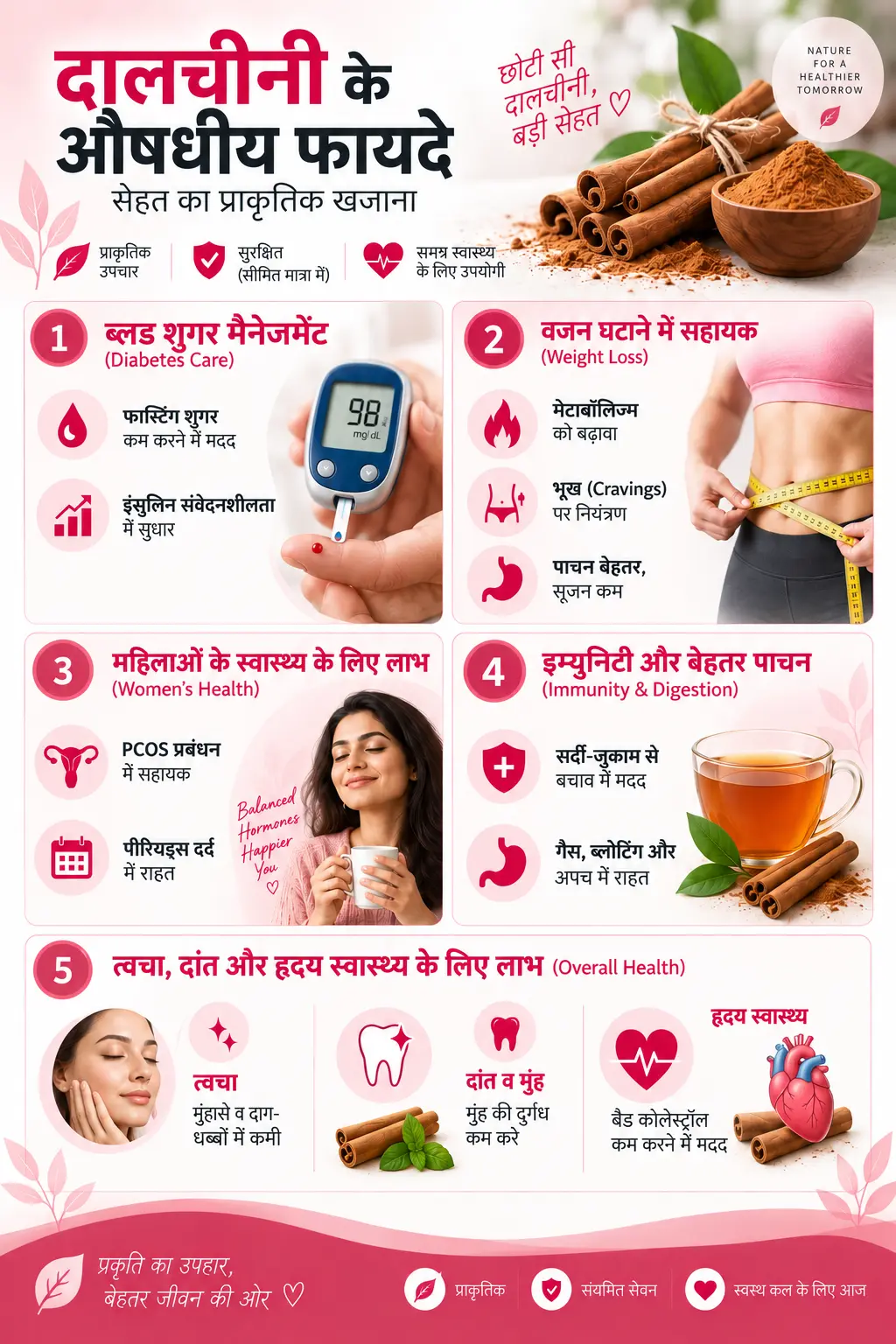
दालचीनी और इंसुलिन का गहरा संबंध है। आधुनिक रिसर्च बताते हैं कि नियमित और सीमित मात्रा में दालचीनी का सेवन फास्टिंग ब्लड ग्लूकोज को कम करने और इंसुलिन सेंसिटिविटी को सुधारने में मदद करता है।
कृपया ध्यान दें कि दालचीनी आपकी मुख्य दवाओं का विकल्प नहीं है, बल्कि एक सहायक आयुर्वेदिक औषधि है।
वजन नियंत्रित करने के लिए दालचीनी का सेवन एक लोकप्रिय और प्रभावी उपाय है –
महिलाओं के लिए दालचीनी विशेष रूप से हार्मोनल संतुलन बनाए रखने में मददगार है:
सावधानी: दालचीनी की तासीर गर्म होती है। अत्यधिक सेवन से पीरियड्स का फ्लो प्रभावित हो सकता है, इसलिए सीमित मात्रा में ही लें।
इन सभी फायदों को एक-एक करके इस टेबल की मदद से समझाने का प्रयास किया गया है –
| अंग / समस्या | दालचीनी का प्रभाव | उपयोग का तरीका |
| त्वचा (Skin) | मुंहासे और दाग-धब्बों को कम करती है। | शहद के साथ पेस्ट बनाकर प्रभावित स्थान पर लगाएं। |
| दांत व मुंह (Oral Care) | मुंह की दुर्गंध और बैक्टीरिया को खत्म करती है। | दालचीनी के पानी से कुल्ला करें। |
| हृदय स्वास्थ्य (Heart) | बैड कोलेस्ट्रॉल और ट्राइग्लिसराइड्स को कम करने में मददगार। | डॉक्टर की सलाह अनुसार चुटकी भर सेवन करें। |
बहुत से लोग सोचते हैं कि दालचीनी सिर्फ शुगर कम करने या वजन घटाने के लिए ही फायदेमंद है, लेकिन यह पूरी सच्चाई नहीं है। दालचीनी का असर सिर्फ इन दो चीजों तक सीमित नहीं, बल्कि यह इम्युनिटी, पाचन, त्वचा, दांतों की सेहत और यहां तक कि हृदय संबंधी सूजन कम करने में भी सहायक मानी जाती है। इसे सिर्फ एक “डाइट टिप” समझने की बजाय एक समग्र सेहत सहायक के रूप में देखना ज्यादा सही होगा, बशर्ते इसे सही मात्रा और सही तरीके से लिया जाए।
दालचीनी को अपनी दिनचर्या में शामिल करने के कुछ आसान तरीके हैं –
सुरक्षित मात्रा की बात करें तो आमतौर पर रोजाना आधे से एक चम्मच (लगभग 1 से 2 ग्राम) दालचीनी पाउडर को सुरक्षित माना जाता है। इससे ज्यादा मात्रा, खासकर कैसिया दालचीनी की, लंबे समय तक लेने पर लीवर पर असर डाल सकती है। जिन लोगों को ब्लड थिनर दवाएं चल रही हैं, गर्भवती महिलाओं और लीवर की बीमारी वाले मरीजों को दालचीनी का सेवन डॉक्टर की सलाह के बिना नहीं करना चाहिए।
दालचीनी सदियों से हमारी रसोई का हिस्सा रही है, और आज विज्ञान भी इसके कई फायदों की पुष्टि कर रहा है, चाहे वो ब्लड शुगर नियंत्रण हो, वजन प्रबंधन हो या इम्यूनिटी बढ़ाना। लेकिन हर औषधीय चीज की तरह, इसका सही और संतुलित इस्तेमाल ही असली फायदा देता है। अगर आप डायबिटीज, PCOS, वजन या हृदय स्वास्थ्य से जुड़ी किसी समस्या का सामना कर रहे हैं और अपनी डाइट से इसे सुरक्षित तरीके से इन्हें मैनेज करना चाहते हैं, तो सीके बिरला अस्पताल के अनुभवी विशेषज्ञों से मिलें।
ऑफिस की डेडलाइन, बच्चों की पढ़ाई, घर की जिम्मेदारियां, सब कुछ मिलकर किसी की भी नींद छीन सकते हैं। यदि आपके साथ भी ये सब है, तो इसमें आप अकेले नहीं हैं। यहीं पर एक पुरानी आयुर्वेदिक जड़ी-बूटी का काम आता है, जिसके बारे में आपने कभी न कभी सुना होगा, अश्वगंधा।
यह कोई नया ट्रेंड नहीं है, बल्कि हजारों साल पुराना आयुर्वेदिक ज्ञान है जिसे अब आधुनिक विज्ञान भी परख रहा है। इस लेख में हम अश्वगंधा के फायदे, इसकी सही खुराक, सेवन का सही तरीका और किन लोगों को इससे बचना चाहिए, यह सब विस्तार से समझेंगे। अगर आप भी तनाव, नींद की समस्या या कमजोरी से परेशान हैं और सही मार्गदर्शन चाहते हैं, तो सीके बिरला अस्पताल के अनुभवी विशेषज्ञों से अपॉइंटमेंट बुक करें और अपनी सेहत का सही आकलन कराएं।
Table of Contents
अश्वगंधा का साइंटिफिक नाम विथानिया सोमनिफेरा (Withania Somnifera) है। इसे आयुर्वेद में “रसायन” श्रेणी की जड़ी बूटी माना गया है, यानी ऐसी औषधि जो शरीर की समग्र ताकत और जीवन शक्ति बढ़ाने में मदद करती है। इसकी जड़ों की गंध घोड़े जैसी होने के कारण इसे “अश्व” (घोड़ा) और “गंध” से मिलाकर यह नाम दिया गया। आधुनिक विज्ञान की भाषा में इसे एडाप्टोजेन (adaptogen) कहा जाता है, यानी एक ऐसा प्राकृतिक तत्व जो शरीर को शारीरिक और मानसिक तनाव के प्रति बेहतर तालमेल बिठाने में मदद करता है। इसकी जड़ों में विथानोलाइड्स नाम के सक्रिय यौगिक पाए जाते हैं, जिन्हें इसके अधिकतम स्वास्थ्य लाभों के पीछे की वजह माना जाता है।
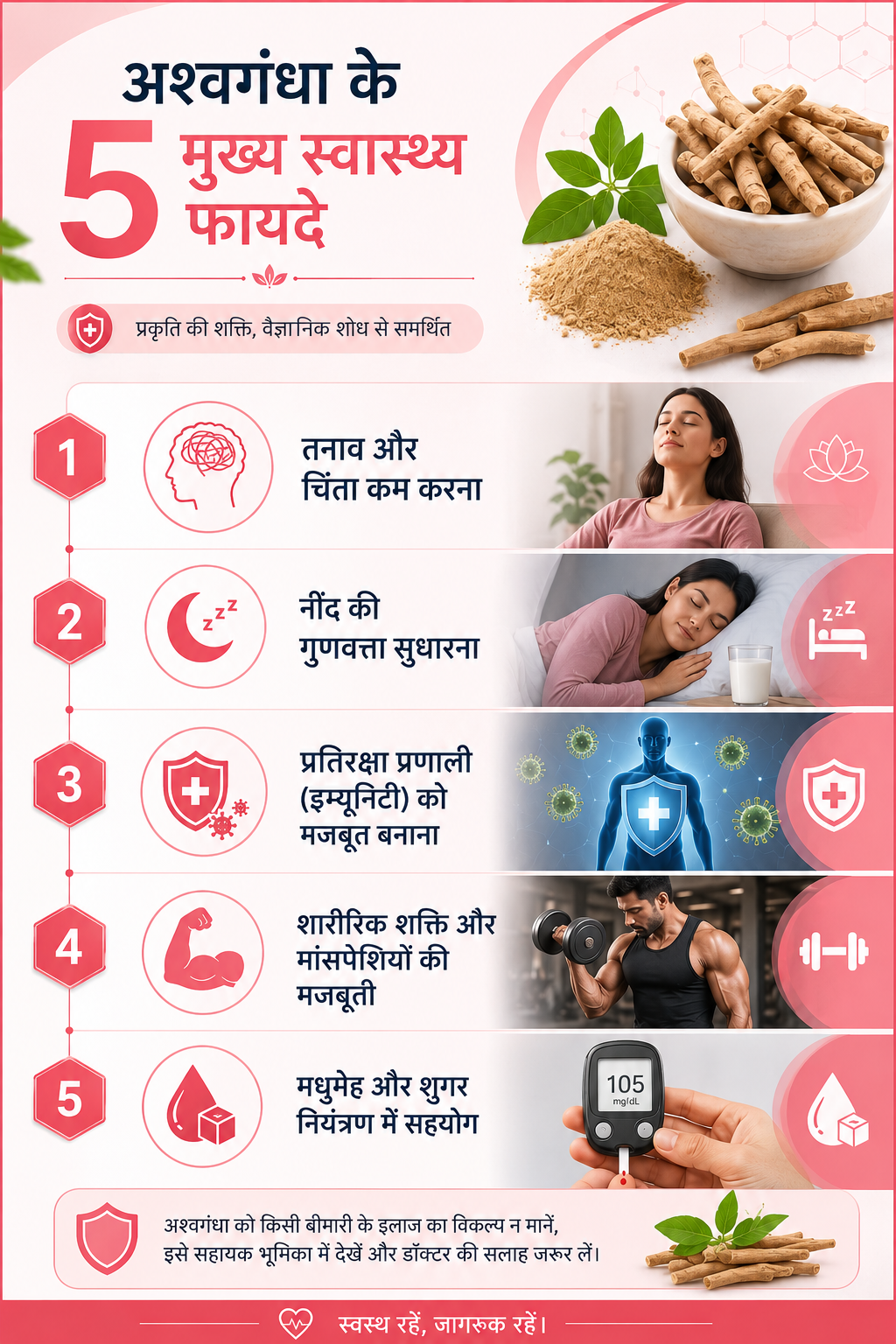
अश्वगंधा एक आयुर्वेदिक जड़ी बूटी है, जिसके फायदे भी भरपूर हैं –
यहां यह समझना जरूरी है कि अश्वगंधा पर हुए सभी शोध एक जैसे मजबूत नहीं हैं। तनाव और कॉर्टिसोल पर इसका असर सबसे ज्यादा और सबसे भरोसेमंद रिसर्च से समर्थित है। बाकी फायदों (इम्यूनिटी, शुगर, मांसपेशियां) पर शोध शुरुआती स्तर के हैं, और छोटे सैंपल साइज़ या सीमित अवधि के कारण इन्हें “संभावित” कहना ज्यादा सही होगा, न कि “साबित” फायदा। हमारे डॉक्टर मरीजों को यही सलाह देते हैं, इसे किसी बीमारी के इलाज का विकल्प न मानें, बल्कि सहायक भूमिका में देखें।
अश्वगंधा की खुराक व्यक्ति की उम्र, स्वास्थ्य स्थिति और उद्देश्य के अनुसार अलग-अलग हो सकती है। सामान्यतः वयस्कों के लिए रोजाना 250 मिलीग्राम से 600 मिलीग्राम तक की खुराक सुरक्षित मानी जाती है, और ज्यादातर क्लिनिकल अध्ययन इसी सीमा में किए गए हैं। पाउडर के रूप में लेने पर आमतौर पर आधा से एक चम्मच (लगभग 3 से 6 ग्राम) प्रतिदिन की सलाह दी जाती है। लेकिन यह सामान्य जानकारी है, हर व्यक्ति की जरूरत अलग होती है, इसलिए खुराक तय करने से पहले किसी योग्य आयुर्वेदिक चिकित्सक या डॉक्टर से जरूर सलाह लें। खासकर अगर आप पहले से कोई दवा ले रहे हैं या किसी पुरानी बीमारी से जूझ रहे हैं।
यह भी ध्यान रखें कि ज्यादातर डॉक्टर अश्वगंधा को खुद से शुरू करने की सलाह नहीं देते, बल्कि अगर मरीज पहले से इसे ले रहा है और कोई समस्या नहीं है, तो उसे जारी रखने की छूट देते हैं और सिर्फ मौजूदा दवाओं के साथ इंटरैक्शन की जांच करते हैं।
अश्वगंधा को लेकर समाज में एक बड़ा मिथक फैला हुआ है कि यह सिर्फ पुरुषों की यौन शक्ति बढ़ाने के लिए इस्तेमाल की जाने वाली जड़ी बूटी है। यह पूरी तरह सही नहीं है। हां, यह टेस्टोस्टेरोन स्तर और प्रजनन स्वास्थ्य को सहारा देने में मदद कर सकती है, इसमें कोई शक नहीं। लेकिन इसका दायरा इससे कहीं ज्यादा बड़ा है। यह तनाव प्रबंधन, नींद, इम्यूनिटी, मांसपेशियों की मजबूती और मानसिक स्पष्टता, यानी शरीर और दिमाग दोनों के समग्र स्वास्थ्य के लिए काम करती है। महिलाएं भी इसे हार्मोनल संतुलन, ऊर्जा स्तर और तनाव प्रबंधन के लिए उतनी ही प्रभावी ढंग से इस्तेमाल कर सकती हैं। इसे सिर्फ एक “मर्दाना” जड़ी बूटी के दायरे में सीमित कर देना इसके असली आयुर्वेदिक महत्व को कम आंकना है।
हर प्राकृतिक चीज हर किसी के लिए सुरक्षित हो, यह जरूरी नहीं। कुछ स्थितियों में अश्वगंधा से परहेज करने की सलाह दी जाती है –
अश्वगंधा अकेले कोई जादुई इलाज नहीं है, यह एक सहायक की भूमिका निभाती है। बेहतर परिणाम के लिए इसे सही जीवन शैली के साथ जोड़ना जरूरी है। यदि आपको भी संदेह है कि आपको अश्वगंधा लेना चाहिए या नहीं, तो बिना देर किए हमारे अनुभवी विशेषज्ञों से परामर्श लें। वे आपका मार्गदर्शन सही से करेंगे।
अगर पिछले कुछ हफ्तों से आपके आसपास भी लोग बुखार, खांसी और बदन दर्द की शिकायत लेकर घर बैठे हैं, तो आप अकेले नहीं हैं। दिल्ली और आसपास के इलाकों में इन दिनों स्वाइन फ्लू यानी H1N1 के मामलों में तेजी देखी जा रही है, और सोशल मीडिया से लेकर पड़ोस के व्हाट्सएप ग्रुप तक, हर जगह यही चर्चा है।
सच कहें तो एक हल्का सा बुखार भी अब चिंता की वजह बन जाता है, खासकर जब घर में बच्चे, बुजुर्ग या गर्भवती महिलाएं हों। यही वजह है कि सही जानकारी होना बेहद जरूरी हो जाता है, ताकि आप घबराने की बजाय समझदारी से कदम उठा सकें। इस ब्लॉग में हम स्वाइन फ्लू से जुड़ी हर जरूरी बात, लक्षणों से लेकर इलाज और बचाव तक, आसान भाषा में समझाएंगे। अगर आपको या आपके परिवार में किसी को लगातार बुखार या सांस लेने में तकलीफ महसूस हो रही है, तो देर न करें, हमारे अनुभवी विशेषज्ञों से अभी अपॉइंटमेंट बुक करें और सही समय पर सही इलाज पाएं।
Table of Contents
स्वाइन फ्लू, इन्फ्लूएंजा-A वायरस की एक किस्म H1N1 के कारण होने वाला संक्रामक रोग है। इसे “स्वाइन” इसलिए कहा जाता है क्योंकि यह वायरस मूल रूप से सूअरों में पाए जाने वाले फ्लू वायरस से समान पाया गया था, हालांकि अब यह इंसानों से इंसानों में ही फैलता है और इसका सूअर के संपर्क से कोई सीधा संबंध जरूरी नहीं है।
भारतीय आयुर्विज्ञान अनुसंधान परिषद (ICMR) के अनुसार, यह कोई नया वायरस नहीं बल्कि हर साल लौटने वाला एक मौसमी इन्फ्लूएंजा स्ट्रेन है। दिल्ली स्वास्थ्य विभाग के हालिया आंकड़ों की मानें तो अकेले दिल्ली में इस साल अब तक इन्फ्लूएंजा-A के लगभग तीन हज़ार मामले दर्ज हो चुके हैं, जिनमें बड़ा हिस्सा H1N1 का है। मानसून के बाद नमी और भीड़ भाड़ वाले माहौल में यह वायरस तेजी से सक्रिय हो जाता है, इसलिए इस मौसम में सतर्क रहना और भी ज़रूरी हो जाता है।
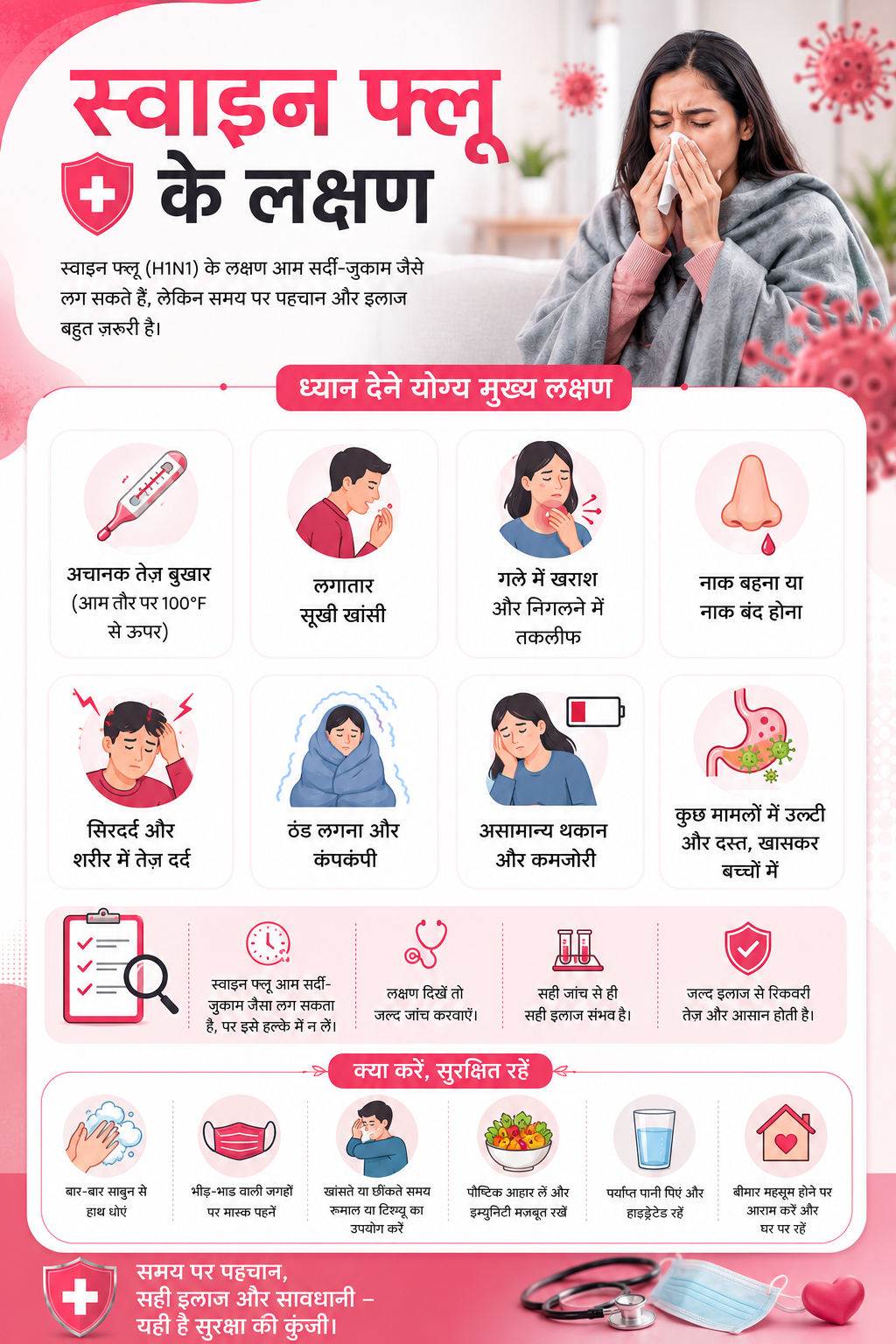
स्वाइन फ्लू के लक्षण आम मौसमी फ्लू से काफी मिलते-जुलते हैं, इसलिए शुरुआत में इसे पहचानना थोड़ा मुश्किल हो सकता है। ध्यान रखने योग्य मुख्य लक्षण इस प्रकार हैं –
हमारे OPD में अक्सर ऐसे मरीज आते हैं, जो शुरुआत में इसे सामान्य सर्दी-जुकाम समझकर घरेलू नुस्खों से इलाज करते रहते हैं, और जब बुखार तीन-चार दिन तक नहीं उतरता तब जांच के लिए आते हैं। ऐसे में देखा गया है कि जितनी जल्दी सही जांच और इलाज शुरू होता है, रिकवरी उतनी ही आसान और तेज होती है। इसलिए लक्षण हल्के भी लगे तो उन्हें नज़रअंदाज़ करना सही नहीं है।
वायरस के संपर्क में आने के बाद आमतौर पर 1 से 4 दिनों के भीतर लक्षण दिखना शुरू हो जाते हैं। कुछ लोगों में यह अवधि थोड़ी लंबी भी हो सकती है, खासकर अगर उनकी रोग प्रतिरोधक क्षमता (immunity) कमजोर हो। यह भी ध्यान देने वाली बात है कि लक्षण दिखने से एक दिन पहले से लेकर बीमारी के 5 से 7 दिन बाद तक व्यक्ति दूसरों को संक्रमित कर सकता है, इसलिए इस दौरान सावधानी बरतना और भी ज़रूरी हो जाता है।
स्वाइन फ्लू मुख्य रूप से एक श्वसन संक्रमण (respiratory infection) है, जो निम्न तरीकों से फैलता है –
विशेषज्ञों का मानना है कि मानसून के बाद बदलता तापमान, नमी और घर के अंदर भीड़ भाड़ इस मौसमी फ्लू वायरस के फैलाव के लिए अनुकूल माहौल बनाते हैं, यही वजह है कि हर साल इसी समय के आसपास मामलों में उछाल देखा जाता है।
अगर लक्षण दो-तीन दिन से ज़्यादा बने रहें, तो डॉक्टर आमतौर पर एक विस्तृत जांच के बाद निम्न परीक्षणों की सलाह देते हैं –
समय पर सही जांच होने से न सिर्फ इलाज की दिशा तय करने में मदद मिलती है, बल्कि गंभीर जटिलताओं से बचाव भी संभव हो पाता है।
अधिकतर स्वस्थ लोगों में स्वाइन फ्लू अपने आप 5 से 7 दिनों में ठीक हो जाता है, बशर्ते सही देखभाल की जाए। इलाज में आमतौर पर शामिल होता है –
एक बात हमेशा याद रखें, बिना डॉक्टर की सलाह के खुद से एंटीबायोटिक या एंटीवायरल दवा लेना नुकसानदायक हो सकता है। हाल ही में इंडियन मेडिकल एसोसिएशन (IMA) ने भी अपनी एडवाइजरी में लोगों को सेल्फ-मेडिकेशन से बचने की सलाह दी है।
अगर लक्षण हल्के हैं और डॉक्टर ने घर पर आराम करने की सलाह दी है, तो इन बातों का ध्यान रखें –
स्वाइन फ्लू से बचाव, इलाज से कहीं आसान है। ये उपाय अपनाकर आप खुद को और अपने परिवार को सुरक्षित रख सकते हैं –
कुछ लक्षण ऐसे हैं जिन्हें बिल्कुल नजरअंदाज नहीं करना चाहिए। अगर इनमें से कोई भी संकेत दिखे तो तुरंत नज़दीकी अस्पताल जाएं –
बच्चों, गर्भवती महिलाओं, 65 वर्ष से ऊपर के बुजुर्गों और डायबिटीज, अस्थमा या हृदय रोग जैसी पहले से मौजूद बीमारियों वाले लोगों को हल्के लक्षण होने पर भी देर किए बिना डॉक्टर से सलाह लेनी चाहिए, क्योंकि इन लोगों में जटिलताओं का खतरा अपेक्षाकृत अधिक होता है। सीके बिरला अस्पताल की इंटरनल मेडिसिन और पल्मोनोलॉजी की अनुभवी टीम मौजूद है, जो हर उम्र के मरीजों के लिए 24×7 आपातकालीन सेवाएं भी उपलब्ध कराती है। अगर आपको या आपके परिवार में किसी को स्वाइन फ्लू के लक्षण महसूस हो रहे हैं, तो जांच में देरी न करें, आज ही हमारे विशेषज्ञ से अपॉइंटमेंट बुक करें।

If your cardiologist has mentioned an ECG and an Echo test in the same breath, and you are left wondering, “Aren’t these two tests the same?” We get you! Many people confuse the two because both are used to examine the same organ, the heart. But they serve different purposes and provide different information about how your heart is functioning. That is why doctors often recommend them together to get an accurate picture of your heart health. So, how are they actually different? Let’s find out.
Table of Contents
An ECG measures the electrical signals that make your heart beat, whereas an Echo uses ultrasound to create moving images of your heart’s structure and pumping action.
An ECG (electrocardiogram) tells you about the heart’s rhythm and timing.
An Echo (echocardiogram) tells you about the heart’s shape, size, valves and pumping strength.
Neither test replaces the other. They answer different questions about the same organ.
You might also come across the term “electrocardiograph,” which simply refers to the machine that records the ECG, not the test itself. This connection between electrocardiogram vs electrocardiograph confuses many patients, so it is worth understanding the difference. The electrocardiogram is the test and its output, and the electrocardiograph is the device that produces it.
| Feature | ECG (Electrocardiogram) | Echo (Echocardiogram) |
| What it checks | Your heart’s electrical timing that is the signal that tells it when to beat | The physical heart itself, including the structure, size, shape and how well it is pumping |
| Technology used | Small electrode patches on your skin, connected to a monitor | A handheld ultrasound probe moved gently over your chest |
| Duration | Usually takes 5 to 10 minutes | Closer to 30 to 45 minutes, since the technician needs multiple angles |
| Can it catch an irregular heartbeat (heart rhythm)? | Yes | Limited, since it is not designed for this. |
| Can it see your heart valves working? | No | Yes |
| Shows chamber size/pumping strength | No | Yes |
| Detects arrhythmias | Yes | Sometimes |
| Detects structural defects | No | Yes |
| Any Pain or discomfort involved | None | None |
| When it is usually recommended | Chest pain, palpitations, routine health checkups | Suspected heart failure, murmurs, valve disease |
An ECG, or electrocardiogram, records the electrical impulses that travel through your heart with every beat. These impulses tell your heart muscle when to contract and relax. It is completely painless, non-invasive and does not send any electricity to your body. Small sticky electrodes placed on your chest, arms, and legs pick up this activity and translate it into wavy lines on a screen or paper.
An ECG can help detect:
An ECG records your heart’s electrical activity, but it does not show the heart’s structure or how well it pumps blood. For that, cardiologists usually recommend an echocardiogram (Echo), which creates real-time images of the heart using ultrasound.
An echocardiogram, commonly called Echo, uses high-frequency sound waves (ultrasound) to create a live, moving image of your heart. This test lets doctors know your heart’s size, how thick its walls are, how well each chamber is pumping and whether the four valves are opening and closing properly.
Echo is particularly useful for diagnosing heart failure, valve disease, congenital heart defects and fluid around the heart. It is also the go-to test for measuring ejection fraction, which is a number that shows how much blood your heart pumps out with each beat.
It is a non-invasive test and does not hurt; however, you may feel a cold gel or mild pressure on your chest from the ultrasound tool.
An Echo test helps doctors evaluate:
What Can’t an Echo Show?
Although an Echo provides detailed images of the heart’s structure and pumping function, it does not record the heart’s electrical activity or detect abnormal heart rhythms as effectively as an ECG.
This decision totally depends on your symptoms. If you are experiencing palpitations, irregular pulse or frequent fainting spells, consult a cardiologist. They will likely start with an ECG since it captures rhythm problems almost instantly.
If you have breathlessness, swelling in your legs, a known heart murmur or a family history of structural heart disease, an Echo gives a complete and detailed picture of your heart health.
No test is better than the other. Both tests are simply designed to answer different questions. Choosing the right test mainly depends on your symptoms.
Note: Do not undergo either test without a doctor’s prescription or recommendation. Speak with a doctor first. After assessing your symptoms and understanding your condition, they will recommend the most appropriate test for you.
In many cases, cardiologists suggest both ECG and Echo because your heart’s electrical system and its physical structure are deeply connected, even though they are measured differently.
An abnormal ECG might raise a red flag that only an Echo can fully explain. For instance, your ECG shows a pattern that looks like a past heart attack. Your cardiologist will likely want an Echo next, just to see how much of the heart muscle was affected and how well it is still pumping blood.
ECG and Echo may sound similar, but they look at your heart through two completely different lenses.
An ECG records your heart’s electrical activity, whereas an Echo shows its structure and how well it pumps blood. Depending on your symptoms and medical history, your cardiologist may recommend one or both tests to arrive at an accurate diagnosis.
Rather than trying to decide which test you need, speak with a cardiologist who can recommend the most appropriate evaluation for your condition. At the CK Birla Hospital, our experienced cardiac specialists can help identify the underlying cause of your symptoms, assess your heart health and guide you towards the right diagnostic test and treatment plan.

सुबह आंख खुलते ही पूरे शरीर में भारीपन, खिंचाव और लगातार थकान महसूस होना सामान्य नहीं है। अगर यह दर्द कई दिनों तक बना रहे, तो यह सिर्फ थकान नहीं, बल्कि आपका शरीर आपको कोई गंभीर चेतावनी दे रहा है। ICMR की एक रिपोर्ट के अनुसार, भारत में हर चार में से एक व्यक्ति मस्कुलोस्केलेटल (हड्डी और मांसपेशी) की समस्याओं से जूझ रहा है।
अगर आप भी पूरे शरीर में दर्द और सूजन के कारणों को लेकर परेशान हैं, तो यह ब्लॉग आपके लिए है। यहाँ हम इसके मुख्य कारण, सही उपचार और प्रभावी घरेलू उपाय जानेंगे। लंबे समय के दर्द को नजरअंदाज न करें; सही जांच के लिए आज ही हमारे अनुभवी विशेषज्ञों से मिलें और अपने स्वास्थ्य समस्या के बारे में विस्तार से बात करें।
Table of Contents
हर दर्द खतरनाक नहीं होता। कई बार शरीर में दर्द का होना बिल्कुल सामान्य होता है और कुछ दिनों में अपने आप ठीक भी हो जाता है। चलिए इसे उदाहरण की मदद से समझते हैं –
जब आपने बहुत दिनों बाद जिम जाना शुरू किया हो और मांसपेशियों पर अचानक जोर पड़े। जब सर्दी-जुकाम या फ्लू हो और पूरे बदन में दर्द और टूटन हो। जब लंबी यात्रा के बाद शरीर अकड़ा हुआ हो। इन सभी स्थितियों में “तीव्र दर्द” (Acute Pain) होता है। यह आमतौर पर 2 से 5 दिनों में ठीक हो जाता है।
लेकिन जब पूरे शरीर में दर्द नियमित हो जाए, यानी हफ्तों या महीनों तक बना रहे – तो यह “दीर्घकालिक दर्द” (Chronic Pain) की श्रेणी में आता है। और यही वह स्थिति है जब डॉक्टर की सलाह जरूरी हो जाती है।
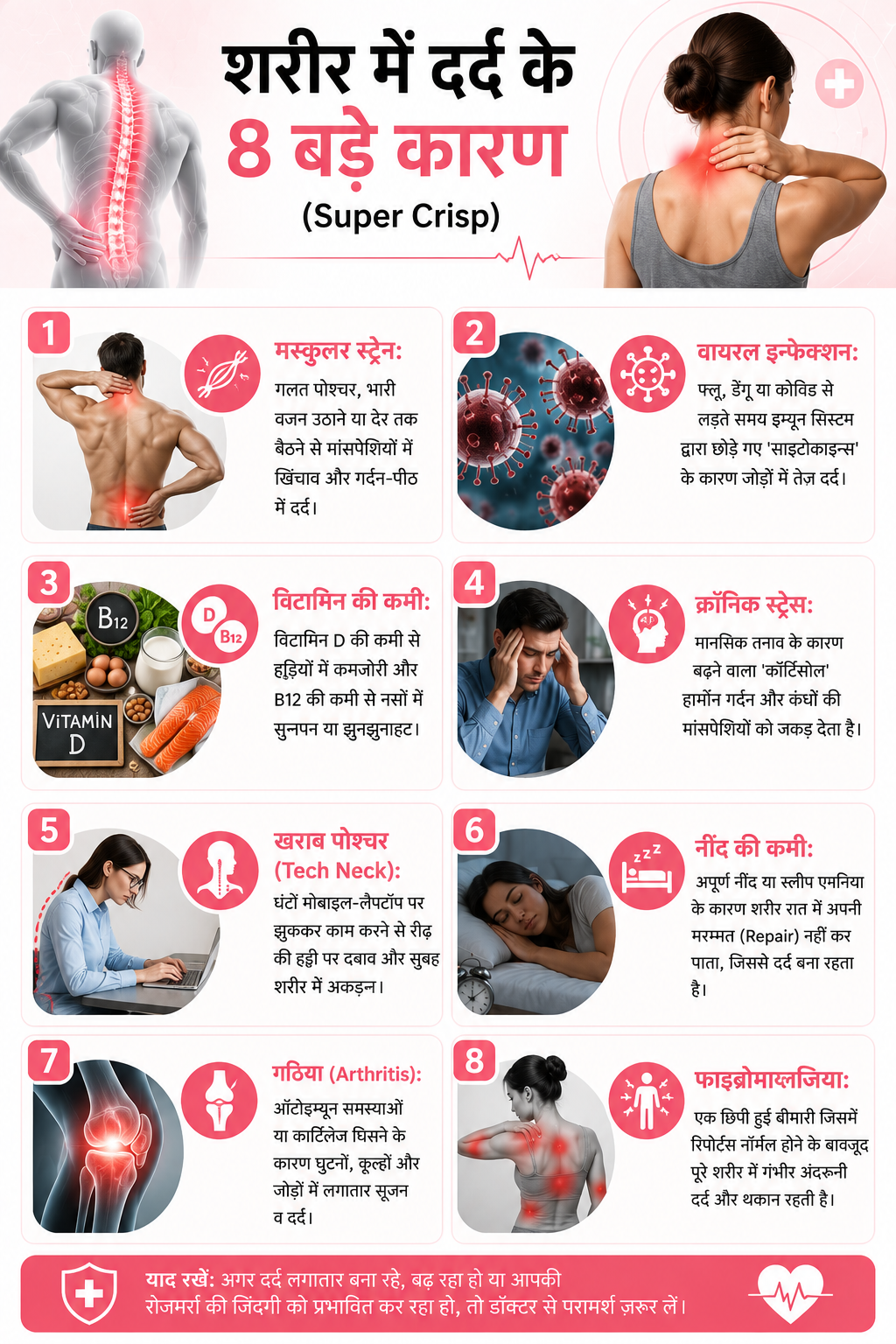
बिना तैयारी के भारी काम करना, गलत तरीके से वजन उठाना, या बहुत देर तक एक ही पोजीशन में बैठे रहना – इन सबसे मांसपेशियों में सूक्ष्म चोटें आ जाती हैं। नतीजा – अगले दिन पूरे शरीर में दर्द और सूजन। यह दर्द खासकर कमर, पीठ, गर्दन और कंधों में महसूस होता है।
जब शरीर किसी वायरस से लड़ रहा होता है, तब प्रतिरक्षा प्रणाली (Immune System) कुछ रसायन (Cytokines) छोड़ती है जो मांसपेशियों और जोड़ों में दर्द पैदा करते हैं। इसलिए फ्लू में “पूरे शरीर में दर्द की दवा” की जरूरत पड़ती है। COVID-19 के बाद भी कई मरीजों में हफ्तों तक शरीर में दर्द और थकान रहती है, जिसे “Long COVID” कहा जाता है।
यह आधुनिक भारत की सबसे बड़ी समस्या है। AIIMS दिल्ली के एक रिसर्च के अनुसार, भारत में लगभग 70-80% शहरी आबादी विटामिन D की कमी का सामना कर रहे हैं। घरों के भीतर काम करना, धूप से बचना और खराब खानपान इसके मुख्य कारण हैं।
यह सुनने में अजीब लग सकता है, लेकिन मानसिक तनाव शारीरिक दर्द में सीधे तौर पर बदल सकता है। जब हम लंबे समय तक तनाव में रहते हैं, तो शरीर “कोर्टिसोल” (Cortisol) हार्मोन रिलीज करता है। इससे गर्दन और कंधों की मांसपेशियां कस जाती हैं और पुराना दर्द बन जाता है। बहुत से लोगों में डिप्रेशन और चिंता (Anxiety) भी शरीर में व्यापक दर्द के रूप में सामने आती हैं।
आज आप मेट्रो में जाएं और देखें कि हर व्यक्ति अपने फोन में घुसा बैठा है। इसे “Tech Neck” कहा जाता है। मोबाइल और लैपटॉप पर झुककर काम करने से गर्दन, कंधे और पीठ पर भारी दबाव पड़ता है। WHO की एक रिपोर्ट के अनुसार, कमर दर्द (Back Pain) दुनिया में विकलांगता का नंबर एक कारण बन चुका है।
नींद वह समय है जब शरीर खुद को ठीक करता है। अगर यह रिपेयर का समय न मिले, तो दर्द और थकान बनी रहती हैं। Sleep Apnea (नींद में सांस रुकना) और अनिद्रा (Insomnia) जैसी स्थितियां इस चक्र को और खराब कर देते हैं।
रूमेटाइड गठिया (Rheumatoid Arthritis) एक स्वप्रतिरक्षित विकार या ऑटोइम्यून विकार है, जिसमें शरीर अपने ही जोड़ों पर हमला करता है। इससे पूरे शरीर में दर्द और सूजन होती है, खासकर सुबह के समय। ऑस्टियोआर्थराइटिस (Osteoarthritis) में जोड़ों की उपास्थि (Cartilage) घिसने लगती है, जिससे घुटने, कूल्हे और रीढ़ में दर्द होता है।
फाइब्रोमायल्जिया एक ऐसी स्थिति है, जिसमें पूरे शरीर में अंदरूनी दर्द होना लंबे समय तक बना रहता है, लेकिन खून की जांच में कुछ नहीं दिखता। इसमें थकान, नींद की गड़बड़ी और याददाश्त की समस्याएं भी होती हैं। भारत में यह बीमारी अक्सर देर से पहचानी जाती है।
पूरे शरीर में दर्द की दवा लेने से पहले सही निदान जरूरी है। डॉक्टर जांच से दर्द के मूल कारण का पता लगाते हैं और उसी दर्द के कारण के आधार पर इलाज की योजना बनाते हैं –
नोट: बिना डॉक्टर की लिखित पर्ची (Prescription) के किसी भी दर्दनिवारक दवा का नियमित सेवन लिवर और किडनी को नुकसान पहुंचा सकता है।
हल्के और अस्थायी शरीर दर्द के लिए ये घरेलू उपाय आपको तुरंत राहत दे सकते हैं –
घरेलू उपाय और आराम तब तक ठीक हैं, जब तक दर्द हल्का और अस्थायी हो। लेकिन निम्न स्थितियों में बिना देर किए डॉक्टर से मिलें –
शरीर में दर्द 2 हफ्ते से ज्यादा समय से बना हुआ हो। दर्द के साथ तेज बुखार, ठंड लगना या वजन अचानक कम होना हो। जोड़ों में सूजन और लाली हो, खासकर सुबह के समय। पूरे शरीर में अंदरूनी दर्द होना, जिसके कोई कारण समझ न आएं। सांस लेने में तकलीफ या सीने में दर्द के साथ शरीर दर्द हो। दर्द की वजह से रोजमर्रा के काम करना मुश्किल हो रहा हो।
इन स्थितियों में खुद से पूरे शरीर में दर्द की दवा लेना खतरनाक हो सकता है। सही जांच ही सही इलाज की नींव है।
पूरे शरीर में दर्द सिर्फ एक तकलीफ नहीं, बल्कि आपके शरीर का संकेत है। चाहे वह थकान हो, विटामिन की कमी या कोई बीमारी, इन संकेतों को हल्के में न लें। इस ब्लॉग में आपने जाना कि शरीर में दर्द क्यों होता है, इसके कारण क्या हैं और इसका डॉक्टरी व घरेलू उपचार कैसे किया जा सकता है।
सबसे जरूरी बात यह है कि अपने दर्द को नजरअंदाज न करें। समय पर सही जांच और इलाज से आप जल्द स्वस्थ हो सकते हैं। सीके बिरला अस्पताल दिल्ली और गुरुग्राम के अनुभवी विशेषज्ञ डॉक्टर आपकी समस्या के सही उपचार के लिए तैयार हैं। आज ही अपॉइंटमेंट बुक करें और दर्द-मुक्त जीवन की शुरुआत करें।

