Ask someone to name the vital organs of the human body, and they will likely mention the heart, lungs, or kidneys. But there is another essential organ that rarely makes the list: bone marrow. Working constantly behind the scenes, it produces the blood that keeps you alive, energised, and protected from disease.
But what exactly is bone marrow? How does it work? And what happens if it stops? Read on to find out more!
Your bones are more than just a rigid structure holding your body upright. Inside many of your bones lies a soft, spongy, jelly-like tissue called bone marrow. It fills the cavities of your bones and is responsible for producing the cells that make up your blood.
There are two types of bone marrow:
Red bone marrow
Yellow bone marrow
Also Read: Gond Katira Benefits: A Natural Secret for Body Cooling, Better Digestion, and Glowing Skin
The process by which bone marrow produces blood cells is called haematopoiesis, which simply means ‘blood cell formation.’ It begins with special cells called hematopoietic stem cells. You can refer to them as the master cells which are capable of becoming any type of blood cell the body needs.
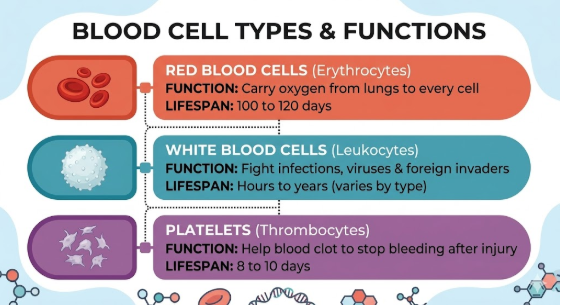
The importance of bone marrow really becomes apparent when you understand what healthy blood does for you. Oxygen delivery, immune defence, wound healing are the foundations of life itself which requires blood.
According to the World Health Organization (WHO), anaemia, a condition in which the blood lacks enough healthy red blood cells, affects roughly a quarter of the global population, estimated at around 1.6 to 1.8 billion people. Many cases are linked, directly or indirectly, to disruptions in bone marrow blood formation.
When bone marrow and blood production is working properly, you feel energised, your immune system is resilient, and your body heals efficiently. When it is not, even simple daily tasks can feel exhausting.
Also Read: Top 10 Summer Foods That Protect You from Heat
None of these symptoms on their own confirms a bone marrow problem, but if you are experiencing several together, especially over a prolonged period, it is worth discussing with your doctor.
Also Read: Know How Jaundice can be Fatal for a Newborn?
There are different conditions and everyday factors that can impact how your bone marrow makes blood. They are:
Also Read: 8 Signs Your Liver Is Healing
You should not delay getting checked by a doctor if you are noticing any of these signs:
After evaluating your situation, your doctor may recommend a complete blood count (CBC) test or a bone marrow test, also called a bone marrow biopsy test, to examine the health and activity of your marrow directly.
In a bone marrow biopsy, a small sample is taken, usually from the hip bone and examined under a microscope to assess how well the marrow is working.
If the situation is very serious, where the marrow is severely damaged or diseased, a bone marrow transplant (formally called a haematopoietic stem cell transplant) may be discussed.
Also Read: What is cholesterol? Type, normal range, Diagnosis and Treatment
Many everyday habits can actively support healthy bone marrow blood cell production.
Feed your body with the right nutrients
Drink enough water. Blood is mostly water, so even mild dehydration shrinks blood volume and forces your marrow to work harder to compensate.
Exercise regularly. Brisk walking, cycling, swimming helps with consistent movement that keeps circulation strong.
Avoid smoking and heavy drinking if either applies to you. Both negatively impact marrow function over time in ways that are hard to reverse.
Manage stress as it can interfere with your body’s balance and immune function. Prioritise sleep, and try simple habits like mindfulness or relaxation to keep things steady.
Also Read: Total Leukocyte Count (TLC) Test: Complete detail, procedure, normal levels, and testing methods
Your bone marrow is one of the most vital organs your body needs. By eating a nutrient-rich diet, staying active and hydrated, managing stress, and being attentive to your body’s signals, you give your bone marrow the best possible environment to thrive. And if something feels off, speak to your doctor as early as possible. You can simply reach out to the CK Birla Hospital for the comprehensive health check up. Early attention is always better than delayed action.
Also Read: How to increase Haemoglobin naturally
Can bone marrow repair itself naturally?
Yes, to a degree. In younger people, after mild damage from a temporary disease or short-term nutritional deficiency, it usually recovers with proper nutrition, rest, and removal of the underlying cause. However, severe damage may require medical intervention.
Does age affect bone marrow function?
Yes. As we age, some of the active blood producing red marrow gets replaced by fatty yellow marrow, so there is simply less of it working at full capacity. This is one reason why anaemia becomes more common as we get older. However, the remaining red marrow continues to work, and healthy lifestyle habits can help preserve its efficiency.
Are there specific tests to check bone marrow health?
A standard complete blood count (CBC) is usually the first step to measure the number and type of blood cells in circulation. If any abnormalities are found, a doctor may ask you for a bone marrow biopsy test, in which a small tissue sample is taken and examined.
Can dehydration affect blood production?
Yes. When you are dehydrated, blood volume drops and the blood itself thickens, making it harder for your heart and marrow to work properly. Dehydration will not damage your marrow directly, but it does make other parts of your body work harder than they should.
Written and Verified by:

Similar Internal Medicine Blogs
Request a call back