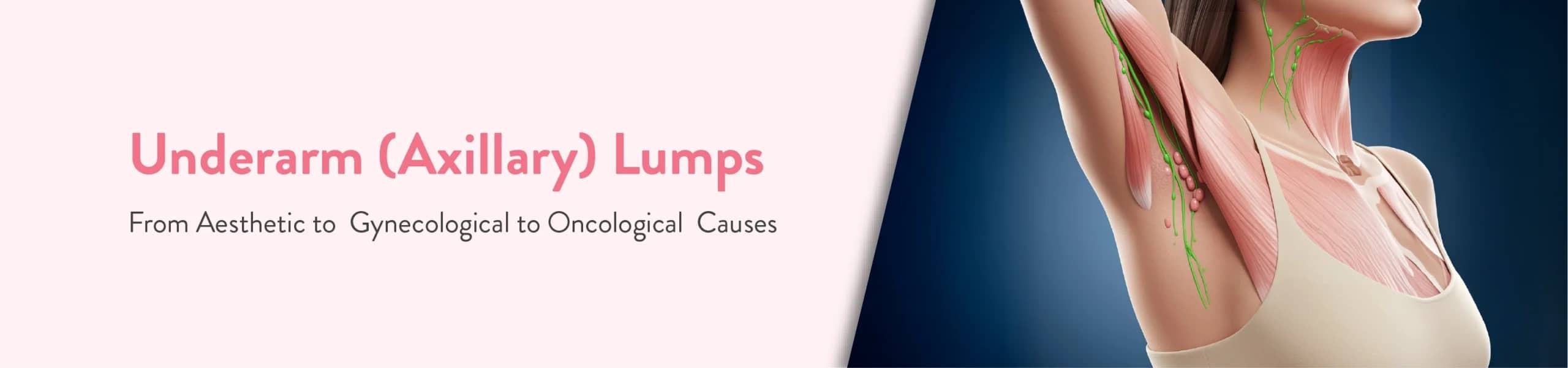
Finding an unusual lump in your underarm out of the blue can make your mind race. What is it? What caused it? And could it be something serious? We get why you may have these questions. An underarm lump can have several causes, from a swollen lymph node or skin-related condition to accessory breast tissue. This blog explains the common causes, what different types of lumps can mean and when it is worth seeing a doctor.
An underarm lump, medically known as an axillary lump, refers to any swelling or mass felt in the armpit region. The axilla is a complex area of the body, containing lymph nodes, fatty tissue, skin, blood vessels, nerves, and in some individuals, breast tissue.
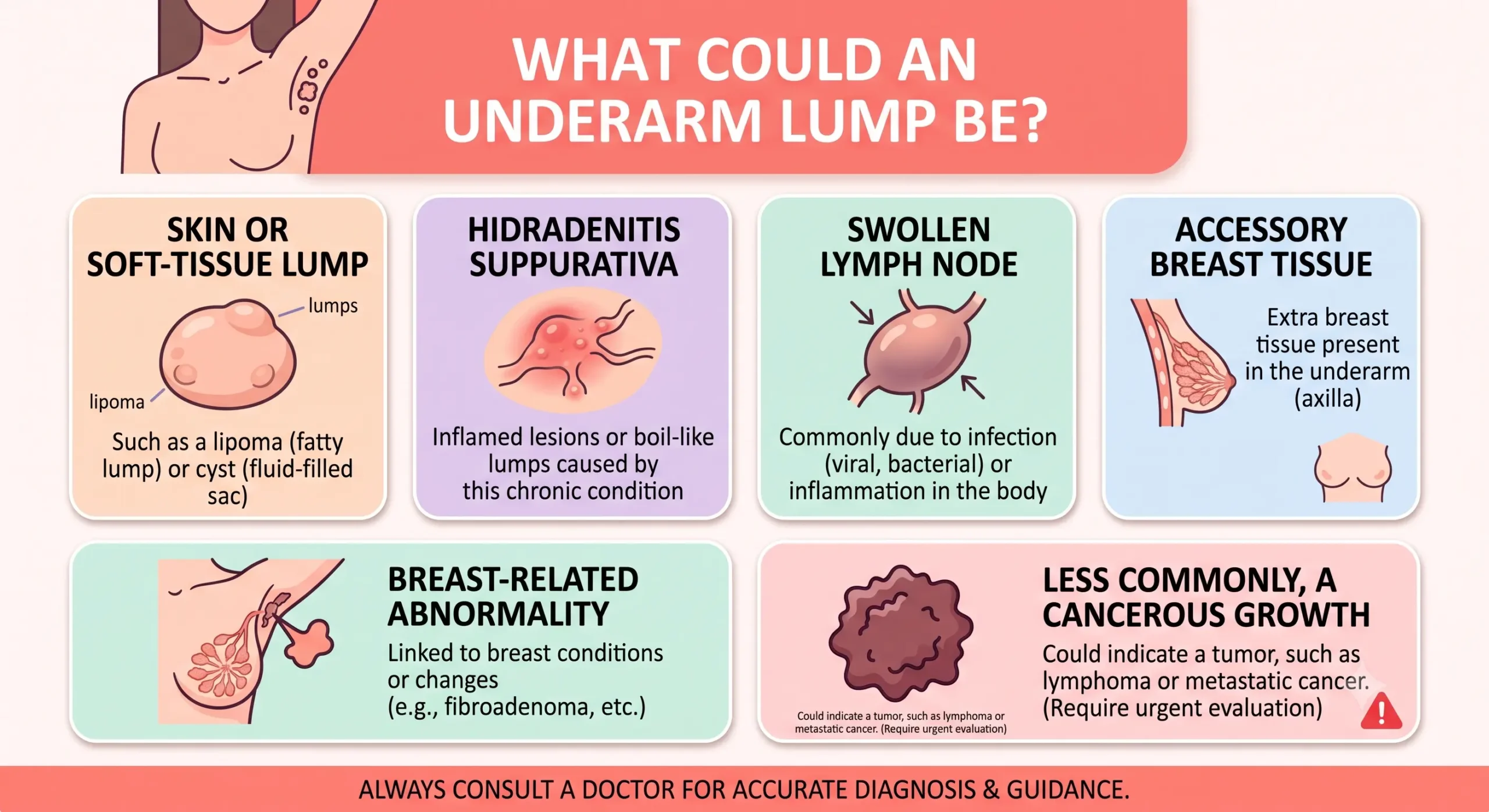
A lump can be due to several different causes such as ingrown hairs or skin cysts, lipomas (soft fatty lumps), infections, or swollen lymph nodes. Most underarm lumps are benign, so try not to jump straight to the worst-case scenario.
In some women, an underarm lump may be caused by accessory breast tissue, which is an extra growth of breast tissue that develops outside the normal chest area.
A lump may be painful or painless, soft or firm, and mobile or relatively fixed. These features can help in assessment but do not provide a diagnosis by themselves.
Anyone who notices a new or persistent underarm lump should consult a breast specialist for proper evaluation.
| Category | Examples | What may be noticed |
| Aesthetic / skin-related | Lipoma, cyst, hidradenitis suppurativa | May feel superficial, soft or tender; some recur |
| Gynaecological / breast-related | Accessory breast tissue, hormonal breast changes, mastitis | May change with periods, pregnancy or breastfeeding |
| Oncological | Breast cancer involving lymph nodes, lymphoma | May be persistent or enlarging and may occur with other breast or systemic symptoms |
These categories are a useful way to understand the possibilities, but they can overlap. For example, an enlarged lymph node may result from a simple skin infection or, less commonly, cancer.
A lipoma is a non-cancerous collection of fatty tissue. It usually feels soft, grows slowly and may move slightly under the skin. Most lipomas are painless.
An epidermoid cyst is a small sac beneath the skin. It is often painless but can become red, swollen and tender if inflamed or infected. A doctor may need to examine the lump or use ultrasound to establish what it contains.
Hidradenitis Suppurativa (HS) is a chronic inflammatory condition affecting hair follicles. It causes painful lumps that keep recurring, abscesses and sometimes scarring, particularly in the armpits and groin. Some women experience flares around their periods.
Some people have accessory breast tissue. It is a breast tissue that developed outside the usual breast area. The armpit is the most common location. It does not look like a typical round lump, instead it may feel like a soft or firm space.
Hormonal changes can make it more evident. Some women experience swelling or tenderness before or during their periods. Pregnancy can also make the tissue more prominent.
Note – Accessory breast tissue behaves like a normal tissue only. Thus, it can develop changes too, some harmless and some not. If you notice a new lump, or any unusual changes, get it checked by a breast specialist.
Hormonal changes during pregnancy can enlarge accessory breast tissue. Breastfeeding can also cause breast inflammation, including mastitis, which may produce painful swelling. That’s why a lump during pregnancy or breastfeeding should not be dismissed.
Cancer is a less common cause of an underarm lump, but doctors will consider it if the lump shows any concerning signs.
Your armpit contains lymph nodes that help drain fluid from your breast and the surrounding area. If breast cancer develops, it can sometimes spread to these nodes, causing them to swell. Interestingly, this swelling can sometimes be the first thing you notice, even before any lump shows up in the breast itself.
But, every swollen lymph node is not cancerous. Infection is a much more common cause of swollen lymph nodes.
Lymphoma is a cancer that affects the lymphatic system, and it can cause lymph nodes to swell, including the ones in your armpit. If you are experiencing an unusual lump, it is best to get it checked.
Your doctor may first ask when you noticed the lump, whether it is changing, whether it varies with your menstrual cycle, and whether you have recently had an infection, vaccination, pregnancy or breastfeeding.
Based on the findings from the examination, the doctor may recommend further tests, such as:
Treatment depends on the diagnosis.
Small, uncomplicated lipomas or cysts may simply be monitored. If they are causing symptoms, though, they can usually be removed. Hidradenitis suppurativa is treated differently, with a focus on reducing inflammation and preventing new lesions from forming.
Accessory breast tissue may not need treatment unless it causes discomfort, restricting movement or is a significant cosmetic concern. In some cases, the lump is surgically removed.
If cancer is diagnosed, treatment depends on the type and stage. For breast cancer, the treatment could involve surgery, radiotherapy, chemotherapy, hormone therapy, or targeted treatment. Lymphoma is treated differently, following a pathway based on its specific type.
Arrange an evaluation with a breast specialist if your underarm lump:
What if the underarm lump is painless?
A painless lump is not always a cause for concern. However, pain alone cannot tell you whether a lump is harmless. If it is new, persistent, growing or feels unusual, it is best to have it checked.
The dedicated Breast Centre and specialist teams at the CK Birla Hospital can help determine the cause of your concern and recommend the right treatment. Simply book a consultation to get expert guidance.
Written and Verified by:

Similar The Breast Centre Blogs
Request a call back


