
Mammography screening is one of the most effective tools for detecting breast cancer early. However, the fear of pain is one of the most cited reasons women delay or avoid mammograms.
But do mammograms really hurt?
For most women, it can be uncomfortable rather than painful.
The mammography machine uses two plates to gently compress the breast tissue, which helps spread it out so radiologists can get a clearer image. That compression is where the sensation comes from. Most women feel a squeezing pressure, some feel mild tenderness and some find it quite uncomfortable. Rarely, it causes significant pain.
A mammogram takes about 20 to 30 minutes in total and the actual compression per image lasts only 10 to 15 seconds. So, any uneasiness felt in this duration is very brief.
Pain experience varies from woman to woman. Research published in a PMC journal has shown that factors such as breast density, hormonal fluctuations and psychological factors like anxiety and previous experiences with medical procedures can all influence how painful the procedure feels.
Stress and anxiety, in particular, can make pain feel more intense. When you are tense, your muscles tighten and your pain threshold may decrease, making the breast compression feel more uncomfortable. This is one reason why relaxation techniques, covered later in this article, can help you.
In general, mammograms are not exactly pleasant, but most women find them tolerable, and any discomfort usually lasts only a few seconds during each image.
During a mammogram, you stand in front of the mammography machine while a radiographer (the imaging specialist who performs the scan) guides you into position and places your breast on a flat support plate.
A second plate then lowers to compress the breast firmly. It reduces motion blur, decreases radiation exposure and separates overlapping tissue so that even small abnormalities show up clearly on the image.
The breast contains glandular tissue, fatty tissue and a network of ligaments and ducts. Compression can place temporary pressure on these structures, which is why some women feel tenderness.
For women with denser breast tissue, where glandular tissue makes up a larger proportion of the breast, this sensation can be more pronounced.
You may feel a bit uncomfortable because the compression is firm, but it lasts only a few seconds before the pressure is released. There is no prolonged squeezing or continuous pressure.
If you are feeling nervous or wondering whether you will be one of the few women who experience more pain during a mammogram, the following tips can help make the procedure more comfortable.
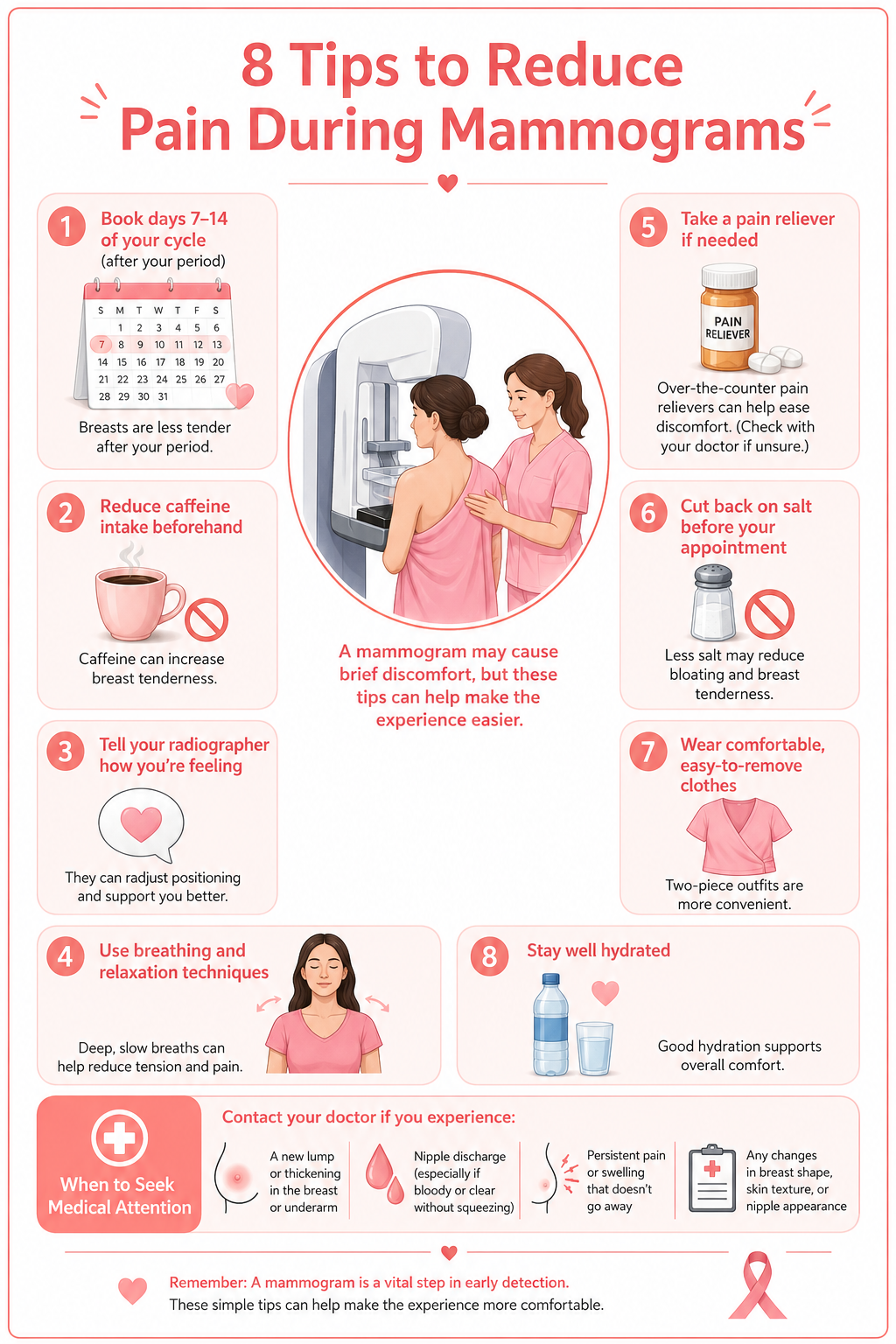
Breast tissue is most sensitive in the week before your period, when estrogen and progesterone levels peak and cause fluid retention and mild swelling in breast tissue. This is when a mammogram is most likely to feel uncomfortable.
If you have regular periods, try to schedule your mammogram in the week after your period ends, generally days 7 to 14 of your cycle. Breast tissue is at its least tender during this window. Postmenopausal women don’t need to factor in cycle timing, but it is still worth choosing an appointment time when you tend to feel more rested and relaxed.
Caffeine can increase breast sensitivity in some people. Cutting back on caffeine for five to seven days before your appointment is a simple, low effort change that can help you feel relaxed during the examination.
If you honestly tell the specialist you are anxious, have had painful experiences before, or have particularly tender breasts that day, they can adjust the angle of positioning, apply compression more gradually and give you a moment to breathe between images.
When the compression plate comes down, exhale slowly and let your shoulders drop. Muscle tension makes everything feel more intense. A few slow, deliberate breaths before each image helps your body relax, which lowers pain sensitivity and also reduces motion blur in the image itself.
Taking an over-the-counter pain reliever can also help in making you feel comfortable. A standard dose of a common pain reliever helps reduce sensitivity in breast tissue during compression. But make sure to check with your doctor about which option suits you best, especially if you have any existing health conditions or are taking other medications.\
Eating a high sodium diet causes your body to retain water, which leads to temporary bloating and swelling throughout the body, including in breast tissue. When breast tissue is slightly swollen and fluid-filled, it tends to be more sensitive to pressure. Reducing your salt intake for three to five days before your appointment may decrease breast tenderness on the day. It won’t eliminate discomfort entirely, but it removes an unnecessary layer of sensitivity that works against you.
Since you will need to undress from the waist up for the scan, choose clothing that comes off and goes back on easily. When you arrive flustered, rushed or self-conscious about getting changed, your body is already tense before the compression even begins. Muscle tension can amplify the mammogram discomfort.
On the same note, do not apply any deodorant, body lotions, creams, talcum powder and perfume. These products can contain tiny metallic or chemical particles that occasionally show up as specks on mammogram images.
Going into a medical appointment dehydrated can increase overall physical tension and sensitivity. So, drink plenty of water in the day or two leading up to your mammogram. Well-hydrated tissue is more supple and resilient, which can subtly reduce the intensity of the compression sensation.
A mammogram involves only a few minutes of temporary discomfort, but it can play a very important role in detecting breast cancer early. With a little preparation, the experience is far more manageable than the anxiety around it suggests.
At the CK Birla Hospital, our experienced healthcare team understands that having your first mammogram can feel overwhelming. Our radiographers work at your pace, ensuring every scan is performed with care, compassion and precision. If you have any questions about the procedure or would like to discuss your concerns, book a consultation with one of our breast specialists for personalised guidance and support.
Written and Verified by:

Similar The Breast Centre Blogs
Request a call back


