We have all experienced it – ‘infections’ ranging from the most prevalent ones like viral fever to more uncommon ones like spinal infections. Many people in India are affected with a variety of infections. One such uncommon but potentially dangerous condition is a spinal infection brought on by bacteria or fungi. Traumatic injuries to the spine, previous spine surgery or secondary infections that arise elsewhere in the body are all linked to spinal infections. Both the spinal cord and the vertebrae may be impacted by spinal infections. If left untreated spinal infections can become life-threatening and lead to complications like spinal cord stroke, severe to permanent nerve loss, paralysis, etc.
Spinal infections are uncommon, though delays in diagnosis and treatment can have severe consequences. They can affect the vertebrae, intervertebral discs, and surrounding tissues and pose a significant risk to spinal stability and neurological health. Below are the reasons why early detection and treatment of spinal infections are crucial:
Spinal infections can put pressure on the spinal cord and nerve roots leading to conditions like paralysis, sensory loss, muscle weakness, etc. Early detection reduces the likelihood of irreversible neurological damage.
Weakening of vertebrae can result from infections leading to various spinal conditions. Early intervention helps preserve spinal alignment and function.
Acting early and seeking the right treatment prevents the infection from spreading to other surrounding tissues and organs.
Identifying the issue at the early stage can eliminate the need for invasive treatments, thus minimising the risk and reducing the recovery time.
Timely care can help with alleviating severe pain, maintain mobility & independence and prevent severe disability.
Spinal infections can affect various parts of the spine i.e. vertebrae, intervertebral disc, and the surrounding soft tissues. The types of infections can be characterised based on the affected area of the spine including,
This is the most common form of spinal infection. The infection occurs on the vertebra and causes symptoms including, severe back pain, fever, muscle spasm, etc.
Discitis is an infection of the intervertebral disc which divides vertebrae. The discs become inflamed due to the infection. People with discitis may also experience fever, decreased mobility, and pain in the affected disc. This type of infection has a connection to previous invasive treatments or spinal surgeries.
The infection occurs between the lining of the spinal cord and the vertebrae. If left untreated epidural abscess infection can have neurological symptoms. The common symptoms of epidural abscess include back pain, fever, paralysis, etc.>
Meningitis is a condition when the protective membrane (tissues around the brain and spine) gets infected and inflamed. Meningitis can spread rapidly and can have serious complications if not treated properly.
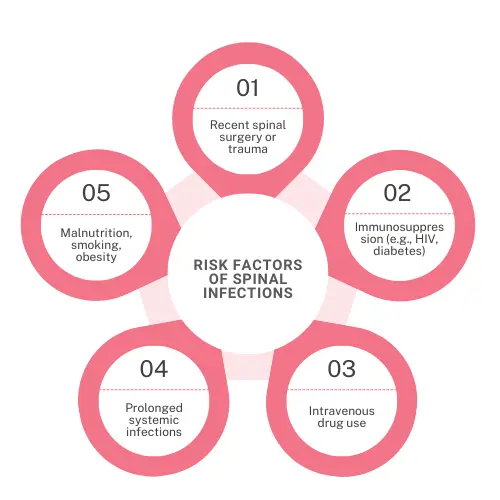
Spinal infections can spread due to various reasons including:
Spinal infections can result from surgeries or invasive treatments, including urologic surgery, spinal fusion surgery, certain dental procedures, etc.
A traumatic injury to the spine can cause tissue damage, reduction in blood supply, open wounds, etc all of which make the spine more susceptible to infection.
Infections in other parts of the body may lead to spinal infections, either directly or indirectly. These infections can spread through the bloodstream, adjacent tissues, or as a result of direct inoculation.
The symptoms may differ depending upon the type of infection, location, extent of infection, neurological involvement, age, and immune system status of the individual. Some of the common symptoms of spinal infections include,
Spinal infections can cause persistent, localized pain that gets worse while making movements.
Fever and chills might be experienced by individuals suffering from spinal infections, however, it may not be present in all cases.
Spinal infections cause localised inflammation, redness, or pus around the surgical area.
Infections can lead to compression of the spinal cord resulting in weakness, numbness, or tingling.
Chronic infections like tuberculosis and others can cause unintended weight loss, unexplained fatigue, etc.
Other symptoms of spinal infections include reduction in mobility, weakness, loss of bowel function, problems urinating, etc.
Spinal infections can be diagnosed by a physical examination by a spine specialist . Typically infections are diagnosed using a mix of imaging tests, blood tests, and physical examinations. To identify the location, type, and severity of the spinal infection the specialist may conduct a physical examination, understand the symptoms, go over the patient’s medical history and recommend specific tests. Several imaging and blood tests are commonly used to diagnose spinal infections including,
Blood Test: To identify the changes in the blood cell count.
Spinal X-ray: Provides a basic view of the spine to help identify bone & disc deterioration.
MRI: Gives a detailed image of the surrounding soft tissues, disc, nerves, etc.
CT Scan: Helps create 2D images of the spine & identify bone health.
Surgical Biopsy: To detect if the condition is cancerous or non-cancerous.
Radioisotope Scan: To check for abnormalities in the bones caused by infection.
The severity of the infection and the underlying symptoms determine how spinal infections are treated. Spinal infections can be treated with surgical and non-surgical methods. In most cases, specialists advise a non-surgical approach to treatment before recommending an invasive way of treatment.
Prescribed medications such as antibiotics and antifungal medicines can help reduce and eradicate the organisms causing infections. The effects of medications can be seen in 6–8 weeks.
Spinal infections may reduce mobility, physical therapies and exercises to help restore strength and range of motion.
The necessity of surgery is determined by the severity of the symptoms. Surgical procedures are the recommended course of action when non-surgical treatments are insufficient to treat the infection. When infection destroys bone tissue, causes spinal instability or impairs movement or sensation surgery is performed. Laminectomy, kyphoplasty and other surgical procedures are used to treat spinal infections.