
Your LDL cholesterol may be normal. Your blood pressure may be under control. You may exercise regularly and eat well. Yet there could still be an inherited cardiovascular risk that your routine lipid profile does not reveal.
That risk factor is Lipoprotein(a), or Lp(a).
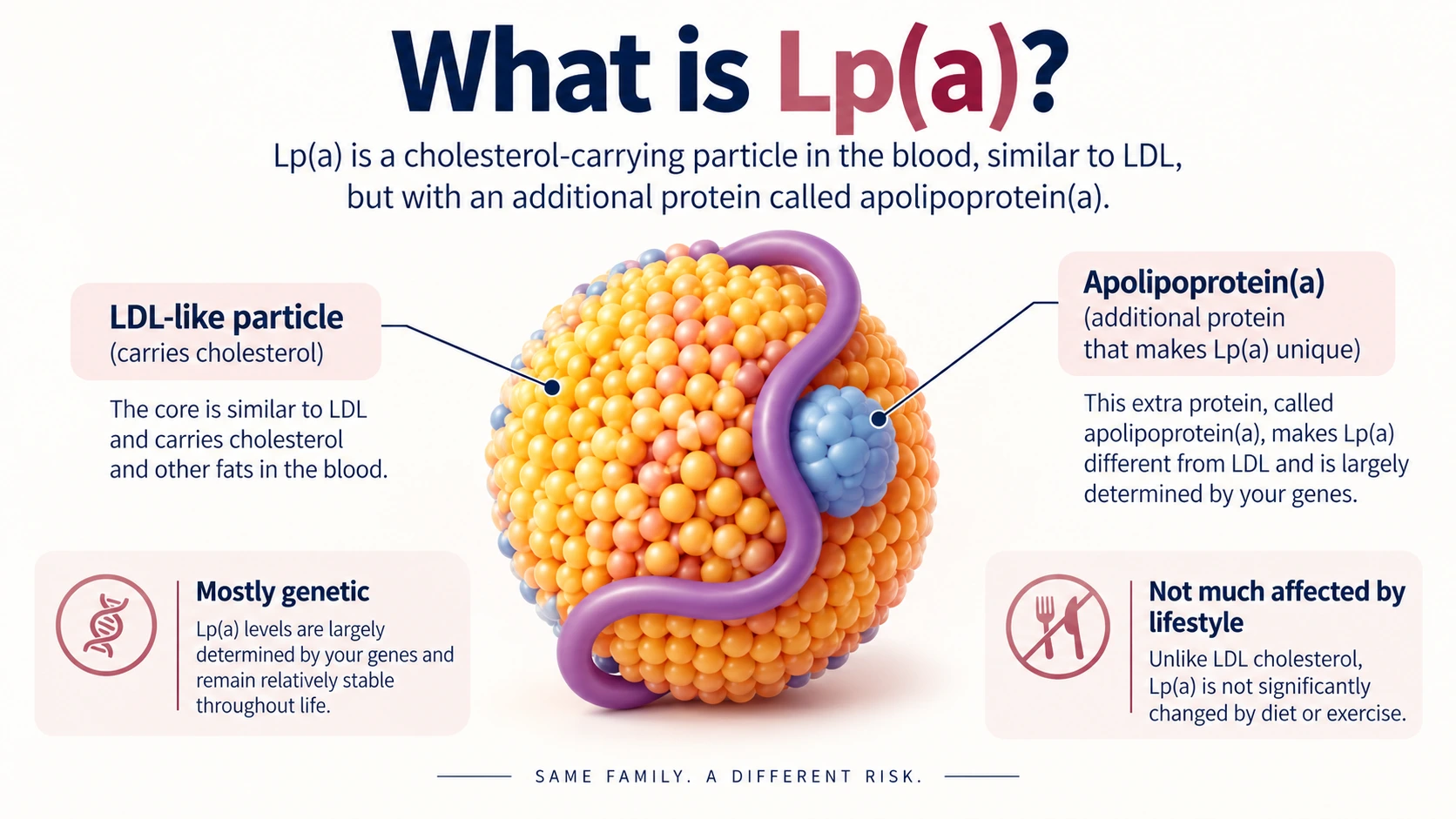
So, what is Lp(a)? Lp(a) is a cholesterol-carrying particle in the blood that resembles LDL cholesterol but has an additional protein called apolipoprotein(a). Unlike many conventional cardiovascular risk factors, Lp(a) levels are predominantly determined by genetics and remain relatively stable throughout life.
This matters because elevated Lp(a) is an established risk factor for atherosclerotic cardiovascular disease, including heart attack and stroke, and is also associated with calcific aortic valve disease. Importantly, elevated Lp(a) can contribute to cardiovascular risk even when LDL cholesterol is well controlled.
And in 2026, Lp(a) is no longer considered a niche test. The latest American College of Cardiology/American Heart Association guideline recommends that all adults have their Lp(a) measured at least once for cardiovascular risk assessment.
Think of lipoprotein(a) or Lp(a) as an LDL-like particle with an additional component.
Its core contains apolipoprotein B, similar to LDL. Attached to this is another protein called apolipoprotein(a). This additional protein is what makes Lp(a) biologically different from ordinary LDL. The important part is how much of it you inherit.
More than 90% of the variation in Lp(a) levels is genetically determined, primarily through variations in the LPA gene. Lifestyle changes such as diet and physical activity have relatively little effect on Lp(a) concentration compared with their effect on other cardiovascular risk factors.
Key Takeaway: Despite healthy lifestyle choices your Lp(a) might be genetically elevated.
That does not mean lifestyle is unimportant. Quite the opposite. It means Lp(a) is another piece of the cardiovascular risk puzzle that deserves to be considered alongside cholesterol, blood pressure, blood sugar, smoking, weight, physical activity and family history.
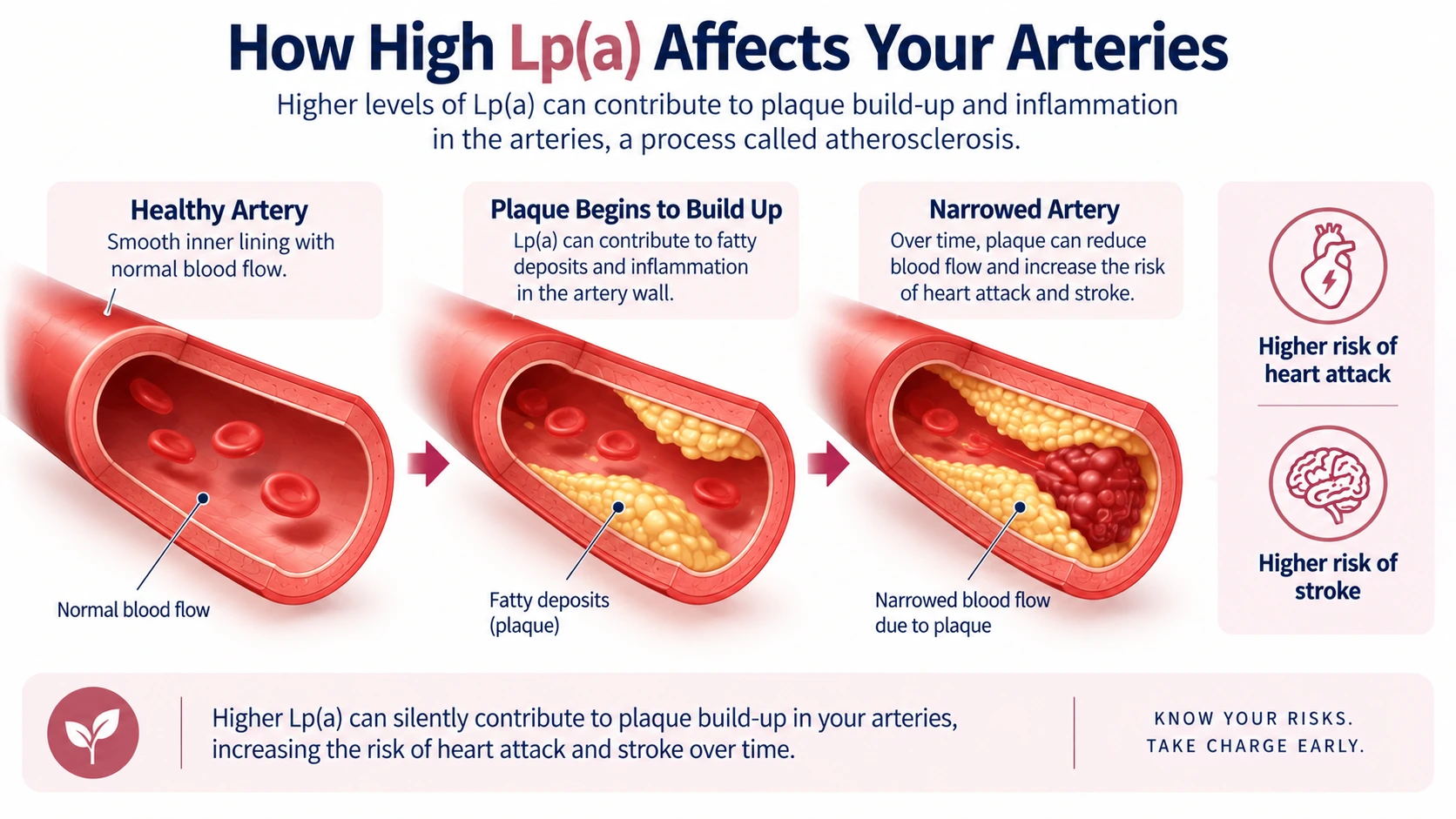
When Lp(a) is elevated, it can contribute to processes involved in plaque build-up and inflammation inside the arteries.
Over time, this can contribute to narrowing of the arteries supplying the heart and other organs, increasing the risk of cardiovascular events such as heart attack and stroke. Large genetic and epidemiological studies support a causal relationship between elevated Lp(a) and atherosclerotic cardiovascular disease.
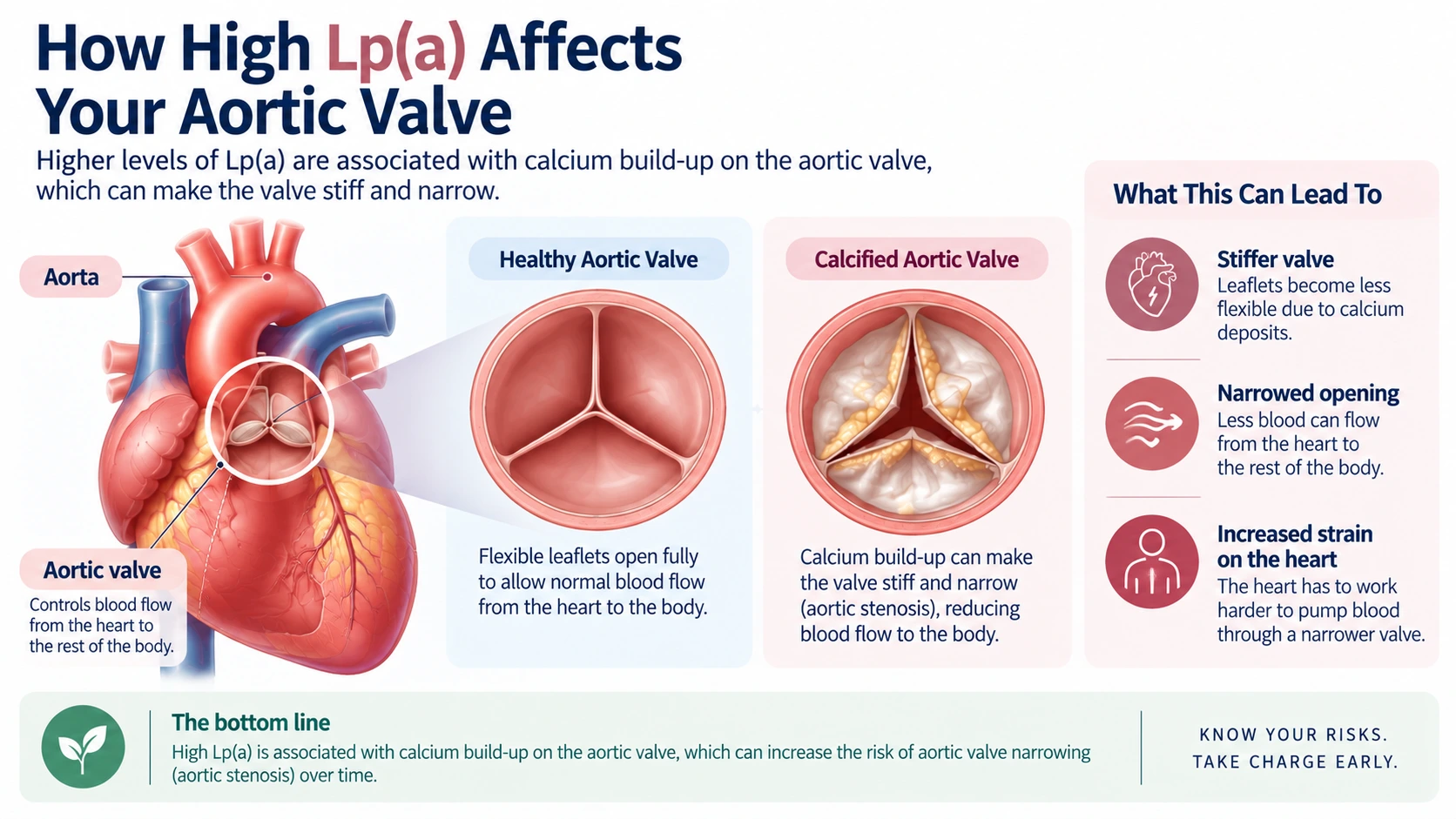
There is another important association.
Elevated Lp(a) is linked with calcium build-up on the aortic valve, which can cause the valve to become stiff and narrow. This condition is known as calcific aortic valve disease, and advanced narrowing is called aortic stenosis.
In other words, Lp(a) is relevant to more than the arteries. It can also be part of the story behind disease affecting one of the heart’s major valves.
Yes. And this is one of the reasons Lp(a) is important.
A conventional lipid profile primarily tells you about measurements such as LDL cholesterol, HDL cholesterol and triglycerides. These remain important, but they do not completely capture every dimension of cardiovascular risk.
Lp(a) can remain elevated even when LDL cholesterol is low or well controlled. The European Atherosclerosis Society specifically notes that elevated Lp(a) remains associated with cardiovascular risk even at low LDL-C levels.
This means a reassuring cholesterol report does not necessarily tell the entire cardiovascular story. Your LDL tells you something. Your Lp(a) may tell you something else.
This question becomes particularly relevant when we look at cardiovascular disease in South Asian populations.
A 2025 review in the Journal of the American Heart Association reported that approximately 25% of South Asians have Lp(a) levels above 50 mg/dL. The same review notes that South Asians experience myocardial infarction nearly a decade earlier than people of European ancestry.
Lp(a) is not the only explanation for premature heart disease among South Asians. Diabetes, hypertension, metabolic health, smoking, abdominal obesity, diet, physical inactivity, genetics and other factors all contribute.
But the combination of a higher prevalence of elevated Lp(a) and an already high burden of premature cardiovascular disease makes Lp(a) particularly relevant to preventive cardiology in India.
A 2024 study from the North India STEMI Registry, for example, found that 32.8% of patients hospitalised with ST-elevation myocardial infarction were younger than 50 years.
That changes the conversation around heart screening. Cardiovascular prevention cannot simply begin when someone is older or develops symptoms.
The answer has changed significantly. The 2026 ACC/AHA guideline recommends measuring Lp(a) at least once in all adults as part of cardiovascular risk assessment.
Testing is particularly relevant when there is:
Because Lp(a) is predominantly inherited, an elevated result may also have implications for close family members. Current guidance supports family-based or cascade testing in selected situations involving premature cardiovascular disease, familial hypercholesterolaemia or markedly elevated Lp(a).
The 2026 ACC/AHA guideline considers Lp(a) ≥125 nmol/L or ≥50 mg/dL a risk-enhancing level. At this level, estimated cardiovascular risk is approximately 1.4 times higher; levels of ≥250 nmol/L or ≥100 mg/dL are associated with approximately twice the estimated ASCVD risk.
However, Lp(a) results should not be interpreted in isolation.
Different laboratories may report Lp(a) in mg/dL or nmol/L, and these units should not be casually converted using a single universal formula because particle composition varies. Interpretation should therefore consider the assay, the units reported and the individual’s overall cardiovascular risk.
First, a high Lp(a) result does not mean you have heart disease. It means you may have an additional risk factor that deserves attention.
At present, there is no widely approved therapy whose sole purpose is to lower Lp(a) and has conclusively demonstrated cardiovascular outcome benefit. Dedicated Lp(a)-lowering therapies are, however, being studied in clinical trials.
So why test for something that cannot yet be directly treated?
Because the rest of your cardiovascular risk can be managed.
The 2026 ACC/AHA guideline recommends early, optimal control of modifiable cardiovascular risk factors in people with elevated Lp(a). This may include paying closer attention to:
Knowing your Lp(a) can therefore change how a doctor looks at your overall risk and how aggressively modifiable risks should be addressed.
One of the biggest misconceptions about cardiovascular disease is that age alone determines risk – it does not. South Asians can develop coronary artery disease earlier than many other populations, and younger patients with cardiovascular disease may not fit the traditional image of someone “at risk.”
That is why preventive cardiology is moving towards a more complete picture of risk. A heart-health assessment may include your family history, blood pressure, blood sugar, cholesterol profile, lifestyle factors and, where appropriate, additional markers such as Lp(a)… The objective is to identify meaningful risk before it becomes an event.

So, what is Lp(a) or lipoprotein(a)?
Because, you cannot choose the genes you inherit, you can choose to understand the risks they may carry. Sometimes, one blood test can open a much bigger conversation about your heart.
Written and Verified by:

Similar Cardiology Blogs
Request a call back