Trust img

Home >Blogs >World Heart Day 2026
CK Birla Hospital

World Heart Day 2026

Cardiology | by Dr Shashikant Mishra on Sep 18, 2026

Share :

Summary

  • Understand why heart health awareness and early detection matter.
  • Recognise common and less obvious symptoms of heart problems.
  • Learn about the risk factors that can increase your chances of cardiovascular disease.
  • Explore diagnostic tests used to assess heart health and cardiovascular risk.
  • Discover simple everyday habits that can support better heart health.
  • Know when recurring symptoms or risk factors may require a cardiology consultation.

Do you know someone who’s had a heart issue? A friend, a relative, maybe even a celebrity whose story made headlines. Chances are, yes, you do. Heart disease has become so common that almost everyone knows someone affected by it.

But common should not mean overlooked. Early awareness and prevention still save lives and that’s precisely what World Heart Day 2026 is calling for, with this year’s message: Don’t Miss a Beat. Recognising the symptoms that hide before they become emergencies.

How Big Are Heart Health Problems, Really?

Cardiovascular disease, the umbrella term for conditions affecting the heart and blood vessels, is the world’s leading cause of death.

Quick fact

According to the WHO, an estimated 19.8 million people died from CVDs in 2022, accounting for around 32% of all deaths globally. Heart attacks and strokes were responsible for 85% of these CVD deaths.

Cardiovascular disease (CVD) includes conditions such as:

And here is something many people overlook: some of the factors that increase your heart disease risk do not cause symptoms. One major study found that more than 45% of heart attacks were silent, with no recognised symptoms at the time.

Many people feel perfectly well while having:

  • High blood pressure
  • High cholesterol
  • High blood sugar
  • Early artery changes

That is why prevention is not only about reacting to symptoms, but also about knowing your risk before any obvious warning signs.

Common Symptoms of Heart Issues You Should Know

Look out for these cardiovascular disease symptoms:

  • A tightness, pressure or heaviness in your chest
  • Feeling short of breath during activity or sometimes even at rest
  • Feeling more tired than usual without an obvious reason
  • Feeling dizzy or light-headed
  • Fainting or near-fainting
  • Palpitations like your heart is racing, fluttering, or skipping beats
  • Swelling around your ankles, feet, or legs
  • Low stamina; everyday activities like climbing stairs feeling harder
  • Chest pain that sometimes spread to your arm, shoulder, back, neck, or jaw

Don’t overlook the less obvious signs

Some symptoms can be easy to overlook or attribute to stress, lack of sleep or ageing. These can be unusual tiredness, shortness of breath or reduced ability to do everyday activities. These symptoms can have many causes and do not always mean that you have any heart disease. But if these signs are persistent or getting worse, you should see a cardiologist.

Know the signs of a heart attack

A heart attack does not always begin with severe chest pain. Some possible symptoms are:

  • Chest pressure or discomfort
  • Shortness of breath
  • Cold sweating
  • Nausea or vomiting
  • Light-headedness
  • Unusual tiredness
  • Pain or discomfort in the arm, shoulder, back, neck or jaw

If you think you or someone around you could be having a heart attack, seek emergency medical care immediately.

Can You Have Heart Disease Without Symptoms?

Yes. Some heart conditions can be present for years without causing any noticeable symptoms.

Coronary artery disease (CAD), for example, can develop as plaque builds up and narrows the arteries that supply blood to the heart. Some people may not have symptoms until the condition becomes more advanced or complicated. That is why knowing your risk factors and getting appropriate health checks can help identify potential heart problems early.
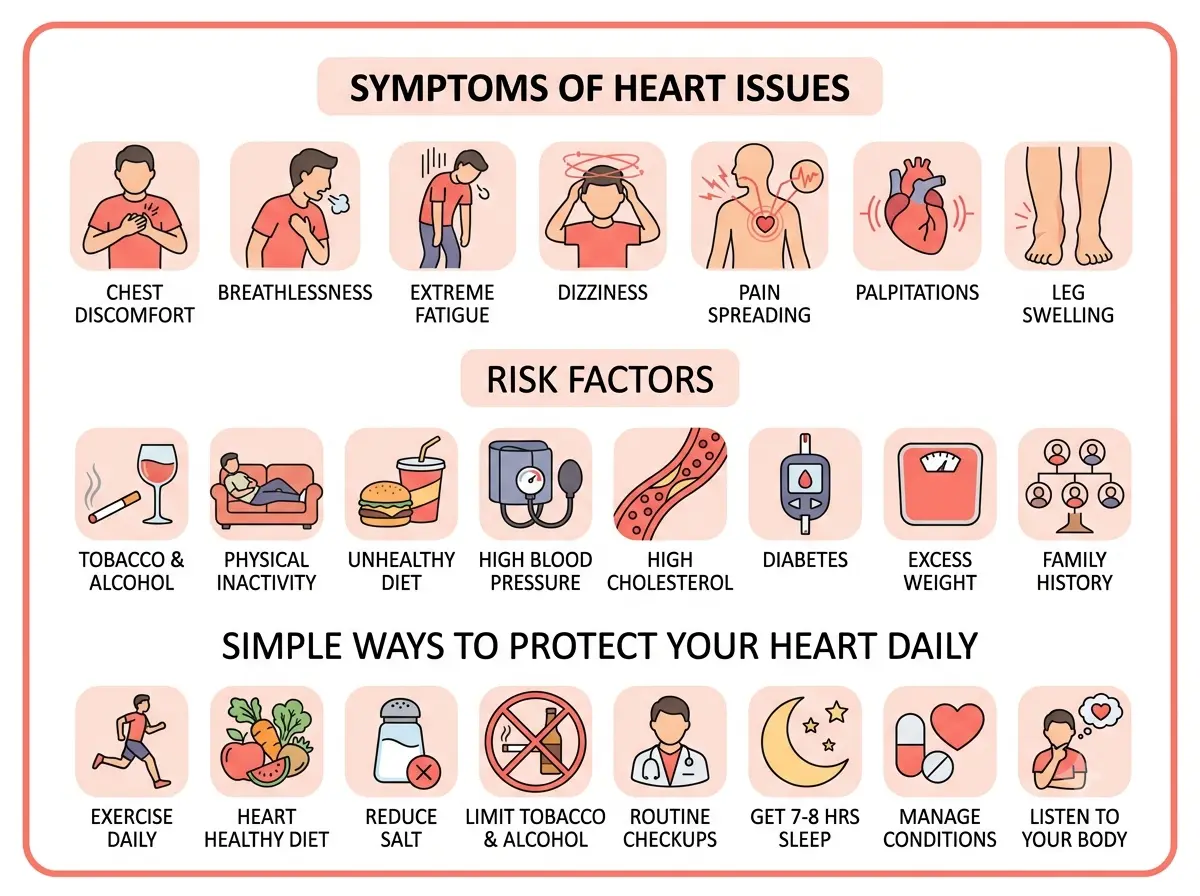
Symptoms of heart issues

What Increases Your Risk of Heart Disease?

Your heart health is influenced by a combination of lifestyle, medical and inherited factors.

Risk factors you can work on

  • Alcohol and tobacco consumption
  • Physical inactivity
  • Unhealthy diet
  • High blood pressure
  • High cholesterol
  • Diabetes management
  • Excess weight

Risk factors you cannot change

  • Age
  • Family history
  • Certain inherited conditions

The WHO identifies tobacco use, an unhealthy diet, physical inactivity and harmful alcohol use as important behavioural risk factors for cardiovascular disease (CVD).
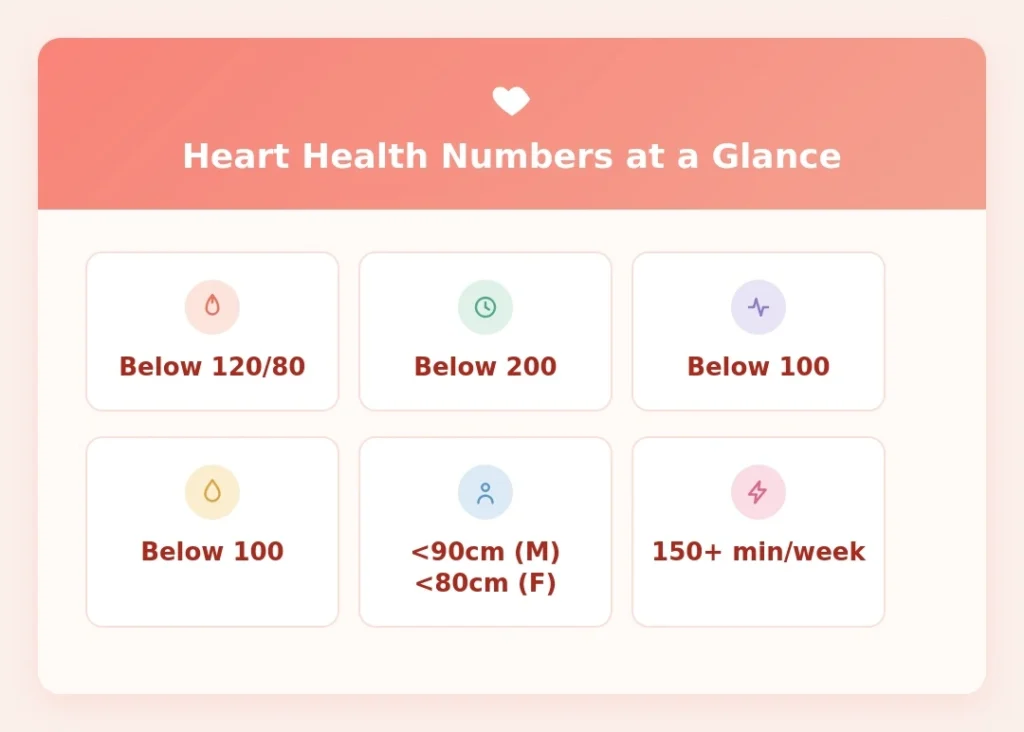
Heart healthy numbers at a glance

Diagnostic Tests Used to Check Your Heart Health

Depending on your symptoms and risk factors, the cardiologists may suggest a few tests to check your heart health and identify the potential risks.

  • ECG (electrocardiogram):

It records the heart’s electrical activity and can help identify abnormal heart rhythms and certain signs of heart problems.

  • Echocardiogram:
    This test uses ultrasound to look at the heart’s structure, its pumping function and valves.
  • Blood sugar tests:
    Tests such as fasting blood glucose and HbA1c can help identify diabetes or high blood sugar, which can increase the risk of cardiovascular disease over time.
  • Lipid profile:
    It measures the cholesterol and triglycerides level in your blood.
  • Lipoprotein(a) or Lp(a) test:
    This test measures a largely inherited type of cholesterol-carrying particle. Higher Lp(a) levels are associated with a higher risk of heart attack and stroke. The 2026 ACC/AHA dyslipidemia guideline recommends measuring Lp(a) at least once in adulthood as part of cardiovascular risk assessment.
  • Treadmill Test (TMT) or stress test:

These cardiac stress tests monitor your heart while you exercise and can help evaluate how it responds when it is working harder.

  • Holter monitor:

It is a portable ECG that records your heart rhythm for an extended period, helping detect irregular heartbeats that may not appear during a short ECG.

  • Other cardiac imaging tests:

Based on your symptoms and risk, a cardiologist may recommend tests such as CT coronary calcium scoring or coronary angiography to look more closely at the coronary arteries.

You may not need all of these tests. Your cardiologist will recommend investigations based on your symptoms, medical history and individual risk factors.

Simple Ways to Protect Your Heart Every Day

  • Be physically active: Walk, cycle or choose another activity that works for your fitness level.
  • Eat more whole foods: Include vegetables, fruits, whole grains and other minimally processed foods in your diet.
  • Avoid excess salt: You should cut back on excess salt particularly if you have high blood pressure.
  • Avoid tobacco and high alcohol consumption: Quitting smoking is one of the most useful things you can do for your cardiovascular health.
  • Go for routine health checkups: Keep track of your blood pressure, cholesterol and blood sugar when recommended.
  • Prioritise sleep: Regular, adequate sleep is very important for your overall cardiovascular health.
  • Manage existing conditions: Listen to your doctor and follow the treatment plan if you have hypertension, diabetes or high cholesterol.
  • Pay attention to changes: Do not dismiss sudden breathlessness, unusual fatigue or reduced exercise tolerance. Get yourself evaluated if something feels off.

Conclusion

“Don’t Miss a Beat” – that’s the message behind World Heart Day 2026, and it applies no matter your age. Whether you are in your 20s or your 60s, your heart does not wait for a certain age to start needing attention. Sometimes the warning signs are obvious and sometimes the changes build gradually. Either way, most cardiovascular risk factors can be managed when identified early.

If you have been noticing recurring symptoms, have a few risk factors, a family history of heart disease, or a change in your health, don’t wait it out. Book a consultation with our Cardiology Department at the CK Birla Hospital for a detailed evaluation and personalised guidance.

FAQs

Share :

Written and Verified by:

MBBS, PGDCCP Senior Consultant - Non-Invasive Cardiology Dr Shashikant Mishra is a clinical cardiologist with over 23+ years of experience. He performs a wide range of non-invasive cardiac procedures, including TMT, 2D Echocardiography (ECHO), Stress Echocardiography (Stress Echo), Dobutamine Stress Echo, and Holter Monitoring. He completed his MBBS from NRS Medical College, Kolkata, in 2004 and obtained a Postgraduate Diploma...