
Persistent itchy skin can result from dry skin, allergies, eczema, infections, or certain medical conditions. Identifying the underlying cause is essential for effective treatment and long-term skin health.
Have you ever found yourself scratching your arms, legs, or back repeatedly and wondering, “Why is my body itchy all the time?” Occasional itching is common, but itchy skin that refuses to go away may be a sign that it is time to seek medical attention.
For many people, an itching problem can be due to dry skin, seasonal changes, or an allergic reaction. However, in some cases, when your whole body feels itchy may be connected to underlying health conditions. In this blog, let’s walk through the causes of body itching that can help you recognize when simple selfcare may be enough and when it is time to go to a doctor.
The medical term for itchy skin is pruritus. It refers to an uncomfortable sensation that makes you want to scratch.
It can affect a small area or involve the entire body. It may irritate you with redness, bumps, or a rash, but sometimes the skin looks completely normal.
Your skin contains specialized nerve endings that react to irritation, dryness, inflammation, or certain chemicals released by the body. When these nerves are triggered, they send signals to the brain, creating the urge to scratch.
Although scratching may provide temporary relief, excessive scratching can damage the skin, worsen inflammation that can frustrate you.
Most itchy skin causes are not serious. Some of the most common reasons are:
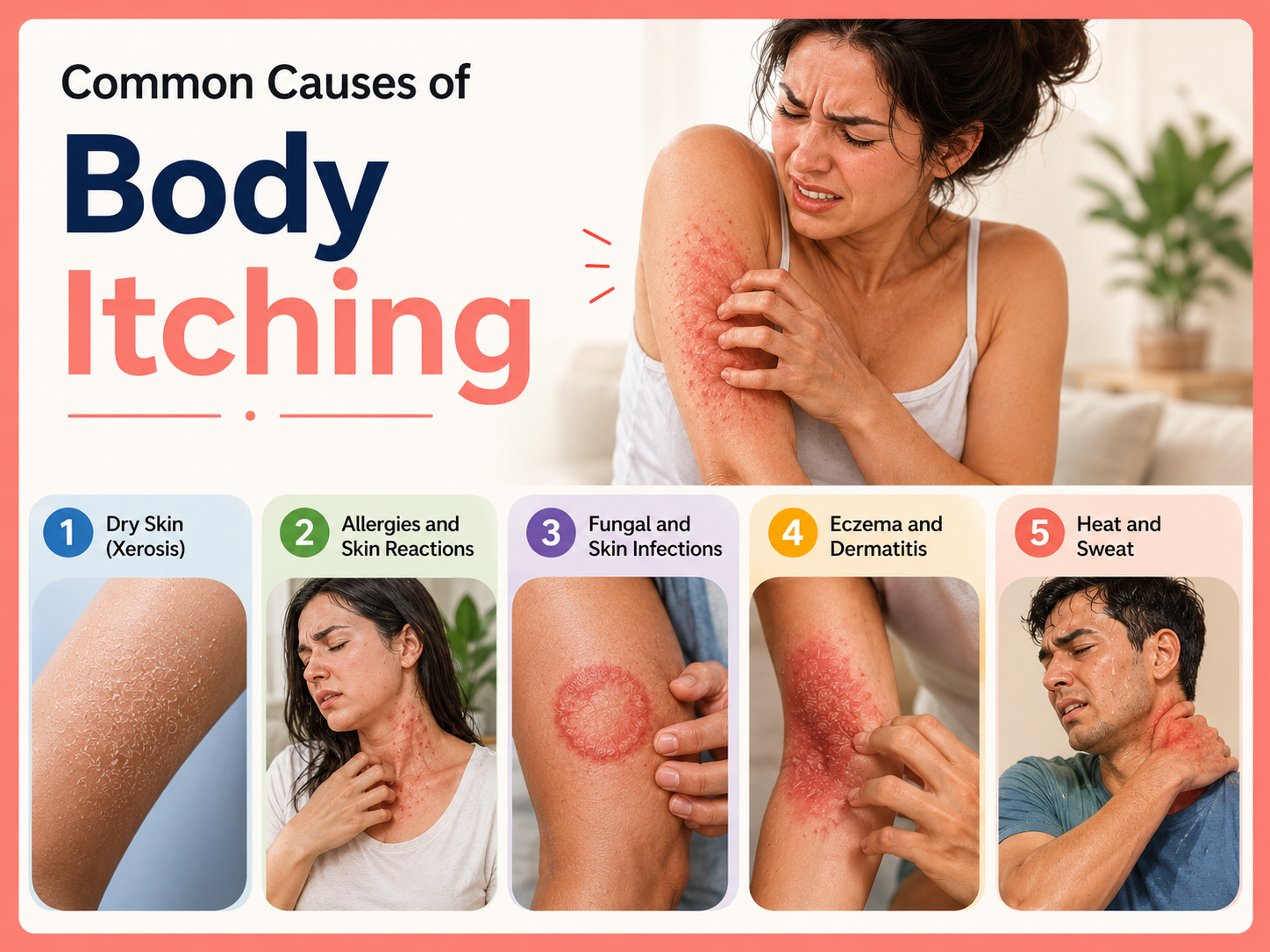
It is one of the major reasons for this condition, especially during winter or in air conditioned environments. Aging can also reduce the skin’s natural moisture levels. Its common signs are:
An itchy skin allergy occurs when the immune system reacts to a substance that it considers harmful. Some possible factors that can cause skin allergies are:
Eczema and dermatitis are inflammatory skin conditions that frequently cause itching, redness, and irritation. These conditions can flare up due to stress, allergens, weather changes, or skin sensitivity.
Certain fungal infections, bacterial infections, and parasitic conditions can also lead to itchy skin. These produce visible changes such as redness, scaling, or small bumps.
Excessive sweating can block sweat glands and irritate the skin, leading to itching, especially in hot and humid climates.
One of the most confusing situations is experiencing a whole body itching with no rash. Many people assume that itching must always be caused by a skin problem, but this is not always true. Sometimes, the skin looks completely normal, but the itching originates from internal changes within the body.
The following points highlights some possible causes:
This is why persistent whole body itching should not always be dismissed as a simple skin issue.
Most cases of itchy skin improve with moisturisers and basic skincare. However, certain symptoms need your serious attention.
You should consider seeing a skin specialist if:
These signs do not necessarily mean something serious is happening with your body, but they do indicate that a proper evaluation is worthwhile. A dermatologist can help identify the reason for itching in whole body areas through a detailed examination, medical history review, and, if necessary, blood tests or allergy testing.
When you know the reasons behind your itchy skin, you can prevent it from getting more serious. If you are experiencing full body itching, or recurring itchy skin allergy symptoms, speaking with a skin specialist can help you choose the right course of action.
At the CK Birla Hospital, experienced dermatologists can help you identify the root cause of persistent itching and guide you toward effective treatment, so you can feel comfortable in your skin again.
Written and Verified by:

Similar Dermatology Blogs
Request a call back


