
Mucus in stool is a jelly-like substance your gut produces daily to help stool pass smoothly and protect the intestinal lining with small amounts are normal. However, frequent, excessive, or bloody mucus, especially with abdominal pain, diarrhoea, or weight loss, may signal IBS, IBD, infection, or another condition that needs a doctor's evaluation.
Do you check the toilet bowl after you poop? If not, you probably should, because your stool says a lot about what is happening inside your body. Many people spot a jelly-like streak of mucus in their stool and immediately start spiraling: “Is this normal?” or “Is my body warning me about something serious?”
Truth is, your gut produces some mucus daily as part of its normal function, so a small amount usually is not concerning. But frequent or excessive mucus, especially with stomach pain, diarrhoea, or blood, should be checked by a specialist.
So how do you know which one you are dealing with? Read along to find the answer!
Your intestines naturally produce a slippery, jelly-like substance called mucus. It coats the lining of your gut and helps stool move through the colon smoothly, without friction.
In a nutshell, mucus helps by:
Small amounts are usually mixed into stool and may not be visible. You may notice mucus more clearly when the intestine is irritated or inflamed, since mucus production increases as a protective response.
So, spotting a small amount of mucus is not necessarily abnormal. What matters more is the amount, appearance, how frequently it occurs, and whether other symptoms are present.
Mucus deserves more attention when it:
Mucus itself is a symptom rather than a diagnosis. Various digestive conditions can cause it, ranging from relatively common problems such as IBS to inflammatory bowel disease and, less commonly, colorectal cancer.
Intestinal Irritation and Constipation
When stool gets stuck and you strain, it irritates your gut and triggers extra mucus. Diarrhoea can also have the same effect, since intestinal lining gets irritated due to more frequent bowel movements.
Inflammatory Bowel Disease (IBD)
IBD covers two main conditions: ulcerative colitis and Crohn’s disease, both of which can cause long-term inflammation in your digestive tract.
Ulcerative colitis specifically affects the large intestine and produces mucus or pus in stool. Crohn’s disease can affect any part of the digestive tract.
Either way, expect it to come with diarrhoea, abdominal pain, rectal bleeding, fatigue, or unexplained weight loss.
Irritable Bowel Syndrome (IBS)
IBS usually shows up as whitish mucus in stool, along with bloating, cramping, and unpredictable bowel habits, sometimes diarrhoea, sometimes constipation, sometimes both. Since IBS is closely tied to the gut and brain connection, stress can make symptoms worse.
Intestinal Infections
Viral, bacterial and parasitic infections can irritate the intestine and lead to more mucus, which may come along with diarrhoea, abdominal cramps, fever or blood in the stool.
Food Allergies or Intolerances
Certain food allergies and intolerances can cause digestive symptoms like diarrhoea and abdominal discomfort in children.
Tip: A food diary can sometimes help identify a consistent relationship between a food and symptoms, but restrictive diets should not be started without appropriate medical or dietary guidance.
Piles (Haemorrhoids)
These are swollen veins around the anus or rectum, usually caused by straining or constipation. They usually bleed bright red and can come with some mucus but don’t assume mucus is always from piles. If it is persistent, get it checked.
Proctitis
This is inflammation of the rectal lining. It can cause mucus, blood, rectal pain, urgency and a frustrating feeling that you need to pass stool even after having a bowel movement.
Colorectal Cancer
It is a less common cause of mucus in stool, but it should be considered when mucus is coming alongside warning signs such as blood in the stool, persistent changes in bowel habits, abdominal discomfort, sudden weight loss or fatigue.
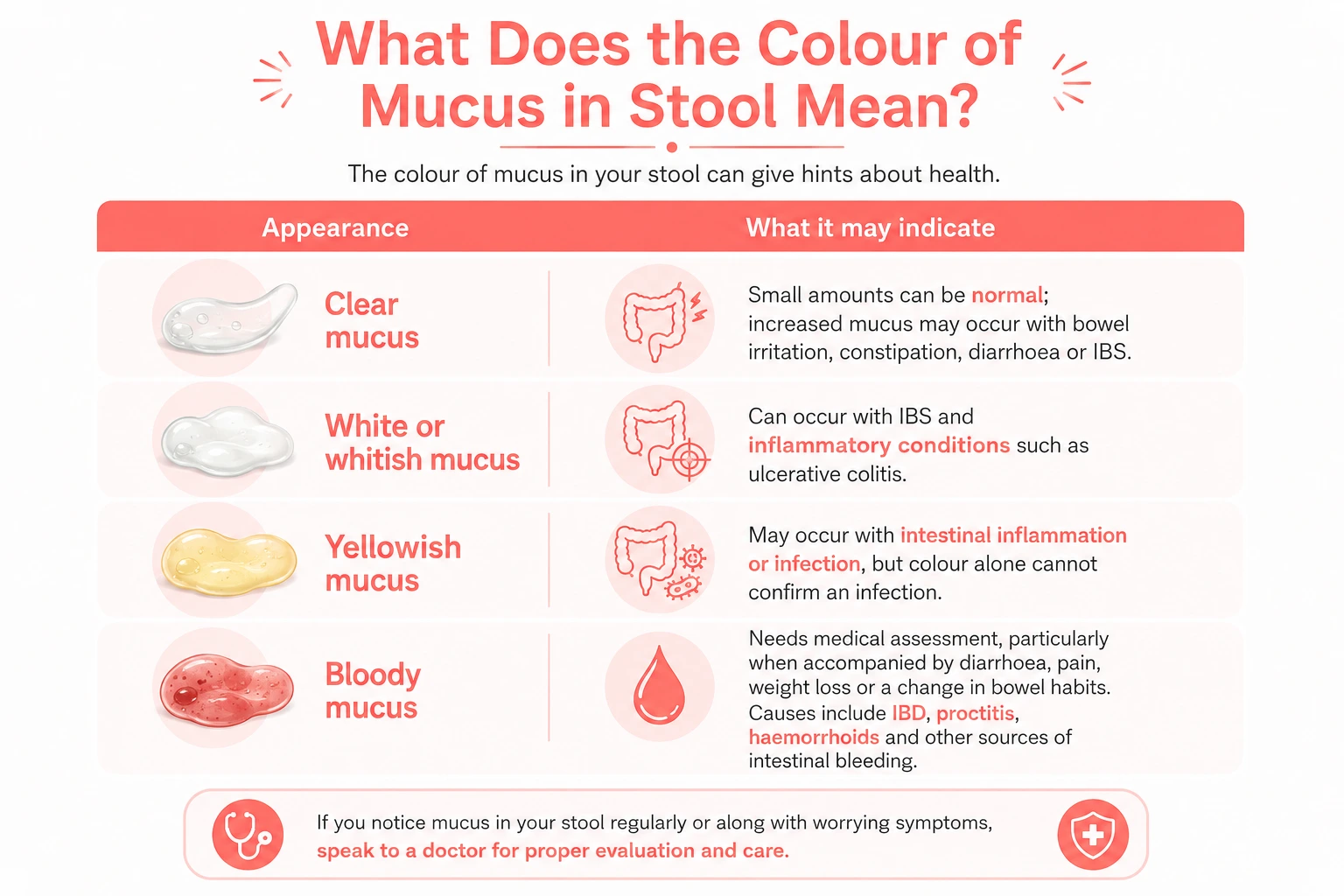
You should speak with a doctor if mucus is persistent, recurring or accompanied by:
Blood in stool or persistent mucus should not simply be assumed to be IBS or piles without getting it properly checked. Initially, you can speak with an internal medicine doctor or general practitioner (GP). If there is anything that needs special assessment, they may refer you to a specialist doctor like a gastroenterologist.
A gastroenterologist usually begins by asking about your bowel habits, diet, medicines, recent infections, family history and other symptoms.
Depending on the situation, your evaluation may involve:
Not everybody with mucus in stool needs to go through all of these tests. The choice of tests depends on your symptoms, age, previous conditions, and other factors.
Once you know what is causing the mucus, the next step is figuring out what actually helps. Let’s see how you can take care of this problem.
Dietary and Lifestyle Measures
Treating the Underlying Condition
Home Remedies
You cannot prevent every cause, but there are various habits that can improve your bowel health.
A small amount of clear mucus in stool can be normal. But persistent, excessive, coloured or bloody mucus needs attention, especially when it comes along with abdominal pain, diarrhoea, weight loss or changes in bowel habits.
If you are unsure about a recurring change in your stool, a consultation with the Gastroenterology Department at the CK Birla Hospital can help identify the cause and determine whether any tests or treatment are needed. Book a consultation with us to get personalised guidance.
Written and Verified by:

Similar Gastroenterology Blogs
Request a call back