Understand what Grade 1 fatty liver means and why early management matters. Learn how healthy weight, diet and regular exercise can help reduce liver fat. Know which foods and lifestyle habits to limit for better liver health. Understand the role of blood sugar, cholesterol, blood pressure and alcohol in fatty liver. Find out when to consult a gastroenterologist or hepatologist for personalised.
If your health report mentions Grade 1 fatty liver, don’t panic, but don’t ignore it either. Grade 1 is the earliest stage and it is quite common, especially if you have a sedentary lifestyle, eat processed food often, or don’t sleep well.
The reason to take it seriously is timing. Because in this early stage, with the right lifestyle changes and appropriate medication, you can reduce the amount of fat in your liver and lower the risk of it getting worse.
Keep reading to learn what actually helps at this stage.
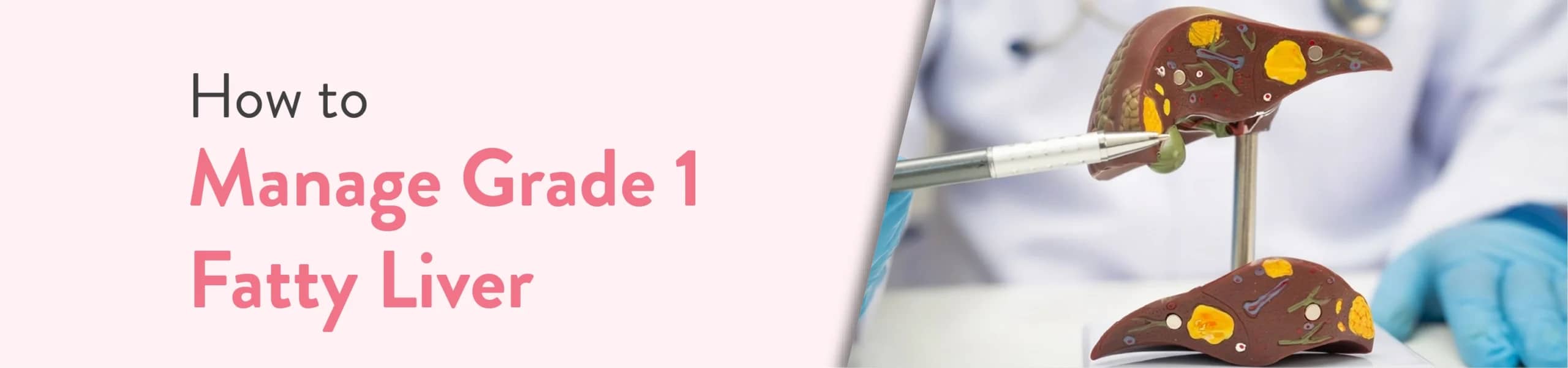
Fatty liver means that too much fat has built up inside your liver. A small amount of fat in the liver can be normal, but when the amount becomes excessive, it may affect how the liver functions.
One of the most common types is metabolic dysfunction-associated steatotic liver disease (MASLD), previously known as non-alcoholic fatty liver disease (NAFLD). MASLD is linked with excess weight, insulin resistance, type 2 diabetes, high cholesterol and other metabolic health problems. Alcohol also causes fat to build up in the liver.
Fatty liver does not cause any evident symptoms initially. It may be found during a routine ultrasound or blood tests.
Finding fatty liver early gives you an opportunity to make changes before it progresses. Grade 1 fatty liver is generally considered an early stage, and lifestyle changes can help reduce the amount of fat in the liver.
In many cases, early fatty liver can improve significantly when the factors causing fat accumulation are addressed. However, the timeline can differ from person to person. How quickly the liver improves depends on your weight, diet, physical activity, blood sugar, cholesterol, alcohol intake and other health factors.
Do not assume that reversal means losing weight as quickly as possible. Crash diets, extreme fasting or skipping meals will not help in the long run. Instead, focus on gradual weight loss, regular physical activity and better metabolic health.
Your doctor may also recommend follow up blood tests or imaging tests to see how your liver is responding to these changes.
As mentioned earlier, Grade 1 fatty liver can be improved in many cases and the amount of fat in the liver can be reduced, especially when it is identified early. But a single medicine, food or drink cannot make your fatty liver disappear.
The treatment mainly depends on why the fat has accumulated in the liver in the first place. For some people, excess weight and poor metabolic health may be the main reason. For others, diabetes, high cholesterol, alcohol, certain medicines or another health condition may be contributing.
This is why the treatment plan can be different for everyone. In most cases, it starts with improving everyday habits and managing the health conditions linked with fatty liver.
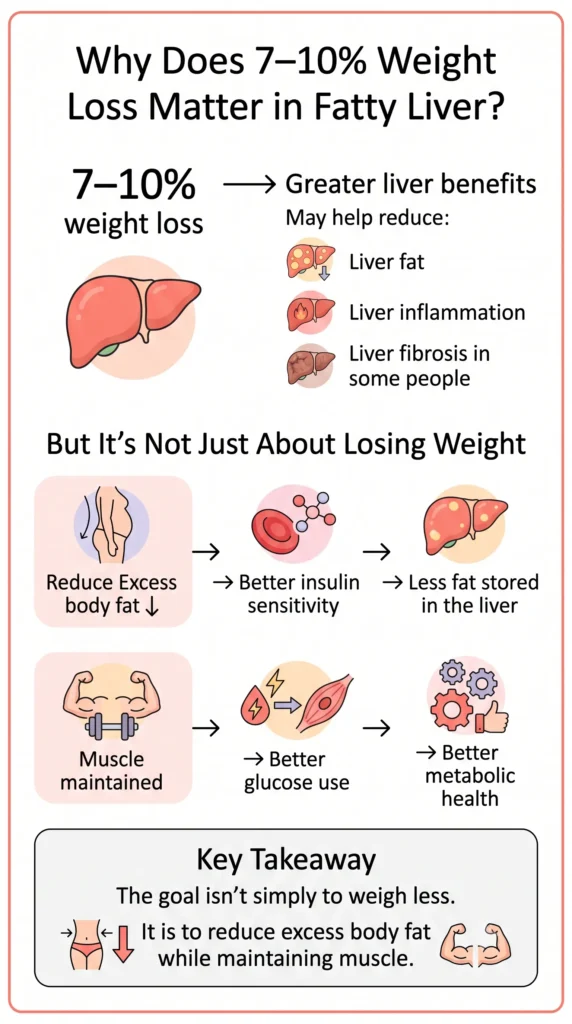
If you are overweight or obese, losing weight can make positive improvements in your health. Research suggests that losing around 3% to 5% of your body weight can help reduce liver fat. Greater weight loss, around 7% to 10%, may provide additional benefits for liver inflammation and fibrosis, particularly in people with more advanced liver disease. But remember, two people can have the same weight but very different amounts of body fat and muscle. So, when managing fatty liver, the goal should be to reduce excess body fat while maintaining muscle.
Be aware of what you eat regularly, how much you eat and how balanced your meals are.
Try to have more:
Try to cut down on:
Your overall eating pattern and how consistently you follow it matter a lot. If you are not sure what your diet should look like, it is better to consult a dietitian. They can help you create a practical diet plan based on your health, lifestyle and nutritional needs.
If you need personalised guidance, you can also consult the experienced dietitians at the CK Birla Hospital.
Regular physical activity can help reduce liver fat and improve insulin sensitivity. Both aerobic exercise and resistance training can be beneficial.
You can start with activities such as:
If you have been inactive for a long time, start slowly. Even a regular 20 to 30 minute walk can be a good beginning.
Over time, you can work towards increasing the level of physical activity, depending on your fitness level and medical condition.
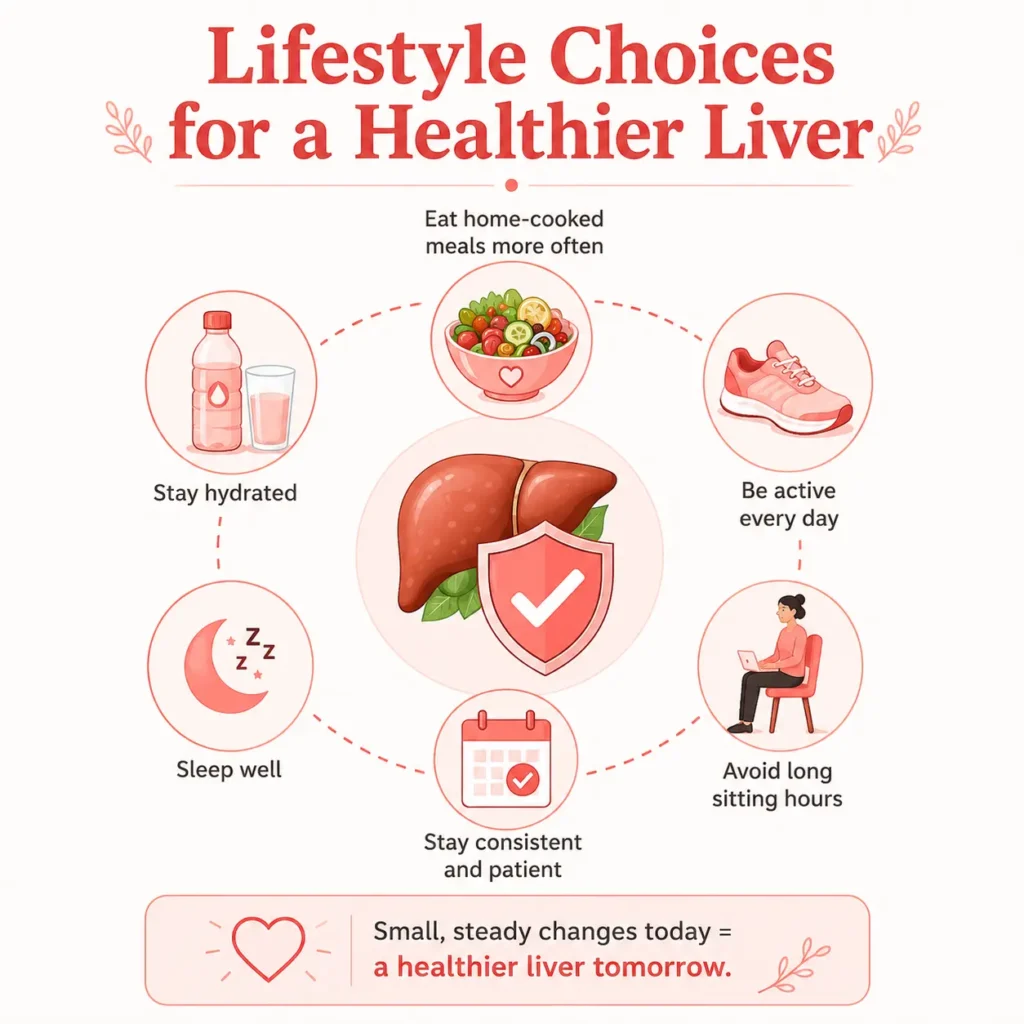
The main thing is consistency. A manageable routine you actually follow is more useful than an intense workout plan you give up after a few days.
Fatty liver is closely connected with metabolic health.
If you have:
managing these conditions becomes an important part of treating fatty liver too.
This is why your doctor may also look at your blood sugar, lipid levels, blood pressure, weight and other metabolic risk factors. Improving these numbers is not only good for your liver. It also benefits your heart and overall health.
If you have been diagnosed with fatty liver, tell your doctor how much and how often you drink. Whether you need to reduce alcohol or avoid it completely will depend on the cause of your fatty liver, how healthy your liver is and whether any fibrosis is present. People with significant fibrosis are generally advised to avoid alcohol.
Once people find out that they have fatty liver, one of the first things they may come across is a juice, powder, herbal product or supplement claiming to detox the liver. There is no special detox product that removes fat from the liver.
Some herbal and dietary supplements can even harm the liver or interact with medicines you are already taking. You should always discuss the supplements with a healthcare professional before using them for fatty liver.
Grade 1 fatty liver is a sign that your liver needs some attention. Small, consistent changes in your diet, physical activity, weight and overall metabolic health can help reduce fat in the liver and lower the risk of progression. It is important to make changes you can follow in the long run and keep up with any treatment recommended by your doctor.
If you have been diagnosed with Grade 1 fatty liver and are unsure where to start, book a consultation with our expert liver disease specialists at the Gastroenterology or Hepatology department of the CK Birla Hospital for personalised advice based on your health and lifestyle.
Written and Verified by:

Similar Gastroenterology Blogs
Request a call back