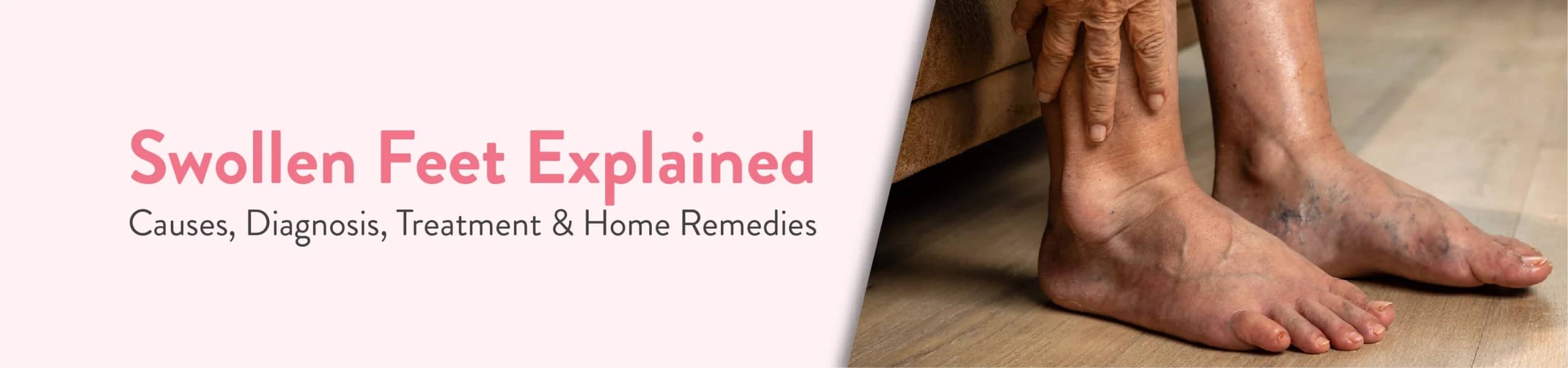
Swelling feet, also known as edema, can result from prolonged sitting or standing, pregnancy, high salt intake, injuries, vein problems, medications, or underlying health conditions. Learn about the causes, symptoms, diagnosis, home care, and warning signs that require medical attention.
Your feet are meant to move. Movement helps push fluid back up through your legs, but stillness lets gravity pull it down instead. That’s why pregnancy, aging, or standing and sitting for too long can cause your feet to swell. But does swelling feet mean something to worry about? Read along to understand why your feet swell, how to get relief and when it is time to see a doctor.
We colloquially call it “swelling feet,” but the medical term is edema, a condition caused by excess fluid collecting in body tissue, commonly in the feet, ankles, and lower legs. It happens when fluid is not circulating back up through the body efficiently, so it settles in the lower extremities instead.
You have probably noticed the signs like your shoes feeling tighter by evening, or a dent left behind when you press on your ankle. That is called pitting edema. Sometimes the swelling does not leave a mark at all when pressed; this is non-pitting edema, and it is generally linked to conditions like lymphedema.
What should you keep in mind?
Not all foot swelling is edema. Injury, inflammation, and infection can make a foot look swollen too, even when fluid retention is not the main cause.
In edema (swelling feet), the most common signs to watch for are:
Pay attention to what comes with the swelling. Pain after an injury may point towards tissue damage. Redness and warmth may be a sign of some infection or inflammation. If you are suffering with swelling in just one leg, along with sudden pain or tenderness, it can be a sign of DVT (Deep Vein Thrombosis), which is a blood clot in a deep vein.
If your swelling feet are accompanied by any of these signs, it is best to see an internal medicine doctor.
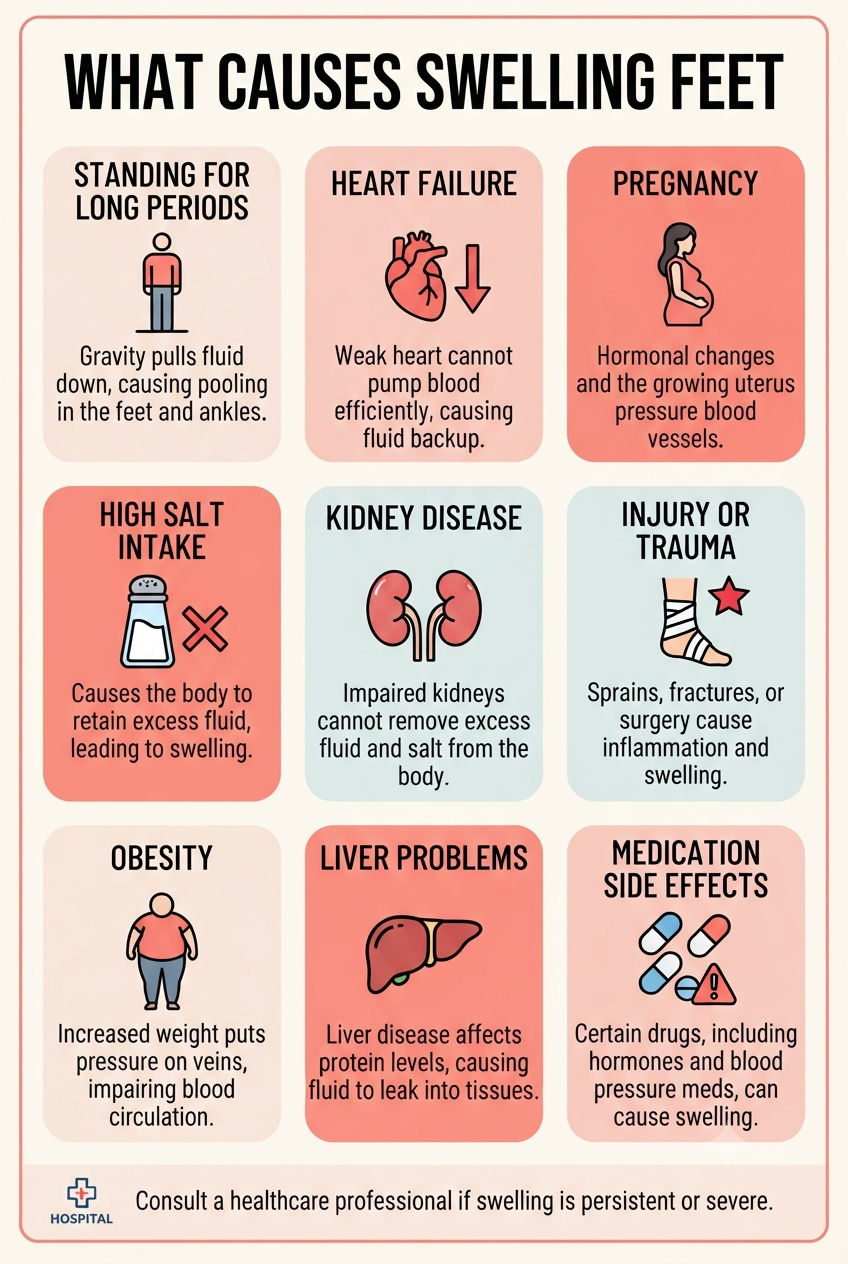
The causes of swelling in the feet range from temporary fluid retention to conditions affecting circulation, the lymphatic system or major organs.
The most common cause is sitting, standing or staying in one position for long periods without much movement, which lets gravity pull fluid down and accumulate in the lower body. This usually happens after a long workday, a road journey or a flight.
As we age, veins can lose some of their elasticity, making it harder for blood to flow efficiently back up the legs. So, mild swelling becomes more common over time.
Gradual swelling of the feet and ankles is common during pregnancy, particularly later in pregnancy and towards the end of the day. During pregnancy, the growing uterus puts extra pressure on the veins carrying blood from the lower body, while hormonal changes cause the body to retain more fluid overall. In both cases, some swelling is considered a normal part of the process.
Sodium causes the body to retain water. A particularly salty meal may therefore make swelling feet and ankles more noticeable in some people who are already prone to fluid retention.
This is also a common cause in some cases as heat can cause blood vessels to widen, which may contribute to fluid moving into surrounding tissues. Swelling can be more evident towards the end of a hot day.
Dehydration is not the most common explanation for persistent foot swelling. However, in some situations, inadequate fluid intake can affect the body’s fluid balance. Recurrent swelling should not simply be attributed to dehydration without considering other causes.
If you previously have any sprain, strain, fracture or other local injury, it can trigger inflammation and swelling in the affected foot or ankle. In this situation, pain and tenderness usually comes with the swelling.
Chronic venous insufficiency is caused when the veins in the legs have difficulty returning blood efficiently to the heart. Fluid can then collect around the ankles and lower legs. Swelling that becomes worse after standing and improves after resting or elevating the legs can fit this pattern.
This is the condition when lymph fluid that normally drains through the lymphatic system, builds up in tissues. It may affect one or both limbs and can cause chronic swelling and changes in the skin.
Certain medications used for high blood pressure, diabetes, pain and inflammation, hormones and steroids, can also cause fluid retention as a side effect. Do not stop a prescribed medicine on your own. A doctor can determine whether the medicine may be contributing to the swelling and whether it should be changed.
An infection or inflammatory condition can cause local swelling that usually comes with pain, redness, warmth or tenderness. An insect bite or sting can also cause temporary swelling.
DVT is a blood clot that develops in a deep vein, usually in the leg. Sudden swelling in one foot or leg, particularly when accompanied by pain, tenderness, warmth or redness, should not be assumed to be ordinary fluid retention. It may require medical assessment.
In some cases, edema can be a sign of an underlying issue with the heart, kidneys, liver, or veins. That is why, if the swelling feet are affecting you more than often, it is always a good idea to initially consult an internal medicine doctor.
Swelling affecting one foot or leg may occur because of:
After a long journey, one-sided swelling deserves particular attention. Long-distance travel, generally involving more than four hours of sitting, can increase the risk of blood clots.
Swelling in both feet may be due to prolonged sitting or standing, pregnancy, venous insufficiency, medication effects or general fluid retention. In some cases, heart, kidney and liver conditions can also cause swelling in both legs.
You may be more likely to develop foot and ankle swelling if you:
Older adults may also experience swelling because several of these factors can occur together.
Medical evaluation is advisable when swelling is:
If you have diabetes, unexplained swelling in the foot, ankle or leg is worth getting checked, particularly if there is a wound, redness, numbness, or any other noticeable change.
There is no specific test for identifying the cause behind swelling feet. The right investigation depends on what the doctor finds during the consultation.
A doctor may ask:
The doctor may examine the skin, veins, pulses, swelling and whether pressing the area produces a pit.
Depending on the suspected cause, investigations may include blood or urine tests, a Doppler ultrasound to assess blood flow and look for a clot, or other imaging and specialised tests. Not everyone with swelling feet needs all of these tests.
If the swelling is mild, familiar and not accompanied by warning signs, a few measures may help.
What to avoid:
Do not rely on massage, herbal drinks, aloe vera or apple cider vinegar soaks as treatments for unexplained swelling. In particular, avoid massaging a suddenly swollen, painful leg before a possible blood clot has been assessed.
If swelling feet are persistent, recurrent or difficult to explain, a medical checkup can help identify the cause rather than simply treating the swelling. The Internal Medicine Department at the CK Birla Hospital can help with the initial evaluation and coordinate care with other medical specialists when needed. To get expert advice, book a consultation.
Written and Verified by:

Similar Orthopaedics Blogs
Request a call back