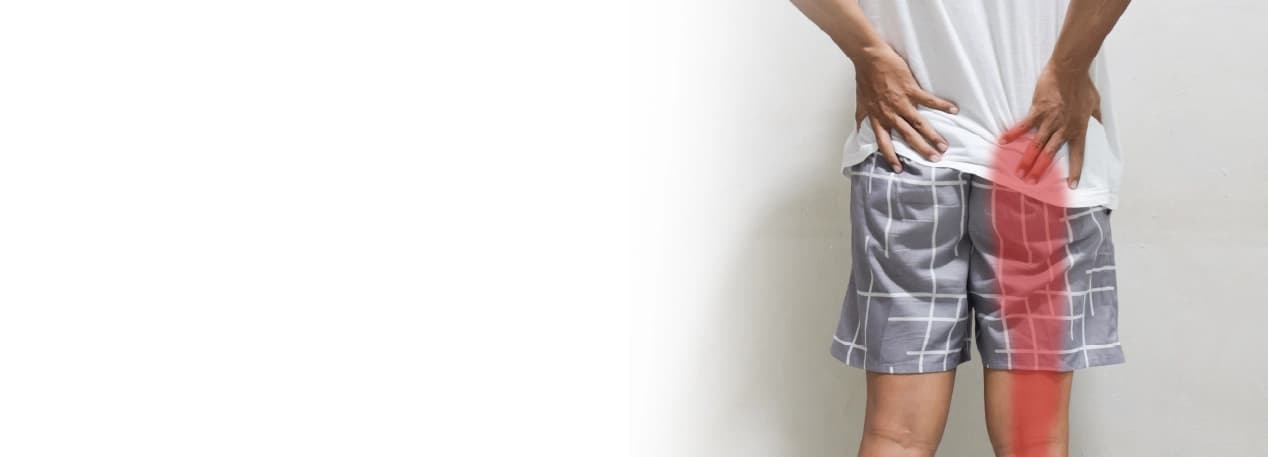
Sciatica is not a disease in itself. It describes pain that travels along the sciatic nerve, the longest nerve in the body. This nerve starts from nerve roots in the lower spine, passes through the buttock, and runs down the back of each leg to the foot.
When something presses on or irritates one of these nerve roots, the pain follows the nerve’s path. That is why a problem in the back can be felt in the thigh, calf, or toes. Sciatica usually affects only one side of the body.
The pressure on the nerve usually comes from one of these spinal problems:
Risk factors:
The pain differs for everyone. Some people feel a dull ache at the back of the thigh, whereas others get a sharp pain that shoots down the leg out of nowhere. Either way, it usually starts in the lower back or buttock, and generally on just one side.
You may also experience:
The doctor will first ask where the pain begins, how long you have had it, and what makes it worse or better. They may also ask about the nature of your job, how many hours you sit each day, and whether you have had back trouble before.
Then comes a physical examination of your reflexes, muscle strength and sensation in the leg. One common test is the leg raise. You lie flat while the doctor slowly lifts your straight leg, and if the pain comes on, it helps show which nerve root is affected.
if the pain is severe, has lasted for weeks, or does not look like a routine disc problem, the pain management specialist may suggest:



Treatment depends on the cause, how severe the pain is, and how long it has been present.
Your doctor may prescribe anti-inflammatory tablets, muscle relaxants, or nerve-pain medicines for a short course. Rest for a day or two if the pain is severe, then ease back into gentle movement.
2. Physiotherapy
Working with your treating doctor, the trained physiotherapist builds a routine to strengthen your core, loosen tight muscles, and ease pressure on the nerve. You will also learn how to sit, bend, and lift without aggravating it.
3. Epidural Steroid Injections
If the pain is not settling, an epidural steroid injection near the irritated nerve can bring down the inflammation. It is usually done under imaging guidance. For some people it gives enough relief to get through rehab, though results vary.
4. Surgery for Severe Sciatica
This is usually kept for cases where several weeks of treatment have not helped, the leg is getting weaker, or there are signs of serious nerve compression. Procedures such as microdiscectomy remove the part of the disc pressing on the nerve and are done through a small incision. Your surgeon will explain whether surgery is suitable, what it involves, and the possible risks.
Many people with a slipped disc feel better within a few weeks to a few months, often without surgery. Recovery is not always a straight line, and some symptoms can persist or come back.
Everyday Habits to Keep Your Back Healthy
Our spine and pain care team will help you understand what is causing your sciatica and recommend a treatment that fits your condition and your daily routine.
We offer:
Sciatica is pain that comes from an irritated or squeezed sciatic nerve. This is the longest nerve in your body. It starts in the lower spine, passes through the buttock, and runs down the back of the leg. Most people feel it in just one leg, often with tingling, numbness, or a sense of weakness.
A slipped disc is the leading cause. Spinal stenosis, a slipped vertebra, piriformis muscle tightness, and spinal injuries are other common causes. Prolonged sitting, obesity, and age-related wear on the spine raise the risk.
If you have been following treatment for 6 to 8 weeks and the pain has not eased, your leg is getting weaker, if the pain is severe enough to disrupt sleep or daily life, or if numbness is spreading, it is time to see a pain management specialist. Any bladder or bowel changes, or numbness in the groin area, need immediate emergency care.
Ordinary back pain mostly stays in the back and feels like a dull ache or stiffness. Sciatica does not stay put. The pain travels down one leg, often below the knee, and tends to come with tingling, numbness, or a burning, shooting feeling. Coughing or sneezing can make it worse.