
Trust img

Slip Disc Treatment
in India

Does your back pain get worse when you bend, lift, or sit for long? When the pain travels into the buttock or leg, often with tingling or weakness, it may be a slipped disc, where the soft cushion between two spinal bones pushes out and presses on a nearby nerve. Finding out how badly the disc is affected decides the right treatment. If you are looking for slip disc treatment in India, the CK Birla Hospital brings together spine specialists, pain management doctors, and physiotherapists to find the cause and plan your care from diagnosis through recovery.
CK Birla Hospital

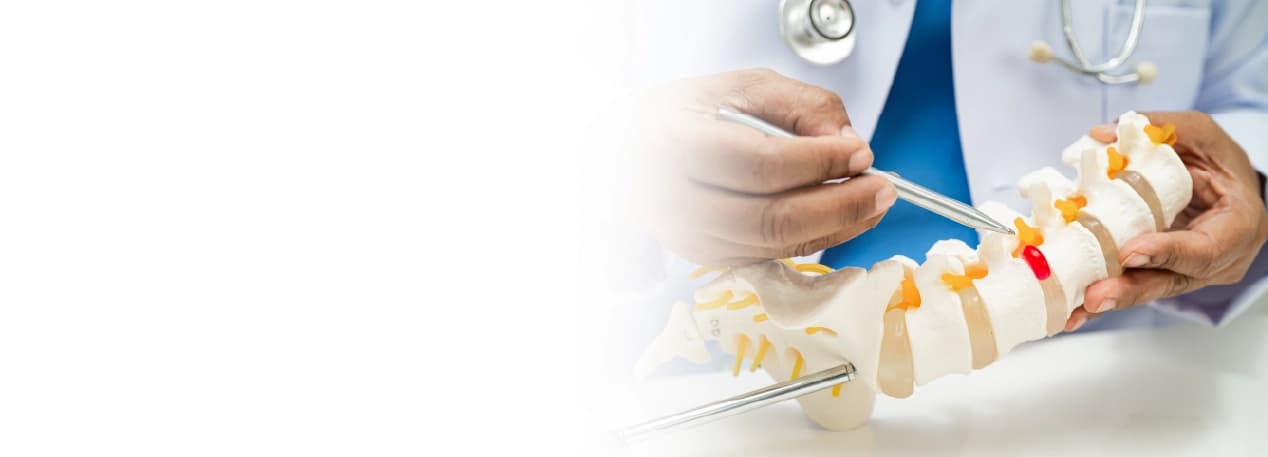
The spine consists of small bones called vertebrae, separated by soft, cushion-like discs that absorb shock and allow movement.

A slip disc, medically known as a herniated or prolapsed disc, occurs when the soft inner material of a disc pushes through a weakened or damaged outer layer. If it presses on a nearby nerve, it can cause pain, numbness, tingling or weakness. The condition commonly affects the lower back or neck, and symptoms depend on the disc’s location and whether nearby nerves are affected.

A slipped disc may develop gradually or following a sudden strain. Here is what usually lies behind it:

  • Ageing: As you get older, discs lose water and flexibility, so they become easier to damage.
  • Lifting the wrong way: Picking up something heavy while bending or twisting puts a lot of strain on the spine.
  • Sitting for long hours: Long stretches at a desk or behind the wheel, without a break, can tire the back and stress the discs.
  • Excess body weight: Additional load can increase stress on the spine.
  • Repetitive work: Bending, twisting, or physically demanding jobs can wear discs down over time.
  • Smoking: It affects disc health and slows the body’s ability to repair tissue.
  • Past injuries or family history: An old spinal injury, or a family tendency toward disc problems, can raise your risk.

Symptoms vary depending on the affected disc and the degree of nerve compression. Some common signs of slip disc are:

  • Back or neck pain
  • Pain travelling into an arm or leg
  • Tingling or numbness
  • Muscle weakness
  • Restricted movement due to pain and stiffness

You should seek emergency medical attention for new bladder or bowel control problems, difficulty passing urine, numbness around the groin or rapidly worsening weakness. These may indicate serious nerve compression.

Diagnosis begins with a consultation and physical examination. The spine specialist will ask about your symptoms, when they started and whether the pain travels into your arms or legs.

The medical examination may include checking muscle strength, sensation, reflexes, walking and spinal movement.

Depending on the findings, your doctor may recommend:

  • MRI scan to get the detailed images of discs and nerves
  • X-ray to check spinal bones and alignment
  • CT scan provides detailed images of the bones
  • Nerve tests like electromyography or nerve conduction studies may help assess nerve function when the diagnosis is unclear
Dr. Dr Ashwani Maichand
Dr Ashwani Maichand

Orthopaedician


Joint Specialist

34+ Years Experience

Delhi

Dr. Dr. Praveen Tittal
Dr. Praveen Tittal

Orthopaedician


Orthopaedics

26+ Years Experience

Gurgaon

Dr. Dr Guruditta Khurana
Dr Guruditta Khurana

Orthopaedician


Orthopaedics

10+ Years Experience

Gurgaon

Dr. Dr Mohammad Irfan Banday
Dr Mohammad Irfan Banday

Orthopaedician


Orthopaedics

15+ Years Experience

Gurgaon

Dr. Dr Ramkinkar Jha
Dr Ramkinkar Jha

Orthopaedician


Orthopaedics

25+ Years Experience

Gurgaon

Dr. Dr Kapil Goyal
Dr Kapil Goyal

Orthopaedician


Orthopaedics

15+ Years Experience

Delhi

Dr. Dr Komal Prasad Gola
Dr Komal Prasad Gola

Orthopaedician


Orthopaedics

8+ Years Experience

Delhi

Dr. Dr Mohit Sharma
Dr Mohit Sharma

Orthopaedician


Orthopaedics

15+ Years Experience

Delhi

Slip Disc Treatment Options

Treatment depends on severity of the symptoms, nerve involvement, duration of pain and overall health.

1. Non-surgical treatment

Many patients improve without surgery. The treatment may involve:

  • Prescribed pain-relieving or anti-inflammatory medicines, depending on your medical history and individual risks
  • Physiotherapy to improve mobility, build strength, and take strain off the spine
  • Temporarily avoiding heavy lifting and movements that aggravate symptoms. Gentle movement is generally preferable to prolonged bed rest.
  • Some patients with severe sciatica may benefit from epidural injections around the affected nerves. Relief may be temporary.

Your specialist will review your progress and adjust the treatment plan as needed.

2. Minimally invasive slip disc surgery

Surgery may be considered when pain remains disabling despite appropriate non-surgical treatment, imaging findings match the symptoms, or significant nerve weakness develops.

Common procedures include:

  • Microdiscectomy: It removes the portion of the disc pressing on a nerve while preserving as much healthy tissue as possible.
  • Endoscopic discectomy: This procedure uses a small camera and specialised instruments through a small incision to remove problematic disc material in suitable cases.
  • Spinal decompression: It removes tissue or bone causing the nerve compression.

The surgeon recommends a technique based on the disc’s location, nerve compression and individual health.

How is Slip Disc Surgery Performed?

In microdiscectomy, the patient receives anaesthesia, and the surgeon makes a small incision over the affected area. Using specialised instruments, the surgeon removes the disc fragment pressing on the nerve and closes the incision.

Patients are generally encouraged to begin walking as advised by the care team. Hospital stay and recovery depend on the procedure and individual circumstances.

Surgery aims to relieve nerve compression, but complete pain relief and prevention of future disc problems cannot be guaranteed.

Slip Disc Recovery and Rehabilitation

Many people improve over several weeks with non-surgical treatment. After surgery, recovery depends on the procedure and on how much the nerve was affected, so your surgeon will give you a timeline that fits your case.

Rehabilitation usually includes:

  • Gradual return to walking and daily activities, as your doctor advises
  • Guided exercises to rebuild mobility and strength
  • Safer lifting and bending techniques to protect your back
  • Regular follow-ups to track pain, sensation, strength, and progress

If you have had surgery, follow the instructions you are given on wound care, driving, going back to work, and exercise. Do not rush these, even if you are feeling better.

Call your doctor if your pain gets worse, or you notice new weakness or numbness.

Why Choose the CK Birla Hospital for Slip Disc Treatment in India?

At the CK Birla Hospital, our spine specialists first find which disc is affected and how much it is pressing on the nerve, then plan treatment that fits your diagnosis and daily life. 

We offer:

  • Multidisciplinary team approach
  • Advanced imaging and diagnostic services
  • A well-equipped physiotherapy centre
  • Full rehabilitation support after surgery
  • Personalised treatment plans based on your diagnosis and daily routine
  • Regular follow-up to track recovery and prevent recurrence

If you are looking for a hospital for slip disc treatment in India, consult a spine specialist to discuss the benefits, risks and expected recovery associated with each option.

FAQs

Consider a consultation if pain remains disabling despite appropriate treatment, symptoms persist or muscle weakness develops. Bladder or bowel problems, difficulty passing urine or numbness around the groin require emergency assessment.

Options include microdiscectomy and endoscopic discectomy. Their suitability depends on the affected disc, nerve compression and overall health.

Treatment may include prescribed medicines, physiotherapy, activity modification and selected epidural injections. Your doctor will personalise the plan to your symptoms.

It depends on the severity. Many slipped discs improve without surgery, but the right treatment is decided by your doctor after an examination and, if needed, scans. Surgery is considered for persistent symptoms or serious nerve compression.

Stay active, build core strength through suitable exercises, use safe lifting techniques, take movement breaks during prolonged sitting and avoid smoking. Follow your doctor’s advice when returning to exercise after a slip disc.

Other Orthopaedics Treatments in India