
A neurologist’s treatment plan, however well planned, only works if a caregiver puts it into practice, day after day. That’s why caregivers play such an important role in managing a disease like dementia. According to the World Health Organization (WHO), family caregivers provide an average of five hours of care and supervision each day globally.
If you are supporting someone with dementia, this blog includes everyday tips to make caregiving easier and more effective.
A dementia caregiver becomes an important link between the person receiving treatment and their healthcare team. The exact responsibilities depend on the person’s symptoms, abilities, treatment plan and stage of dementia.
A caregiver may help by:
Caregivers should never stop, start, or change a prescribed medicine on their own. If a medicine seems to be causing a problem, or the person is having trouble taking it, speak with their neurologist before making any changes.
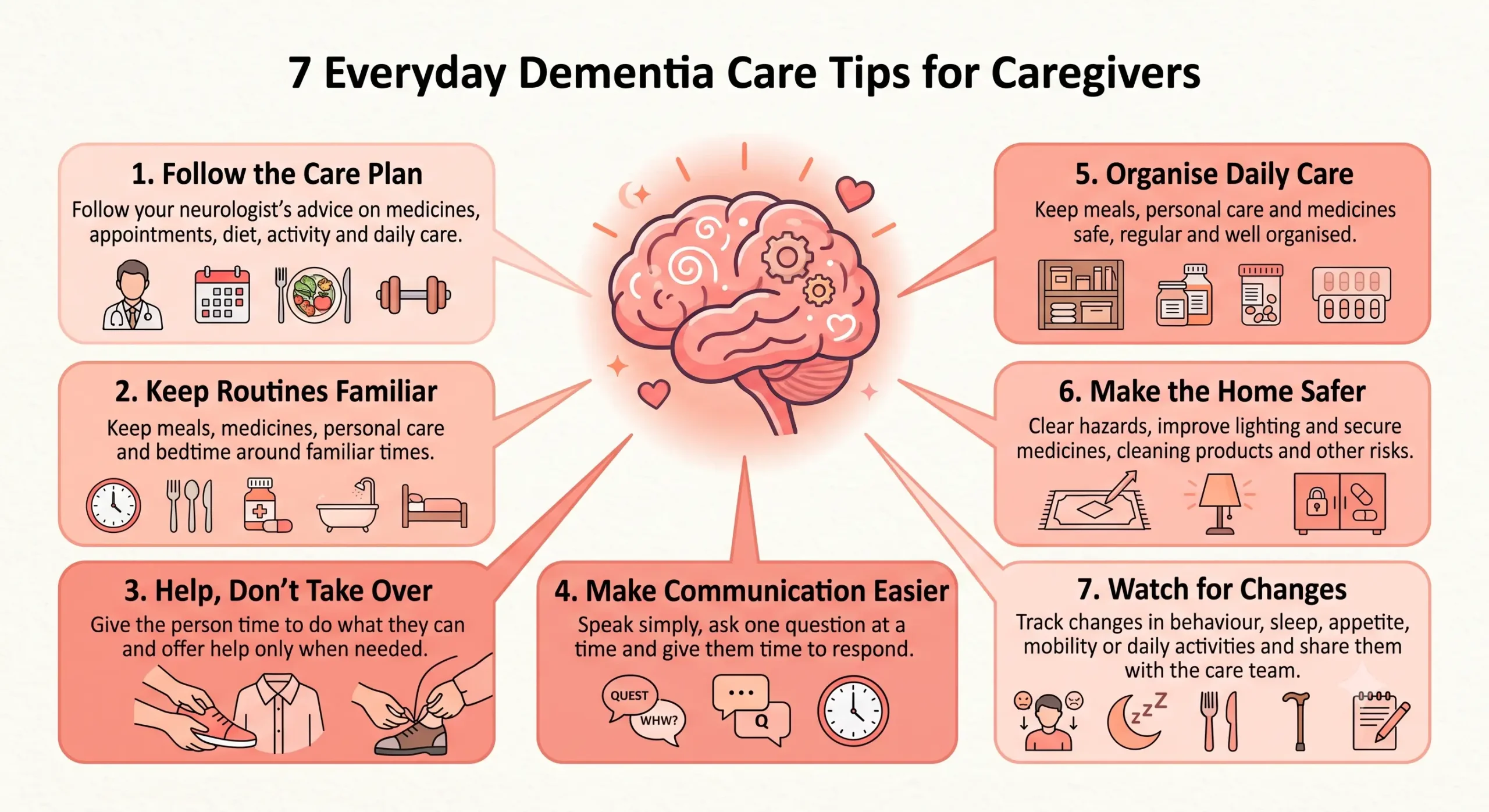
Caring for someone with dementia is mainly about small, daily choices. Here are seven everyday tips that can help.
Start with the recommendations already provided by your neurologist and care team. Medicines, appointments, exercises, and any other instructions, keep it all in one place. If more than one family member is involved, a simple written schedule can help everyone stay on the same page.
If the specialist has given specific advice about diet, swallowing, activity, sleep, or behaviour, make sure everyone helping out actually knows it. And if something is not working, don’t just change it. Check in with your neurologist first.
Try to keep waking, meals, personal care, medicines and bedtime around the same familiar times. Listening to familiar music, folding clothes, gardening, looking through photographs or helping with a simple household task may be helpful instead of introducing unfamiliar activities.
NICE recommends choosing activities that match a person’s preferences, strengths, needs and interests.
As dementia progresses, the routine may need to change. However, the aim is never to keep every part of the day exactly the same, but to provide enough familiarity to make daily life easier.
For a person with dementia, even familiar tasks may feel slower or more difficult. But that does not mean they have to stop doing everything altogether. So, give them time to complete tasks they can still manage. Break a complicated activity into smaller steps and offer help only where it is needed.
For example, instead of choosing and dressing the person completely, you could lay out two suitable clothing options and let them choose. Small choices like this help them stay involved in their own care.
Memory and communication difficulties can sometimes make conversations difficult for both the person with dementia and the caregiver.
As a caregiver, you can try the following to make things easier:
Make sure you avoid interrupting, arguing or repeatedly testing their memory. Allowing extra time and changing the wording of a question if the person does not understand it initially can help.
Regular meals and a familiar approach to personal care can make everyday routines easier to manage.
Follow your neurologist’s advice about nutrition and swallowing. If there are concerns about coughing while eating or drinking, difficulty swallowing or repeated choking, inform the treating team.
For bathing, dressing and grooming, explain what you are doing, preserve privacy and allow the person to participate as much as possible.
Medicines should be given according to the prescribed schedule. Keep them organised and stored safely, especially if the person has difficulty remembering doses.
As dementia progresses, changes in memory, judgement, balance or orientation can increase safety risks at home.
So, look around the house for practical hazards. These may include:
Good lighting, clear walking areas and familiar surroundings can help. Safety measures should still allow the person to move around and participate in everyday life as independently as possible.
Knowing your loved one’s usual pattern can help you notice when something has changed. Here’s what is worth keeping track of:
Sometimes these changes can be due to pain, constipation, dehydration, infection, poor sleep, stress from the environment, or even medicine side effects can also affect behaviour.
So, instead of trying to figure out the cause on your own, just note what happened, when it started, and how often it is occurring. Then share that with your neurologist and the care team.
Dementia care does not stop after a consultation. Everyday routines, observations and small adjustments at home can become an important part of ongoing care.
At the CK Birla Hospital, the Neurology and Neurosciences team can help families understand changes associated with dementia, review ongoing concerns and plan care according to the person’s individual needs.
If you have concerns about changes in memory, behaviour or daily functioning, simply book a consultation and talk to our neurologists for expert guidance.
Written and Verified by:

Similar Neurology Blogs
Request a call back