Trust img

Home >Blogs >Uremia: Symptoms, Causes, Stages, Diagnosis and Treatment
CK Birla Hospital

Uremia: Symptoms, Causes, Stages, Diagnosis and Treatment

Nephrology & Dialysis | by Dr Vikram Kalra on Sep 29, 2026 | Last Updated : Sep 29, 2026

Share :

Summary

  • Uremia occurs when severe kidney dysfunction causes waste products to build up in the blood.
  • Learn about the common symptoms, causes, CKD stages, diagnostic tests, and treatment options for uremia.
  • Understand when uremia may require urgent medical attention, dialysis, or kidney transplant.

Your kidneys filter waste from your blood every day. But what happens when they gradually lose the ability to do so? The buildup of waste in the blood can eventually lead to a serious condition called uremia.

But what exactly is uremia, what causes it, and what signs should you look out for? Keep reading to understand its symptoms, causes, stages, and treatment

What Does Uremia Mean?

As your body breaks down protein from food, it produces a waste compound called urea. Healthy kidneys filter this out and send it off in urine.

But when the kidneys become severely damaged or lose much of their function, they may no longer be able to keep up with this job. As a result, waste products can start building up in the blood instead of being removed from the body.

When this buildup becomes significant and starts affecting the body, it is known as uremia. It is most commonly seen in people with advanced chronic kidney disease (CKD) or kidney failure and can affect several parts of the body.
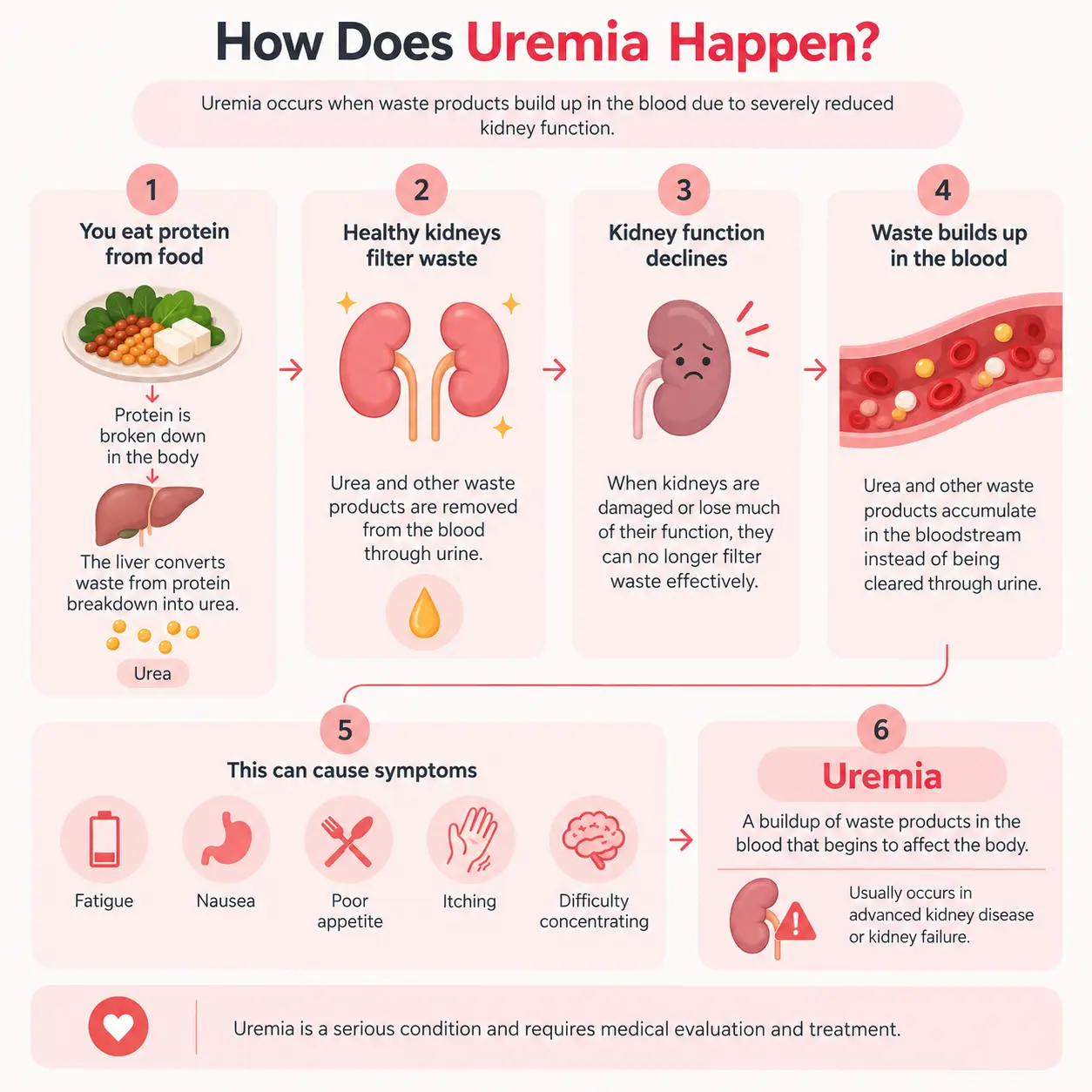
How does uremia happen

What Causes Uremia?

The common thread behind uremia is declining kidney function, but what leads to that decline can look different from one person to another.

  1. Chronic Kidney Disease (CKD) is the most common underlying cause. It usually builds up slowly over years, often because of long-term diabetes or high blood pressure.
  2. Acute Kidney Injury (AKI), is when the kidneys suddenly stop working properly. This can happen because of any serious infection, blood loss, dehydration, or reacting poorly to certain medications.
  3. Glomerulonephritis, an inflammation of the kidney’s filtering units, can disturb kidney function over time.
  4. Polycystic kidney disease, a genetic condition involving fluid-filled cysts in the kidneys, gradually reduces filtering capacity.
  5. Urinary tract obstruction due to kidney stones, an enlarged prostate, or scar tissue, can back up waste when urine cannot drain properly.
  6. Long-term use of certain medicines has also been associated with kidney damage.

In several regions, including parts of India, doctors and researchers have reported cases of chronic kidney disease in people who do not have the usual risk factors, such as diabetes or long-standing hypertension. This has led to growing interest in what is known as chronic kidney disease of unknown origin (CKDu). Researchers are investigating several possible environmental and occupational factors, including exposure to agrochemicals, contaminated drinking water, heavy metals, and prolonged heat stress. However, no single cause has been established so far.

Symptoms of Uremia

Early symptoms of uremia are easy to mistake for everyday tiredness or a stomach bug. You may experience unusual fatigue, poor appetite, mild nausea, or difficulty in concentrating. By the time symptoms become evident, a fair amount of kidney function may already be affected, which is exactly why it is very important to pay attention to even the minor signs.

As waste levels rise further, other symptoms can appear, such as:

  • Persistent itching, sometimes intense enough to disturb sleep
  • Muscle cramps, particularly at night
  • A metallic or ammonia-like taste in the mouth
  • Swelling in the legs, ankles, or around the eyes, caused by fluid retention
  • Restless legs or tingling sensations

In advanced cases, symptoms can escalate to: 

  • Shortness of breath
  • Chest discomfort (sometimes from fluid around the heart)
  • Feeling of confusion

In severe cases of uremia, a rare skin finding called ‘uremic frost’ may be seen.

It happens when extra urea comes out through sweat and forms tiny white crystals, leaving a powdery film on the skin. It is a well-known phenomenon, but you rarely see it today, mostly because of access to effective dialysis and treatment.

Stages of Uremia and Kidney Disease

Uremia tracks alongside the progression of chronic kidney disease, which nephrologists (kidney disease specialists) classify into five stages based on the glomerular filtration rate (GFR).

GFR is a measure of how well your kidneys are filtering blood.

mL/min: Means millilitres per minute.

1.73 m²: Refers to a standardised body surface area of 1.73 square metres, so kidney function can be compared between people of different body sizes.

CKD Stage GFR (mL/min/1.73 m²) What It Usually Looks Like
Stage 1 90+ Mild damage, often no noticeable symptoms
Stage 2 60–89 Mild reduction in kidney function; symptoms are often absent
Stage 3 30–59 Moderate decline; fatigue or mild symptoms may begin
Stage 4 15–29 Severe reduction; uremic symptoms become more evident
Stage 5 Below 15 Kidney failure; uremia may become significant, and kidney replacement therapy such as dialysis or a kidney transplant may be needed

How is Uremia Diagnosed?

Diagnosis usually starts with a conversation about your symptoms and medical history, followed by a set of tests:

  • Blood urea nitrogen (BUN) and serum creatinine are the two core blood markers used to assess how much waste is accumulating.
  • Estimated GFR (eGFR) is calculated from creatinine, age, and sex, this gives a report on overall kidney function.
  • Urinalysis checks for protein, blood, or abnormal cells in the urine that point toward kidney damage.
  • Electrolyte panel checks potassium, sodium, and bicarbonate levels, which can become imbalanced as kidney function declines.
  • Complete blood count (CBC) checks for anemia, which is common in kidney disease because the kidneys produce a hormone called erythropoietin (EPO) that stimulates red blood cell production.
  • Ultrasound is used to evaluate the kidney size, structure, and rule out blockages or cysts.

Treatment Options for Uremia

Treatment depends mainly on what is driving the kidney dysfunction and how advanced it is.
  • Treat the Underlying Cause: Treatment usually starts by looking at what is causing the kidney problem in the first place. Managing blood sugar if you have diabetes, keeping blood pressure under control, or treating a urinary blockage can help protect the remaining kidney function, particularly when the problem is identified early.
  • Dietary Changes: A dietitian can help you work out how much protein, potassium, phosphorus, and sodium is right for you based on your kidney function and lab results.
  • Medications: Certain medicines may also be prescribed to manage the problems that come with declining kidney function.
  • Dialysis: It becomes necessary when kidney function drops to a point where the body can no longer safely manage waste and fluid balance on its own. There are two main types:
    • hemodialysis, which filters blood using a dialysis machine, typically a few times a week
    • peritoneal dialysis, which uses the lining of the abdomen to filter waste
  • Kidney transplant: It is the closest thing to a long-term solution for advanced kidney failure, replacing the damaged kidney’s function with a healthy donor organ. The eligibility depends on your overall health, donor availability, and other individual factors.

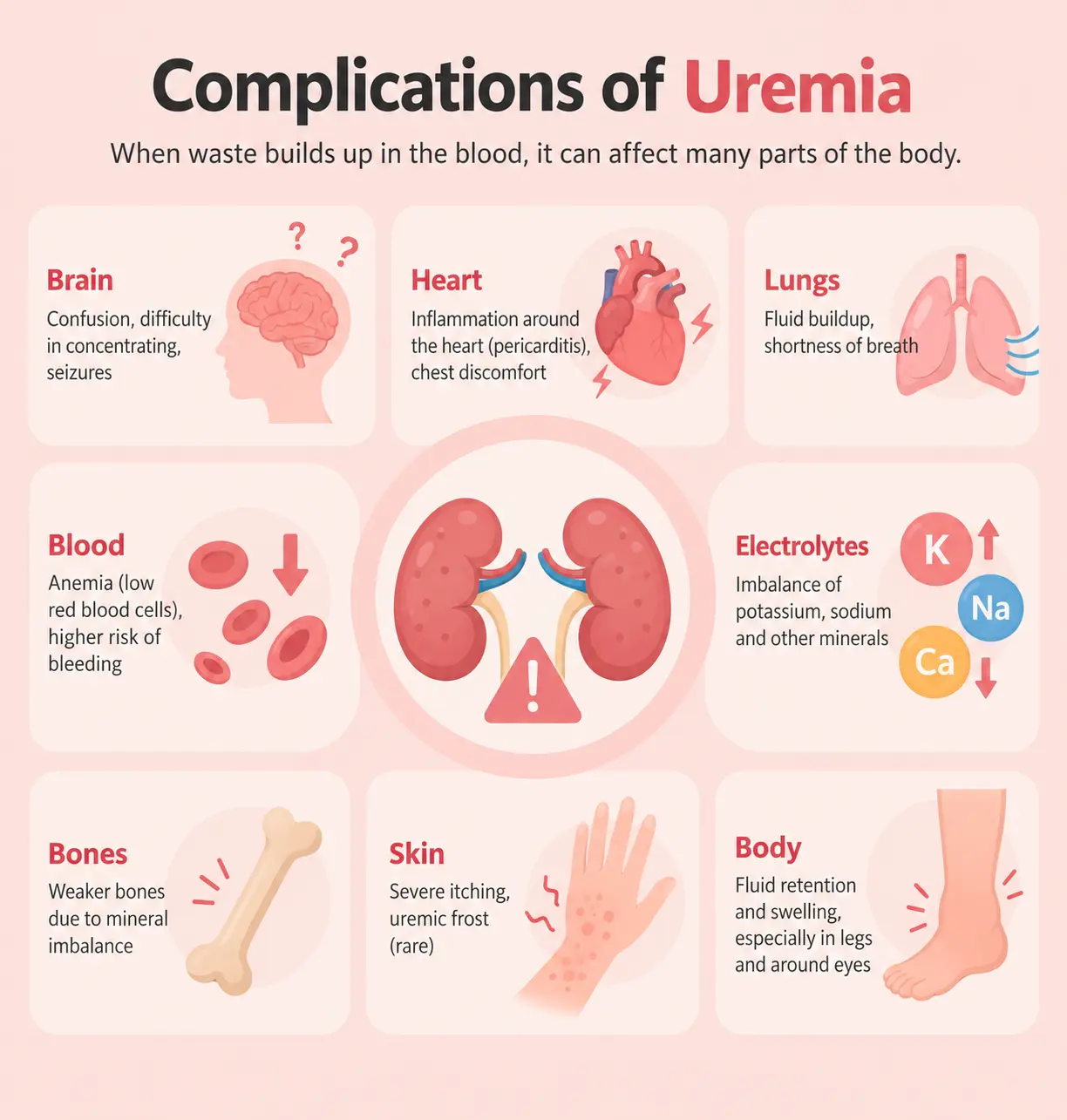
Complications of uremia

When Should You See a Doctor Urgently?

If you experience frequent confusion, severe breathlessness, chest pain, very little or no urine output, or sudden swelling, don’t ignore these symptoms or wait for them to settle on their own. Seeking timely medical attention can help identify the cause and prevent the condition from becoming more serious.

Regular blood and urine tests can help catch changes early, especially for those with diabetes, high blood pressure, or a family history of kidney disease.

And if something doesn’t feel right, reach out to our nephrologists and kidney care team at the CK Birla Hospital.

FAQs

Share :

Written and Verified by:

MBBS, MD (General Medicine), DM (Nephrology from AIIMS, Delhi) Dr Vikram Kalra is a reputed nephrologist with over 30+ years of experience. He completed his DM in Nephrology form the esteemed All India statue of Medical Sciences, Delhi. He has to his credit more than 500 successful kidney transplants. He has actively participated in various research projects which focus on...

Nephrology & Dialysis Treatments at Our Hospitals

Uremia: Symptoms, Causes, Stages & Treatment