Right now, as you read this, is your neck bent forward or your shoulders rounded? If your posture looks like this most of the day and your neck often feels stiff, tight, or strangely inflexible, you may be seeing the first signs of cervical pain.
Cervical pain has become one of the most common complaints of our time, yet most people ignore it until it starts affecting their sleep, work, and daily life. So before that stiffness turns into unbearable pain, read on to learn the symptoms, causes, diagnosis, and treatment of cervical pain.
What is Cervical Pain?
Cervical pain is basically pain, stiffness, or discomfort you feel in your neck, especially around the cervical spine. That’s the top part of your backbone, the part that holds up your head and lets you turn, nod, and tilt it.
Sometimes the pain stays in your neck. Other times it travels to your shoulders, upper back, arms, or even your hands, depending on what is causing it. The common reasons behind it are muscle strain, poor posture, age-related changes in the spine, an injury, or an irritated nerve.
What Causes Cervical Pain?
Cervical pain can build up from everyday habits, changes in the spine, or a sudden injury. Here are the most common causes:
- Poor posture, like hunching over a laptop or phone for hours
- Muscle strain from staying in one position or sleeping awkwardly
- Cervical spondylosis, the age-related wear of the discs and joints in your neck
- Nerve compression from a bulging, herniated disc which can cause tingling or numbness down the arm
- Injuries, and a sudden back-and-forth jerk of the neck
- Other medical conditions like arthritis, infections, or other health problems
Symptoms of Cervical Pain
How do you know if your neck problem is more than a simple stiff neck? Watch for these signs:
- Neck pain or stiffness
- Difficulty turning or bending the neck
- Muscle tightness or spasms
- Pain around the shoulders or upper back
- Headaches associated with neck pain
- Tingling or numbness in the arm or hand
- Weakness in an arm or hand
- Pain that travels from the neck into the shoulder or arm
If a nerve is irritated or compressed, the symptoms may extend beyond the neck. This is called cervical radiculopathy (pinched nerve), meaning a nerve root in the neck is affected. It can cause pain, tingling, numbness or weakness along the affected arm.
Note: See a pain management specialist right away if you have severe pain after a fall or accident, neck stiffness with fever, weakness that keeps getting worse, trouble walking or balancing, or loss of bladder or bowel control.
Types of Cervical Pain: How Long It Lasts and What Causes It
There are two main ways to group cervical pain: by how long it lasts and by what causes it.
How long does Cervical Pain last?
- Acute neck pain lasts less than 6 weeks and usually comes from a muscle strain or sleeping in an awkward position.
- Subacute neck pain lasts between 6 and 12 weeks. It is usually caused by an acute injury, like a muscle strain or jerk, that has not fully healed.
- Chronic neck pain lasts more than 12 weeks and is more commonly linked to age-related wear of discs and joints, nerve-related issues or poor posture.
What’s causing Cervical Pain?
- Mechanical neck pain stays in your neck and usually comes from a strained muscle, bad posture, irritated joints, age-related wear called cervical spondylosis, or a whiplash injury.
- Radiculopathy happens when a pinched nerve sends pain, tingling, or weakness into your shoulder, arm, or hand, and a herniated disc is a common reason for it.
- Myelopathy is caused by compression of the spinal cord in the neck, and even though the neck pain may be mild, you might notice clumsy hands, trouble walking, or balance problems.
- A cervicogenic headache starts in your neck and spreads to the back of your head or behind your eyes.
- Referred pain feels like it is in your neck but actually comes from somewhere else, such as your shoulder or jaw.
- Less commonly, neck pain can be caused by infections, arthritis, fractures, or tumors.
Different types of pain have different causes, so knowing yours helps you get the right treatment.
How is Cervical Pain Diagnosed?
A pain management specialist will usually begin by asking about:
- when the pain started
- what makes it better or worse
- any previous injury
- whether you have symptoms such as numbness or weakness
A physical examination may be done to evaluate your neck movement, muscle strength, sensation and reflexes. Imaging tests such as an X-ray, CT scan or MRI may be recommended if needed.
Treatment for Cervical Pain
The right treatment depends on what is causing your pain, how bad it is, and what symptoms you have.
Treatment may include:
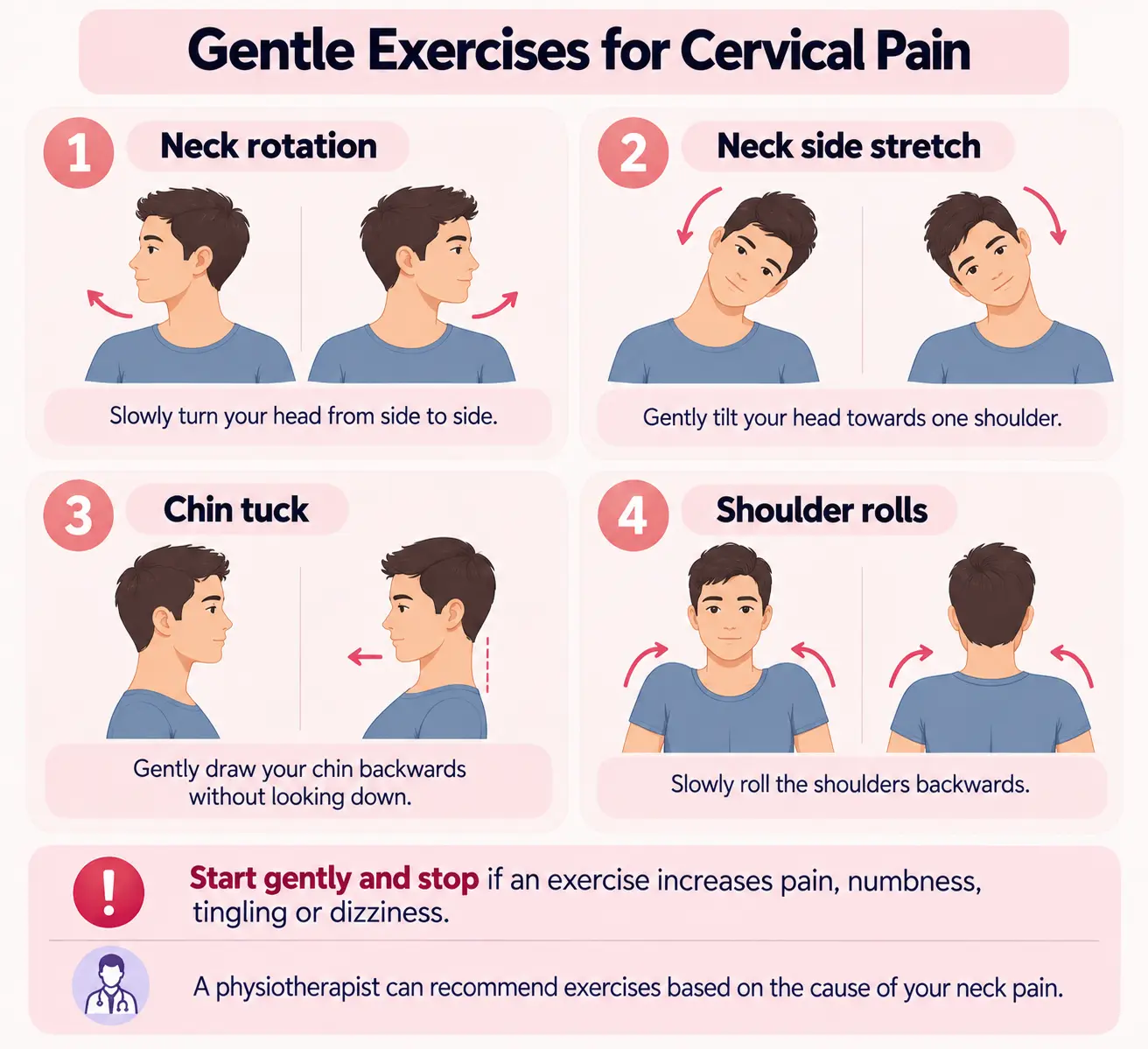
- Physiotherapy: A physiotherapist can show you exercises and simple movements to make your neck more flexible and stronger.
- Medicines: Your doctor may suggest pain relievers or anti-inflammatory medicines. Take them as advised, especially if you have other health conditions or take other medicines.
- Posture and daily habits: Avoid staying in one position for too long, set up your workstation properly, and ease back into normal activity gradually.
- Treatment for nerve-related pain: If a nerve is pinched, you may be referred to a neurologist or another specialist, who will find the cause and decide the best treatment.
- Surgery: It is considered only in some cases, such as when nerve or spinal cord problems are getting worse, or when other treatments have not helped enough.
Simple Habits to Prevent Neck Pain
For mild neck pain without concerning symptoms, simple measures may provide relief. You can try:
- Taking regular breaks from prolonged screen use
- Keeping your computer screen at a comfortable eye level
- Maintaining gentle neck movement instead of keeping the neck completely still
- Trying gentle exercises recommended by a healthcare professional
- Using a comfortable pillow that keeps your neck in a neutral position
Do not rely on home treatment if the pain is persistent, worsening or associated with numbness, weakness or pain travelling into the arm.
When You Should See a Pain Management Specialist
Consider medical evaluation if your cervical pain:
- Lasts for several weeks or keeps coming back
- Is disturbing your sleep or daily activities
- Travels into your arm or hand
- Comes with numbness, tingling, or weakness
- Starts after an accident or a serious injury
You should get medical help right away if you have severe neck pain after a major injury, weakness that is new or getting worse, trouble walking or keeping your balance, or new bladder or bowel problems. These can mean the nerves or spinal cord are affected and need to be checked quickly.
Get Expert Care at The CK Birla Hospital
You don’t have to live with persistent neck pain. Our team of pain management specialists, neurologists, and spine care experts at the CK Birla Hospital will help you understand the cause behind your pain and guide you towards the right treatment and rehabilitation. Simply call us to book a consultation.