Understand the bilirubin test, including its purpose, normal range, types, and what high bilirubin levels may indicate. This medically reviewed guide explains common causes, symptoms, and how doctors interpret bilirubin test results alongside other liver function tests. It also covers conditions such as jaundice, liver disease, bile duct blockage, and Gilbert syndrome. The content is for educational purposes and does not replace professional medical advice.
If your body is showing yellow pigment, high bilirubin levels may be the reason. But is a high bilirubin level dangerous? Does it mean liver damage? Will it go away on its own? Ending up with a stack of questions after getting recommended a bilirubin test is completely normal. If you are looking for the right answers, keep reading. This blog covers what the test is, why it is done, the normal ranges, and more.
Bilirubin is a yellow substance your body produces when it breaks down old red blood cells. Normally, your liver processes it and removes it through bile. If bilirubin levels become too high, it may indicate a problem with your liver, bile ducts, gallbladder or red blood cells. High bilirubin can also cause yellowing of the skin and eyes, a condition called jaundice.
A bilirubin test is a simple blood test that measures the amount of bilirubin in your bloodstream. It helps doctors check how well your liver is working and identify conditions affecting your liver, gallbladder, bile ducts or red blood cells. A bilirubin test is considered a safe and routine blood test with very few risks. Most people experience no side effects.
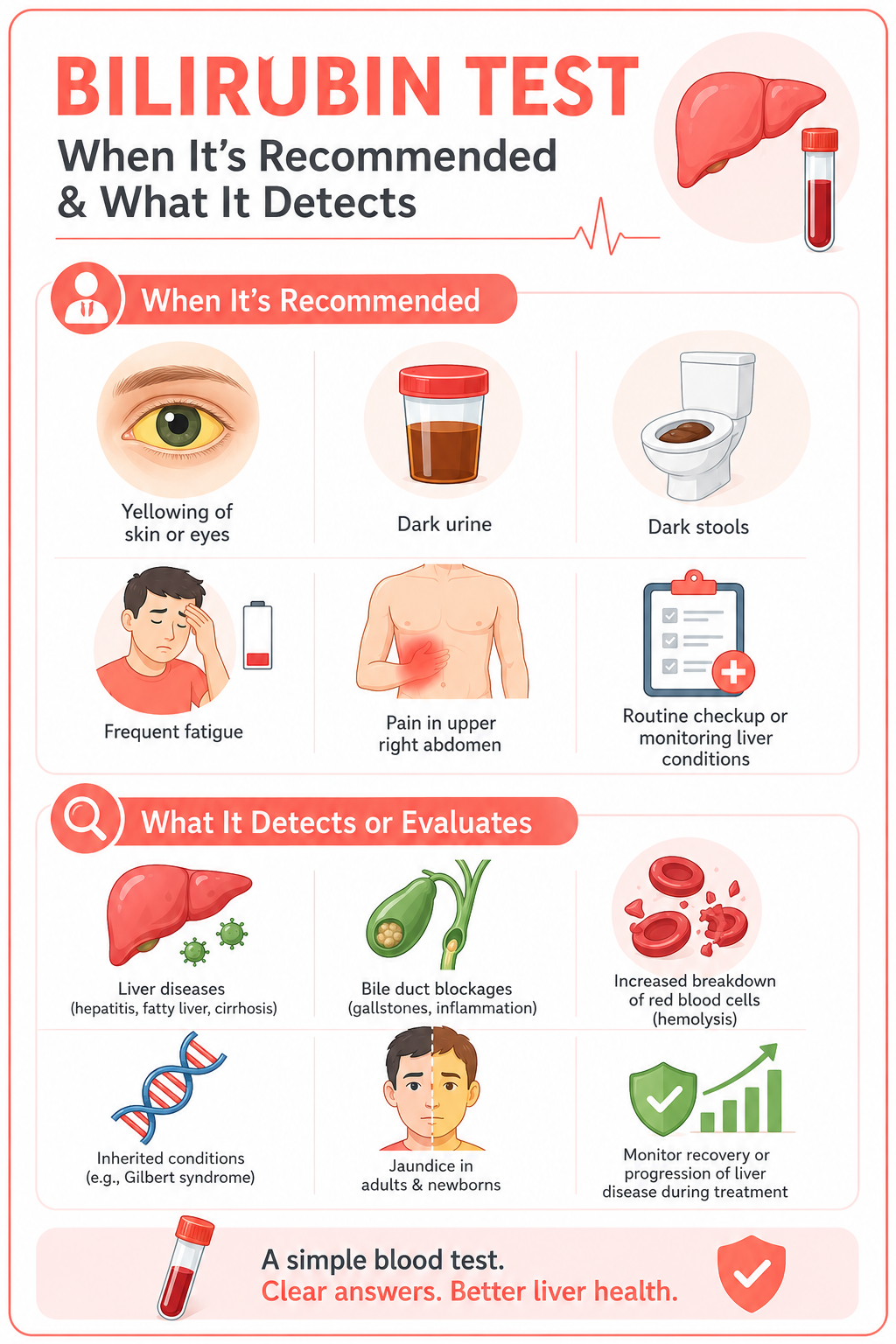
Your doctor may recommend this test if you have symptoms such as:
This test may also be included in routine health checkups or used to monitor existing liver conditions.
Doctors order a bilirubin blood test to help identify the cause of symptoms or monitor known health conditions. Rather than diagnosing a specific disease on its own, the test acts as an important indicator of how your liver and bile drainage system are functioning.
A bilirubin test may help detect or evaluate:
In some cases, your bilirubin level may be only mildly high without causing symptoms. This is one reason doctors rarely rely on a bilirubin test alone. Instead, they use it alongside other investigations to determine whether the finding is temporary, benign or a sign that further evaluation is needed.
The procedure itself is quick and usually takes only a few minutes.
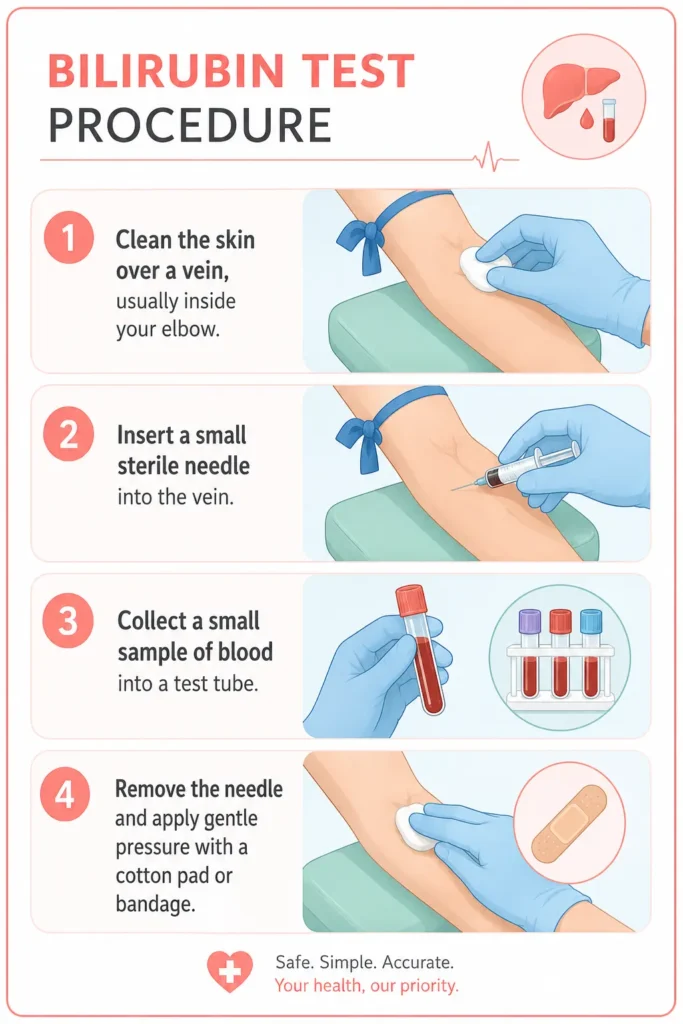
To collect a blood sample, the healthcare professional first cleans the skin over a vein. Next, a sterile needle is inserted to draw a small amount of blood into a test tube. Afterward, the needle is removed and the site is covered with a cotton pad or bandage.
Most people experience only a brief pinch when the needle is inserted. You can normally return to your daily activities immediately after the blood sample is collected.
The blood sample is then sent to a laboratory, where specialists measure different forms of bilirubin. Results are generally available within the same day or within 24 hours, depending on the laboratory.
Your laboratory report may list more than one bilirubin value. They can be:
A mild increase in indirect bilirubin can also occur in Gilbert syndrome. It is a common inherited condition that is generally harmless and usually discovered during routine blood testing.
“Is my bilirubin level normal?”
This is one of the most common questions people have after receiving their blood test report. While reference values may vary slightly between laboratories due to differences in testing methods and equipment, most healthy adults fall within a similar range.
Doctors interpret your total bilirubin, direct bilirubin and indirect bilirubin together rather than focusing on a single value. This approach helps understand whether your liver is processing bilirubin normally or if additional evaluation may be needed.
| Bilirubin Test | Normal Range |
| Total Bilirubin | 0.2 to 1.2 mg/dL (3.4 to 20.5 µmol/L) |
| Direct (Conjugated) Bilirubin | 0 to 0.3 mg/dL (0 to 5.1 µmol/L) |
| Indirect (Unconjugated) Bilirubin | 0.2 to 0.9 mg/dL (3.4 to 15.4 µmol/L) |
Note: Reference ranges may differ slightly between laboratories. Always use the range printed on your laboratory report and discuss the results with your healthcare provider.
Your healthcare provider will consider various factors to interpret the result. These factors are:
High bilirubin levels, also known as hyperbilirubinemia, can develop when the body produces too much bilirubin. The liver cannot process the high levels of bilirubin efficiently, or bile cannot flow properly into the intestines.
Some of the most common causes are of this condition are:
It is not necessary that everyone with high bilirubin will develop symptoms. When they do occur, they may include:
If these symptoms appear suddenly or are accompanied by fever, severe abdominal pain, confusion, or persistent vomiting, seek medical care promptly.
A bilirubin test is a valuable option for examining liver function and understanding how your body processes the breakdown products of red blood cells. Certainly, abnormal results can understandably cause concern, but they do not directly indicate serious liver disease. Doctors interpret bilirubin levels together with your symptoms, medical history, physical examination and other findings to determine the next steps. If your report shows a high bilirubin level, discussing the results with your healthcare provider is the best way to understand what they mean for your individual health. To get expert advice, you can simply book a consultation at the CK Birla Hospital.
Written and Verified by:

Similar Internal Medicine Blogs
Request a call back