So many fruits, so many claims. But amla is one fruit that has been around almost everywhere.
From popular hair oils and tangy candies to traditional medicines and our grandmothers’ home remedies, it has been a familiar part of Indian life for generations.
Lately, online wellness trends have labeled it a ‘superfood.’ But does the clinical evidence and researches actually support the benefits of amla? Let’s find out.
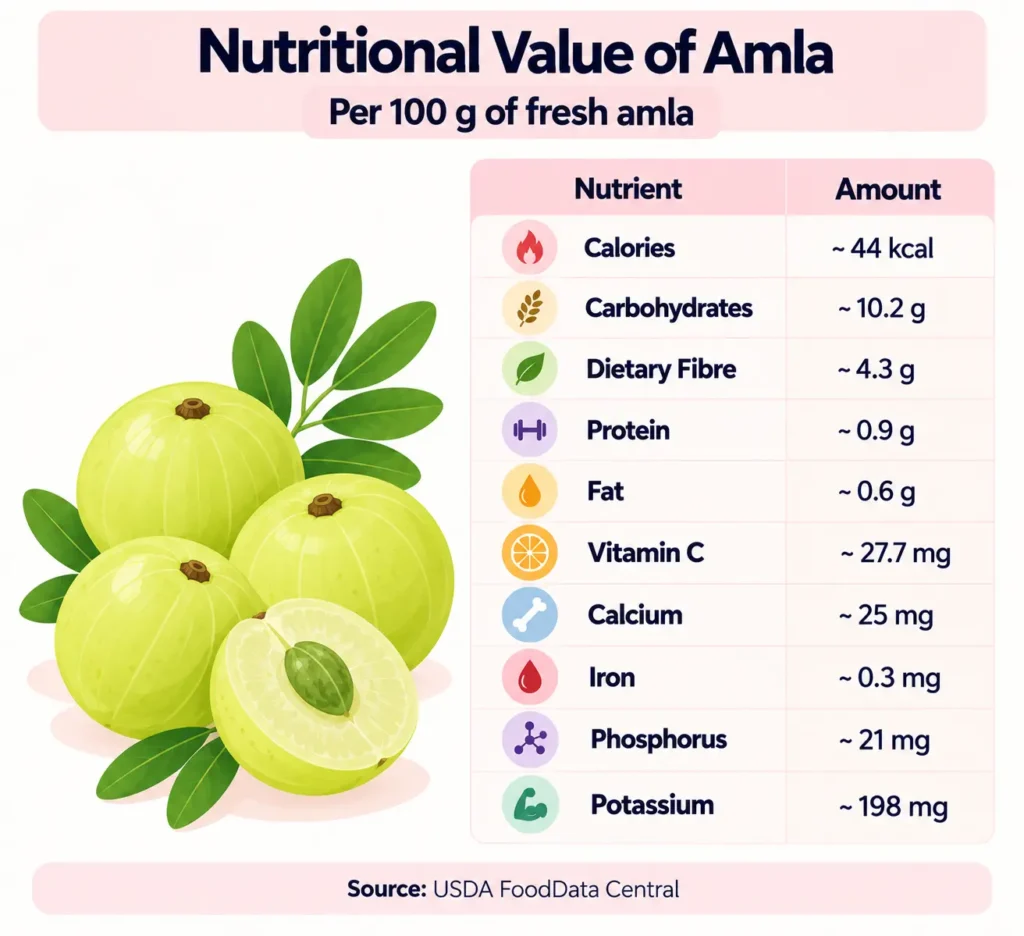
Amla is a small, sour fruit, packed with a surprisingly rich mix of plant compounds.
A research review lists several compounds in amla, including:
Vitamin C plays an important role in keeping your immune system strong, helping your body make collagen, and protecting your cells from oxidative stress. But remember that just because amla contains good nutrients does not mean eating it can treat or cure a disease.
Amla is known for doing a little bit of everything. Better immunity, lower cholesterol, clearer skin, stronger hair, better digestion and even weight loss are all claims you may come across. But it does not need to be a miracle food to be worth eating. It is a nutritious fruit that can be part of a healthy diet, and some of its potential benefits are more promising than others.
Here’s where it may actually help:
It contains vitamin C and other plant compounds, and some studies have found that Amla preparations may help improve cholesterol and triglyceride levels.
However, it does not mean eating amla prevents heart attacks or replaces cholesterol medication. You should have it only as a potentially useful addition to an overall heart-healthy diet, not a treatment by itself.
Some research suggests that Amla may have a role in supporting blood sugar management. This has made amla and diabetes a popular topic, especially among people looking for natural ways to manage glucose levels.
But if you have diabetes, don’t swap your prescribed treatment for amla juice or powder. Amla can be part of your diet, but it is not a diabetes treatment.
The fruit provides vitamin C, polyphenols and other naturally occurring plant compounds. These contribute to its antioxidant properties and make amla a nutritious addition to a varied diet.
Amla for hair has been a go to remedy for generations, which is exactly why you will find it in oils, shampoos and all kinds of traditional haircare preparations. So, you can try amla if you like it, but don’t expect it to work like an actual hair loss treatment.
Also, if you are using an over-the-counter amla product, always check the ingredient list to see whether it actually contains real amla extract or just an artificial version.
Amla’s vitamin C and other plant compounds have made it popular in skin and beauty routines too. But the evidence here is still limited, and amla is not a shortcut to clear or glowing skin. Your overall diet, sleep, sun protection and skincare are much more important than any single fruit.
Sometimes the biggest benefit of a food is just that, it is a nutritious food. Fresh amla adds variety to your diet and can be enjoyed in different ways. If you like its sour, tangy taste, there is no need to turn it into some complicated wellness routine.
You may see both claims online, but they should not be treated as established benefits.
Amla has traditionally been used in digestive preparations, but that does not mean it can treat digestive disorders. Similarly, there is not enough evidence to call amla a weight-loss food or fat burner.
If weight management is your goal, your overall eating pattern, physical activity, sleep and other health factors matter.
For most people, amla is safe to eat as part of a normal diet. But a few groups should be a little more cautious:
If you fall into any of these categories, it is a good idea to speak with your doctor before adding amla supplements or large quantities to your diet.
Amla certainly earns its place in a healthy diet. It is packed with vitamin C and other beneficial plant compounds. But, the current evidence does not support amla as a replacement for medicines used to treat diabetes, high cholesterol or other conditions. So enjoy it because it is a nutritious fruit, not because it will magically cure everything.
Still not sure what to add to your diet and what to skip? Speak with a healthcare professional before making any changes to your diet or treatment. The Nutrition and Dietetics team at the CK Birla Hospital can help you understand how different foods and supplements fit into an eating plan built around your individual health needs.
Written and Verified by:

Similar Fitness and Wellness Blogs
Request a call back