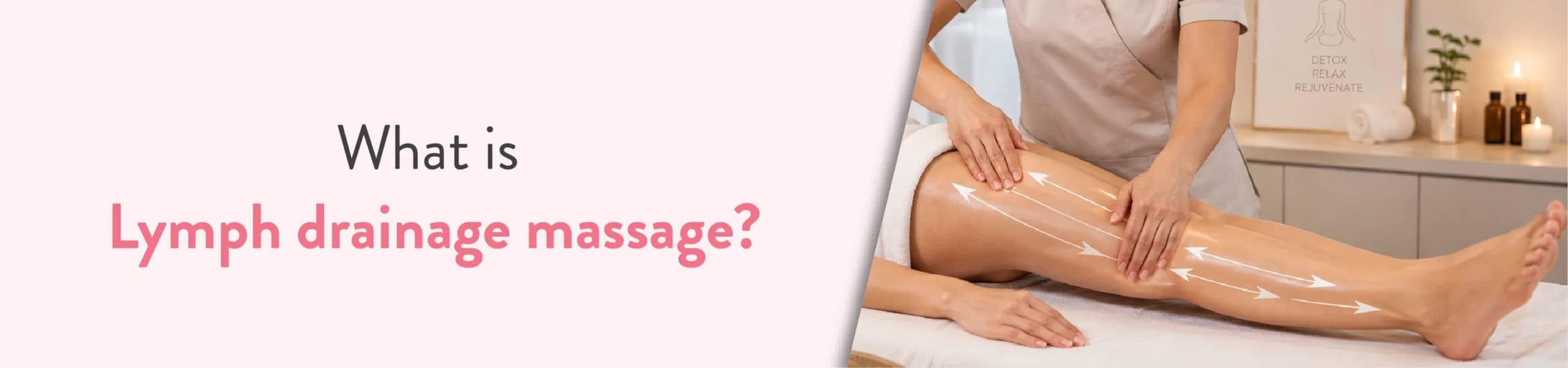
Your lymphatic system is responsible for moving fluid through the body and supporting your immune function. In some cases, after surgery, injury, or certain medical conditions, this system does not drain as efficiently as it should, leading to swelling or fluid buildup that’s difficult to get rid of on its own.
This is one of the reasons your doctor may recommend a lymphatic drainage massage, or MLD (Manual Lymphatic Drainage). For patients dealing with lymphedema, post-surgical swelling, or similar conditions, this gentle technique can help encourage fluid movement and bring relief.
So, how does this massage actually work? Let’s find out.
First, let’s understand the lymphatic system. It is a network of vessels, lymph nodes, and tissues that helps maintain fluid balance and supports your immune system. When these vessels or nodes become damaged or blocked, often due to surgery, injury, or certain medical conditions, lymphatic drainage massage may be recommended to help fluid move properly again.
Lymphatic drainage massage is a gentle, specialised massage technique that helps get lymph fluid moving through the body using very light, rhythmic movements. You may also hear it called manual lymphatic drainage (MLD), which refers to specific, structured techniques used to support lymphatic flow.
Because lymphatic pathways are complex and swelling can have many different causes, that’s why this massage should not be treated like a routine massage.
A physiotherapist should evaluate the swelling first to see if this massage is actually the right approach for you. If it is appropriate, the physiotherapist will carry out the technique themselves and in many cases, they will also teach you simple self-massage methods you can safely use at home for ongoing care.
This massage can help you in a few ways:
This massage is often promoted online as a way to ‘detox’ the body, burn fat or cause weight loss. These claims should be treated cautiously.
MLD is designed to facilitate lymphatic fluid movement. It does not remove your body fat, replace medical treatment or permanently remove swelling caused by an underlying condition.
You may notice that an area looks temporarily less puffy after fluid has shifted, but this should not be confused with fat loss.
A professional session usually begins with an assessment.
Your physiotherapist may ask:
During the massage, the physiotherapist uses slow, gentle and rhythmic skin movements. You won’t feel any deep pressure during the session. The sequence and direction depend on your individual lymphatic pathways and the location of the swelling.
For people with diagnosed lymphedema, manual lymphatic drainage (MLD) may be used as part of a broader treatment programme. Depending on the individual’s needs, this may also include:
Together, these approaches may form part of decongestive lymphatic therapy (DLT), also known as complete decongestive therapy (CDT). These are treatment plans that bring different therapies together to help reduce swelling and help you manage lymphedema over time.
Note: Lymphedema is a long-term condition where fluid builds up and causes swelling, usually in an arm or leg, because the lymphatic system is damaged or blocked. The treatment plan should be personalised to the individual’s needs and guided by a trained lymphedema professional.
It is not appropriate for every person or every type of swelling.
You should first seek medical advice if you have swelling, particularly if it is sudden or affects only one limb. A blood clot, infection or another medical condition may need to be ruled out before massage is considered.
MLD should also generally be avoided over areas affected by an active skin infection such as cellulitis, or when there is a blood clot or certain other medical concerns.
If you have undergone cancer treatment, surgery or radiation therapy, discuss lymph drainage with your treating team before beginning it.
| Lymph Drainage Massage | Regular Massage |
| Uses very light, specific movements | May use moderate or deep pressure |
| Focuses on lymphatic fluid movement | Often focuses on muscles, soft tissues or relaxation |
| Requires knowledge of lymphatic anatomy | Techniques vary according to massage type |
| Commonly used in lymphedema management | May be used for muscular tension or general wellbeing |
| Should be adapted to the patient’s condition | May not be appropriate for lymphatic swelling |
The major difference is purpose and technique. Lymphatic drainage massage should be performed by a trained physiotherapist, particularly when it is being used to manage a medical condition.
Lymphatic drainage massage or MLD can be a useful part of managing certain types of swelling, particularly lymphedema. But the right approach is not simply to book a massage whenever you notice puffiness. It is important to determine the cause of swelling before starting treatment.
At the CK Birla Hospital, our physiotherapy team can assess your symptoms, understand the underlying concern and guide you towards an appropriate treatment plan. If you are experiencing persistent swelling, speaking with a professional is a better first step than trying lymph drainage techniques on your own.
Written and Verified by:

Similar Physiotherapy Blogs
Request a call back

