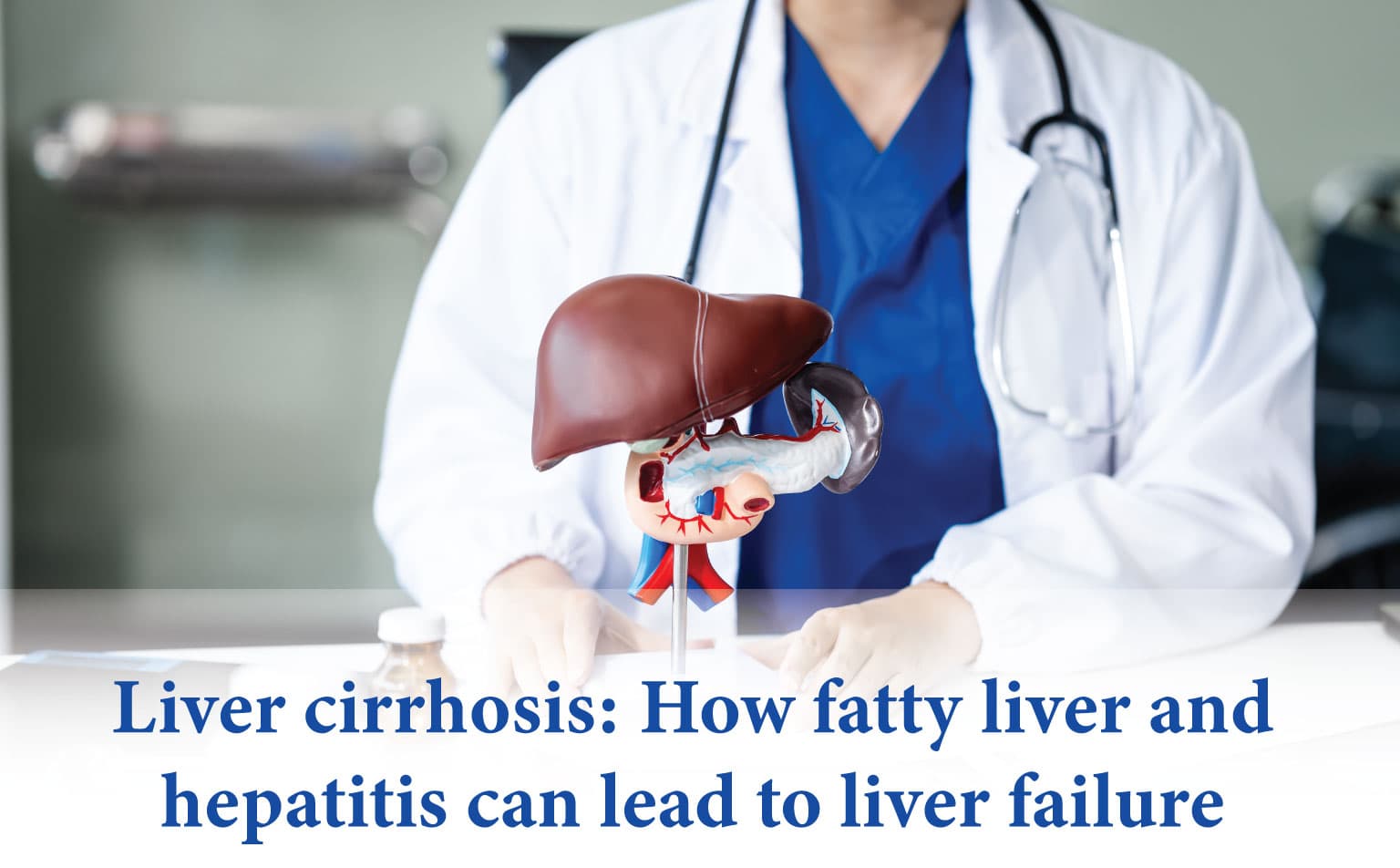
Liver cirrhosis occurs when long-term damage to the liver causes healthy tissue to be replaced by scar tissue. Early symptoms can be mild, but as the disease advances the risk of serious complications rises. Common causes include fatty liver disease and alcohol, both of which can steadily damage the liver over time. Cirrhosis progresses through stages, and treatment depends on the stage and the complications present, such as jaundice and fluid build-up in the abdomen (ascites) or body swelling. In advanced cases, liver failure can develop and a liver transplant may be needed. A healthy diet, regular exercise, limiting alcohol and timely liver tests can help protect the liver. Do not ignore symptoms such as persistent fatigue, yellowing of the eyes or skin, swelling in the legs or abdomen, and see a doctor early.
