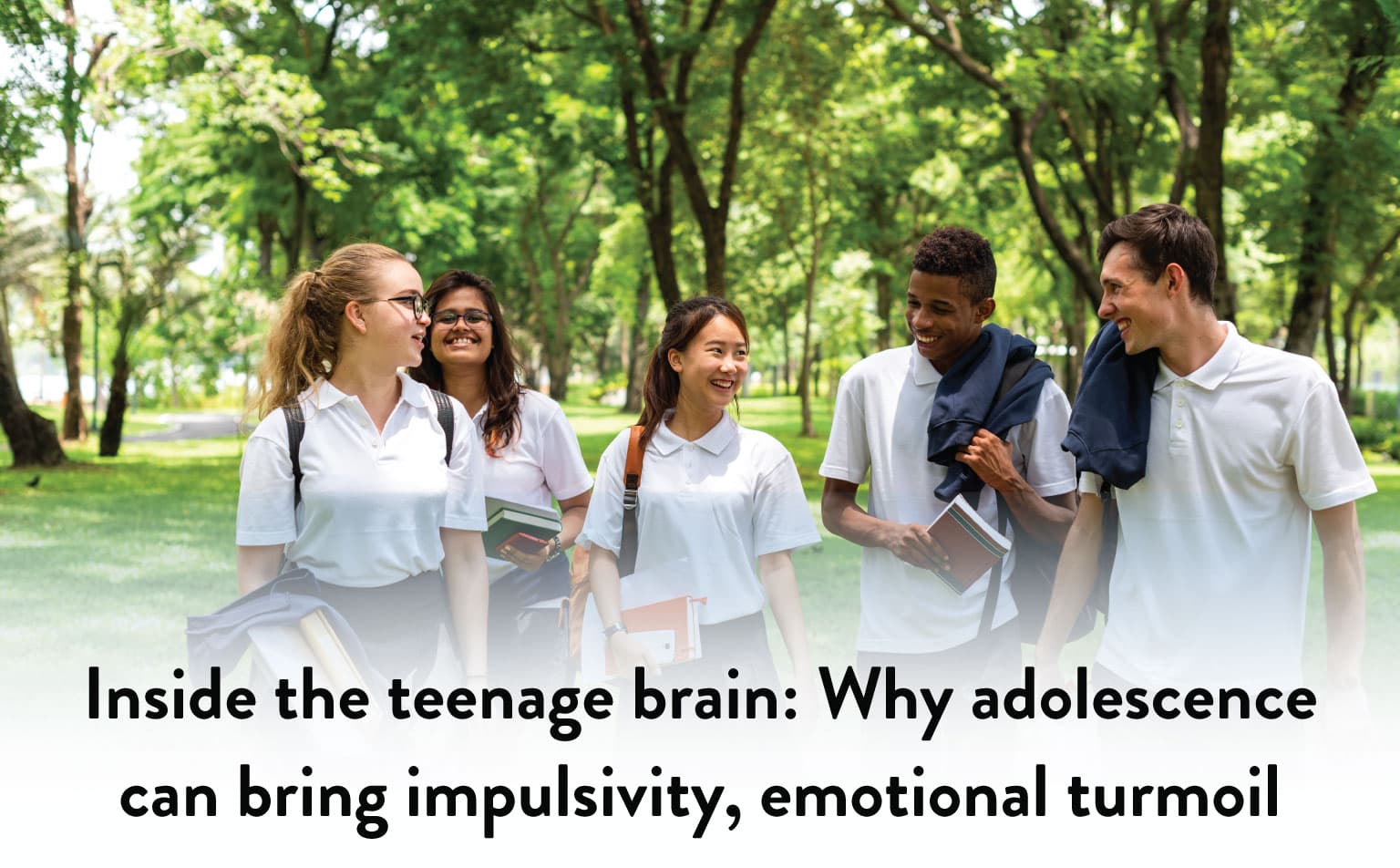
The teenage years, especially between 13 and 17, are a crucial period of brain development, often called a “work in progress.” The prefrontal cortex, which handles planning, decision-making and impulse control, is still maturing, while the emotion and reward centres become highly active. This imbalance explains why teenagers feel emotions strongly, are easily influenced by peers and may take risks even when they know the consequences. It also makes them more prone to stress, addiction and mental health problems, and early puberty can add to this vulnerability. There is no reliable test to predict who will develop a psychiatric illness, so early detection depends on spotting warning signs such as ongoing sadness or irritability, falling grades, social withdrawal, big personality shifts, sleep trouble or thoughts of self-harm. The good news is that the teenage brain is highly adaptable. Supportive parenting, open communication, enough sleep, regular exercise, balanced nutrition and timely professional help can protect long-term mental health.
