Chronic pain is not the same as the pain you feel after an injury or surgery. Those resolve. Chronic pain stays for months, sometimes years, and it changes how you sleep, how you move, what you eat, and how you think. Most people who live with it spend a long time looking for the one thing that will fix it. That one thing rarely exists. What works is a plan that addresses the pain from several directions at once, adapted to your specific condition, your daily routine, and what you can realistically sustain.
This is how to build that plan.
A pain management plan built on the wrong diagnosis does not work. Many people arrive at a pain specialist after months of partial treatment, physiotherapy for what turned out to be neuropathic pain, or anti-inflammatory medication for what was actually a structural mechanical problem. Before building any plan, confirm what you are dealing with.
Chronic pain broadly falls into three categories. Musculoskeletal pain originates in bones, joints, muscles, tendons, or ligaments. Arthritis, disc disease, and myofascial pain fall here. Neuropathic pain comes from damage or dysfunction in the nerve pathways themselves, producing burning, shooting, or electric-shock sensations. Diabetic neuropathy, post-herpetic neuralgia, and nerve compression injuries are common causes. Cancer pain is driven by tumour pressure, inflammation, or the side effects of treatment and requires a different approach from either of the others.
The type of pain determines what treatments are likely to work. Getting this right first saves months of trial and error. The Pain Management Centre in Gurgaon at CK Birla Hospital uses clinical assessment alongside imaging, nerve conduction studies, and pain mapping to identify the source before any treatment is recommended.
Eliminating pain entirely is rarely achievable with a chronic condition. Setting that as the goal leads to abandoning treatments that were actually working. More useful goals are functional: walking 30 minutes without stopping, sleeping through the night, returning to a specific activity, and reducing pain from a 7 out of 10 to a 4.
Write them down. Be specific about what you want to be able to do, and attach a time frame. Not because chronic pain follows a timetable, but because a time frame forces a review. At 8 weeks, have things improved? If not, what needs to change?
Discuss your goals with your pain specialist at the first appointment. A patient whose priority is returning to work needs something different from one whose priority is managing pain during sleep. The plan should be built around yours, not a default template.
Self-managed approaches, exercise, sleep, diet changes, and support medical treatment. They do not replace it.
For musculoskeletal pain, anti-inflammatory drugs, muscle relaxants, or topical agents are commonly used. For neuropathic pain, the medication class shifts. Antidepressants such as duloxetine and anticonvulsants such as pregabalin work on nerve signalling rather than inflammation, and they take time to reach their effect. Take prescribed medication on schedule rather than only when pain becomes unbearable. Stopping and restarting medications that modulate nerve signalling disrupts the effect and resets the clock.
Injections are used when medication has not provided enough relief, or when the source of pain is specific enough to target directly. Nerve blocks, joint injections, facet injections, and epidural procedures each address different mechanisms. They are not permanent solutions in most cases, but they provide a window of lower pain in which physiotherapy can make more progress than it could against a higher baseline.
Minimally invasive procedures such as radiofrequency ablation, spinal cord stimulation, and intrathecal drug delivery are used for severe or refractory chronic pain where other approaches have not worked. Radiofrequency ablation disrupts the nerve signals carrying pain from specific joints and can provide relief lasting 6 to 18 months. These are specialist-led decisions, not self-referral options.
Physiotherapy is one of the most consistently effective treatments for chronic pain, and one of the most commonly abandoned. The reason is almost always the same: pain increases briefly when movement begins, and patients interpret this as a sign the therapy is making things worse. In most cases it is not.
Deconditioned muscles around a painful joint or spine produce more pain when worked, initially. The improvement comes after weeks of effort, not days. This is not a sign to stop.
Work with a physiotherapist who has experience in chronic pain rehabilitation rather than acute injury recovery. The approach is different. Targets are set in terms of function rather than pain levels. The session itself may feel less intense than expected, because pacing is central to the method and overdoing it early sets the programme back.
Physiotherapy twice a week is not enough on its own. Movement between sessions maintains the gains and breaks the cycle of rest, stiffening, and increased pain that chronic pain patients commonly fall into.
Start with low-impact activity and build gradually. Walking is the simplest entry point: 10 minutes to start, extended by 5 minutes a week until you can walk 30 to 45 minutes continuously. Swimming removes bodyweight load from joints and works well for patients with knee, hip, or spinal pain. Yoga and specific stretching programmes reduce the muscle tension that contributes to pain between flare-ups.
The principle that governs all of this is pacing. Doing a little, resting, doing a little more. Overdoing activity on a good pain day and spending the next three days in bed is the boom-bust pattern that keeps people stuck. Moderate, consistent activity produces better outcomes than occasional intense effort every time.
Pain and sleep have a circular relationship. Pain disrupts sleep; poor sleep lowers the threshold at which pain is felt, making the same stimulus more painful than it would be when rested. Patients with chronic pain who sleep badly rate their pain as more severe and respond less well to treatment.
Keep consistent sleep and wake times seven days a week. Position the body with pillows to support painful areas — a pillow between the knees reduces lumbar and hip pain for side sleepers. Keep the bedroom cool and dark. Avoid screens for an hour before bed.
If pain at night is severe enough to prevent sleep despite these changes, raise it with your pain specialist. Night pain that is worse than daytime pain can indicate a specific mechanism that changes the medication approach, and it is worth distinguishing from general sleep hygiene problems.
Do not use alcohol to manage sleep. It induces sleep but disrupts sleep architecture, reduces restorative sleep stages, and worsens pain sensitivity the following day.
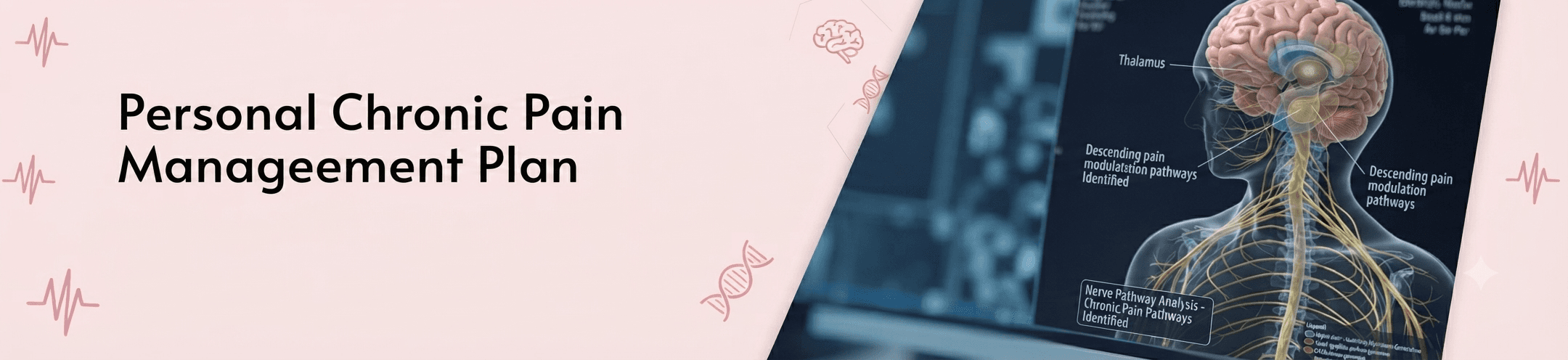
Chronic pain is not psychological, but it has a psychological dimension that cannot be ignored without cost. Pain that persists changes how the nervous system processes signals, called central sensitisation It changes how patients think about their bodies and their future. Anxiety about pain raises pain perception. Depression from months of restricted activity and missed life lowers the threshold at which pain is felt.
This does not mean the pain is imagined. It means treating pain without addressing the psychological dimension leaves part of the problem unaddressed.
Cognitive Behavioural Therapy adapted for chronic pain teaches patients to identify and examine catastrophising thought patterns: the assumption that pain means damage, that activity will make things worse, that improvement is impossible. Patients who complete this alongside medical treatment report lower pain scores and better function than those on medical treatment alone. Mindfulness-based approaches reduce the distress caused by pain, which sounds like a modest benefit until you consider that distress from chronic pain often limits function more than the pain itself does.
If the pain management programme includes psychological support, use it. At CK Birla Hospital, pain specialists work alongside a broader care team rather than in isolation.
Diet does not cure chronic pain. But inflammation makes pain worse, and diet directly affects systemic inflammation. Foods high in refined sugar, refined carbohydrates, and trans fats raise inflammatory markers. A diet built around vegetables, whole grains, oily fish, nuts, and olive oil reduces them.
Hydration matters specifically for musculoskeletal pain. Spinal discs are largely composed of water. Chronic dehydration reduces their height and shock-absorbing capacity over time.
In overweight patients with knee osteoarthritis, weight reduction produces measurable improvement in pain that is not fully explained by reduced mechanical load. The reduction in circulating inflammatory compounds from adipose tissue appears to contribute independently.
If dietary changes feel overwhelming alongside everything else, reduce ultra-processed food first. It is the change with the broadest effect on inflammation and the strongest evidence behind it.
A pain diary helps identify patterns: times of day when pain is worse, activities that trigger it, the relationship between sleep quality and next-day pain levels, how specific medications or treatments affect things. This is useful for your specialist and useful for you in distinguishing between pain that is changing and pain that feels the same because it always feels the same.
The risk is that tracking becomes hypervigilance. Constant monitoring keeps attention on pain and increases the distress it causes. A weekly or fortnightly review is enough. Record date, pain score, activity, sleep quality, and medication taken. Bring it to each appointment. Adjust the plan based on what the patterns show.
A personal plan is not a substitute for specialist care. Some situations require a clinical review:
Pain that is rapidly worsening without a clear reason. New numbness, weakness, or loss of bladder or bowel control alongside back or neck pain. Pain with unexplained weight loss or night sweats. Severe pain uncontrolled despite prescription medication. Pain preventing sleep entirely despite the measures above. Each of these warrants prompt assessment, not further self-management.
The Pain Management team at CK Birla Hospital in Gurgaon and Delhi includes certified pain specialists with experience across musculoskeletal, neuropathic, and cancer pain.
The plan is not a rigid protocol. It is a set of components: medical treatment, physiotherapy, movement, sleep, psychological support, diet, that work together and need regular review. What helps most in month one may need adjustment by month three. A treatment that produces no benefit after an adequate trial should be stopped and replaced.
Bring your goals to each consultation. Be specific about what is limiting you. Ask what a treatment is expected to achieve and over what time frame. Review the plan at every appointment.
Chronic pain rarely resolves in one intervention. It changes over time with attention and consistency sometimes slowly, but enough to matter when it does.
Written and Verified by:

Similar Blogs
Request a call back
