Filter :
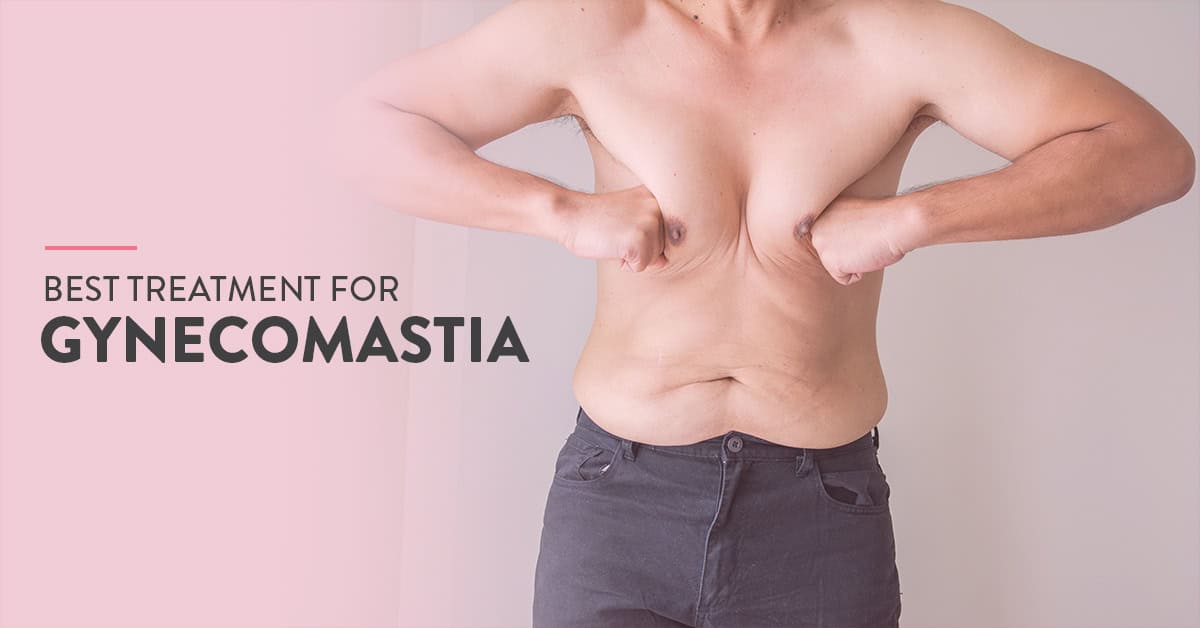
Gynecomastia is a medical term used for enlarged or swollen breast condition in males. It occurs due to excess tissue under the breasts. Breast enlargement may be accompanied by pain and tenderness in some individuals.
Breasts consist of glandular tissue and fatty tissue. Glandular tissue is dense and firm while fatty tissue is soft. A man with gynecomastia is likely to have more than normal levels of both types of tissue, resulting in abnormally large looking breasts.
Pseudo gynecomastia or false gynecomastia refers to excess fat deposits under the breast area. However, true gynecomastia occurs when there’s excess growth of glandular tissue beneath the breasts. In such a case, male chest reduction surgery is the best treatment for gynecomastia.
It is a common condition affecting men and boys, with hormonal imbalance being the most prevalent cause.
Table of Contents
The hormone testosterone guides sexual characteristics in males, whereas estrogen governs sexual traits in women. However, men and women both have the two hormones in some proportion. Males make more of testosterone and females make more of estrogen.
Estrogen is primarily responsible for the development of breasts in females. But when the male body starts making too much estrogen and low testosterone, it may result in abnormal breast enlargement.
Gynecomastia can occur naturally in men at different phases of life.
Medical conditions that can disrupt natural hormone balance and cause gynecomastia includes:
Between 10 to 25% of cases of gynecomastia can result from medications and herbal products. These include:
However, the medical evidence on their effect on gynecomastia is limited.
Read: How Chemotherapy Works Against Cancer
The foremost thing you should do as soon as you notice anything unusual with your chest is to consult a doctor. Your doctor will first run some blood tests and imaging tests to precisely diagnose your condition and identify the likely cause.
The best treatment for gynecomastia will depend on its cause evaluated by your doctor. If the condition occurs naturally, it usually goes away on its own. Most individuals with mild gynecomastia do not necessarily require treatment.
However, in cases where gynecomastia occurs due to some underlying health concern, treating the target issue will prove helpful.
If some medication is responsible for your breast enlargement, then as per doctors advise stopping its use or changing the drug will improve your condition within a few months.
Men who find this condition embarrassing and whose quality of life is impacted by it can surely opt for surgical treatment to get rid of gynecomastia.
Male chest reduction surgery is the most effective treatment to get rid of gynecomastia and restore your usual chest appearance.
Doctors may also advise surgery for men who find their condition is affecting them emotionally and lowering their self-esteem.
The doctors perform gynecomastia procedures under general anaesthesia. The complete surgery typically takes around one to two hours to complete.
To further maintain the effects of the gynecomastia procedure, a well-rounded approach is vital. Maintaining a healthy weight, exercising, healthy dietary habits will play a long-term role in the overall efficacy of the surgery.
Can gynecomastia be cured without surgery? It is often the question asked by men. No doubt, options like weight loss and exercise are great ways to enhance your overall health and fitness, but you cannot cure true gynecomastia with it.
Though most people think obesity to be the main reason behind gynecomastia, that’s seldom the case. Being overweight can only contribute to worsening the problem but isn’t the primary culprit.
Exercise and diet help eliminate fat in the body and are popular among people when it comes to male breast reduction without surgery. Since the cause of true gynecomastia is excess glandular tissue in the breasts, it doesn’t respond to diet and work-outs. In fact, in some cases, weight loss and exercise has caused gynecomastia to become more apparent, leaving you with a sole surgical option.
That said, weight loss and exercise may be partially effective in treating pseudo gynecomastia, or when there is excess fat tissue under the breast area. You can try jogging, swimming, cycling to burn body fat and do push-ups to tone your chest muscles.
Whatever the case, you need to consult a doctor first for a proper diagnosis to find the best gynecomastia cure which suits your condition.
There is no denying the fact that gynecomastia can often lead to stress, anxiety and confidence issues in men. As such, it is significant to reach out to your family or friends for your emotional well-being. You can also consult a counsellor who will guide you in the right direction.
Always remember, seeking help and support isn’t a sign of weakness. Talk to a specialist right away, and you’ll be on the road to recovery in no time.

IVF or In vitro fertilisation is a type of assisted reproductive technology (ART) which is done to help couples and individuals conceive. It uses a combination of medical and surgical treatment to fertilise the egg outside the body and implant the resulting embryo into the uterus. It is one of the most widely known forms of ART. The description is, however, an extremely simplified version of this long and complex process. The outcome depends on a number of factors including the age and health of hopeful parents.
There is no doubt that IVF has revolutionised the field of fertility. It has enabled couples and individuals all around the world fulfil their dream of becoming a parent. As it rises in popularity it is necessary to raise awareness about what it all entails. Here we will explore IVF a little further including its risk factors associated with IVF, IVF process and its suitability.
Table of Contents
A common misconception is that IVF is the only fertility treatment available. It is the most recognised type of artificial reproductive technology, and is used for patients with:
IVF is an extremely complex and long procedure. Each course of treatment will end with implantation of the embryo into the uterus, this is called an IVF cycle. Patients may need either one or multiple IVF cycles to conceive. The steps involved in an IVF cycle are:
Before you begin your treatment, your doctor will evaluate your uterus and fallopian tubes to rule out any issues that might need surgical repair. You would then be given fertility medications to stimulate egg production. This protocol used to decide the dose and frequency of drug administration is carefully chosen to maximise egg production while avoiding the development of ovarian hyper-stimulation syndrome. It is desirable to harvest multiple eggs as not all harvested eggs are viable for fertilisation. You would have to undergo an ultrasound to examine the ovaries as well as a blood test to assess hormone levels in your body.
Your eggs would be harvested with the help of a minor surgical procedure. Ultrasound imaging is used to guide a hollow needle through the pelvic cavity so as to retrieve the eggs. You would be sedated and monitored by an anaesthesiologist to minimize discomfort during the procedure.
Sperm samples would be taken from the male partner.
The collected sperm is then used to fertilize the retrieved eggs in a laboratory dish. This process is called insemination. In case there is a low probability of fertilisation, a process called intracytoplasmic sperm injection (ICSI) is used. In ICSI, a single sperm is injected directly into the egg. The sperm to be injected is carefully selected from the sample to increase the chances of success. Once this is done, the eggs are monitored to check for growth. If the cells start multiplying, the egg is considered to be fertilised and are called embryos.
Usually 3 to 5 days after fertilisation, the embryos are implanted into the uterus. A small tube or catheter is used to transfer the embryos. This procedure is generally painless, although some women do complain about experiencing mild cramping. Implantation generally occurs around 6-10 days after egg retrieval in case the process is successful.
Read: Five things you should know before visiting an IVF centre
It is important to remember that IVF does not guarantee a pregnancy or live birth. The success of the treatment depends on a wide range of factors such as reproductive history, maternal age, cause of infertility as well as lifestyle. The live birth IVF success rate drops drastically with maternal age over 35 years (40% at 35 years of age and 4% over 40 years of age).
It is also important to know that for most people, multiple IVF cycles would be required for successful implantation. So, do not lose hope right away in case of an unwanted outcome.
Like all medical procedures, IVF does not come without any side effects. They can be mild or severe from patient to patient. Common side effects of IVF include:
There are a few risks associated with IVF treatment. These would be explained to you in full detail by your doctor before you start the treatment. They include:
Be sure to do your research before you start with any treatment. Choose your IVF centre and fertility specialist doctor with extreme care and caution. Remember IVF is a long and arduous journey. Take time to recuperate between cycles. Follow a healthy lifestyle and diet to maximise your chances for success. Be patient, strong and positive during this time.
Que 1: Why is there a higher chance of having twins with IVF?
Ans: For a higher chance of implantation, the doctor generally implants multiple embryos in the uterus. This increases the risk of having multiple pregnancies (twins, triplets, quadruplets etc). As there are a whole other range of risks associated with multiple pregnancies such as preterm labour and miscarriage, doctors have now started limiting implantation to one embryo after carefully selecting the most viable and healthy embryo.
Ques 2: What should I eat during my IVF treatments?
Ans: You should follow a healthy balanced diet during your IVF treatments. Don’t drastically change your diet. Eat plenty of fresh fruit, vegetables, whole grains, legumes, lean protein and low-fat dairy. Diet is also significant in maintaining sperm health, so the male partner should be careful about what they eat as well.
Ques 3: What do I do if my eggs or my partner’s sperm is not viable?
Ans: If your eggs or your partner’s sperm are not suitable for fertilization, your doctor might recommend using a donor. Many facilities now offer egg donation and harvesting services and have contact with egg and sperm banks. The donors are generally kept anonymous. You can get a better idea about the procedure with the help of your doctor.
Ques 4: What do I do if implantation is not successful?
Ans: In the case of multiple implantation failures due to an unsuitable uterine environment, you can opt for surrogacy. In surrogacy, your embryo would be implanted in a gestational surrogate who would carry your baby to term. Seek medical counsel to understand the legal aspects of surrogacy in your region.
Read: What to do When You Suspect Infertility
At the CK Birla Hospital, we aim to provide the best treatment with the utmost care and our Department of Fertility has one of the largest IVF centres in Gurgaon with a combined team experience of over 100 years and 55% IVF success rate.
Connect with our team of IVF experts to learn more about the IVF process and treatment. Book appointment today.

According to WHO 2010 data, infertility affects one in four couples. People sometimes find it difficult to accept that it is a medical condition like any other and needs medical attention. Reproductive endocrinologists (commonly known as infertility specialists) are experts in this field and should be considered as first choice for all infertility treatments. If you are in the process of looking for the best IVF centre, here are some tips for you to choose the right one.
Success of the IVF procedure depends upon a number of factors, most important of which is the age of the patient and the factor causing infertility. Two main factors affecting it are the age of the mother and the factor causing infertility. The success rate comes down with the age of the mother. If the age of the mother is less than 30 years, the success rate can be as high as 60-65%. If the mother’s age is more than 35 years it drops to 35-40%. If mother’s own eggs are used and her age is over 40 years, then the success rate can be as low as 10%. The success rates can be improved by proper selection of the IVF protocol, choosing the best embryos based on strict guidelines and proper pregnancy support.
Embryos that can survive and grow in lab to the blastocyst stage, have the highest chance of implantation and success. It’s a natural way of embryo selection. Only the most competent embryo reaches a blastocyst stage. It is helpful in patients who have plenty of embryos. The embryos are made to grow to reach the blastocyst stage, and this selects the best embryo to be transferred. The surplus embryos are frozen and can be used in the future.
The doctor you feel comfortable with should be your choice. You might have some questions, and you need to get them answered. Only a doctor who is polite and friendly will answer all your queries. When you feel connected with the doctor, you will end up satisfied with your treatment. The bond of trust is essential so that your doctor can look into the emotional needs as well. At times, IVF is not successful at the very first time. You can lose patience and hope, and you need a doctor who can help you through this.
IVF is no doubt a costly procedure, because of the drugs, culture media and equipment used. On an average a patient needs to try it 2-3 times before getting any success. This can be made cost effective if the centre has expertise in freezing of gametes. By freezing surplus embryos, patient has the advantage of getting repeated embryo transfers without paying for whole IVF cycle again and again. When you are looking for somewhere to go for IVF you should consider if the centre has this option.
In an IVF cycle, a good laboratory is as important as a qualified and experienced doctor. The most important part of IVF i.e. embryogenesis (mixing of eggs and sperm) happens in the lab. Skilled doctors who have received special training in embryology are needed for the same. They are called embryologists. Get to know what standard of laboratories the IVF center has and if they have a good embryologist.
Apart from these, you should also check the scan facilities the center has. For instance, highly skilled doctors and advanced technology ultrasound present in the reputed Fertility center at the CK Birla Hospital can save your time and efforts. Moreover, the hospital also has advanced labour and recovery rooms, NICU and the best neonatologists in Gurgaon, as even after delivery, it can provide neonatal and special baby care that is all facilities are available under one roof.

Becoming a parent is an incomparable experience. The excitement and the joy of watching your newborn grow up are unmatched by anything else. These uncharted waters also bring along a plethora of questions and doubts. First-time mothers often find themselves swinging between ecstasy and anxiety.
Nowadays, there is no shortage of advice for a new mom. From the internet to every relative who visits you, everyone has some parenting tips to offer. Sometimes, the well-meaning pieces of advice for a new mom from different sources contradict each other and leaves you wondering which one to follow.
Every new mother or soon to be mother faces a similar set of emotions. Only those who have been in that position can offer the best advice. Here are some newborn tips for first-time parents from those who have trodden the path of motherhood before you.
WHO advice for new moms is that babies must be exclusively breastfed for the first six months of their life. Breast milk is the best food that your baby can get as it is optimised to meet their nutritional requirements. It provides them with the necessary antibodies to ward off illnesses.
Breastfeeding is touted as the most natural thing a mother does her newborn. Because of this, the expectation is that breastfeeding is simple and requires no prior preparation. However, nothing could be further from the truth for many mothers.
Many new mothers face issues such as low supply, breast engorgement, inverted nipples, and improper latching. If you do face trouble with breastfeeding, then you are not alone. Over 70% of women in India face some issues with breastfeeding.
The best advice for new moms is that you should learn about breastfeeding before the baby arrives. Use online resources or take online classes to understand various breastfeeding positions and remedies to most common breastfeeding issues. Proper knowledge will equip you to face anything that comes to your way in your breastfeeding journey.
Read: Breastfeeding FAQs
Irrespective of how much you prepare, a newborn can throw up a lot of surprises. Babies are just forming a routine in the first six to eight weeks. Your body has also been through a lot and needs time to recover. The good news is that there is no shortage of help in the Indian family.
All your relatives and friends want to help. All you need to do is ask. Often, new mothers feel that asking for help is a sign of weakness. If you ask an experienced mom, “What is your best advice for a soon-to-be first-time mother?” they will tell you not to be shy about asking for help. It is often a godsend. You will also find that many want to help if you just ask.
Milestones are an important part of your baby’s development. They tell you how your baby is developing various skills. However, each child develops these skills at a different pace.
Comparing your baby with other babies is the worst thing you can do to yourself and the baby. When you compare, you become anxious if your child hasn’t crossed a milestone that others have. You may end up pushing your baby to do something that they are not ready to do.
Similarly, comparing yourself to other mothers is another rabbit hole that you do not want to enter. You may come across many moms on social media who seem to have everything under control and who seem perfect in every way. Keep in mind that you only see what they choose to show you, so you must avoid comparing yourself with others.
Kangaroo care is essential to help you bond with the baby. A doctor’s advice to a new mom almost always includes performing kangaroo care daily.
It allows you to bond with your newborn and has a host of other benefits for you as well as the baby. It helps stabilise the baby’s weight, makes them feel safer, promotes neurodevelopment, and also helps you enhance your milk supply.
Many first-time mothers often neglect kangaroo care. However, it has many proven benefits and should not be overlooked under any condition. This is a part of the most essential baby care tips for new moms.
A support system is vital for a new mother. Your family is an important aspect of your support system, but you need to find a group of other first time mothers who can become your tribe.
Such a group understands what exactly you are going through and provides valuable parenting tips for new moms. Having a support group also ensures that you never feel alone.
Following the doctor’s advice seems like the most obvious advice to a new mom. But every region in India has its traditions and home remedies for treating common ailments in newborns.
While these traditional wisdom work in many cases, they are not foolproof, and might even have an adverse impact on the newborns. Doctors in your hospital will be aware of these and may ask you to stay from them. The best advice for first-time moms is to follow your doctor’s advice, irrespective of pressure from family.
There is little that can prep you for the sleeplessness that becomes your permanent companion for a few months after the baby arrives. One of the most common newborn tips for first-time parents is to sleep when the baby sleeps.
This may seem hard to implement in real-life. Household chores and visitors for the new addition to the family will make it difficult for you to find proper time to sleep. However, you must try to get some shuteye at every possible instance.
Never think that you can only sleep during the night. Squeeze in some naps during the day as well: even a small nap can leave you feeling refreshed.
Read: Good Parenting tips by Dr Shreya Dubey
There is nothing that can compare to the feeling of holding your newborn in your arms and watching them grow up. It is a magical experience. One of the best positive parenting tips is to enjoy these moments to the fullest. If you are wondering what some of the best parenting tips for new moms are, then it is to be with your baby and take in every moment.
Read: What to expect when your baby is in the NICU
Visit our consultants at our Paediatric and Neonatology department for special Newborn care tips, clarifications and guidance.

“I have a sharp pain underneath my feet and it is usually worse early mornings especially when I am pressed to use the bathroom. What could be the cause?” This is a common complaint received by physicians, today. The pain in heels could be due to a condition known as plantar fasciitis, a common cause of heel pain.
According to a study, it is said that one in 10 people will experience plantar fasciitis symptoms in their lifetime. Its occurrences tend to be highest in middle-aged women who are obese as well as young male athletes, who put themselves through high levels of endurance.
Table of Contents
Plantar fasciitis heel pain occurs due to an inflammation of a thick band of tissue that runs across the bottom of your foot. This thick, web-like ligament is called the plantar fascia. The plantar fascia connects your heel bone to your toes. This ligament is kind of like a shock absorber, cushioning your heel from pain when you walk or run. It supports the arch of your foot. When it experiences inflammation, the result is plantar fasciitis. As you grow older and hit your 40s, or if you start gaining more weight, there’s more pressure placed on the plantar fascia, causing it to be at higher risk of plantar fasciitis.
If you experience plantar fasciitis symptoms, it’s important not to ignore it as repeatedly putting pressure and not getting the medical care you need can lead to wear and tear of the ligament, aggravated pain and sometimes, even surgery.
Let’s delve into some of the common causes of plantar fasciitis.
The causes and treatment of plantar fasciitis depend on several factors such as your lifestyle, profession and daily habits. Several activities or factors can increase the risk of this condition.
There is no one specific plantar fasciitis cure as such. It is a mix of treatment and prevention approaches.
When you experience continuous bouts of pain, get it examined early on. Your doctor might order an X-ray or ultrasound imaging. The idea is to rule out any other conditions, such as a tumour. Once identified as plantar fasciitis pain, your doctor may suggest applying ice packs to reduce the swelling, taking anti-inflammatory medications or certain injections, as well as medication to manage plantar fasciitis pain.
Your doctor may also recommend physical therapy to help heal the swelling over a period of a few days.
“Doctor, when one has plantar fasciitis, does it matter if they rest their feet on the floor, stretched out, or elevated?” This is a common question asked by those recovering from plantar fasciitis. Yes, it is recommended that the patient keep the leg at an elevated level and not put pressure on the foot.
Read 4 Types of foot pain one should not ignore
Severe plantar fasciitis symptoms such as a chronically inflamed ligament may require surgery–either an open one or an Endoscopic Plantar Fasciotomy (EPF). The recovery time for the formed is four to six weeks, while the latter is almost instant. Both are minor surgeries.
There are certain newer treatments also available, but it is best to get your physician’s opinion for the best diagnosis of your specific case. Post the surgery or reduction of the swelling, physical therapy may also be recommended.
To reduce the risks of plantar fasciitis occurring again, taking a preventive approach can be the best policy.
Reducing your weight to the prescribed amount recommended for your height and age is a long-term but essential approach to ensuring there are no recurrences of plantar fasciitis pain.
Avoid practices like crash dieting, and exercise routines that place pressure on your heel, and further aggravate it. The best approach is to consult a nutrition and fitness trainer, for a good weight loss regimen, with a sign-off from your physician
Another smart thing to do is to ensure your footwear is optimal, whether for walking or running. Using sneakers with soft, cushioned soles that reduce the pressure on your heels, and purchasing some custom orthotic shoe inserts can also be used to reduce the stress.
Avoid exercising on hard surfaces and ice your foot after every high-intensity workout session. Reduce the frequency of physical activities that involve a lot of pressure on your foot, such as jumping and running.
Plantar fasciitis is emerging as one of the top orthopaedic complaints in the world. In many ways, plantar fasciitis can be considered as a “lifestyle” condition that crops up due to poor fitness habits, as well as hazards of certain types of professions.
The occurrence of plantar fasciitis symptoms, treatment, and prevention is in your hands provided you take care of yourself, and your body. However, if you do experience pain, remember that pain is always an indicator that your body is trying to tell you something. So be alert to it, and consult your doctor so that you can course-correct early on.
Read: From bunions to hammertoes: How to avoid the shoes that kill your feet

Nearing your due date? It is the time to recognize the early signs of labour pains. This can help be prepared, grab the “go bag” and reach your hospital to welcome the little one.
Many a time, initial symptoms of labour are vague and easily misinterpreted. Whether it is your first pregnancy or not, you can always get confused with dull labour cramps and discomfort after a heavy meal. Or even your water breaking or urine trickling thanks to the pressure on your bladder. To help you figure it out, here is a list of early signs of labour approaching.
These symptoms don’t manifest in any particular order and can occur a few days before the start of your labour.
During pregnancy, the cervical opening is closed shut by a thick plug of mucus. This helps prevent bacteria from entering the uterus. In the third trimester, this plug is pushed into your vagina. This generally causes an increase in vaginal discharge that may be clear, pinkish or bloody. However, if this discharge is as heavy as your period, get in touch with your obstetrician.
This feeling is also called “lightening”. This term is used to describe the feeling of the baby’s head settling deep into your pelvis. You might also notice a change in the shape of your abdomen. You may also feel like you can breathe more freely. This is because the baby is no longer pressing on your diaphragm. This can happen anywhere from a few weeks to a few hours before you begin your labour.
As you approach your labour, you will notice that you have stopped gaining weight. Some soon-to-be mothers also report to have lost a few kilos. This is completely normal and should have no effect on your baby’s birth weight. This weight loss is generally attributed to lower levels of amniotic fluid, increased urination and sometimes increased activity.
It is reported that muscle cramps and pain in the lower back and groin as labour approaches, is more common in women who are giving birth again. This is because your muscles and joints are stretching and shifting in preparation for the birth of your little one.
As the muscles in your uterus relax in preparation of birth, other muscles, including the ones in your rectum relax as well. This results in diarrhoea, a common complaint amongst women approaching labour. It is important that you keep yourself hydrated to compensate for the loss of fluids.
Some mothers reportedly become more restless or experience a burst of energy as they go closer to their due date. They may feel an inexplicable urge to clean and organize everything around them. This is called the “nesting instinct”. It is completely normal. Just remember to get plenty of rest as there you won’t be guaranteed much sleep after the birth of your baby.
Braxton Hicks contractions are sometimes called practice contractions. They feel like tightening or hardening of your uterus with mild cramps and are often mistaken for labour. Braxton Hicks contractions generally ease up with time unlike real labour contractions. They also go away by changing positions. Real contractions become closer and more intense with time and generally fall into a regular pattern.
Watch the video as Dr Astha Dayal (Dept. of Obstetrics and Gynaecology at the CK Birla Hospital) lists out a few early signs of labour and how to identify them correctly.
Read:
If you experience any of the following symptoms, you are probably going to go into labour quite soon. So, get in touch with your doctor if you notice any of these 1st signs of labour.
Read: Caesarean section delivery – What to expect
It is generally advised that you start preparing your hospital bag and do trial hospital runs a few weeks before your due date. This will not only keep you ready for when junior decides to arrive but also give you the confidence to complete your pregnancy with minimum stress.
Read: Tips to get you started on your postpartum weight loss journey

We have all been affected by an upset stomach one time or the other. Cramps, diarrhoea and indigestion are just a few of the symptoms that leave us feeling drained and sick. Thankfully in most cases, upset stomachs can be easily treated by adjusting our diet a little. So, hasten your recovery by just following the list of food for upset stomach and a few lifestyle tips.
Table of Contents
An upset stomach isn’t one single condition — it’s a symptom that can come from several different causes, including:
– Gastritis (inflammation of the stomach lining, often from stress, certain medications, or infection)
– Viral gastroenteritis (the “stomach flu”)
– Food poisoning
– Irritable Bowel Syndrome (IBS)
– Lactose intolerance
– Food allergies
– Constipation
Note: bananas and applesauce are the exception to the “avoid raw fruit” rule below — they work precisely because they’re low in the insoluble fibre that raw fruit has, which is what makes raw fruit harder to digest during an upset stomach.

Most raw fruit is best avoided during a stomach upset (see “must-not haves” below), but a few are the exception:
Bananas— gentle on the stomach, help settle diarrhoea, and replace potassium lost through vomiting or loose stools.
Applesauce — cooked and pureed apple is easier to digest than a whole raw apple and helps firm up loose stools.
Ripe papaya, in small amounts — some people find it easier to digest than other raw fruit once symptoms start easing, though it’s best reintroduced only after the sharpest symptoms have settled.
These three are the fruit-based exceptions to the “avoid raw fruit” rule, everything else in the citrus, whole-apple, or high-fibre category is best left until your stomach has settled.
This is a common question, and the honest answer is: juice helps less than most people expect, and in some cases can make things worse.
Coconut water is a reasonable, low-sugar choice for gentle hydration alongside other fluids.
Diluted, low-sugar fruit juice without pulp** (for example, apple juice cut with water) can be used in small amounts once you’re keeping fluids down.
Plain fruit juice, water, and broth are not a substitute for oral rehydration solution (ORS) when you’re significantly dehydrated. They don’t replace lost electrolytes (sodium, potassium, bicarbonate) the way ORS does, and drinking a lot of plain juice or water alone can, in some cases, worsen the electrolyte imbalance. If diarrhoea or vomiting is more than mild, ORS should be your first choice, not juice.
For children specifically, undiluted apple juice and other clear liquids are not recommended as a rehydration fluid — an age-appropriate ORS is the right choice, and a doctor or pharmacist can advise on the correct amount.
If your upset stomach involves diarrhoea or vomiting, replacing lost fluids matters as much as choosing the right food. Along with water, coconut water, and clear soups, keep oral rehydration solution (ORS) on hand — it replaces the salts and sugars your body loses, not just the water. *If you’ve just vomited, it’s best to wait a few hours and sip small amounts of fluid frequently before trying solid food again, rather than eating or drinking a large amount right away.
The best way to deal with an upset stomach is to have plenty of fluids and stick to easily digestible bland soft food. Choose some comforting “khichidi” or curd rice for your meals with a side of buttermilk till the symptoms abate. Khichidi is known as the best food for upset stomach in India. If you don’t see your condition becoming better after a few days, seek medical attention or consult with your doctor to rule out any other condition.
Read: Causes of stomach ache after eating
If you’re looking for light, easy-to-digest food for an upset stomach, the must-haves listed above (semi-solid foods, white rice, toast, bananas, and applesauce) are exactly that — plain, low-fat, low-fibre foods that don’t ask much of your digestive system. Add boiled potatoes (plain, no butter or spices) and a plain scrambled egg to this list if you need something more filling once the sharpest symptoms have eased.
Alongside food choices, a few simple habits can reduce stomach discomfort:
– Eat slowly — it takes about 20 minutes for your stomach to signal fullness to your brain, so slower eating helps you avoid overeating.
– Chew thoroughly rather than gulping — swallowing air along with food can trap gas and worsen bloating.
– Eat smaller, more frequent meals rather than large ones.
– Avoid lying down for a few hours after eating, especially if reflux is part of your discomfort.
Most upset stomachs settle with diet and rest, but see a doctor if you notice any of the following:
– Symptoms lasting more than 3 days without improvement
– Signs of dehydration — very dark urine, dizziness, or not urinating
– Blood in vomit or stool, or black, tarry stools
– High fever alongside stomach pain
– Severe pain that is sharp, constant, or getting worse rather than better
The best way to deal with an upset stomach is to have plenty of fluids and stick to easily digestible bland soft food. Choose some comforting “khichidi” or curd rice for your meals with a side of buttermilk till the symptoms abate. Khichidi is known as the best food for upset stomach. If you don’t see your condition becoming better after a few days, consult with doctor.
Ques 1: What should I eat for an upset stomach?
Ans: If you are suffering from an upset stomach it is better to opt for semi solid bland food which is easy to digest. This includes white rice, plain bread, yogurt and bananas, these are some foods for upset stomach. Reduce your salt consumption and drink plenty of fluids (water is the best).
Ques 2: Why do I always have an upset stomach after drinking milk or eating cheese?
Ans: If you feel uncomfortable, bloated, nauseated, etc whenever you have foods with dairy products, chances are that you might be lactose intolerant. Try switching for dairy-free alternatives such as soy/almond milk, tofu, etc to see if the symptoms abate. If not, consult your doctor to test for possible causes.
Ques 3: Is yogurt good for upset stomach?
Ans: Yes, yogurt may help in upset stomach. Yogurt is rich in probiotics that can help you in maintaining good stomach health.

Frozen shoulder or adhesive capsulitis is a common disorder that causes stiffness, pain in the shoulder as well as limiting its range of motion. It manifests over a period of time and is commonly seen in patients recovering from any injury or surgery that limits the movement of the arm. In this article, we shall explore ways you can prevent frozen shoulder after an injury or surgery.
The causes behind a frozen shoulder are still not fully understood. Experts believe that an inflammatory process is probably involved. After any injury or surgery involving our shoulders, most of us are guilty of popping painkillers instead of facing the problem head-on. This is also because many of us are apprehensive of making our condition worse. The truth of the matter is, shoulder joints often “freeze” due to a lack of movement and use.
The key to preventing frozen shoulders is to keep it moving. The idea is to consistently move the joint to the end range and remodel the connective tissue in the shoulder to recover the maximum range of motion and flexibility. It is important to remember not to overexert yourself. If you have any doubts, consult your doctor before trying any of the following exercises to prevent a frozen shoulder.
Along with the above exercises, you can also perform simple home remedies to prevent frozen shoulders such as gently massaging the affected area with lukewarm oil to relieve stiffness and applying a cold compress to manage pain. After an injury or surgery, talk to your surgeon and/or physical therapist for exercises best suited for your recovery. Remember every case is different, hence you should be careful not to overexert yourself.
Ques 1: Can I get frozen shoulders if I have diabetes?
Ans: Although the exact reasons are still unknown, studies show that frozen shoulder develops twice as often in patients with diabetes mellitus. If you have diabetes, practice shoulder strengthening and stretching exercises to prevent the development of frozen shoulders. Also, consult your doctor if you observe any stiffness and pain in the shoulder joints.
Ques 2: Can frozen shoulders be prevented?
Ans: Frozen shoulder or stiffness and pain in the shoulder joint develop over a period of time, usually due to lack of use. You can prevent it by gradually strengthening your shoulder and increasing its range of motion with simple at-home stretching exercises. Consult your doctor to get a tailored exercise plan best suited for your recovery.
Ques 3: Can a frozen shoulder go away on its own?
Ans: There are typically three stages of frozen shoulder: Freezing, frozen and thawing stage. Stiffness and pain caused by frozen shoulders can decrease over time. However, chances of restoring maximum function are best if you perform stretching and strengthening exercises regularly. In severe cases, frozen shoulder might also require medical intervention wherein, the doctor would manually “release the shoulder”

The oldest pair of shoes dates back more than 40,000 years. Initially designed to protect the feet, the expectations and requirements of footwear have changed considerably over the years. However, three major factors still play a key role in choosing the right footwear today: form, function and fit.
Form refers to the aesthetic design of the shoe, hence, it changes with the trends in the fashion industry. Function addresses its purpose while fit relates to the ability of the footwear to accommodate to the shape of the foot.
Fit is one of the most vital aspects of footwear as a good fit eventually translates to good functionality. Unfortunately, finding a proper balance between the three factors is next to impossible and people usually end up compromising on one or two of them.
With age, choosing footwear that accommodates the foot both in width and length becomes all the more essential as the shape of the feet changes as we grow older. Many people, especially women, develop broader feet with ageing secondary to problems like arthritis, flat feet and bunions. Moreover, the unilateral deformity can result in a size difference between the feet, making standard female footwear unsuitable. As a result, finding an appropriately fit shoe that accommodates all the dimensions of the deformed foot becomes challenging.
Incorrectly fitted footwear is associated with a number of serious consequences such as ulcers and infection, especially in diabetic people. Patients with diabetes have a high risk of developing diabetic neuropathy that results in numbness in both feet. Any minor trauma or pressure caused by ill-fitting shoes can cause blisters and wounds in the feet. Studies show that diabetics wearing tight or loose shoes are 5 times more likely to have foot ulceration. It has also been observed that diabetic patients have broader feet as compared to non-diabetic people. So, many of them when buying shoes of adequate length end up buying narrower shoes.
It is widely known and acknowledged that comfortable shoes and good foot health are both interdependent and interconnected. Shoes play a dual role in both protecting the feet and providing comfort while walking. Ill-fitting footwear is associated with not just foot pain but also deformities and pain in the proximal parts of the body such as the knee, hip, and back. It also increases the risk of injuries and can have an impact on your gait. Picking the right pair of shoes is hence essential to healthy and pain-free living.
Read: 12 everyday tips for foot care in diabetes
The purpose of shoes is to give adequate cushioning and support to the feet. At the same time, they should be visually appealing as well. Many a time, we end up compromising on comfort and fit for shoes that look good. According to a study conducted in the US, almost 70% of the participants were reportedly wearing shoes that didn’t accommodate the length or the width of the feet. Ill-fitting shoes can result in a number of foot problems such as:
Hence, we should avoid regular use of high heels and save them for special occasions.
So, if you also have the habit of wearing short, tight, or loose shoes; it is time to rethink your choice of shoes. It is time to stop punishing your feet and reward them with comfort.
Choosing the right and fit pair of shoes is no rocket science. All you have to do is keep the following things in mind while selecting new shoes:
Be extra careful when you are selecting your footwear and abstain from wearing uncomfortable pairs. A seemingly innocuous pair of shoes may translate into a long-term foot disorder. Also, perform foot exercises to improve the strength of all the 26 bones, joints, ligaments and muscles of the feet. To keep your feet healthy and strong, you can consult our expert orthopaedic doctors at the CK Birla Hospital Gurgaon.

