PCOD (Polycystic Ovarian Disease) is an ovulatory disorder in which a woman’s ovaries fail to release eggs regularly as it develops multiple follicles, which develop into cysts in the ovaries over time. Women with PCOD and PCOS may emit more male hormones (androgens), resulting in infertility, irregular menstruation periods, hair loss, and abnormal weight gain. But patients can manage PCOD/PCOS with a few dietary and lifestyle changes.
PCOD (Polycystic Ovarian Disease) and PCOS (Polycystic Ovary Syndrome) are both similar but not the same. The names of PCOD and PCOS are sometimes used as synonyms during general discussions. With PCOD, the ovaries produce an increased amount of immature eggs that form cysts, and the disease can be treated with help of lifestyle changes. PCOS is a more complex endocrine and metabolic disorder associated with increased levels of androgens and increased insulin resistance.
| Aspect | PCOD | PCOS |
|---|---|---|
| What it is | Ovaries release immature or partially mature eggs that build up as cysts | A broader hormonal and metabolic disorder with higher androgen levels |
| Severity | Usually milder | Considered more severe, with wider metabolic effects |
| Effect on fertility | Often manageable; many women conceive with lifestyle changes and modest medical help | Ovulation is less regular, so conceiving can be harder and may need fertility treatment |
| Long-term risks | Fewer long-term complications | Higher risk of type 2 diabetes, high blood pressure and endometrial changes if untreated |
| Management | Diet, exercise and weight management are often enough | May need hormonal medication and closer, ongoing monitoring alongside lifestyle change |
Though the exact cause of PCOD still remains unknown, here are some possible causes.
Excess insulin production
An increase in insulin levels leads to an increase in androgen production (a male hormone) in women.
Family history
There is a possibility of getting affected with PCOD if there is a history of PCOS/PCOD in your family.
Excess androgen production
Abnormal and excessive production of androgen by the ovaries can increase hair growth and acne on the face and body.
Low-grade inflammation
Women with PCOS or PCOD have been found to have low-grade inflammation which induces polycystic ovaries to create androgens, which can cause heart and blood vessel problems.
Doctors generally classify PCOD/PCOS into four broad patterns, based on which of three features are present: irregular ovulation, higher androgen levels, and multiple small follicles seen on an ultrasound. Knowing the pattern can help your doctor decide on the right treatment.
Your gynaecologist will confirm your specific pattern using your period history, a physical exam, blood tests and an ultrasound scan, rather than from symptoms alone.
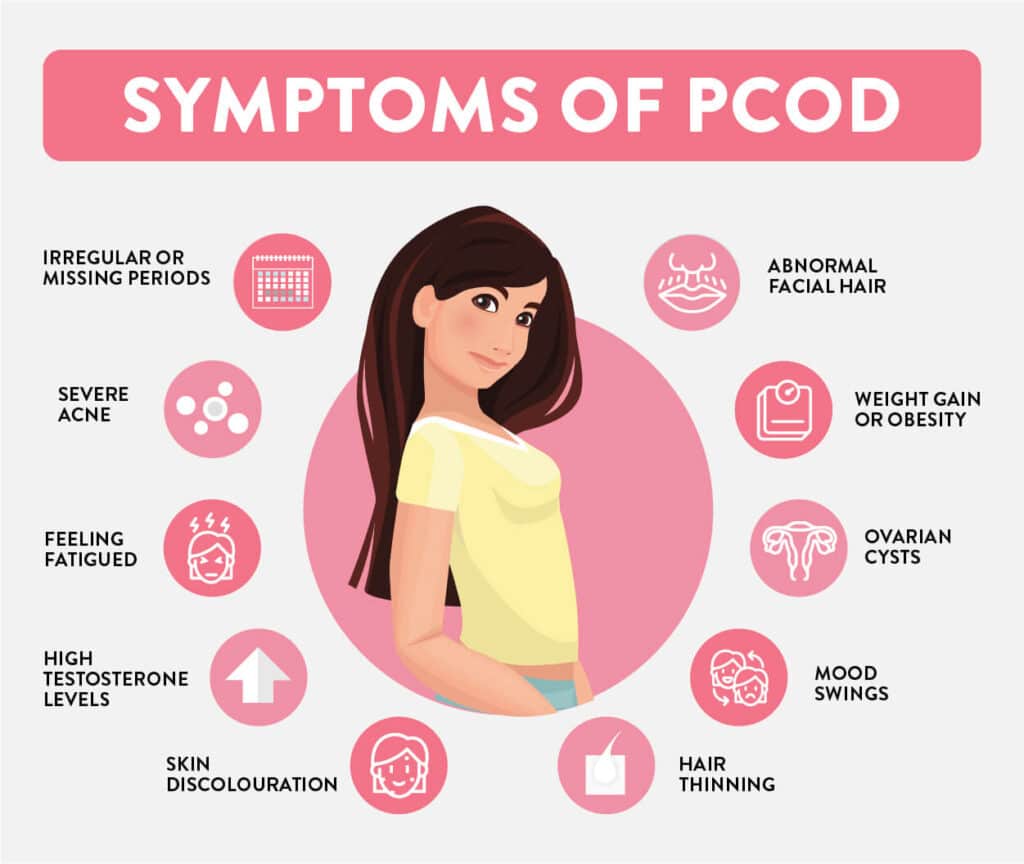
PCOD itself is not life-threatening, and most women lead full, healthy lives with it. But leaving it unmanaged for years, especially alongside weight gain, can raise the risk of:
These risks are why regular check-ups matter, even when day-to-day symptoms feel manageable.
As there isn’t any definitive process to diagnose PCOD/PCOS, there are just a few possible ways to diagnose it.
See a gynaecologist if you notice:
There isn’t any cure for PCOD/ PCOS. Therefore, PCOD problem treatment focuses on managing and changing the way of living.
While there is no cure to PCOD, it is possible to control its effects. Women are able to handle their conditions quite well for long periods through changes in their diet and lifestyles, with medications being administered when necessary for issues like acne, irregular periods, or fertility. Consistent communication with your gynecologist on an ongoing basis, rather than taking a one-off approach to the condition, has proven to work the best.
PCOD stands for Polycystic Ovarian Disease. It describes a condition where the ovaries produce many immature eggs that build up as small cysts over time.
Though PCOD and PCOS are both results of hormonal imbalance, PCOS is considered to be more severe.
A healthy lifestyle can help to reduce the effects of PCOD.
Irregular or missed periods are a sign of PCOD which can easily be detected at home.
The exact cause is not fully understood, but excess insulin, a family history of PCOD/PCOS, higher androgen levels and mild, ongoing inflammation are the most commonly identified contributors.
Regular exercise, a diet lower in refined carbohydrates and sugar, maintaining a healthy weight, and managing stress are the main natural ways to control PCOD. Even a 5% reduction in body weight can meaningfully ease symptoms.
Doctors generally describe four patterns, based on whether irregular ovulation, raised androgen levels and cysts on ultrasound are present together or separately. Your gynaecologist will confirm your specific pattern through examination and tests.
Left unmanaged for years, PCOD can raise the risk of type 2 diabetes, high blood pressure, fertility difficulties, and mood-related symptoms such as anxiety or low mood.
PCOD can make ovulation less predictable, which can delay conception, but many women with PCOD conceive naturally or with modest medical support such as ovulation-inducing medication.