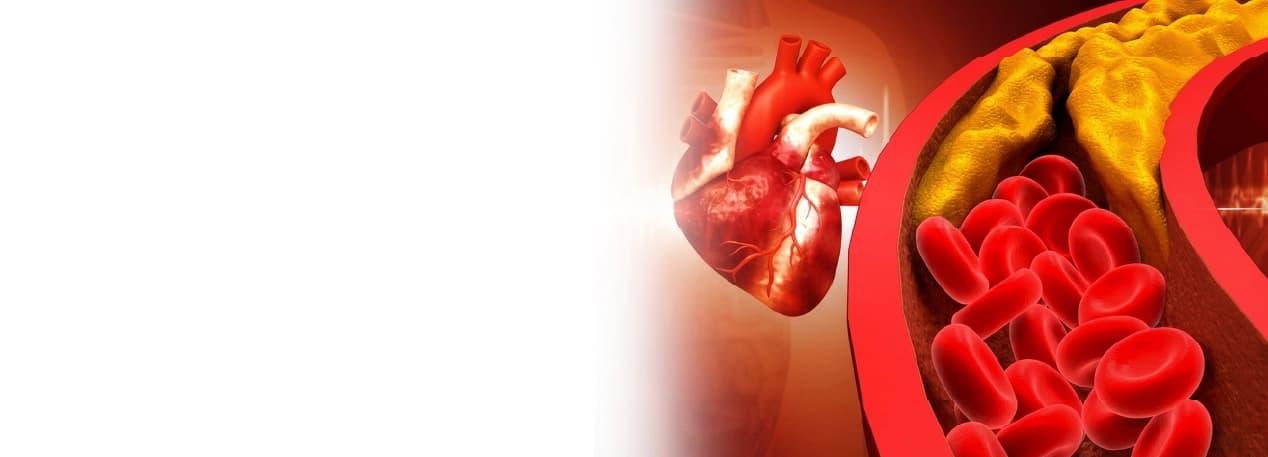
Multiple arteries supply oxygen-rich blood to your heart. When these arteries become narrowed or blocked due to a buildup of fatty deposits called plaque along the inner artery walls, Coronary Artery Disease (CAD) develops.
This process of fatty deposit buildup in the arteries is called atherosclerosis. When it occurs in the arteries supplying the heart, it results in coronary artery disease. As plaque accumulates, it restricts blood flow and the heart muscle does not get enough oxygen-rich blood, especially during exertion. Cardiologists also refer to this condition as ischaemic heart disease.
Symptoms of CAD vary from person to person, which is exactly what makes early detection difficult. You should watch for:
One thing many patients don’t realise is that coronary artery disease symptoms can be completely absent in the early stages. This is sometimes called a silent heart blockage, a condition when the artery narrows without any obvious warning. This is why routine cardiac screening is important, particularly if you are over 40 or have a family history of heart disease.
Plaque does not build up in the arteries overnight. It is usually the result of various factors working together over time:
Many of these situations are modifiable. It means lifestyle changes and timely medical care can slow, and sometimes even partly reverse, the disease process.
Cardiologists classify CAD based on how it presents:
Treatment depends on how advanced the blockage is, your symptoms and your overall heart health. At the CK Birla Hospital, our cardiac team builds a plan around your specific case.
Before deciding on treatment, your cardiologist will likely recommend:
For early or moderate CAD, treatment generally starts with medications to manage cholesterol, blood pressure medication, blood thinners and drugs that ease the heart’s workload.
Paired with a healthy diet (lower in saturated fat and sodium, higher in fibre and whole foods), regular activity, and limiting alcohol and tobacco, this approach can help in slowing the disease progression.
When an artery is significantly narrowed, angioplasty is the recommended treatment. In this treatment:
Step 1: A thin catheter with a small balloon is guided to the blocked section of the artery.
Step 2: The balloon is inflated to push plaque against the artery wall.
Step 3: A small mesh tube called a stent is usually placed to keep the artery open.
It is a minimally invasive procedure, done under local anaesthesia, with most patients discharged within a day or two.
For patients with multiple blockages or complex artery disease, coronary artery bypass surgery may be recommended. During CABG, surgeons use a healthy blood vessel, taken from the leg or chest wall, to create a new path for blood to flow around the blocked artery. It is a more involved procedure than angioplasty, usually requiring a hospital stay of about a week, but it can offer more durable results in cases of extensive blockage.
Coronary artery disease recovery time varies by procedure.
Our cardiac care team combines experienced interventional cardiologists and cardiac surgeons with modern catheterisation labs and diagnostic facilities, allowing us to move quickly from evaluation to treatment.
We offer:
If you are looking for an experienced cardiologist for CAD treatment, our team is available for consultations, second opinions, and emergency cardiac care.
Book a consultation with our cardiology team at the CK Birla Hospital.
CAD can’t always be fully reversed, but early stage plaque buildup can be slowed or partly improved through medication, diet changes, exercise, and quitting smoking. The goal in most cases is to stop progression and reduce the risk of a heart attack.
Yes. Many people have significant artery narrowing without any noticeable symptoms until a stress test or scan picks it up, or until a heart attack occurs. This is why regular screening is worth considering if you have risk factors.
After angioplasty, many patients return to desk-based work within a week. After bypass surgery, it is usually six to eight weeks, depending on your recovery and the physical demands of your job. Your cardiologist will advise based on your progress.
Family history does increase your risk, but it is one factor among several. Lifestyle, diet, blood pressure, and cholesterol levels all play an important role too.
If you experience chest pain or pressure lasting more than a few minutes, especially with breathlessness, sweating, nausea, or pain spreading to your arm or jaw, seek emergency care immediately. Don’t wait to see if it passes on its own.